Biomass - GCSE Biology Definition
Reviewed by: Dr Natalie Lawrence
Last updated
Key Takeaways
Biomass is the mass of living tissue in an organism, usually measured as dry mass (its mass without water).
Producers such as plants and algae build biomass using glucose made in photosynthesis.
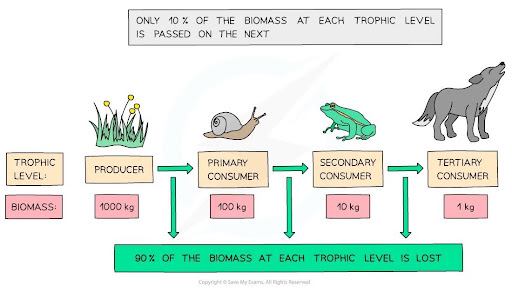
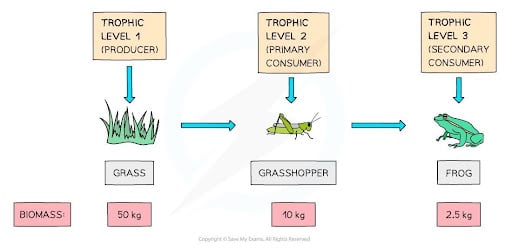
Only about 10% of the biomass at one trophic level is passed on to the next.
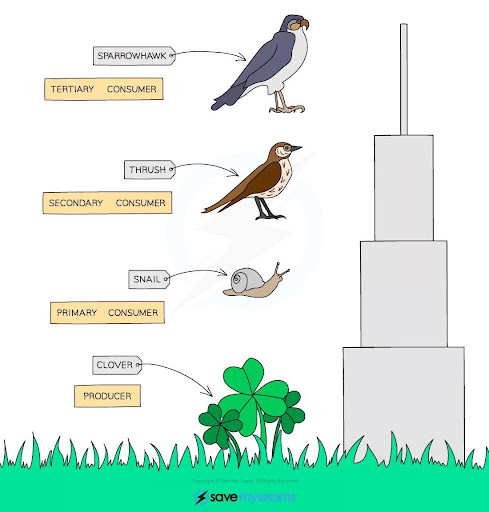
A pyramid of biomass shows the dry mass at each trophic level, and it usually gets narrower towards the top.
Biomass burned as a fuel is a renewable energy resource because new plants can be grown to replace it.
What Is Biomass?
Biomass is the mass of living tissue contained within an organism or a group of organisms. Scientists usually measure it as dry mass, which is the mass of an organism with all of its water removed.
The word has two linked uses. In ecology, biomass describes how much living material there is at each level of a food chain. It can also be used to refer to the fuels made from plants and other living things that can be burned to release energy.
Both meanings rest on the same fact: biomass is a store of chemical energy, and that energy first arrived on Earth as sunlight fixed by producers.
How is Biomass Produced?
In biology, all biomass starts with producers. Producers are usually photosynthetic organisms, mainly plants and algae. During photosynthesis they use light energy to turn carbon dioxide and water into glucose and oxygen, then use the glucose to build new biomass.
Consumers can't make their own food, so they take in biomass by eating. An animal digests the biomass of its food and uses the molecules to build biomass of its own. That's how biomass, and the chemical energy stored in it, moves along a food chain.
Biologists measure biomass as dry mass because the amount of water in an organism can vary. Removing water allows a more consistent comparison of the mass of biological material between organisms.
How Biomass Is Lost Between Trophic Levels
Only about 10% of the biomass (opens in a new tab) at each trophic level is transferred to the level above it. The other 90% never reaches the next consumer. At the very start of the chain, producers transfer only around 1% of the light energy that reaches them into biomass.
Biomass is lost between trophic levels for several reasons:
glucose is used up in respiration, and carbon dioxide and water are released as waste
not all the food an animal eats is absorbed, and some is egested as faeces
water and urea are lost in urine
some parts of an organism, such as bones and fur, aren't eaten at all
“All the reasons for biomass loss can be a bit confusing. I tell students to think of ‘loss at transfer’ - all the energy that the next organism doesn’t take in - and ‘running costs’ that reduce the energy they do acquire for building their own tissues.”
– Natalie Lawrence, Biology Tutor
You can measure how efficient a transfer is as a percentage:
Efficiency (%) = biomass transferred to the next trophic level ÷ biomass available at the previous trophic level × 100
The answer is usually close to 10%.
These losses explain why food chains rarely have more than six trophic levels. Eventually there isn't enough energy left to support another level of consumers.
Calculating the efficiency of biomass transfers is a skill worth practising before your exams. Try exam questions written by experienced examiners and aligned to your specification, for example AQA GCSE Trophic Levels in an Ecosystem Exam Questions.
Pyramid of Biomass
A pyramid of biomass is a diagram that shows the relative dry mass of organisms at each trophic level in a food chain. Producers form the bottom bar, at trophic level 1. Each bar above represents the next level of consumers, and its width shows how much biomass that level holds. Because biomass usually falls at every trophic level, the bars get narrower towards the top.
Pyramid of Biomass vs Pyramid of Numbers
A pyramid of numbers counts organisms, while a pyramid of biomass weighs them. That difference changes the shape of the diagram.
Feature | Pyramid of numbers | Pyramid of biomass |
What each bar shows | Number of organisms at each trophic level | Dry mass of organisms at each trophic level |
Shape | Can be any shape | Usually narrows towards the top |
Oak tree food chain | One oak tree supports many insects, so the bottom bar is narrow | The oak tree's mass is far greater than the insects', so the bottom bar is widest |
Accounts for organism size | No | Yes |
A pyramid of biomass gives a better idea of how much plant and animal material is at each level. That makes it a clearer way to show how the organisms in a food chain depend on each other.
Check out our specification-tailored pyramids of biomass revision notes to consolidate what you have learned here, for example AQA GCSE Pyramids of Biomass Revision. They're written by experienced examiners and include tips on drawing a pyramid of biomass to scale.
What Is Biomass Energy?
Biomass energy is the energy released when biomass is used as a fuel, known as a bio-fuel. Bio-fuels include plant matter such as wood, as well as ethanol and methane. They can be used in place of fossil fuels.
Bio-fuels have the same three main uses as other energy resources:
transport, such as vehicles that run on bio-fuel
generating electricity in power stations
heating homes and businesses
Common biomass examples include wood, crops grown to be burned as fuel, and ethanol or methane produced from plant or waste material.
How Does Biomass Energy Work?
In a biomass-fired steam power station, biomass fuel is burned to heat water, in the same way as a fossil-fuel power station. The energy transfers happen in this order:
Burning the fuel transfers energy from its chemical store to the thermal store of the water
The water boils, and the steam turns a turbine
The turbine turns a generator, which generates electricity
The energy in biomass started out as light from the Sun. Plants captured it during photosynthesis and stored it as chemical energy in their tissues, and burning the fuel releases it again.
Is Biomass Renewable?
Biomass is classed as renewable because its sources can be replenished. Sustainable use requires replacement to keep pace with consumption. New trees and crops can be grown to replace the ones that are burned. Coal, oil and natural gas are non-renewable, so they'll eventually run out.
Biomass is sometimes called ‘carbon-neutral’, but that claim is controversial. Growing plants take in carbon dioxide for photosynthesis, and burning them releases carbon dioxide again. However, fuel is often burned to farm, process and transport biomass, which adds extra carbon dioxide.
Advantages of biomass energy | Disadvantages of biomass energy |
Renewable, if sustainably managed | Burning it releases carbon dioxide |
Reliable, because it can produce energy at any time | Fuel crops take up land that could grow food |
Can replace fossil fuels for transport, electricity and heating | Clearing land for fuel crops can destroy habitats |
Frequently Asked Questions
What are some examples of biomass?
Any living tissue counts as biomass, including trees, grass, crops, algae and animals. As a fuel, the most common examples are wood, crops grown for fuel, and ethanol or methane produced from plant or waste material.
Why is biomass measured as dry mass?
Biomass is measured as dry mass because the amount of water in organisms varies. Removing water allows a more consistent comparison of the mass of biological material between trophic levels.
Why is only about 10% of biomass passed on to the next trophic level?
Only some of the biomass at one trophic level becomes new biomass at the next. Some material is not eaten or absorbed, and some absorbed material is used in respiration or lost through excretion. Only about a tenth is available to build the next consumer's biomass.
Is biomass the same as a fossil fuel?
Biomass and fossil fuels are different energy resources. Biomass comes from living organisms and can be regrown, so it's renewable. Fossil fuels such as coal, oil and natural gas are non-renewable and will eventually run out.
What is the difference between biomass and biofuel?
Biomass is the mass of living tissue in organisms, while a bio-fuel is a fuel made from that material. Wood is biomass that can be burned directly as a bio-fuel. Ethanol is a bio-fuel produced from plants.
Why do food chains rarely have more than six trophic levels?
Food chains are short because energy and biomass are lost at every transfer. With only about 10% passed on each time, there's soon too little energy left to support another level of consumers.
References
National Geographic: Energy Flow and the 10% Rule (opens in a new tab)
Examiner-written GCSE Biology revision resources that improve your grades 2x
- Written by expert teachers and examiners
- Aligned to exam specifications
- Everything you need to know, and nothing you don’t
Was this glossary entry helpful?

Share this article

 written revision resources that improve your