Key Takeaways
Coordination is the way organisms detect changes in their environment and produce appropriate responses to survive
The two main types of coordination in biology are nervous coordination (fast, short-lived) and hormonal coordination (slower, longer-lasting)
The coordination pathway follows five stages: stimulus, receptor, coordination centre, effector, response
The brain, spinal cord, and endocrine glands all act as coordination centres in the human body
Plants coordinate their growth using hormones, which control responses to light and gravity
What Is Coordination?
Coordination in biology refers to the process by which living organisms detect stimuli and produce appropriate responses. Every time you pull your hand away from something hot or shiver on a cold morning, that's coordination at work.
Your body relies on coordination to maintain stable internal conditions through a process called homeostasis. Without it, blood glucose levels could spike dangerously, body temperature could spiral out of control, and cells would stop functioning properly. Coordination keeps everything in check without you even realising it.
Two systems handle coordination in humans: the nervous system and the endocrine system. They work alongside each other, but they operate at very different speeds and in different ways.
The Coordination Pathway
All coordination follows the same basic pathway, whether it's nervous or hormonal:
stimulus → receptor → coordination centre → effector → response
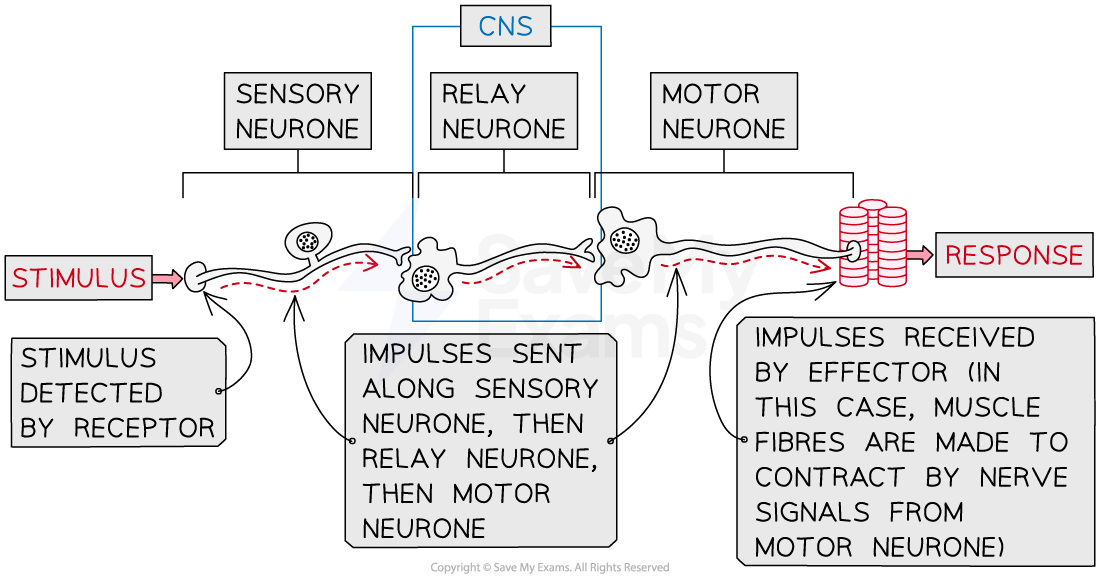
Here's how it works in practice. You accidentally touch a hot pan. Pain receptors in your skin detect the heat (the stimulus). They send electrical impulses along a sensory neurone to your spinal cord (the coordination centre). A relay neurone passes the signal to a motor neurone, which carries it to the muscles in your arm (the effector). Your arm jerks away before you've even consciously registered the pain. That's the response.
This entire sequence happens in a fraction of a second. In reflex actions like this one, the conscious brain isn't even involved, which is precisely why reflexes are so fast.
Types of Coordination
The two main types of coordination in the human body use different signalling methods and are suited to different jobs.
Feature | Nervous Coordination | Hormonal Coordination |
|---|---|---|
Signal type | Electrical impulses | Chemical hormones in blood |
Speed | Very fast (milliseconds) | Slower (seconds to hours) |
Duration | Short-lived | Longer-lasting |
Target | Specific (single muscle or gland) | Widespread (multiple organs) |
Example | Pulling hand from hot surface | Regulating blood glucose |
Nervous Coordination
The nervous system coordinates rapid responses. It consists of the central nervous system (CNS), which is the brain and spinal cord, plus the peripheral nervous system (PNS), which includes all the nerves branching out to every part of the body.
There are three types of neurone in the system. Sensory neurones carry impulses from receptors to the CNS. Relay neurones connect sensory and motor neurones inside the CNS. Motor neurones carry impulses from the CNS to effectors, which are muscles or glands that carry out the response.
Hormonal Coordination
The endocrine system uses a different approach. Glands secrete hormones into the bloodstream, and these chemicals travel around the body until they reach their target organs.
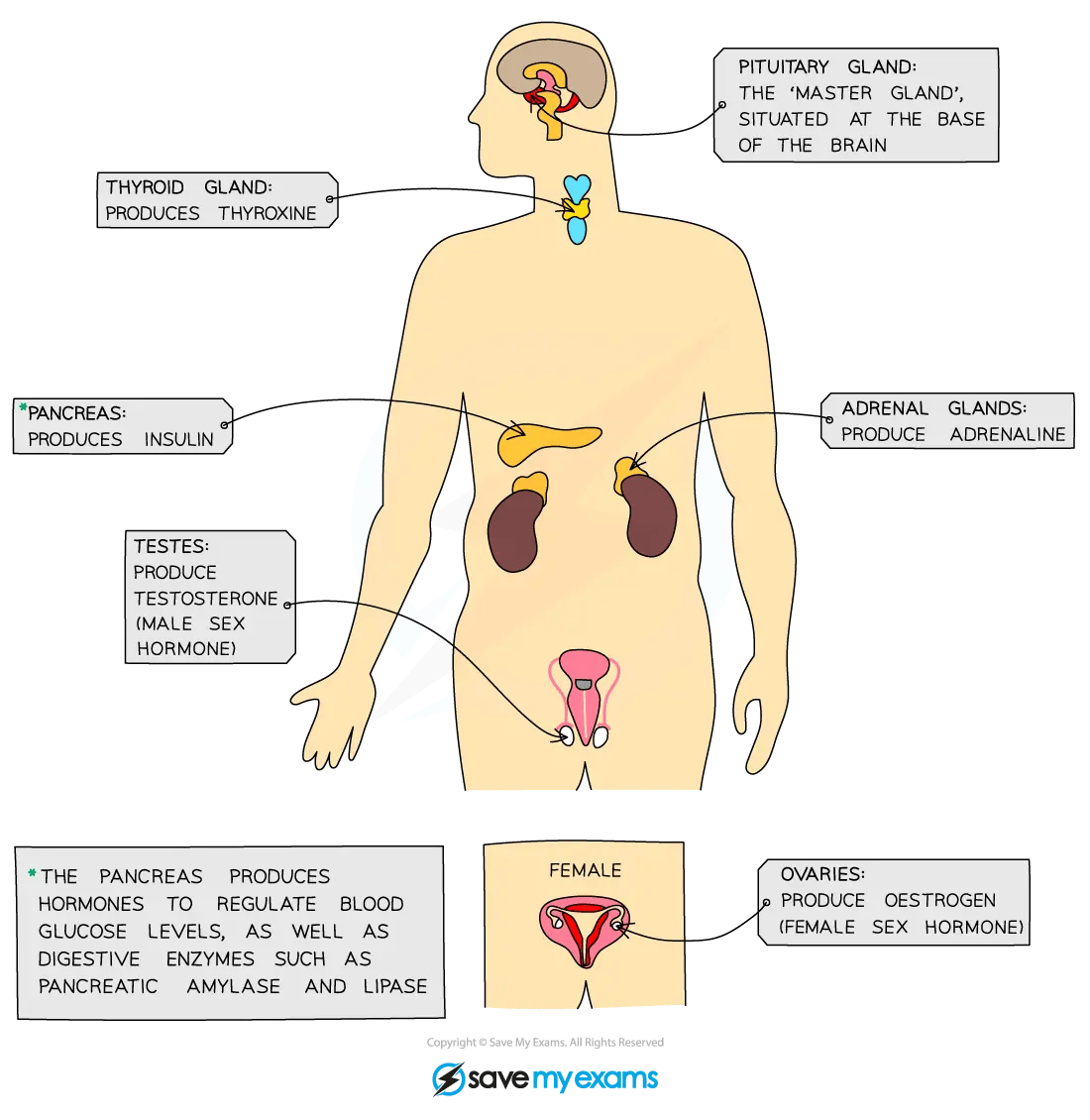
The pituitary gland in the brain is sometimes called the "master gland" because it produces hormones that control other glands. The pancreas produces insulin to regulate blood glucose. The adrenal glands release adrenaline during the fight-or-flight response, increasing heart rate and diverting blood to muscles. The thyroid produces thyroxine, which controls metabolic rate.
Hormonal coordination doesn't need to be fast. Regulating blood sugar or controlling growth are processes that play out over hours, days, or even years.
“I always emphasise the importance of the receptors in target tissues for endocrine coordination to explain to my students how a signal can be sent around the whole body but only produce a specific set of effects”
– Natalie Lawrence, Biology Tutor.
Coordination Centres in Biology
A coordination centre receives information from receptors and triggers an appropriate response through effectors. The human body has several such centres.
The brain is the main coordination centre. It processes sensory information, makes decisions, and sends instructions to muscles and glands. Different regions handle different functions: the cerebrum deals with conscious thought, while the brainstem controls automatic processes like breathing.
The spinal cord acts as a coordination centre for reflex actions. When speed matters more than conscious thought, the spinal cord bypasses the brain entirely. That's why you can pull your hand away from danger before your brain has even processed what happened.
Endocrine glands also function as coordination centres for hormonal responses. The pancreas, for instance, detects changes in blood glucose concentration and responds by releasing insulin or glucagon to bring levels back to normal through negative feedback.
Coordination Examples in Everyday Life
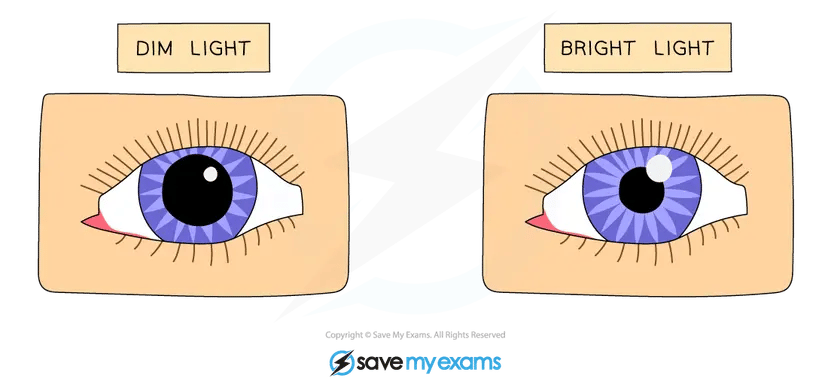
The pupil reflex: Walk from a dark room into bright sunlight and your pupils shrink within seconds. Photoreceptors in the retina detect the increased light intensity. The brain processes this and sends signals to the muscles in the iris, which contract to make the pupil smaller. This protects the retina from damage.
Shivering when cold: Temperature receptors in your skin detect a drop in external temperature. The brain triggers rapid muscle contractions (shivering) to generate heat and bring your body temperature back up.
Hand-eye coordination: Catching a ball involves your eyes detecting the ball's trajectory, the brain processing speed and direction, and motor neurones coordinating precise muscle movements in your hands and arms.
Blood glucose regulation after eating: After a meal, blood glucose rises. The pancreas detects this and releases insulin, which signals the liver and muscles to absorb glucose from the blood. Once levels return to normal, insulin secretion stops. This negative feedback loop occurs every time you eat.
If you're revising the nervous system or homeostasis, Save My Exams has detailed revision notes covering the full coordination pathway, neurone types, and reflex arcs. Our AQA GCSE Structure & Function notes are written by experienced teachers and examiners, with diagrams and examiner tips to help you prepare for exam questions, and we have notes tailored to your specific course too.
Coordination in Plants
Plants don't have a nervous system, but they still coordinate their responses using hormones. One of the most important plant hormones is auxin, which controls how shoots and roots grow in response to light and gravity.
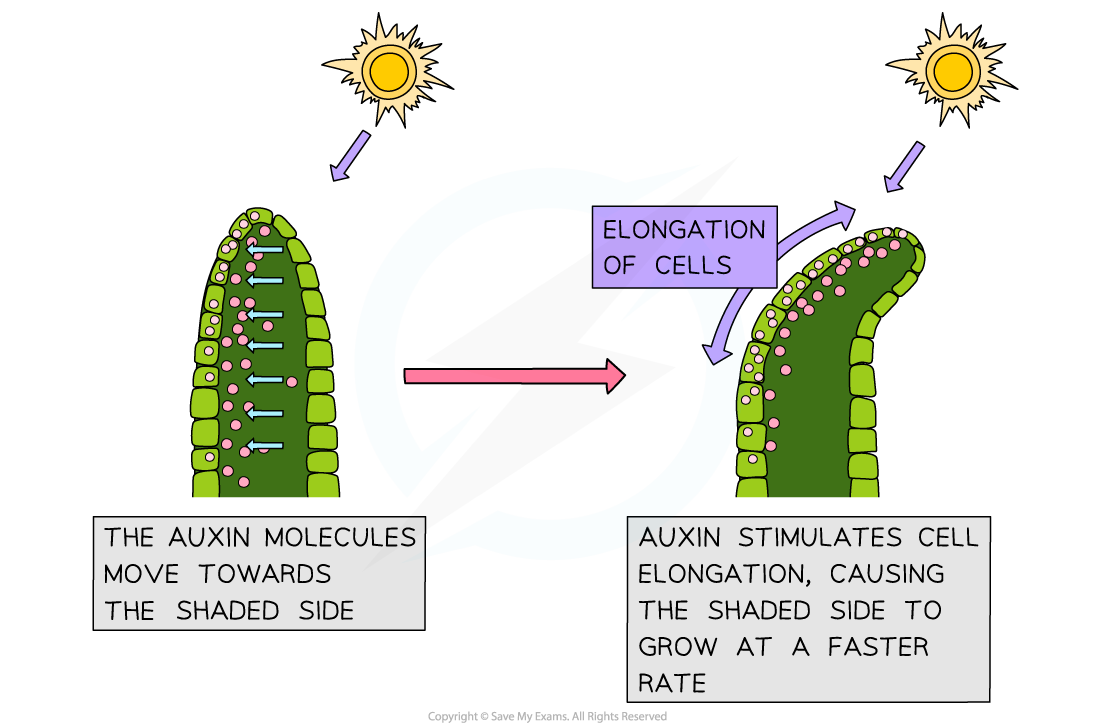
When light hits a shoot from one side, auxin accumulates on the shaded side. Since auxin promotes cell elongation in shoots, the shaded side grows faster than the sunny side. The shoot bends towards the light. This response is called phototropism, and it helps leaves capture maximum sunlight for photosynthesis.
Roots respond differently. Auxin inhibits cell elongation in roots, so when gravity pulls auxin to the lower side of a horizontal root, the lower side grows more slowly. The upper side grows faster, and the root curves downward. This anchors the plant and helps it reach water in the soil.
Other plant hormones play a role too. Gibberellins trigger seed germination and flowering. Ethene controls fruit ripening. Between them, these hormones coordinate growth, reproduction, and responses to the environment, all without a single neurone.
If you're revising plant coordination, Save My Exams has revision notes tailored to your course. For example, check out our Plant Hormones AQA GCSE Biology Revision Notes.
Frequently Asked Questions
What is the difference between nervous and hormonal coordination?
Nervous coordination uses electrical impulses travelling along neurones and produces rapid, short-lived responses targeted at specific muscles or glands. Hormonal coordination uses chemical hormones carried in the blood and produces slower, longer-lasting responses that can affect multiple organs at once.
What is hand-eye coordination and how does it work?
Hand-eye coordination is the ability to process visual information and use it to guide precise hand and arm movements. Your eyes detect the position and movement of an object, the brain processes this information and calculates the required response, and motor neurones coordinate the muscles in your hands and arms. It's a form of biological coordination applied to physical movement, and it improves with practice as neural pathways strengthen.
What is coordination in sport and physical fitness?
In sport, coordination refers to the ability to move different body parts smoothly and efficiently together. A footballer timing a header or a tennis player returning a serve both depend on the nervous system rapidly processing sensory information and coordinating muscle responses. Training improves coordination because repeated practice strengthens the connections between neurones, making responses faster and more accurate.
Why is coordination important for homeostasis?
Homeostasis depends on coordination to detect when internal conditions drift from their normal range and to trigger corrective responses. Receptors detect changes (like a rise in blood glucose), coordination centres process the information (the pancreas detects the change), and effectors carry out the response (liver cells store excess glucose). Without coordination, the body couldn't maintain the stable internal environment that cells need to function properly.
Examiner-written GCSE Biology revision resources that improve your grades 2x
- Written by expert teachers and examiners
- Aligned to exam specifications
- Everything you need to know, and nothing you don’t
Was this glossary entry helpful?

Share this article

 written revision resources that improve your