Nucleus - GCSE Biology Definition
Reviewed by: Dr Natalie Lawrence
Last updated
Key Takeaways
The nucleus is a membrane-bound organelle that stores a cell's DNA and controls its activities
It's found in eukaryotic cells (animal and plant cells) but not in prokaryotic cells like bacteria
The nucleus contains the chromosomes, which carry genetic instructions for making proteins
A structure called the nucleolus inside the nucleus produces ribosomal RNA
Not all eukaryotic cells have a nucleus – mature red blood cells and sieve tube elements lack them
What Is the Nucleus?
In biology, a nucleus is a membrane-bound structure that houses a cell's genetic material – its DNA. This contains every instruction the cell needs to grow, divide, and carry out its specialised jobs.
Both animal and plant cells contain a nucleus with a membrane or nuclear envelope. This is what separates eukaryotic cells from prokaryotic ones. Bacteria have no nucleus at all – their DNA floats freely in a nucleoid in the cytoplasm.
Structure of the Cell Nucleus
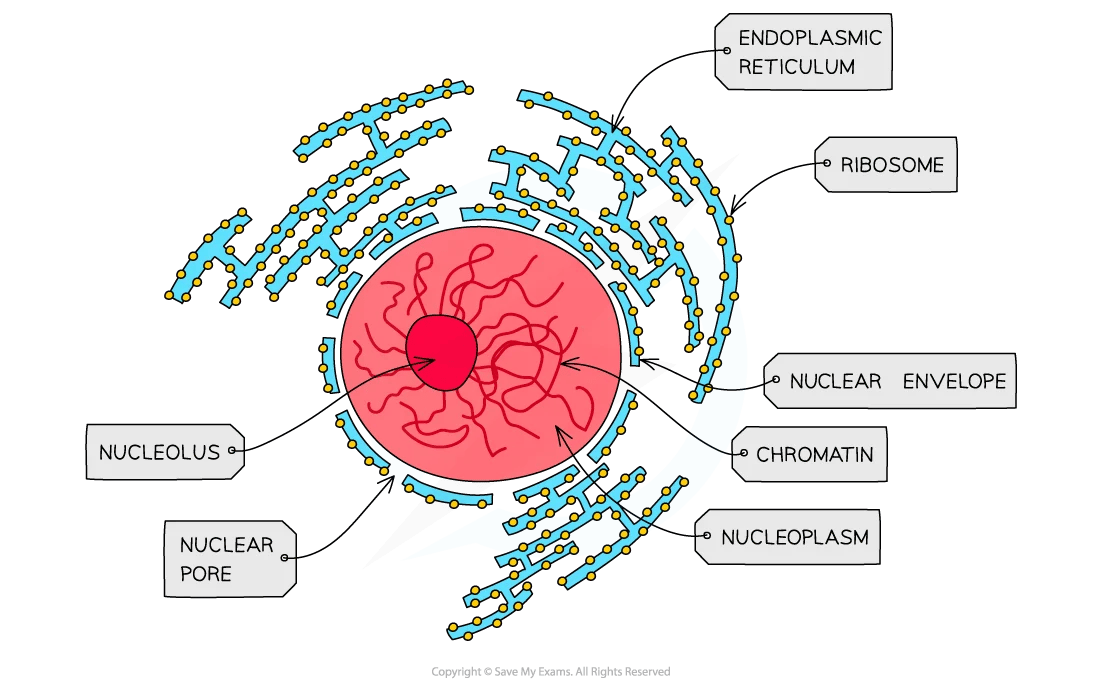
A nucleus diagram reveals several distinct parts working together. The table below breaks down the main components.
Structure | Location | Function |
|---|---|---|
Nuclear envelope | Outer boundary | Double membrane separating the nucleus from the cytoplasm |
Nuclear pores | Within the envelope | Allow specific molecules to pass in and out |
Chromatin | Inside the nucleus | Unwound DNA combined with proteins; condenses into chromosomes during division |
Nucleolus | Dense inner region | Produces ribosomal RNA (rRNA) for building ribosomes |
Nucleoplasm | Fills the interior | Gel-like substance supporting chromatin and nucleolus |
Nuclear Envelope and Nuclear Pores
The nuclear envelope is a double membrane – two lipid bilayers with a gap between them. It isn't a sealed barrier, though. Scattered across its surface are tiny openings called nuclear pores.
These pores control what enters and leaves the nucleus. Messenger RNA (mRNA) carrying genetic instructions passes out to ribosomes in the cytoplasm. Enzymes and proteins needed inside the nucleus travel the opposite direction.
This selective transport is one way in which the nucleus regulates cell activity.
Chromatin and Chromosomes
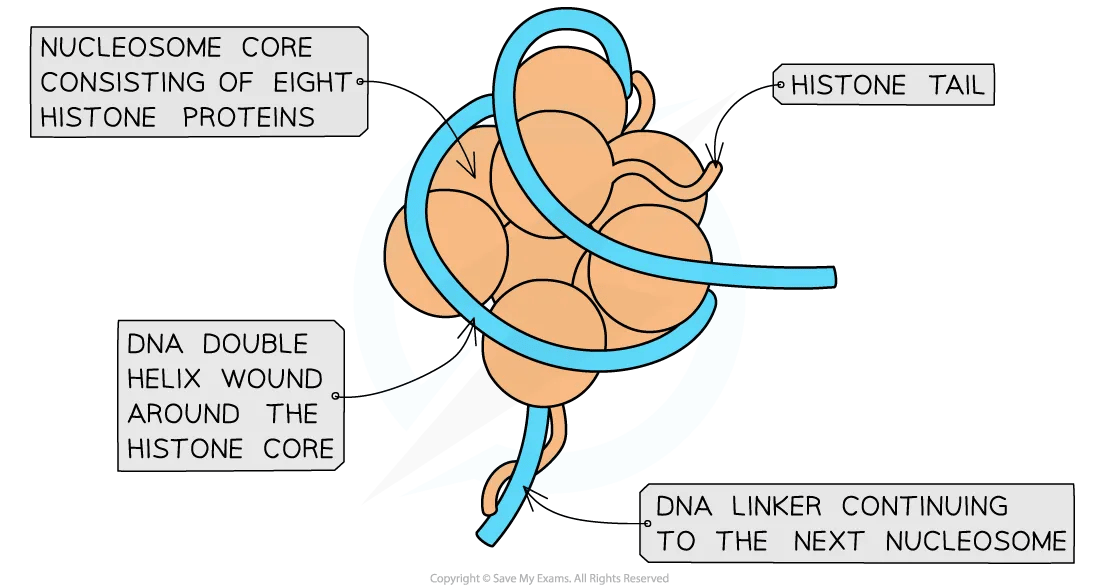
DNA doesn't float loosely inside the nucleus. It wraps around proteins called histones to form nucleosomes, creating a material called chromatin.
Most of the time, chromatin stays spread out in long, thin threads. This loose form lets the cell read genetic instructions and make proteins. When a cell prepares to divide, chromatin coils up tightly into visible structures called chromosomes. Human cells contain 46 chromosomes, arranged in 23 pairs.
Why the switch? Condensed chromosomes are far easier to sort and separate. Loose chromatin strands would tangle and break during division.
The Nucleolus
The nucleolus is a dense, dark-staining region in the nucleus that is visible even under a light microscope. It has no membrane of its own, so it isn't a separate organelle.
The nucleolus sits inside the nucleus, but its products move to the cytoplasm. Its job is producing ribosomal RNA. This rRNA combines with proteins to form ribosomes, which assemble proteins in translation.
Save My Exams covers the cell nucleus and its organelles across biology revision notes written by experienced teachers and examiners. The AQA GCSE Animal & Plant Cells notes walk through each structure in detail - and we have notes aligned to your particular exam specification too.
What Is the Function of the Nucleus?
So what does the nucleus do? Its roles fall into four main areas:
Storing genetic information – most DNA is kept inside the nucleus, protected by the nuclear envelope
Controlling gene expression – molecular mechanisms in the nucleus determine which genes are expressed
Coordinating cell division – DNA replication takes place in the nucleus before cell division can proceed
Regulating growth and repair – by directing protein synthesis, the nucleus controls how the cell behaves
“The nucleus is sometimes called ‘the brain’ or ‘control centre’ of the cell. I think that's an oversimplification, which we’re disproving with new research. We’re finding that the nucleus is more like a library holding instructions that the cell's machinery reads as needed.”
– Natalie Lawrence, Biology Tutor.
When a gene is "read", the nucleus produces a strand of mRNA. This mRNA carries a copy of the gene's code out through the nuclear pores. Ribosomes in the cytoplasm then translate it into a specific protein.
The Nucleus and Cell Division
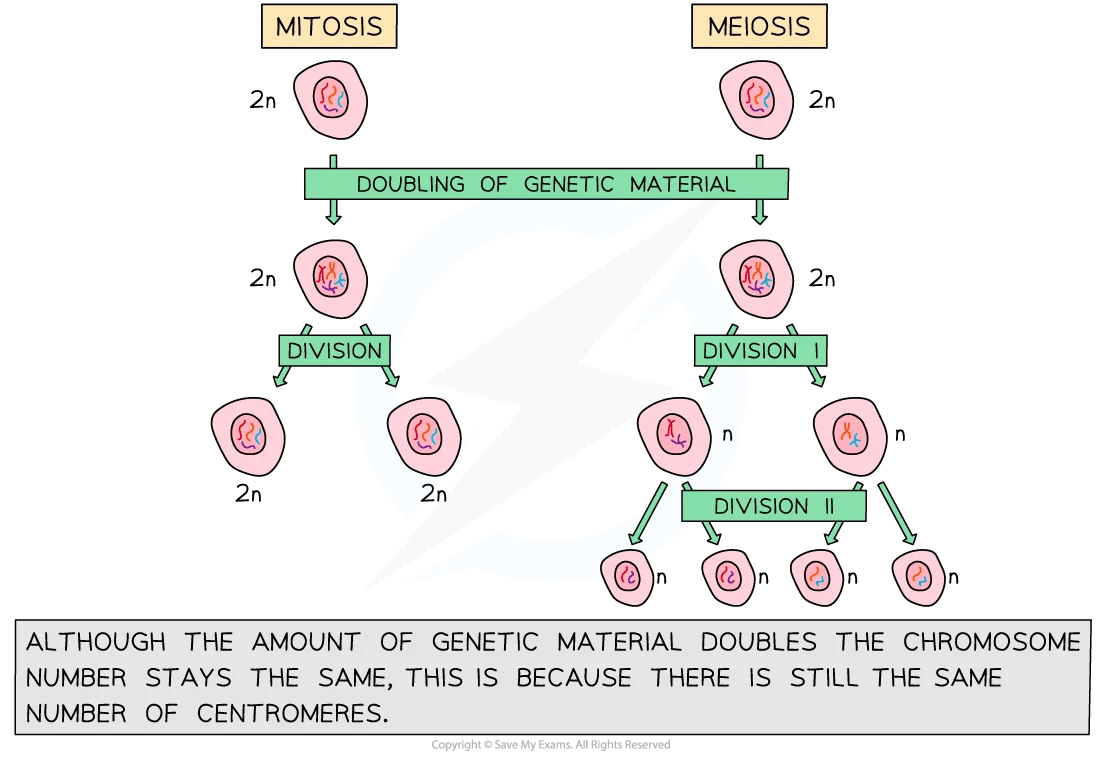
Before a cell divides, every chromosome must be copied. This happens during the growth phase of the cell cycle.
In mitosis, the nuclear envelope breaks down. Chromosomes are pulled apart, and a complete set moves to each side of the cell. New nuclear envelopes form around each group, producing two genetically identical daughter cells.
Meiosis follows a similar pattern but involves two rounds of division. It produces four cells with half the original chromosome number. This is how sex cells like sperm and eggs are made.
Do All Cells Have a Nucleus?
Prokaryotic cells – bacteria and archaea – don’t have nuclei. Their DNA exists as a single circular loop in the cytoplasm, sometimes alongside smaller rings called plasmids.
Some eukaryotic cells lose their nucleus too. Mature red blood cells in mammals eject theirs during development. This creates more space for haemoglobin, the protein that carries oxygen. It's an effective trade-off: better oxygen transport, but the cells can no longer divide or repair themselves. Red blood cells survive about 120 days before being replaced.
Frequently Asked Questions
What is the difference between the nucleus and the nucleolus?
The nucleus is the membrane-bound organelle containing a cell's DNA. The nucleolus is a smaller, dense region inside the nucleus that produces ribosomal RNA for building ribosomes. One holds the genetic code; the other manufactures protein-building machinery.
What would happen to a cell without a nucleus?
It can't make new proteins because it has no access to DNA instructions. The cell functions briefly using existing proteins, but it can't grow, repair itself, or divide. Mature red blood cells manage without a nucleus for about 120 days before breaking down.
How does the nucleus affect the rest of the cell?
Through gene expression. When the cell needs a protein, the relevant gene is copied into mRNA. This mRNA exits through nuclear pores and is translated by ribosomes. By switching genes on or off, the nucleus directs everything from growth to specialisation.
Is the nucleus the same in plant and animal cells?
Both contain a nucleus with the same basic structure – nuclear envelope, chromatin, nucleolus, and nuclear pores. The nucleus functions identically in both cell types. Differences between plant and animal cells (cell wall, chloroplasts, permanent vacuole) sit outside the nucleus.
Examiner-written GCSE Biology revision resources that improve your grades 2x
- Written by expert teachers and examiners
- Aligned to exam specifications
- Everything you need to know, and nothing you don’t
Was this glossary entry helpful?

Share this article

 written revision resources that improve your