Plasmid - GCSE Biology Definition
Reviewed by: Dr Natalie Lawrence
Last updated
Key Takeaways
A plasmid is a small, circular piece of DNA found in bacteria that exists separately from the main bacterial chromosome
Plasmids replicate independently and carry genes that can give bacteria useful traits, such as antibiotic resistance
Scientists use plasmids as vectors in genetic engineering to insert new genes into organisms
The production of human insulin by genetically modified bacteria relies on plasmid DNA
Plasmids are not needed for a bacterium's basic survival, but they can provide a significant advantage in certain environments
What Is a Plasmid?
A plasmid is a small, circular loop of double-stranded DNA found inside bacterial cells. It sits in the cytoplasm, separate from the bacterium's main chromosomal DNA. Unlike the chromosome, which carries the genes a bacterium needs for everyday survival, a plasmid carries extra genes that might be useful.
Bacteria can contain one plasmid, several, or none at all. The number varies between species and even between individual cells of the same species. Each plasmid replicates independently of the bacterial chromosome. When a bacterium divides, copies of the plasmid pass to both daughter cells.
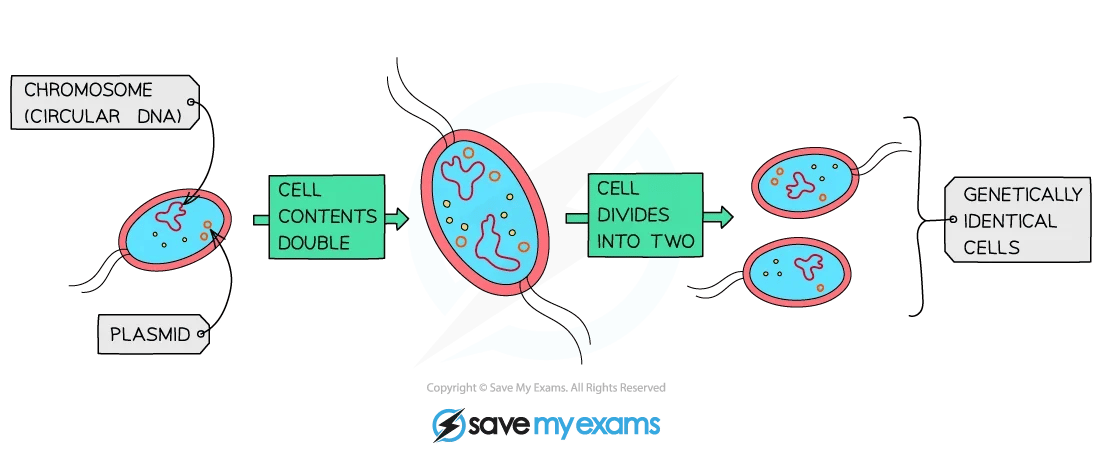
You'll sometimes see the term "plasmid DNA" used to distinguish these molecules from chromosomal DNA. Both are made of the same chemical building blocks (nucleotides arranged in a double helix), but plasmid DNA is much smaller.
If you're building your understanding of bacterial cell structure, Save My Exams has detailed revision notes on Eukaryotes & Prokaryotes for AQA GCSE written by experienced teachers and examiners, covering everything from cell size to the differences between prokaryotic and eukaryotic cells. We also have notes tailored specifically to other courses.
Plasmid Structure
Plasmid DNA is circular and double-stranded. Many plasmids carry antibiotic resistance genes, which protect the bacterium from specific antibiotics. Scientists use these resistance genes as markers during genetic engineering to check whether a plasmid has been successfully taken up by a cell.
Some plasmids also contain recognition sites for restriction enzyme, specific sequences where the enzymes cut the DNA. These sites are critical when scientists need to open up the plasmid and insert a new gene.
Feature | Plasmid DNA | Chromosomal DNA |
|---|---|---|
Shape | Circular | Circular (bacteria) or linear (eukaryotes) |
Size | Small (a few thousand base pairs) | Large (millions of base pairs) |
Essential for survival? | No | Yes |
Replication | Independent | Coordinated with cell division |
Typical genes carried | Antibiotic resistance, toxin production | Core metabolic and structural genes |
Plasmid Function
Plasmids give bacteria traits that help them survive in challenging conditions. The most well-known example is antibiotic resistance. A bacterium carrying a resistance plasmid can survive exposure to a particular antibiotic, while bacteria without that plasmid die.
This matters because plasmids can spread between bacteria through a process called conjugation, where one bacterium transfers a copy of its plasmid to a neighbouring cell through direct contact.
This horizontal gene transfer is one reason antibiotic resistance spreads so quickly through bacterial populations. It doesn't require reproduction. A resistant bacterium can pass its plasmid to a completely unrelated bacterium next to it.
Beyond antibiotic resistance, plasmids can carry genes for producing toxins (which help some bacteria cause disease) or for breaking down unusual chemicals in the environment. Some soil bacteria, for instance, carry plasmids that let them digest oil or pesticides.
“I help my students imagine the role of plasmids by describing them as the ‘bolt on’ packs you used to get in old-style video games. They extend the range of potential functions of the cell in ways that aren’t central to the bacterium’s ordinary survival.”
– Natalie Lawrence, Biology Tutor.
Plasmids in Genetic Engineering
Scientists often use plasmids as vectors to shuttle new genes into host cells. Here's how the process works, using the production of human insulin as an example.
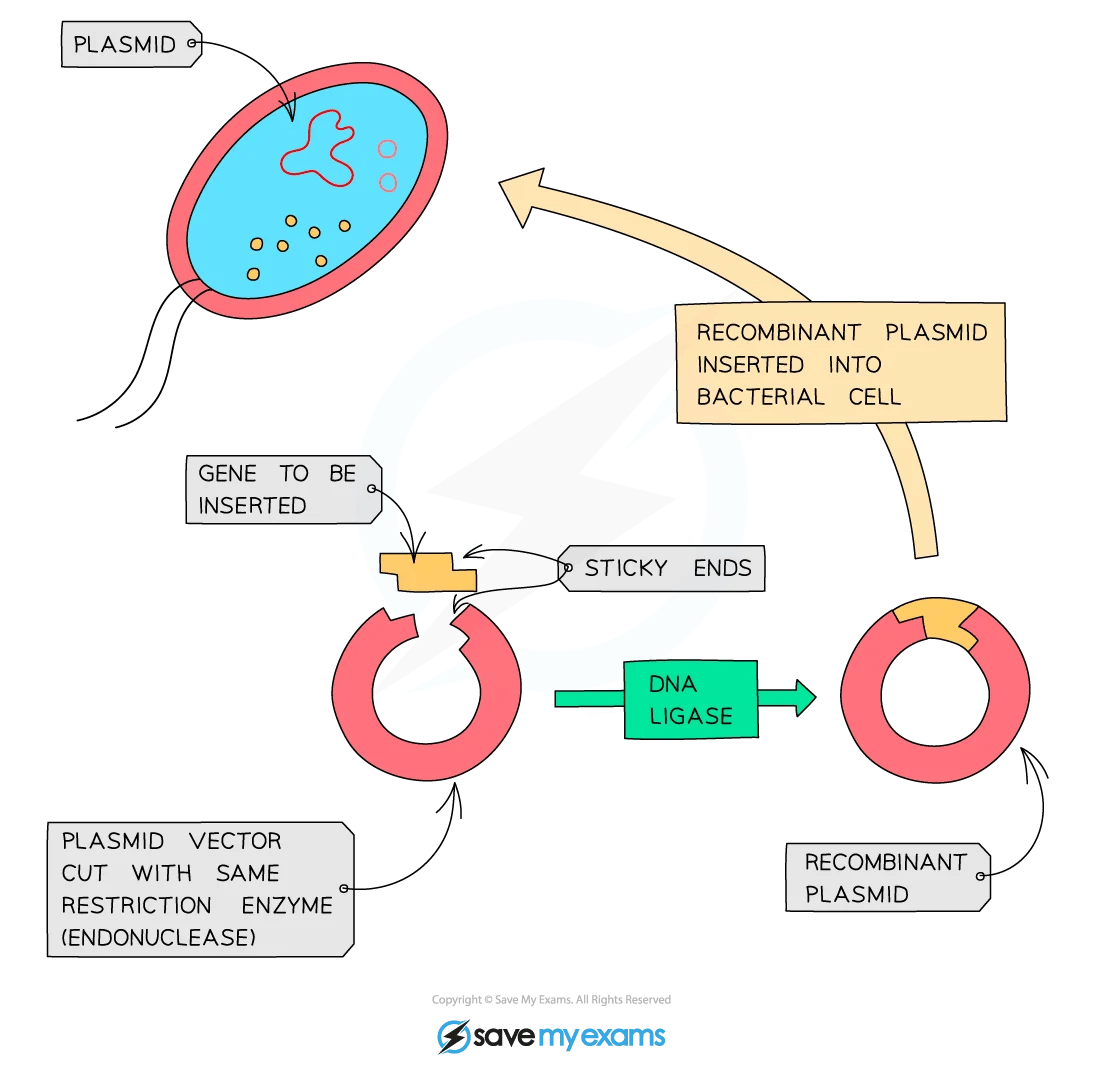
First, the human insulin gene is cut out of human DNA or RNA using restriction enzymes. These enzymes cut at specific sequences, leaving short unpaired sections called "sticky ends." The same restriction enzyme is used to cut open a bacterial plasmid, creating matching sticky ends on the plasmid.
The insulin gene and the open plasmid are then mixed together. Because the sticky ends are complementary, they pair up. An enzyme called DNA ligase seals the DNA backbone, creating a recombinant plasmid that now contains the human insulin gene.
This recombinant plasmid is inserted into a bacterial cell. When the bacterium divides, it copies the plasmid along with its own DNA. The bacteria multiply rapidly in a fermenter, and new cells carry the insulin gene. These bacteria produce human insulin protein, which is collected and purified for medical use.
Before genetic engineering made this possible, insulin had to be extracted from the pancreases of pigs and cows. Bacteria-produced insulin is identical to the human version and can be made in far larger quantities, more cheaply and safely.
For a step-by-step breakdown of this process with diagrams, the Save My Exams revision notes on Genetic Engineering for AQA GCSE walk you through each stage, from restriction enzymes to recombinant plasmids. These are one of many sets of notes aligned to whatever exam specification you are taking.
Difference Between a Plasmid and a Vector
A vector is any DNA molecule used to carry foreign genetic material into a cell during genetic engineering.
Plasmids are the most common type of vector, but they aren't the only one. Viruses (called bacteriophages when they infect bacteria) and artificial chromosomes can also serve as vectors. So, every plasmid used in genetic engineering is a vector, but not every vector is a plasmid.
Real-World Applications of Plasmid DNA
The insulin example is the best known, but plasmid-based genetic engineering reaches well beyond diabetes treatment.
Medicine: Human growth hormone, clotting factors for haemophilia, and some vaccines are produced using bacteria carrying recombinant plasmids. Gene therapy research also uses modified plasmids to deliver working copies of faulty genes into patient cells.
Agriculture: GM crops such as Bt cotton and golden rice (opens in a new tab) were created by inserting genes (carried on plasmids) into plant cells. Bt cotton produces a bacterial toxin that kills insect pests, reducing the need for chemical pesticides. Golden rice produces beta-carotene, helping address vitamin A deficiency.
Environmental science: Some bacteria naturally carry plasmids that break down pollutants. Researchers are engineering bacteria with enhanced versions of these plasmids for bioremediation (opens in a new tab), cleaning up oil spills and industrial waste.
One surprising fact: plasmids aren't limited to bacteria. Yeast cells (which are eukaryotic) also carry a well-studied plasmid called the 2-micron plasmid.
Frequently Asked Questions
Do all bacteria contain plasmids?
No. Plasmids are common in bacteria, but not universal. Some bacterial species carry multiple plasmids while others carry none. A bacterium can survive without any plasmids, since the genes for core life functions are on the main chromosome.
Can plasmids be transferred between different species of bacteria?
Yes. Through conjugation, bacteria can pass plasmid copies to unrelated species. This is one of the main ways antibiotic resistance genes spread across bacterial populations in hospitals and the wider environment.
Why are plasmids important in antibiotic resistance?
Plasmids often carry genes that code for enzymes capable of breaking down or pumping out antibiotics. Because plasmids transfer between bacteria easily (without needing cell division), resistance can spread rapidly through a population, even between different species.
What is the difference between plasmid DNA and chromosomal DNA?
Both are made of the same nucleotide building blocks, but chromosomal DNA is much larger and carries essential genes for survival. Plasmid DNA is small, circular, replicates independently, and carries usually non-essential but often advantageous genes, such as antibiotic resistance.
References
Golden rice | Description, GMO, Genetic Engineering, Controversy, History, & Facts | Britannica (opens in a new tab)
Bioremediation of environmental wastes: the role of microorganisms (opens in a new tab)
Examiner-written GCSE Biology revision resources that improve your grades 2x
- Written by expert teachers and examiners
- Aligned to exam specifications
- Everything you need to know, and nothing you don’t

Was this glossary entry helpful?



Share this article
 written revision resources that improve your