Genetic Engineering (AQA GCSE Biology): Revision Note
Exam code: 8461

Genetic engineering: Basics
Genetic engineering involves:
modifying the genome of an organism by introducing a gene from another organism
This is carried out by 'cutting' the desired gene from a chromosome in one organism, and inserting it into the cells of another
The resulting genetically modified (GM) organism will have new desired characteristics
Plant genetic engineering
Genetically modified plant crops are crop varieties that have had DNA from other organisms inserted into their genome
This is usually done to improve food production in some way, e.g:
tomatoes have been genetically modified to grow larger fruit
rice has been genetically modified to produce beta carotene (needed by humans to make vitamin A)
crop plants have been genetically modified to be resistant to diseases or resistant to certain herbicides
Bacteria genetic engineering
Bacterial cells have been genetically engineered to produce useful substances
E.g. the gene for human insulin has been inserted into bacteria, which then produce human insulin
This can be collected for medical use to treat people with diabetes
Advantages & disadvantages of genetic engineering
There are a range of arguments for and against the use of genetic engineering in agriculture, particularly as relates to genetically modified (GM) crops
Advantages and disadvantages of GM crops
Advantages:
GM crops can be resistant to insect pests; this reduces the need for chemical pesticides
Resistance to herbicides allows farmers to spray chemical weed killers without harming their crops
Increased yields allow farmers to feed more people and increase their income
Disadvantages:
fears that GM crops might interbreed with wild plant species, introducing genes for pest or herbicide resistance into wild populations; this could:
kill non-target insects
reduce the usefulness of herbicide resistance
concerns around increased herbicide use and its effects on wild flower species
some people feel that the effects of eating GM crops on human health have not been fully explored
companies that make GM seeds charge more for them, so they are not affordable for all farmers and poorer farmers cannot compete with larger farms
Advantages and disadvantages in medicine
Advantages:
Bacteria engineered to make human proteins, such as insulin or human growth hormone, can produce large quantities
The product is easier to purify
It is the specific human protein, so it may be more effective
There is less chance of an immune reaction, or of disease being passed from animals to humans
Disadvantages:
Treatments such as gene therapy are still being researched, so their safety and effectiveness are not fully known
GM crops
Crops that have had their genes modified are called genetically modified (GM) crops
Crop plants have also been genetically modified to:
make them resistant to herbicides (chemicals that kill plants),
When the herbicide is sprayed on the crop field it only kills weeds and does not affect the crop itself, so there is less competition for light, water and mineral ions and the crop grows better, giving a higher yield
be drought-resistant
These crops are able to grow in dry conditions, increasing yield in dry regions
Curing diseases with genetic engineering
Modern medical research is exploring the possibility of genetic modification to overcome some inherited disorders
As these inherited genetic diseases are caused by faulty genes, it may be possible to treat these by inserting working versions of these genes into people with the genetic disease
This is called gene therapy
The process of genetic engineering
Higher Tier Only
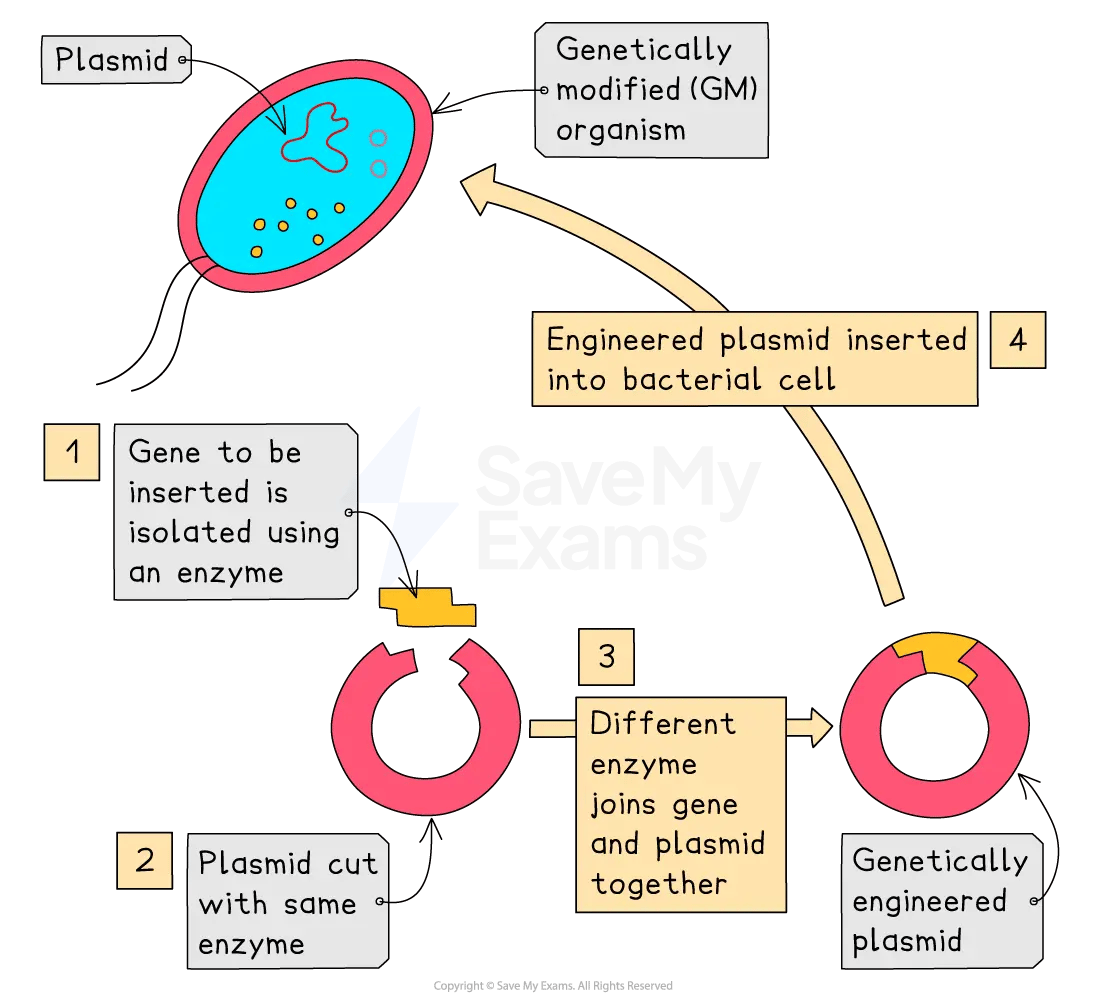
The main steps in the process of genetic engineering:
Enzymes are used to isolate (cut out) the required gene
This gene is inserted into a vector
The vector is usually a bacterial plasmid (a piece of circular DNA found inside bacterial cells) or a virus
The vector is used to insert the gene into the required cells of the target organism
Genes are transferred to the cells of animals, plants or microorganisms at an early stage in their development so that they develop with desired characteristics

Unlock more, it's free!
Join the 100,000+ Students that ❤️ Save My Exams
the (exam) results speak for themselves:

Was this revision note helpful?
Build on this topic