CHD: A Non-Communicable Disease (AQA GCSE Biology): Revision Note
Exam code: 8461

Coronary heart disease
The heart needs a supply of blood to deliver oxygen, glucose and other nutrients, and to remove waste products such as carbon dioxide
Blood is supplied to the heart by the coronary arteries
What is coronary heart disease?
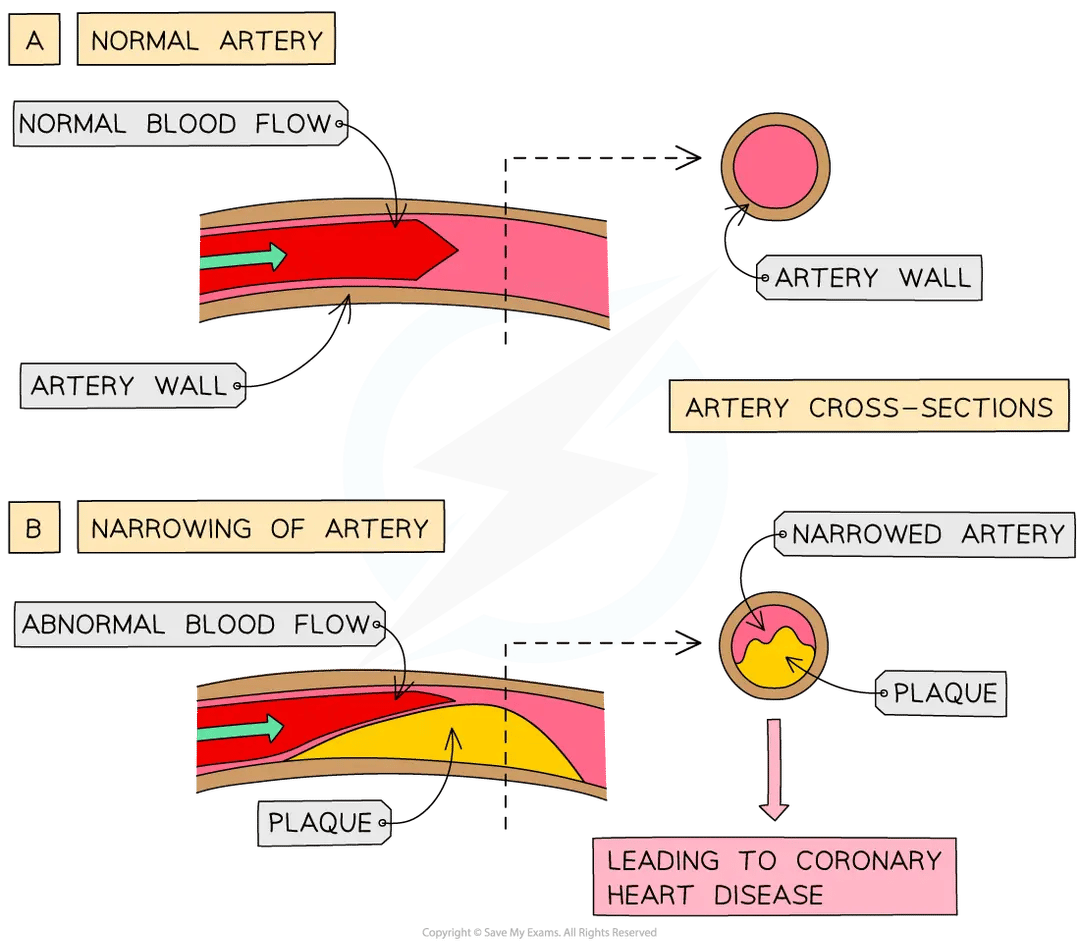
In coronary heart disease (CHD) layers of fatty material build up inside the coronary arteries
If a coronary artery becomes partially or completely blocked by these fatty deposits, blood flow is reduced
The fatty deposits form a structure known as a plaque
This results in a lack of oxygen for the heart muscle, reducing aerobic respiration
Cells will have less energy and the heart may be unable to beat effectively
CHD is a non-communicable disease: it is not caused by a pathogen, so it cannot be passed from one person to another
Treating coronary heart disease
Treatment of CHD involves either:
increasing the width of the lumen of the coronary arteries using a stent
prescribing statins to lower blood cholesterol
Treating CHD: Stents
Stents can be used to keep the coronary arteries open
A narrow tube is threaded up through the groin up to the blocked vessel
A tiny balloon is then inflated
The balloon pushes the metal or plastic stent against the wall of the artery, increasing the width of the lumen
The balloon and tube are then removed
Stents are very effective at reducing the risk of a heart attack as they widen the lumen to increase blood flow to the coronary arteries, and the procedure is relatively simple
Stents also last a long time, which is a positive, however, there is a risk of blood clots (thrombosis) occurring
Advantages of stents | Disadvantages of stents |
|---|---|
Effective at reducing the risk of a heart attack as they widen the lumen and increase blood flow Last a long time Simple, minor surgery to insert a stent | Risk of blood clots occurring Risk of infection during surgery Risk of damage to the blood vessel during surgery |
How stents are inserted

Treating CHD: Statins
Statins are drugs that are widely used to reduce the levels of cholesterol in the blood
This slows down the rate of fatty material deposit in the coronary arteries (statins do not remove fatty deposits that are already there), reducing the risk of CHD occurring
Advantages of statins | Disadvantages of statins |
|---|---|
Reduce the levels of harmful cholesterol in the blood which reduces the risk of fatty deposits building up | Need to be taken regularly and long-term to remain effective Take some time to have an effect Side effects of statins include muscle and joint pain, kidney problems and neurological issues |
Faulty heart valves
The heart valves play a vital role in ensuring blood is pumped from the ventricles to the arteries, in one direction only
In some people, heart valves may become faulty as a result of illness, old age or a heart attack
Valves can stiffen which can prevent them from opening fully to let blood flow through
This reduces the volume of blood pumped by the heart
Sometimes a faulty heart valve might develop a leak
This allows blood to flow from the ventricles back into the atria or the arteries back into the ventricles
Both issues reduce the effectiveness of the heart in pumping oxygenated blood around the body, so less oxygen reaches the muscles; less aerobic respiration takes place, so less energy is released for muscle contraction. The person becomes breathless and tired, especially during exercise (more anaerobic respiration means lactic acid builds up, causing muscle fatigue)
Faulty heart valves can be replaced via surgery using:
biological valves from cows or pigs
mechanical valves
Valve replacement type | Advantages | Disadvantages |
|---|---|---|
Biological valve | Highly effective Less likely to leak No need to take anti-clotting medication | Need to be replaced after 12 - 15 years Risk of immune rejection |
Mechanical valve | Long-lasting Less need to replace | Can increase the likelihood of blood clots Lifelong need to take anticoagulant (anti-blood clotting) medication |
Examiner Tips and Tricks
You may be asked to evaluate different methods of treatment for CHD and faulty valves.
You should carefully consider the benefits and risks associated with each type of treatment when doing this.
Heart transplants
In the case of heart failure a heart can be transplanted from a donor who has recently died
Waiting lists for organ transplants are often long, so an immediate solution can involve replacing the heart with an artificial heart made from plastic and metal
Artificial hearts may be used to:
keep patients alive while waiting for a heart transplant
allow the heart to rest as an aid to recovery
Advantages of artificial hearts | Disadvantages of artificial hearts |
Shorter waiting times Less chance of the patient's immune system rejecting it | Do not work as well as real hearts Increased risk of blood clots, leading to increased risk of stroke |
Examiner Tips and Tricks
You should be able to evaluate the advantages and disadvantages of treating cardiovascular diseases with drugs, mechanical devices or transplants.
Issues to think about include:
the risk of surgical procedures vs. the benefits of a successful outcome
the ease of access to the treatment
the potential side effects/long-term impacts

Unlock more, it's free!
Join the 100,000+ Students that ❤️ Save My Exams
the (exam) results speak for themselves:

Was this revision note helpful?
Build on this topic