How Materials are Cycled (AQA GCSE Biology): Revision Note
Exam code: 8461

Recycling in an ecosystem
Many different materials cycle through the abiotic and biotic components of an ecosystem
E.g. carbon is cycled from the atmosphere, to the living tissues of organisms, and back again (see below)
Cycling of materials is essential to ensure that:
molecules are not permanently locked up in a particular location, making them inaccessible for other organisms
organisms can gain the new molecules that they need to build new tissues during growth
Carbon cycle
Elements need to be recycled in order to allow new organisms to be made and grow
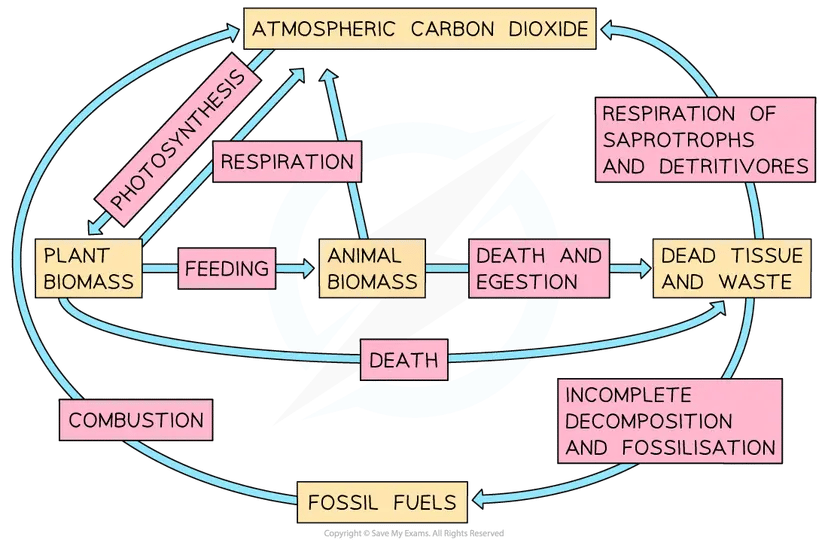
Carbon is cycled as follows:
Carbon dioxide (CO₂) is removed from the atmosphere by producers during photosynthesis
The carbon is used to make carbon compounds within the bodies of producers
Carbon is passed on to consumers when they feed
CO₂ is released during respiration by plants and animals and microorganisms
When organisms die, microorganisms release CO₂ during decomposition
If animals and plants die in conditions where decomposing microorganisms are not present, the carbon in their bodies may be converted into fossil fuels; CO₂ can be released during combustion of these fuels
Examiner Tips and Tricks
Remember that carbon is not released into the soil during decomposition; it is released into the atmosphere during the respiration of decomposers.
Water cycle
The water cycle provides fresh water for plants and animals on land before draining into the seas
Water is continuously evaporated and precipitated
Water molecules move between bodies of water—such as rivers and oceans—and the atmosphere via multiple stages
Stages of the water cycle
Water enters the atmosphere as water vapour
Energy from the Sun heats the Earth’s surface, and water evaporates from oceans, rivers and lakes
Transpiration from plants releases water vapour into the air
The warmer air of the lower atmosphere rises, taking the water vapour with it
The moist air cools down as it rises
Water vapour condenses back into liquid water, forming clouds
Water returns to Earth in the form of precipitation:
As the water droplets in the cloud get bigger and heavier, they begin to fall as rain, snow and sleet
This is called precipitation

Role of microorganisms
Microorganisms play a vital role in cycling material through an ecosystem; they return carbon to the atmosphere as carbon dioxide and mineral ions to the soil
When living organisms produce waste products or organisms die, the waste products and dead organisms are broken down by microorganisms known as decomposers: the decomposers release enzymes that digest the large molecules in the dead material into small soluble molecules, which they absorb
Bacteria and fungi are the main groups of decomposers
Decomposition (also known as decay) is the process by which waste products or dead organisms are broken down and the materials they contain (such as carbon and mineral ions such as iron, magnesium and nitrates) are returned to the environment
When decomposing microorganisms respire, carbon is returned to the atmosphere in the form of carbon dioxide

Unlock more, it's free!
Join the 100,000+ Students that ❤️ Save My Exams
the (exam) results speak for themselves:

Was this revision note helpful?
Build on this topic