Resistant Bacteria (AQA GCSE Biology): Revision Note
Exam code: 8461

Mutations & bacterial evolution
The theory of evolution by natural selection is now widely accepted and many sources of data are now available to support the theory of evolution
The theory of evolution by natural selection is now widely accepted and many sources of data are now available to support the theory of evolution
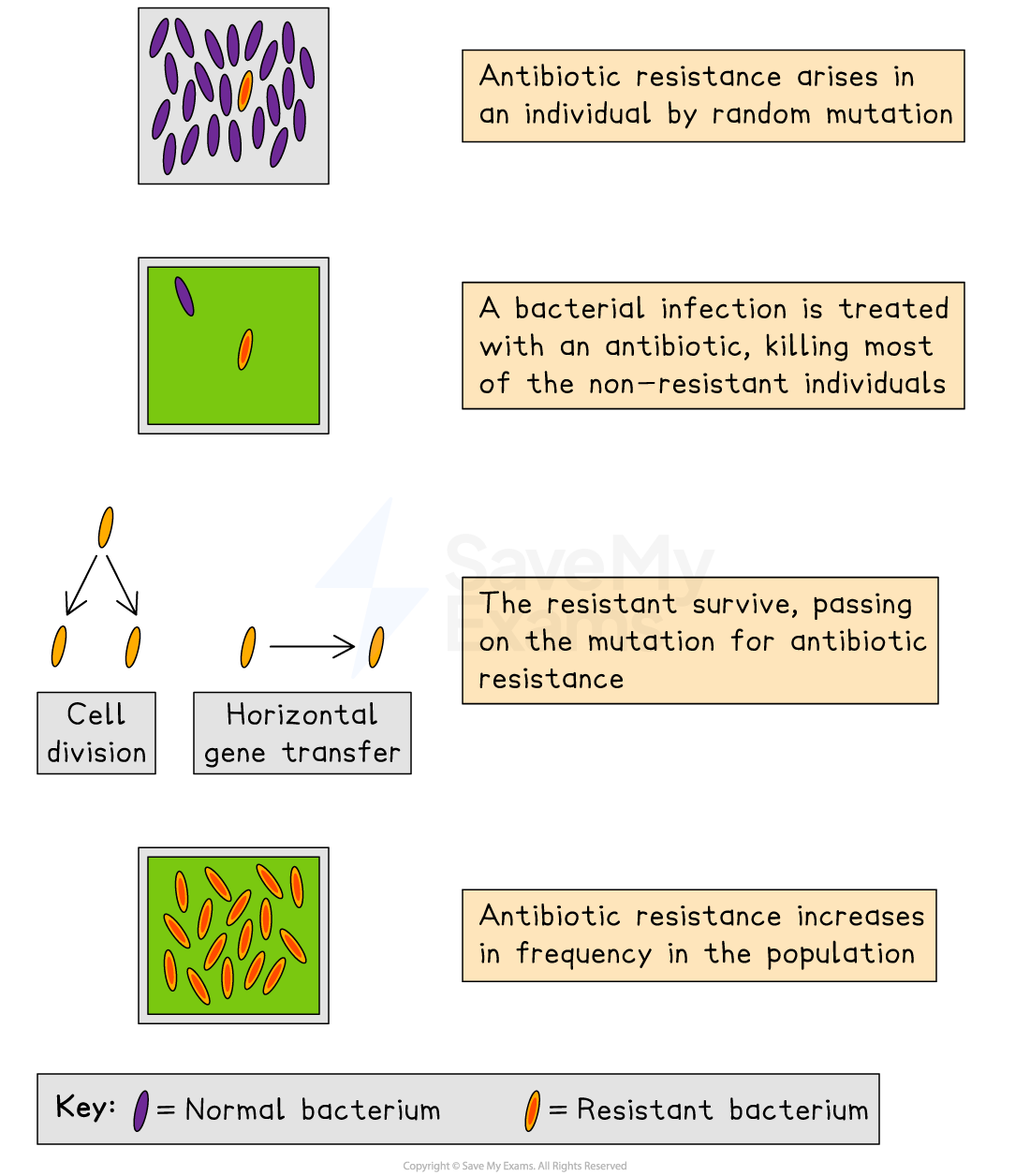
One very clear piece of evidence for evolution is antibiotic resistance in bacteria; this can develop by natural selection as follows:
Within a bacterial population there is variation caused by mutations
A chance mutation might cause some bacteria to become resistant to an antibiotic (e.g. penicillin)
When the population is treated with this antibiotic, the resistant bacteria do not die
This means they can continue to reproduce with less competition from non-resistant bacteria, which are now dead
Therefore the genes for antibiotic resistance are passed on with a much greater frequency to the next generation
Over time the whole population of bacteria becomes antibiotic-resistant and is known as an antibiotic resistant strain
Bacteria can evolve rapidly because they reproduce at a fast rate
Resistant strains of bacteria can spread easily because:
routine antibiotic treatment is ineffective
people are not immune to it
MRSA
An example of an antibiotic resistant strain of bacteria is MRSA
MRSA = methicillin resistant staphylococcus aureus
If someone gets infected with MRSA they cannot be treated easily and the bacteria are resistant to standard antibiotic treatments
To slow the development of antibiotic-resistant strains like MRSA:
doctors should avoid unnecessary prescriptions, such as for viral or mild infections
patients must complete their antibiotic course to ensure all bacteria are eliminated, preventing resistant mutations
antibiotic use in agriculture should be limited to reduce resistance spread
Developing antibiotics
The current increase in antibiotic resistance is encouraging drug companies to develop new antibiotics that are effective against resistant strains
However, the number of new antibiotics discovered has slowed significantly and developing new antibiotics is a very costly process
Some scientists are worried that the demand for new antibiotics may not be met, as more and more antibiotic-resistant strains evolve

Unlock more, it's free!
Join the 100,000+ Students that ❤️ Save My Exams
the (exam) results speak for themselves:

Was this revision note helpful?
Build on this topic