Plant Organ System (AQA GCSE Biology): Revision Note
Exam code: 8461

Transport in plants
The roots, stems and leaves are plant organs that together form an organ system for the transport of substances around the plant
These organs are made up of specialised tissues and cells, which are adapted to carry out this transport function
Tissues: xylem and phloem
Cells: root hair cells
Transport tissues
Plants contain two types of transport tissue:
xylem (pronounced: zy-lem)
phloem (pronounced: flow-em)
Xylem
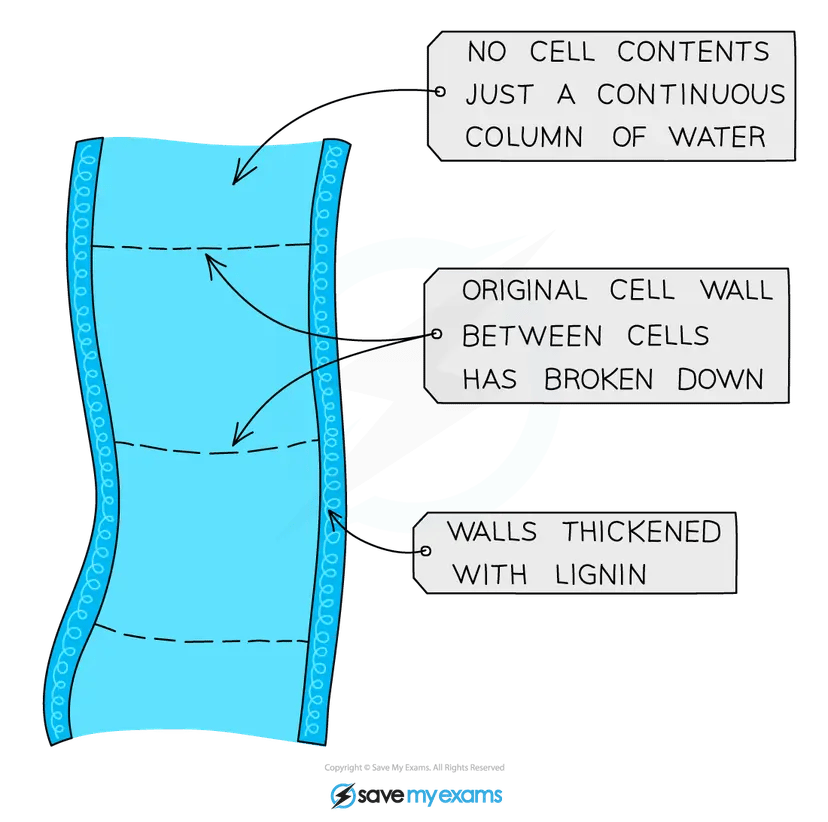
Xylem vessels transport water and mineral ions from the roots to the stem and leaves
This continuous upward movement of water from the roots to the leaves, via the xylem, is known as the transpiration stream
Features that aid xylem transport include:
hollow cells: the lack of internal structures allows the continuous flow of water
absence of end walls: this also aids continuous flow
cell walls strengthened by lignin: this prevents the vessels from collapsing under pressure
Phloem
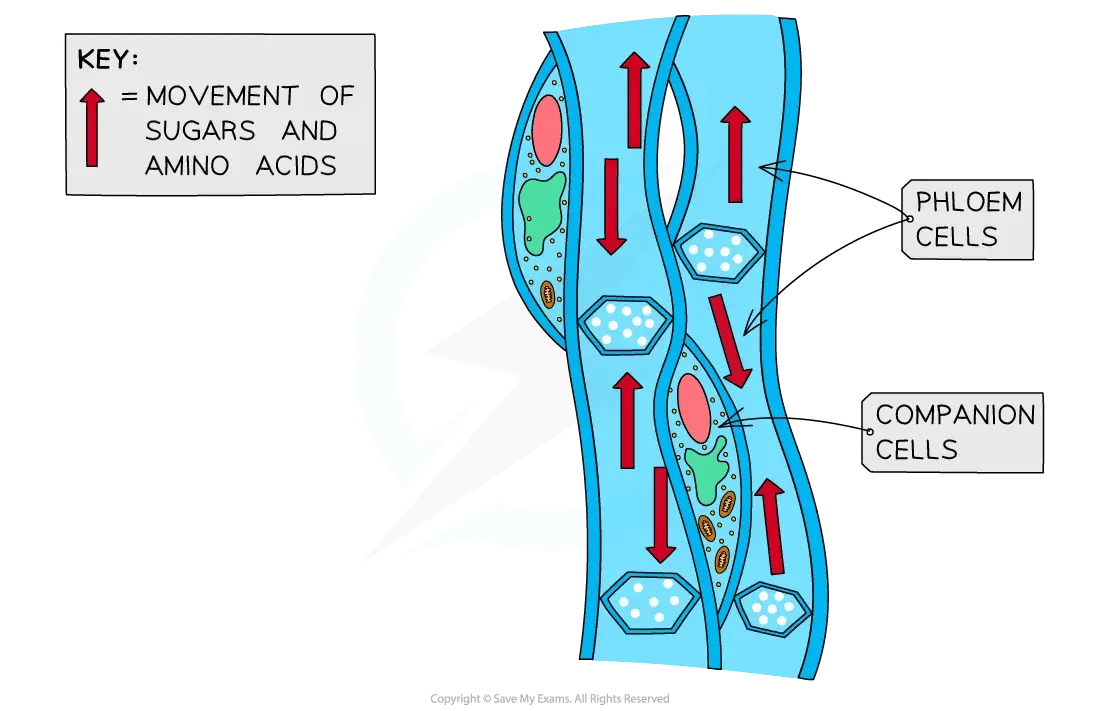
Phloem vessels transport dissolved sugars (and amino acids) either upwards or downwards
The direction depends on whether sugars are being produced by photosynthesis or released from storage organs
Features that aid phloem transport include:
pores in the end walls: this allows movements of substances between phloem cells
reduced cell contents: a lack of organelles and reduced volume of cytoplasm provides more space for transport
Examiner Tips and Tricks
It can be difficult to remember which transport tissue transports which substances. Remember that:
xylem transports water
X is next to W in the alphabet
phloem transports food (in the form of dissolved sugars)
Both phloem and food begin with an 'f' sound
Note: don't use the term 'food' in an exam; instead refer to the transport of dissolved sugars / sucrose
Root hair cells
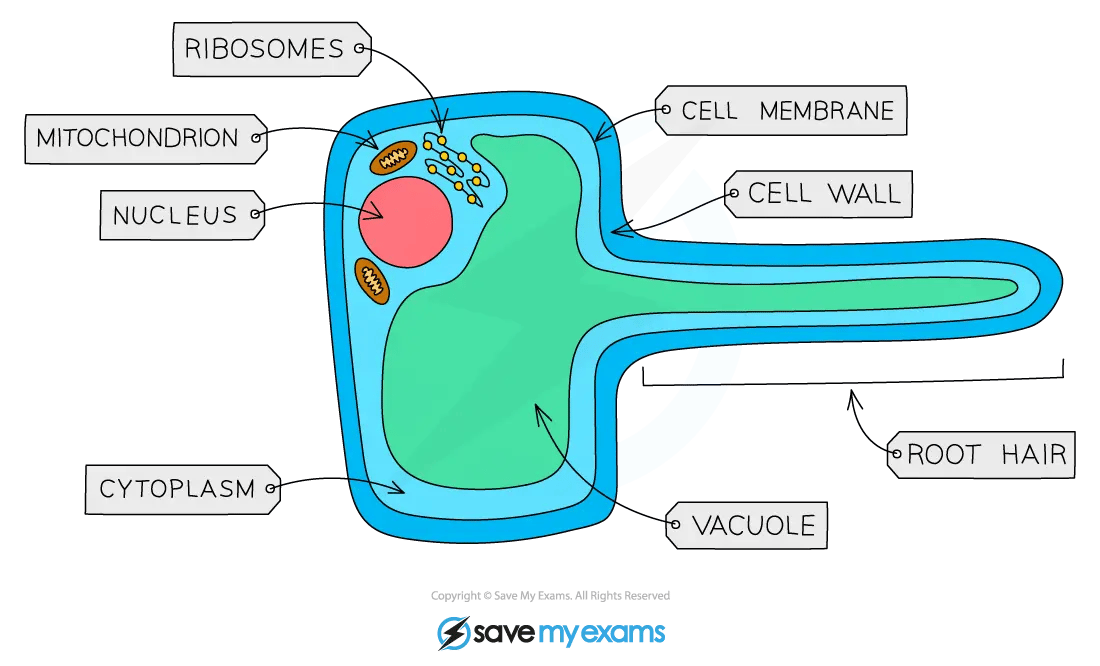
Root hair cells are adapted for the efficient uptake of water and mineral ions from the soil
Water is taken up by osmosis
Mineral ions, e.g. nitrates, are absorbed by active transport, from a low concentration in the soil to a higher concentration in the cell (against the concentration gradient), using energy from respiration
Features that aid this process include:
hair-like extensions: this increases the surface area of cells for absorption
many mitochondria: these release energy for the active transport of mineral ions
large vacuole: sugars are stored here, generating a high solute concentration inside the cell; this maintains the concentration gradient for osmosis
Examiner Tips and Tricks
You should always say that mitochondria release energy, never that they 'make' or 'produce' energy.

Unlock more, it's free!
Join the 100,000+ Students that ❤️ Save My Exams
the (exam) results speak for themselves:

Was this revision note helpful?
Build on this topic