Resolution - GCSE Biology Definition
Reviewed by: Dr Natalie Lawrence
Last updated
Key Takeaways
Resolution is the ability to distinguish between two separate points or objects that are close together
A microscope can have high magnification but poor resolution, producing an enlarged yet blurry image
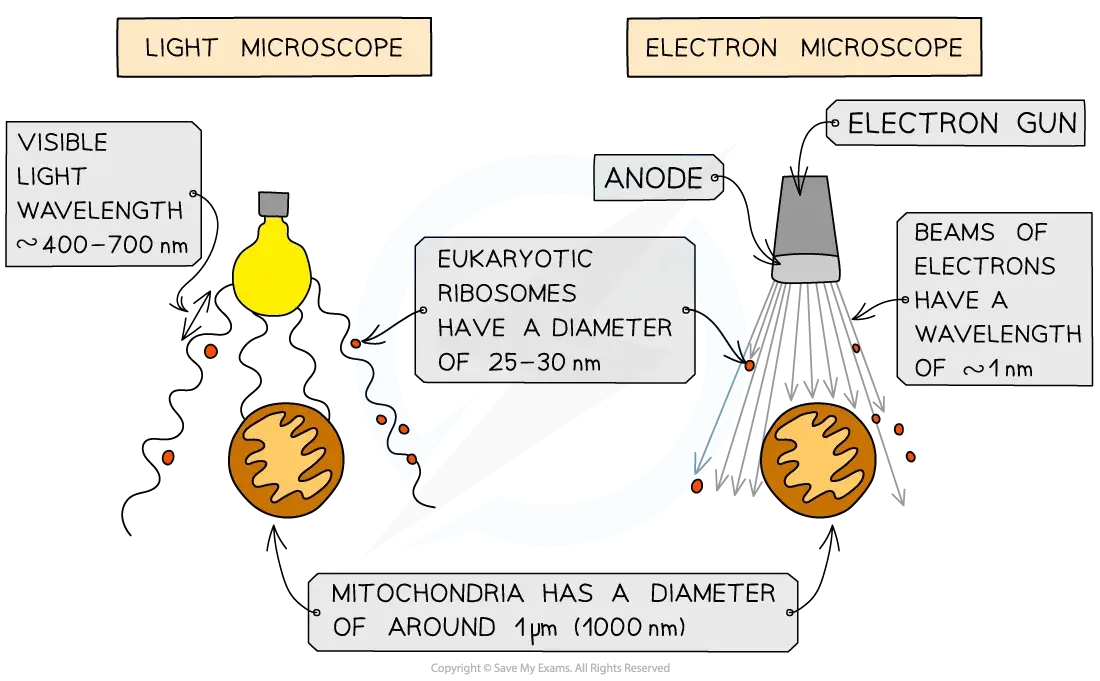
Light microscopes have a resolution limit of around 200 nm, while electron microscopes can resolve down to 0.1 nm
Shorter wavelengths of radiation produce higher resolution, which is why electron microscopes outperform light microscopes
Resolution matters across both biology (studying cells and organelles) and physics (optical instruments and imaging)
Resolution Definition
Resolution describes how well an instrument can distinguish two points that sit very close together. If two dots merge into one blob, the instrument's resolution isn't fine enough to tell them apart. Imagine zooming in on a photograph taken with a low-quality camera: zoom in far enough and the image becomes pixelated. That blur isn't a problem with size. It's a problem with resolution.
Scientists rely on higher resolution to observe structures that the naked eye can't distinguish. Without sufficient resolution, increasing the size of an image just makes it bigger, not clearer.
What Is Resolution in Biology?
In biology, resolution usually refers to the smallest distance between two structures in a specimen where they can still be seen as separate objects under a microscope. Cell biologists need high resolution to study organelles like mitochondria, ribosomes, and the endoplasmic reticulum. These structures sit within micrometres or even nanometres of each other.
A light microscope can distinguish objects roughly 200 nm apart. That's enough to see most cells and some larger organelles, but smaller structures blend together. Electron microscopes push this limit much further, allowing biologists to observe individual protein complexes and membrane layers.
What Is Resolution in Physics?
In physics, resolution refers to the resolving power of optical instruments such as lenses, telescopes, and cameras. The diffraction limit sets a hard boundary on what any instrument can resolve: when light passes through an aperture, it spreads out slightly, and two very close light sources start to overlap. You can find out more about the diffraction limit in our notes on the resolving power of telescopes.
Difference Between Magnification and Resolution
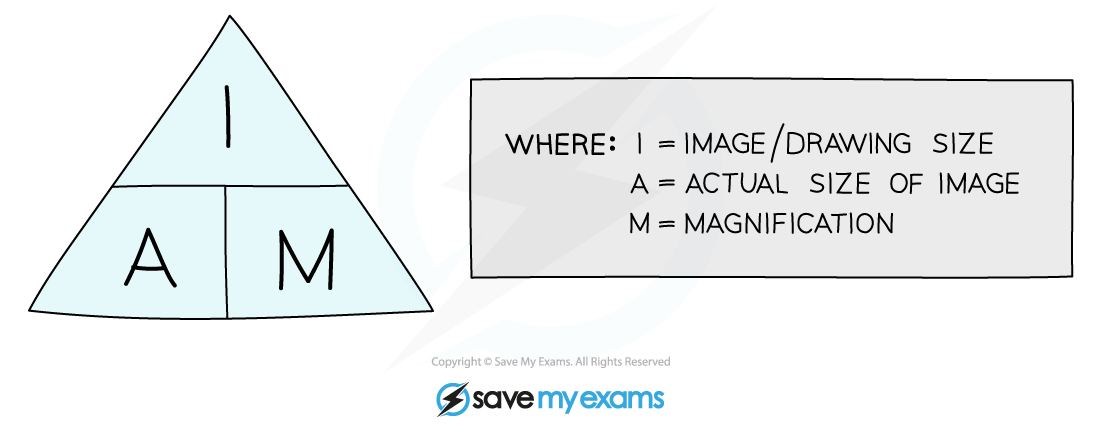
Magnification and resolution are related but do very different jobs. Magnification controls how large an image appears. Resolution controls how much detail you can actually see.
Magnification | Resolution | |
|---|---|---|
What it does | Makes the image bigger | Reveals finer detail |
Can increase without limit? | Yes, but detail is lost beyond the resolution limit | No, set by wavelength and lens properties |
Analogy | Zooming into a photograph | The sharpness of the original photograph |
Here's a practical way to picture it. Stretch a low-resolution photo across a large monitor and it looks pixelated. The image is magnified, but no new detail appears. That's "empty magnification", and microscopes hit the same wall. Once you've passed the resolution limit, cranking up magnification doesn’t help you see anything better.
Factors That Affect Resolution
Three main factors determine an instrument's resolution.
Wavelength of radiation. Shorter wavelengths resolve finer detail. Visible light has wavelengths between 400 and 700 nm, which caps the resolution of light microscopes at around 200 nm. Electron beams, which have much shorter effective wavelengths than visible light, achieve far better resolution. Since wavelength and frequency are inversely related, the higher the frequency, the better the resolution, too.
“I give my students a rough rule of thumb to help remember resolving capacities of different kinds of microscope: you can only resolve objects that are separated by roughly half a wavelength of the radiation you’re using. No smaller.”
– Natalie Lawrence, Biology Tutor.
Aperture. The aperture determines how much light a lens can gather. A larger aperture means the lens collects light from a wider angle, improving resolution.
Quality of the optical system. Lens defects, vibrations, and poor sample preparation all degrade resolution in practice. Even a theoretically powerful microscope won't perform well if the optics are misaligned or the specimen is poorly stained.
Types of Microscopes and Their Resolution
Microscope Type | Typical Resolution | How It Works |
|---|---|---|
Light microscope | ~200 nm | Uses visible light focused through glass lenses |
Transmission electron microscope (TEM) | ~0.1 nm | Fires an electron beam through an ultra-thin specimen |
Scanning electron microscope (SEM) | ~1–10 nm | Scans an electron beam across the surface of a specimen |
Light microscopes suit most classroom biology. You can observe cells, tissues, and larger organelles, and specimens can remain alive during observation.
TEMs offer the finest resolution and reveal internal cell ultrastructure, but specimens must be dead, ultra-thin, and housed in a vacuum. SEMs produce detailed 3D surface images at slightly lower resolution than TEMs, and they're widely used in materials science and forensics.
If you're revising microscopy and resolution for your exams, Save My Exams offers detailed revision notes that walk through each microscope type with diagrams and examiner tips. Check out our AQA GCSE Microscopy revision notes, or find those tailored to your specification, to build on what you've learned here.
Frequently Asked Questions
Why does a higher magnification not always mean a clearer image?
Magnification only enlarges what the microscope can already resolve. Once you exceed the resolution limit, additional magnification stretches the same blurry data across a larger area. No new detail appears. This is why microscopists limit magnification to the resolving power of their instrument rather than simply turning it up.
What is the resolution limit of the human eye?
The human eye can resolve two points roughly 0.1 mm (100 µm) apart at a comfortable reading distance of about 25 cm. Anything smaller than this blurs together without optical aid. That's why microscopes exist: they bridge the gap between what our eyes can separate and what actually needs to be seen.
How do scientists improve the resolution of a microscope?
The most effective approach is to use a shorter wavelength of radiation. Switching from visible light to an electron beam dramatically improves resolution. Scientists also increase the numerical aperture by using oil immersion lenses. These replace the air gap with a medium that has a higher refractive index.which reduces refraction between the lens and the specimen. Super-resolution techniques like fluorescence microscopy now push beyond the classical diffraction limit, though these are specialist tools.
Can resolution be improved without changing the microscope?
To a degree, yes. Using immersion oil between the lens and the coverslip increases the numerical aperture and improves resolution. Better specimen preparation, such as thinner sections and appropriate staining, also helps. Reducing vibrations and ensuring correct alignment make a noticeable difference too. But there's a hard floor set by the wavelength of radiation the microscope uses, and no amount of adjustment can break past it.
Examiner-written GCSE Biology revision resources that improve your grades 2x
- Written by expert teachers and examiners
- Aligned to exam specifications
- Everything you need to know, and nothing you don’t

Was this glossary entry helpful?


Share this article
 written revision resources that improve your