Best AI Flashcard Makers for Students: Tested & Compared

Written by: Angela Yates
Reviewed by: Holly Barrow
Published
Contents
- 1. Key Takeaways
- 2. AI Flashcard Makers at a Glance
- 3. How We Tested
- 4. Top 3 AI Flashcard Makers for Students
- 5. Other AI Flashcard Makers Worth Considering
- 6. Already Know Your Exam Board?
- 7. How to Choose the Right AI Flashcard Maker for You
- 8. Our Verdict: The Best AI Flashcard Maker for Students
- 9. Frequently Asked Questions
- 10. Final Thoughts
If you're looking for the best AI flashcard maker for students, NotebookLM was the strongest option we tested. It generated accurate flashcards quickly, linked explanations directly back to the original source material, and offered the best balance of usability, accuracy, and value.
Not all AI flashcard makers are built equally. Some focus on revision games and gamification, while others provide AI tutors, study guides, or flashcard decks created by other users. The biggest challenge is knowing whether you're revising the right material for your course and exam board.
To help you choose, we tested seven popular AI flashcard makers using the same GCSE Biology revision materials. As teachers and educational content creators, we were interested not only in the quality of the flashcards but also whether the tools helped students focus on accurate, relevant content rather than wasting time or learning material they don't need for their exams.
Key Takeaways
Best overall AI flashcard maker: NotebookLM
Best for understanding difficult concepts: Gizmo AI
Best for active recall and revision games: Quizlet
Best free option: Anki (with Ankify)
Best for combining notes and flashcards: RemNote
AI Flashcard Makers at a Glance
Tool | Best For | Free Version | Our Verdict |
|---|---|---|---|
NotebookLM | Source-based study and revision | Yes | Best overall |
Gizmo AI | Understanding concepts | Yes | Best AI tutor |
Quizlet | Active recall and revision games | Yes | Best for retrieval practice |
RemNote | Notes and flashcards | Yes | Best for serious learners |
Anki | Long-term spaced repetition | Yes | Best free option |
StudyGlen | Multiple study formats | Yes | Good all-rounder |
Revisely | Customisable flashcards | Limited | Easy to use, but weaker AI support |
How We Tested
Rather than relying on marketing claims or feature lists, we tested each tool using the same Save My Exams GCSE AQA Biology revision notes on photosynthesis.
For every platform, we:
Uploaded the same revision materials where possible
Generated AI flashcards
Reviewed the quality and accuracy of the flashcards produced
Tested study and revision features
Assessed ease of use and onboarding
Compared free and paid options where available
Recorded screenshots and noted down observations throughout testing
Our goal was simple: to identify which tools actually help students turn revision materials into useful flashcards.
Top 3 AI Flashcard Makers for Students
NotebookLM
A powerful AI study tool that generated the best flashcards from our test materials.
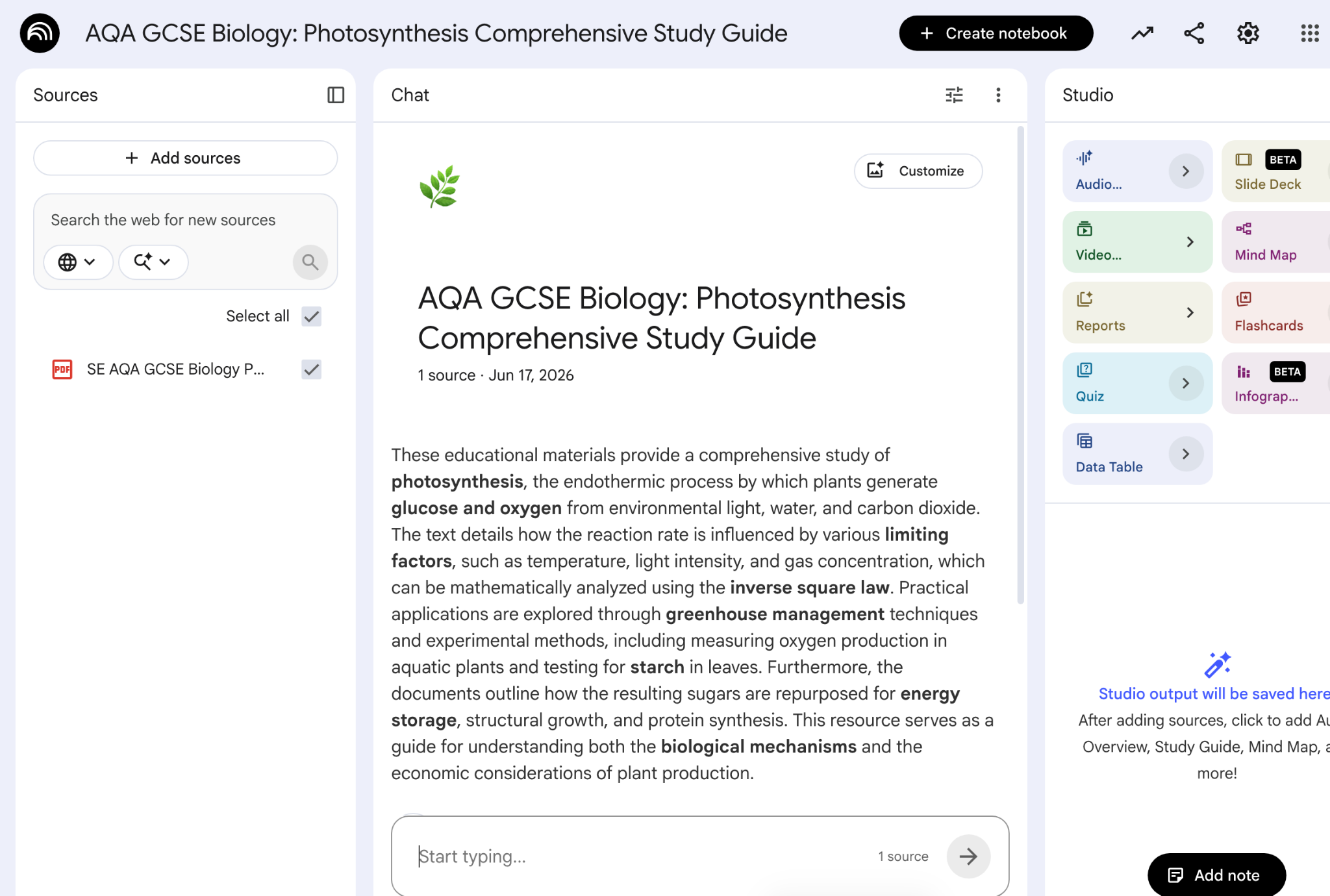
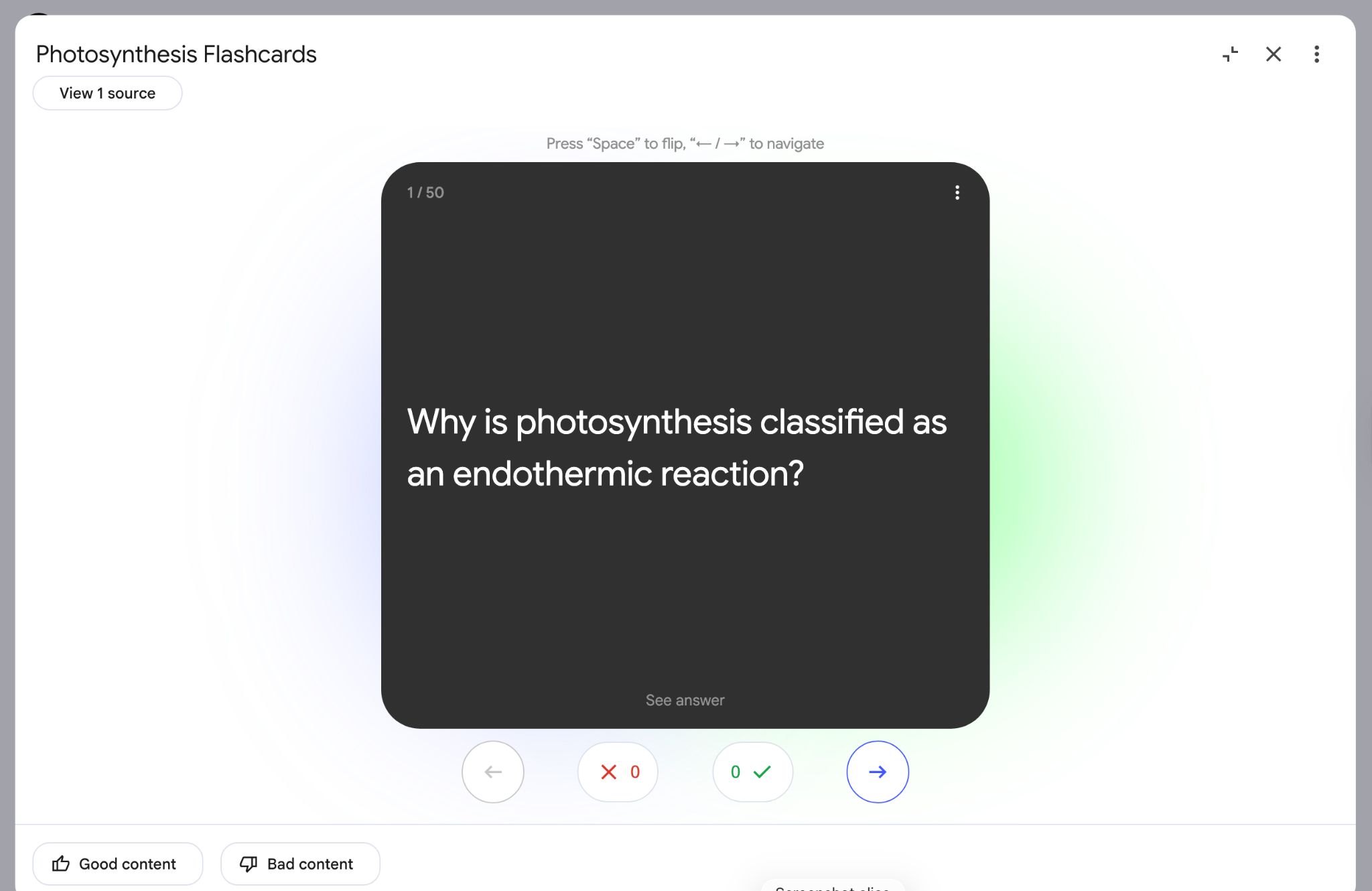
NotebookLM was the most impressive tool we tested overall. After uploading our GCSE Biology notes, it automatically generated an AI summary of the content before creating 50 flashcards in under a minute.
What makes NotebookLM different is its ability to keep everything connected to the original source material. When we clicked "Explain" on a flashcard, NotebookLM opened a chat window that expanded on the topic while linking directly back to the relevant section of our original uploaded notes.
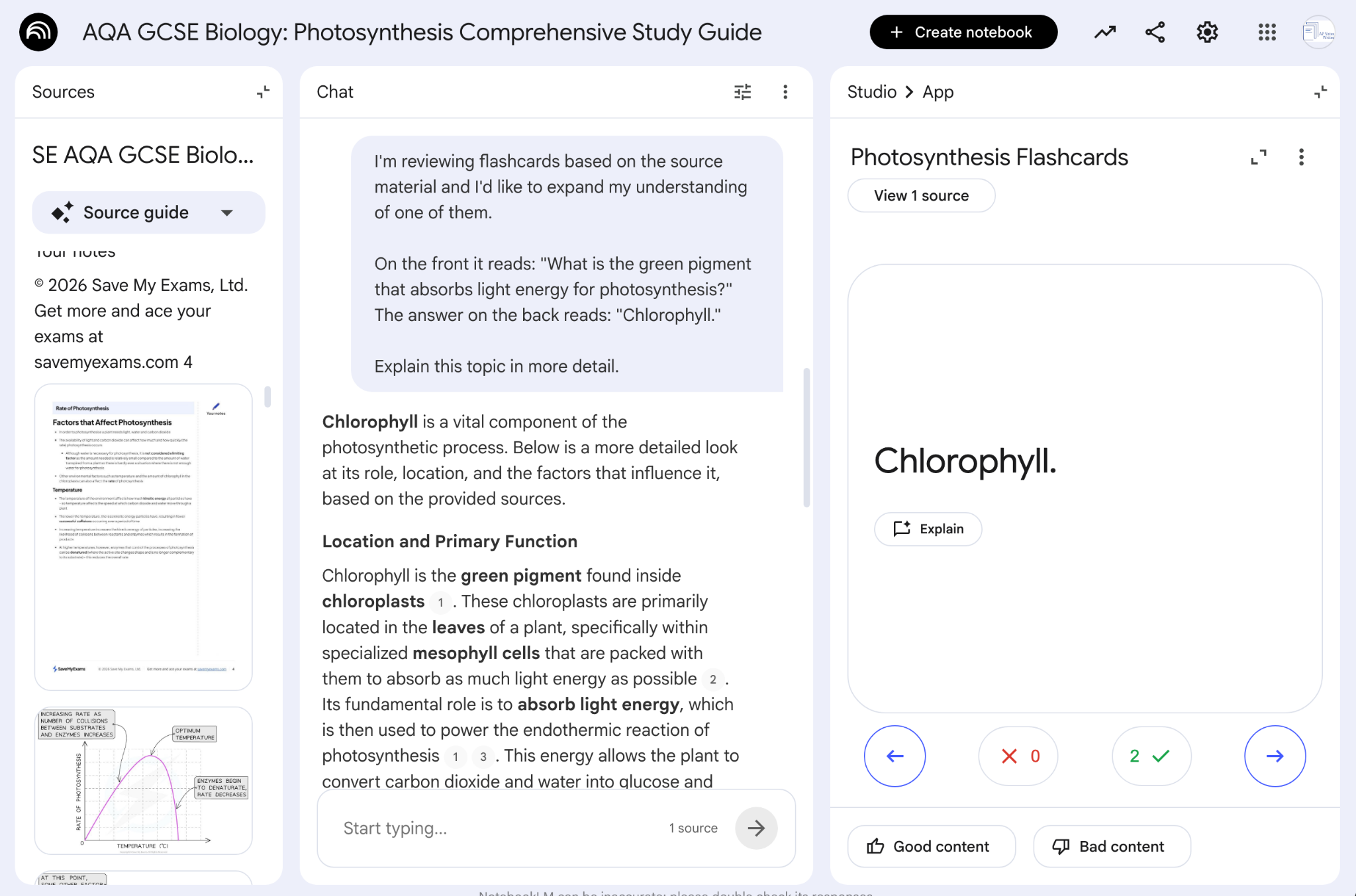
This makes it easy to move between revision notes, flashcards, AI explanations, and source material without leaving the workspace. What impressed us most was how seamlessly these features worked together. Rather than simply testing memory, NotebookLM helped us understand concepts and revisit the original material when needed.
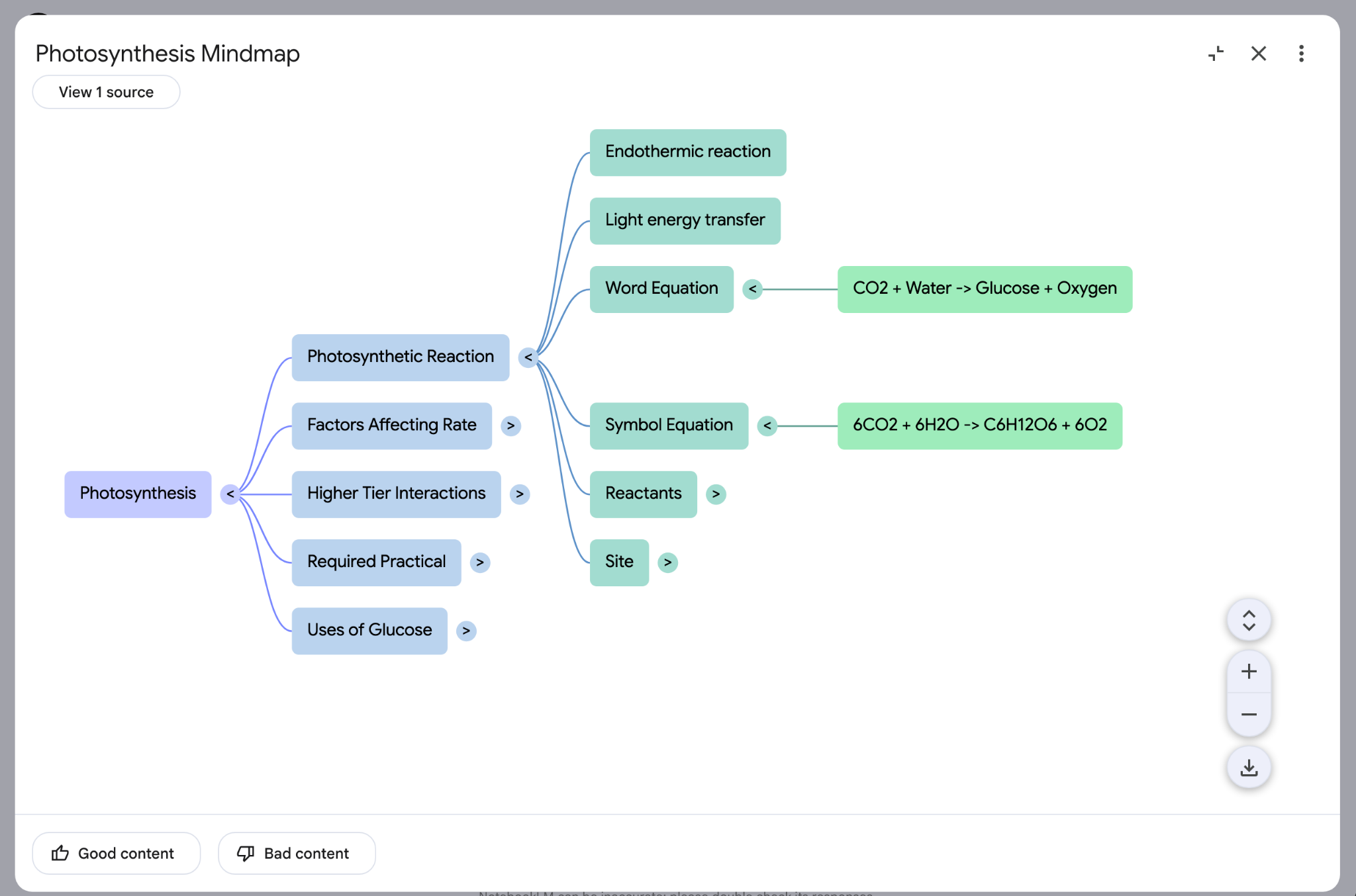
We also tested several additional study tools, including mind maps, which were generated quickly and accurately from the same notes.
Like all AI tools, NotebookLM warns that AI-generated responses can contain mistakes. However, because explanations are linked back to the source material, it was much easier to verify information than on many competing platforms.
Standout features
Fast flashcard generation
Links explanations back to original notes
Strong source grounding
Useful additional study tools, including mind maps
Free to use
Limitations
Less gamified than some competitors
No built-in revision games
Pricing
Free to use for most students. Premium features and higher usage limits are available through Google AI subscriptions. At the time of writing, Google AI Plus was GBP £4.49 per month, Pro was £18.99 and Ultra was £79.99. Prices may vary and are only available in specific regions.
Best for
Students who want an AI-powered study assistant that can generate flashcards, explain concepts, and stay linked to their original revision materials.
Sample flashcard
Gizmo AI
An engaging AI study platform that helps students understand concepts as well as memorise them.
Gizmo impressed us from the moment we signed up. Within minutes, we were answering GCSE Biology questions based on AQA content, without needing to upload our own materials.
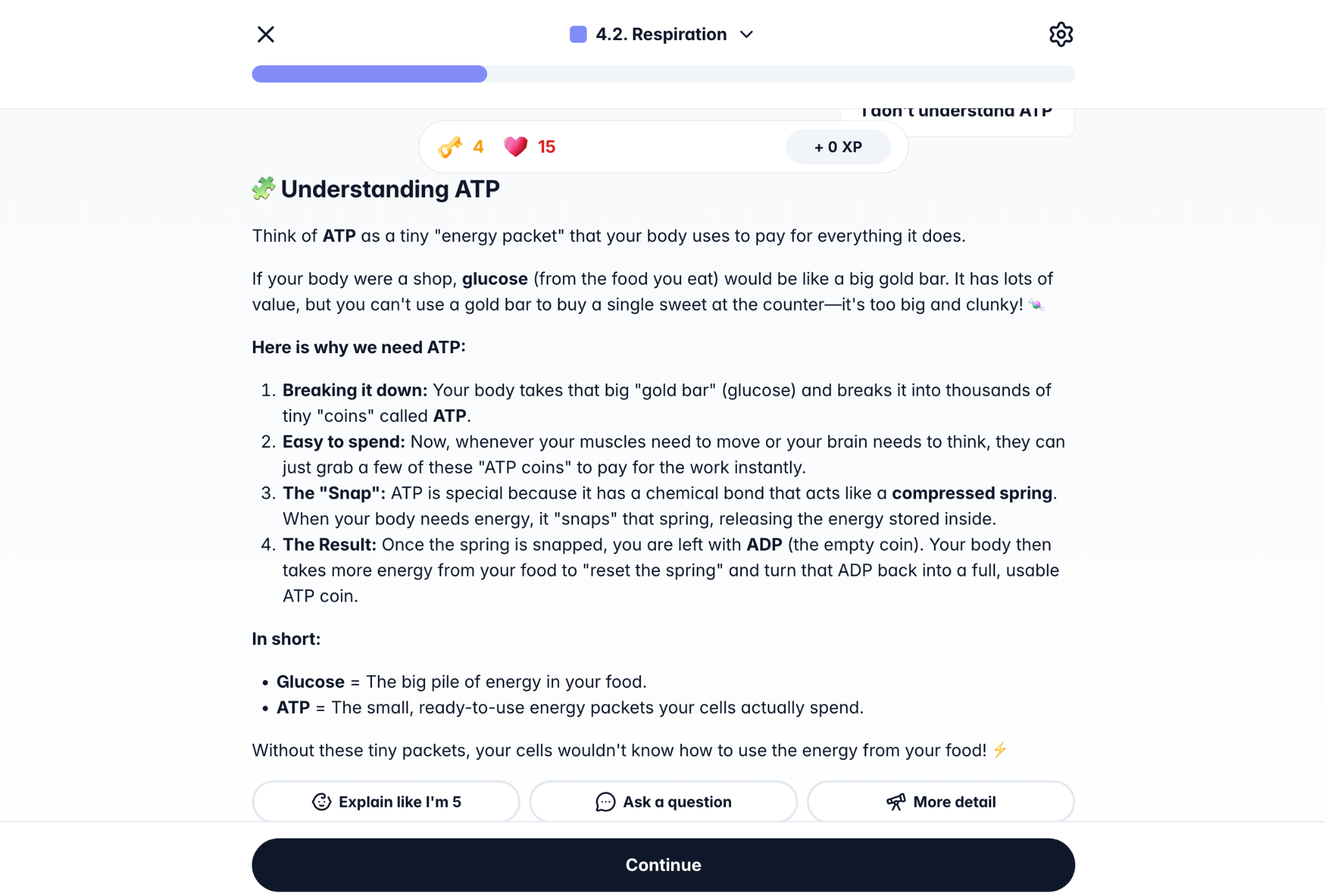
Unlike many flashcard tools, Gizmo focuses heavily on helping students understand concepts rather than simply testing recall. When we answered questions incorrectly, the platform offered several ways to explore the topic further, including:
Explain Like I'm 5
Ask a Question
More Detail
During testing, these explanations often presented the same concept in several different ways, making difficult topics easier to understand. One explanation even used a simple gold-bar-and-coins analogy to break down the concept of ATP. Meanwhile, the Ask a Question tool provided useful follow-up explanations when we wanted to explore a topic further.
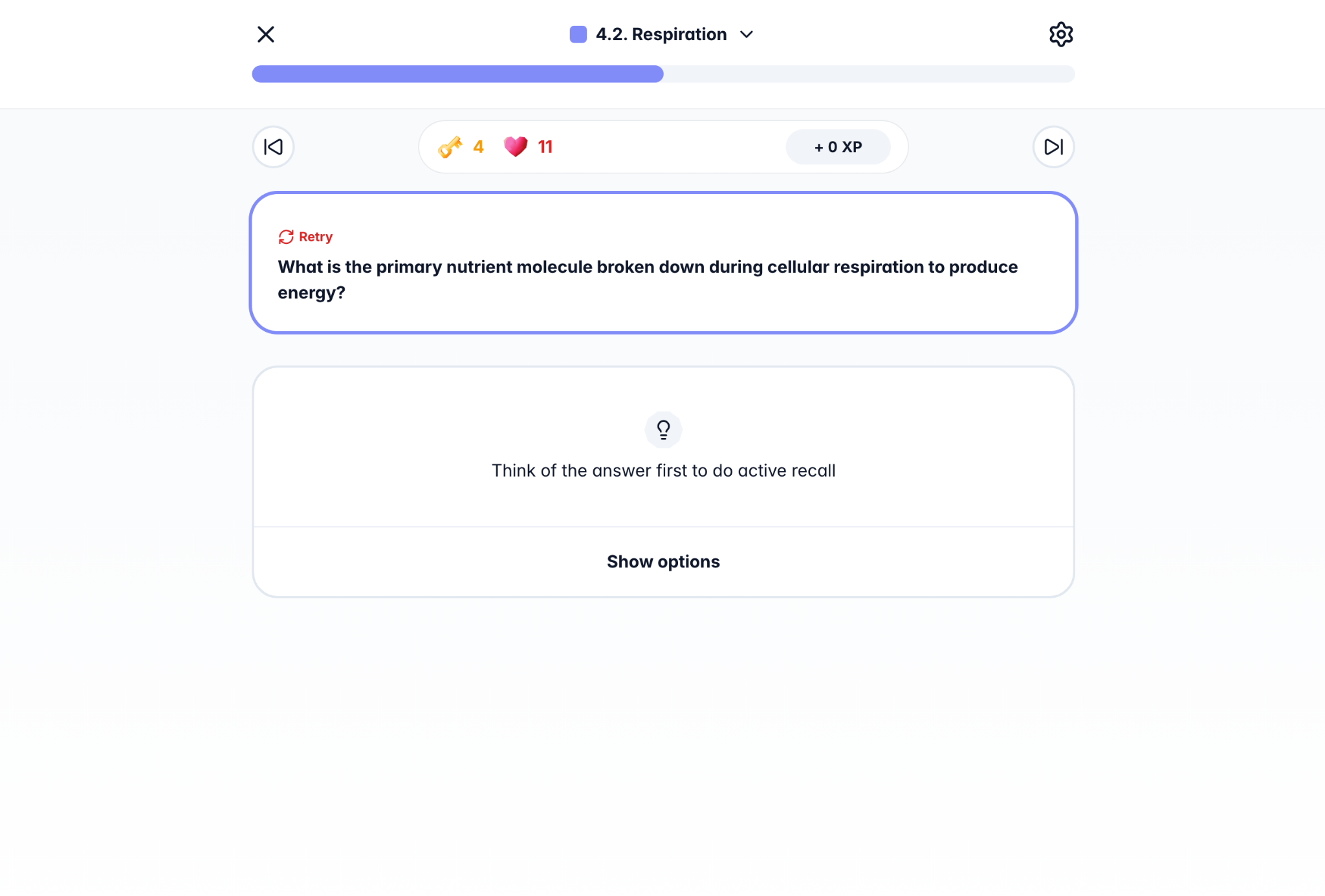
Gizmo also incorporates active recall into the learning process. Some multiple-choice questions encouraged us to think of an answer before revealing the options, reducing the temptation to guess.
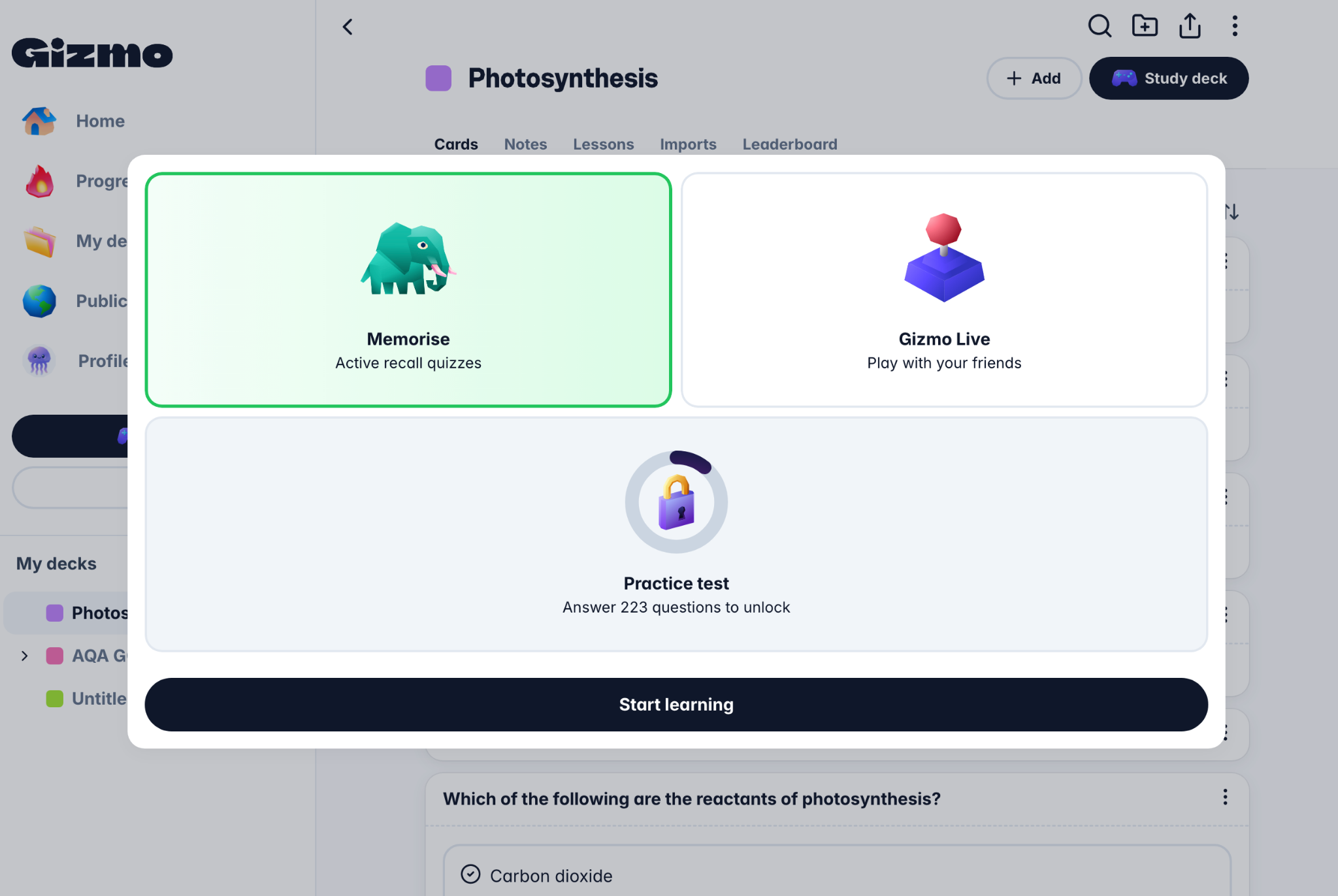
Flashcard generation was fast and accurate. After uploading our GCSE Biology notes, Gizmo generated a set of flashcards in under a minute. It also supports uploads from PDFs, PowerPoints, lecture recordings, YouTube videos, and even photos of handwritten notes.
The platform's strong gamification features help make revision more engaging. Students can build streaks, earn rewards, unlock new content, and compete with friends through Gizmo Live.
Standout features
Excellent AI explanations
Multiple explanation levels
Strong support for understanding difficult concepts
Built-in active recall techniques
Fast flashcard generation
Board-based study content
Limitations
Expensive compared with some competitors
Free version includes cooldown periods and usage limits
Some students may find the heavily gamified approach distracting
Pricing
A free version is available, although study sessions are limited by cooldown periods and usage caps. Paid plans remove these restrictions and unlock additional features, but Gizmo was one of the more expensive platforms we tested. At the time of writing, Gizmo Unlimited was GBP £155.22 per year. Make sure you check the ‘Student discount’ button to instantly reduce that cost to £77.22 per year. Last-minute plans are available for cramming, costing £4.99 per week.
Best for
Students who need help understanding difficult concepts as well as revising them.
Sample flashcard
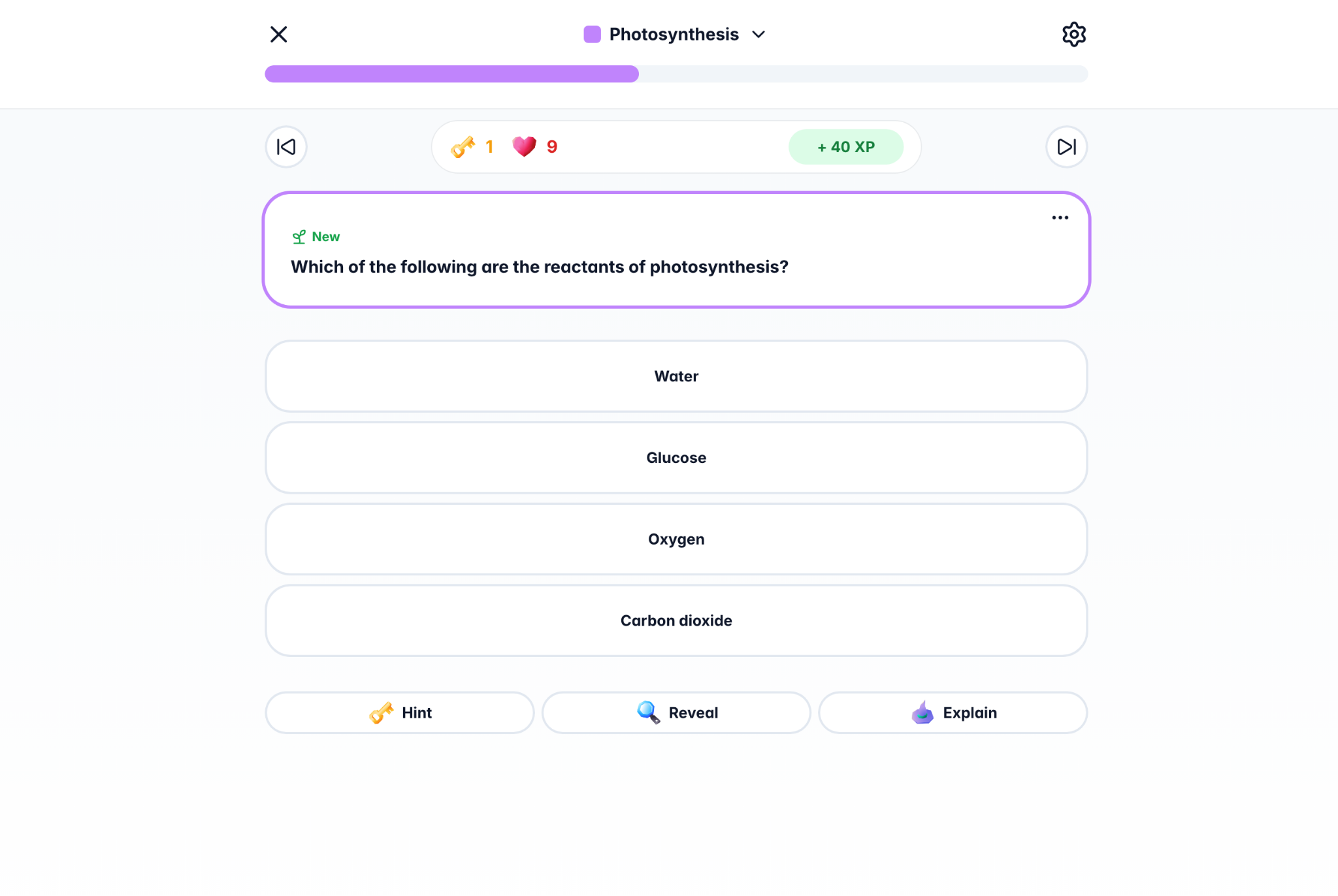
Quizlet
A feature-rich revision platform that offers some of the best study modes and revision games we tested.
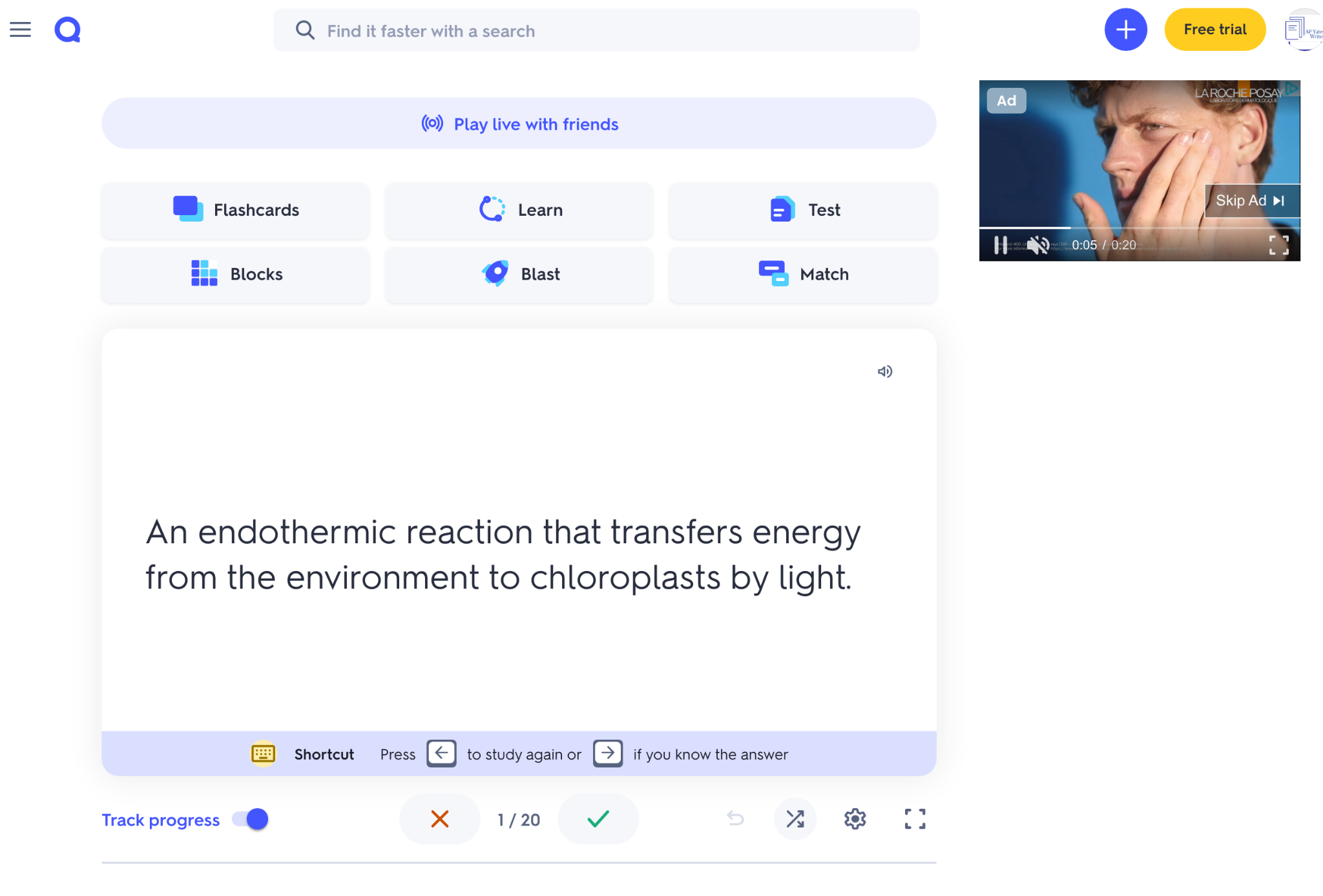
Quizlet generated accurate flashcards extremely quickly when we uploaded our GCSE Biology revision notes as a PDF. Interestingly, results were much better when we uploaded the PDF directly than when we pasted the same information into a text box. The PDF-generated flashcards were accurate and ready to use almost immediately.
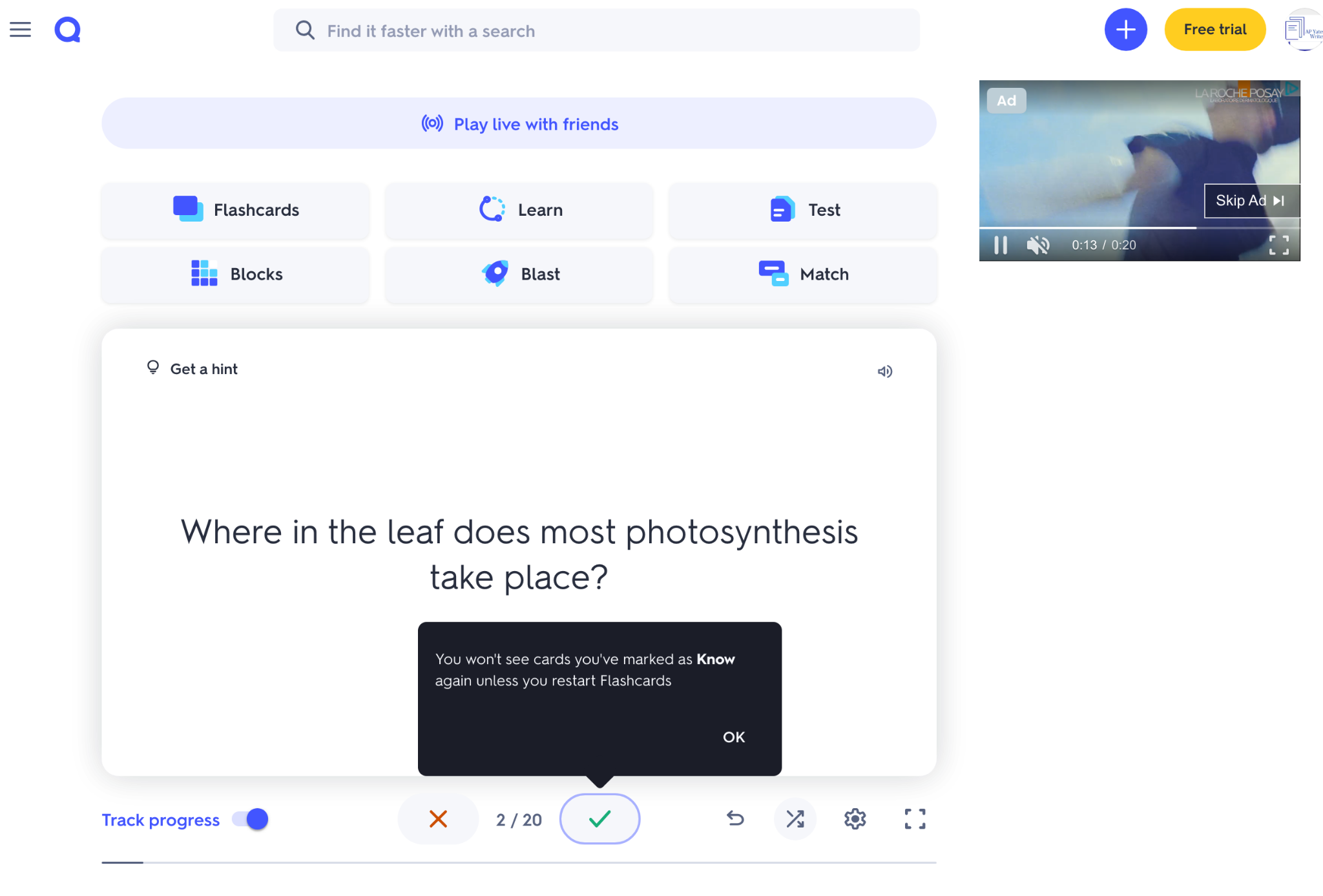
What makes Quizlet stand out is the number of ways you can study once your flashcards have been created. During testing, we were able to switch between traditional flashcards, Learn mode, tests, matching activities, multiple-choice questions, and written-answer questions without leaving the platform.
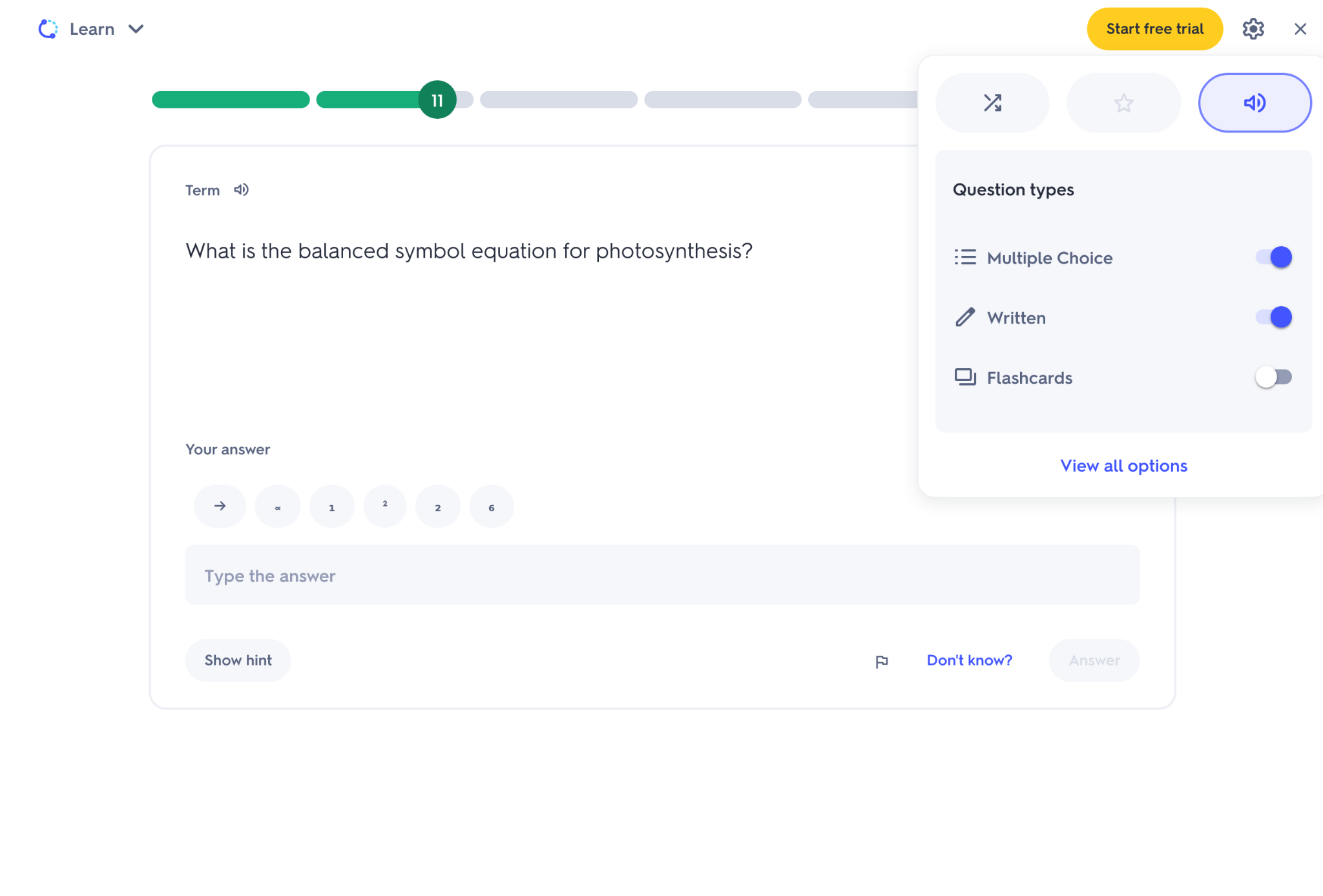
Quizlet also performed well as an active recall tool. We particularly liked the ability to create shorter, adjustable tests using different question formats. Some of the multiple-choice questions were quite easy to guess, but the variety of study modes helped keep revision engaging.
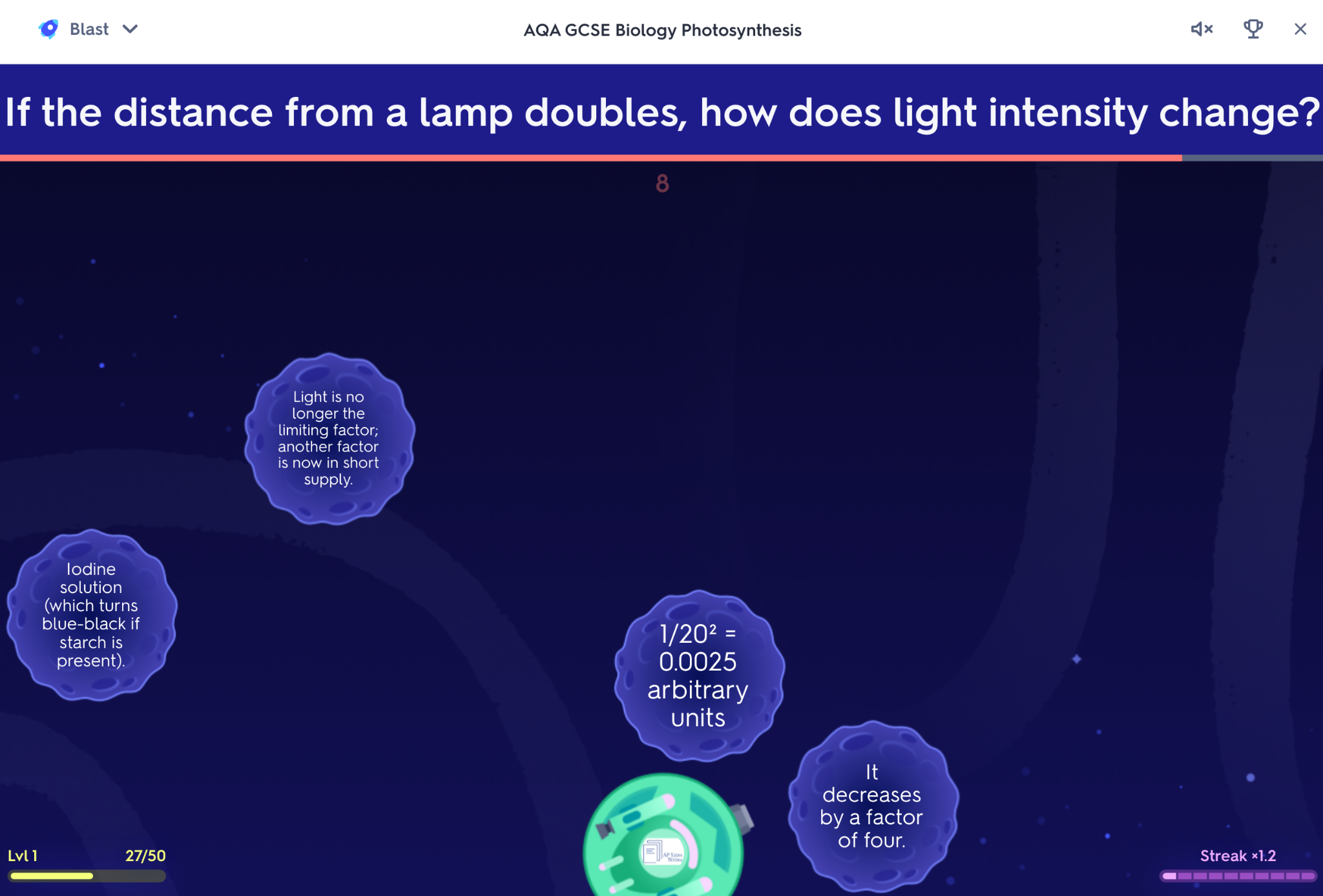
The platform's game-based activities were among the strongest we tested. Blast, a Space Invaders-style game in which students shoot the correct answer to build a streak, was particularly enjoyable and offered a fun alternative to traditional revision. There are also matching and puzzle-style games available.
After upgrading to a paid plan, we tested Quizlet's AI-generated Study Guides. These automatically created revision summaries, quick-reference notes, and discussion questions from our uploaded materials. The summaries were useful, and we liked the ability to edit and personalise them. However, the discussion questions were not exam-style questions, and some generated content used US English terminology despite the original source material being written in UK English.
We also explored the Textbook Solutions feature. While some explanations were useful, they were often broad rather than exam-board-specific. For GCSE students, particularly those already using resources aligned to a specification, these additional materials sometimes felt more distracting than helpful.
Overall, Quizlet's greatest strength is the sheer number of ways it allows students to revisit and test their knowledge once flashcards have been created.
Standout features
Excellent PDF flashcard generation
Wide range of study modes
Strong active recall tools
Engaging revision games
Useful AI-generated study guides
Limitations
Free version contains frequent adverts and upgrade prompts
Some quiz questions became unreliable during longer study sessions
Study guides and textbook solutions are not tailored to UK exam boards
US English terminology occasionally appeared in generated content
Pricing
A free version is available, although adverts and usage limits are noticeable during longer study sessions. Upgrade to Quizlet Plus for GBP £7.99 per month (£35.99 per year for an annual plan) to get additional access to the tools. Quizlet Plus Unlimited unlocks additional study modes, AI study guides, textbook solutions, unlimited games, and an ad-free experience for £9.99 per month (£44.99 per year for an annual plan) at the time of writing.
Best for
Students who enjoy active recall, varied revision activities, and game-based learning.
Sample flashcard
Other AI Flashcard Makers Worth Considering
RemNote
A powerful study platform that combines note-taking, flashcards, and AI support.
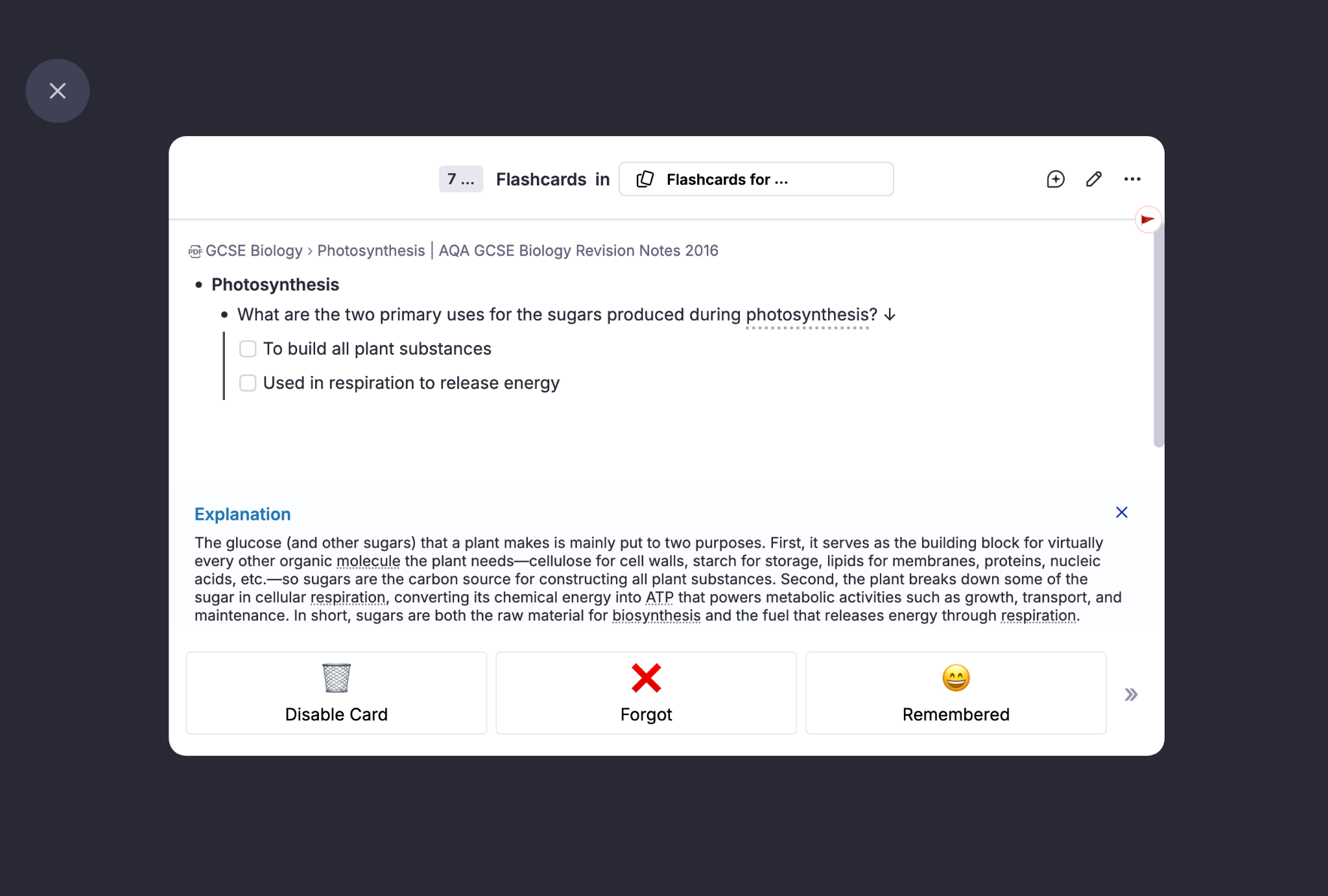
RemNote sits somewhere between a traditional flashcard maker and a complete study system. During testing, it generated accurate flashcards from our GCSE Biology notes and offered far more support for remembering information than most competitors.
One feature we particularly liked was the ability to hover over key terms and instantly access definitions, memory aids, visual associations, and mnemonics. For example, RemNote generated memorable analogies to explain scientific concepts and offered optional tools such as catchy phrases and alliteration to reinforce learning. These won't suit every student, but they’re easy to ignore if they don't match your learning style.
The platform also makes it easy to edit and expand your revision materials. Flashcards can be generated directly from notes, and students can create additional cards using formats such as multiple choice, cloze, lists, and short-answer questions.
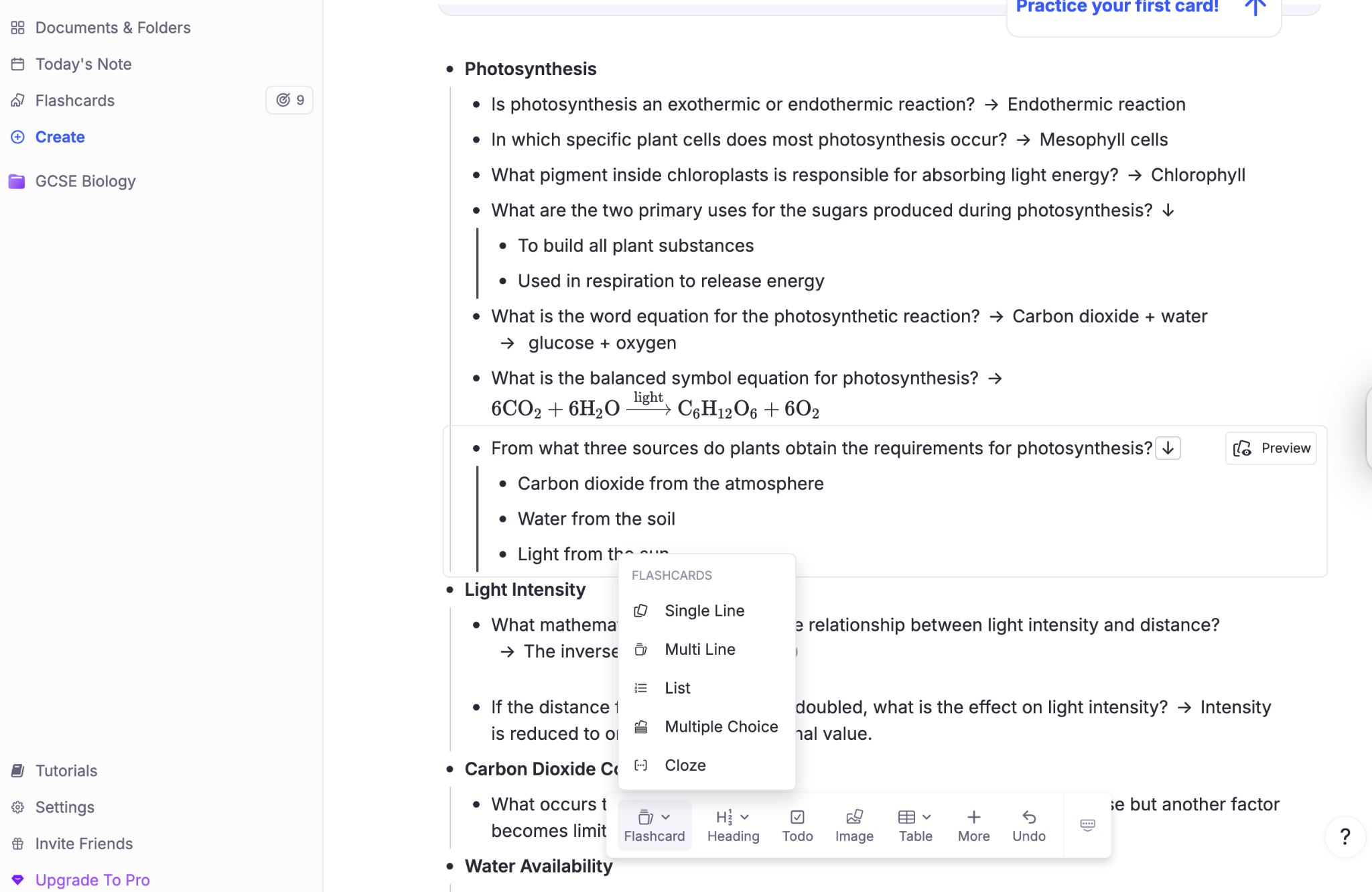
Like NotebookLM, RemNote allows you to return to your original notes and explore concepts in more depth. An AI Tutor feature provides additional explanations when you're stuck, although we found some of these explanations more detailed and text-heavy than the student-friendly explanations offered by Gizmo.
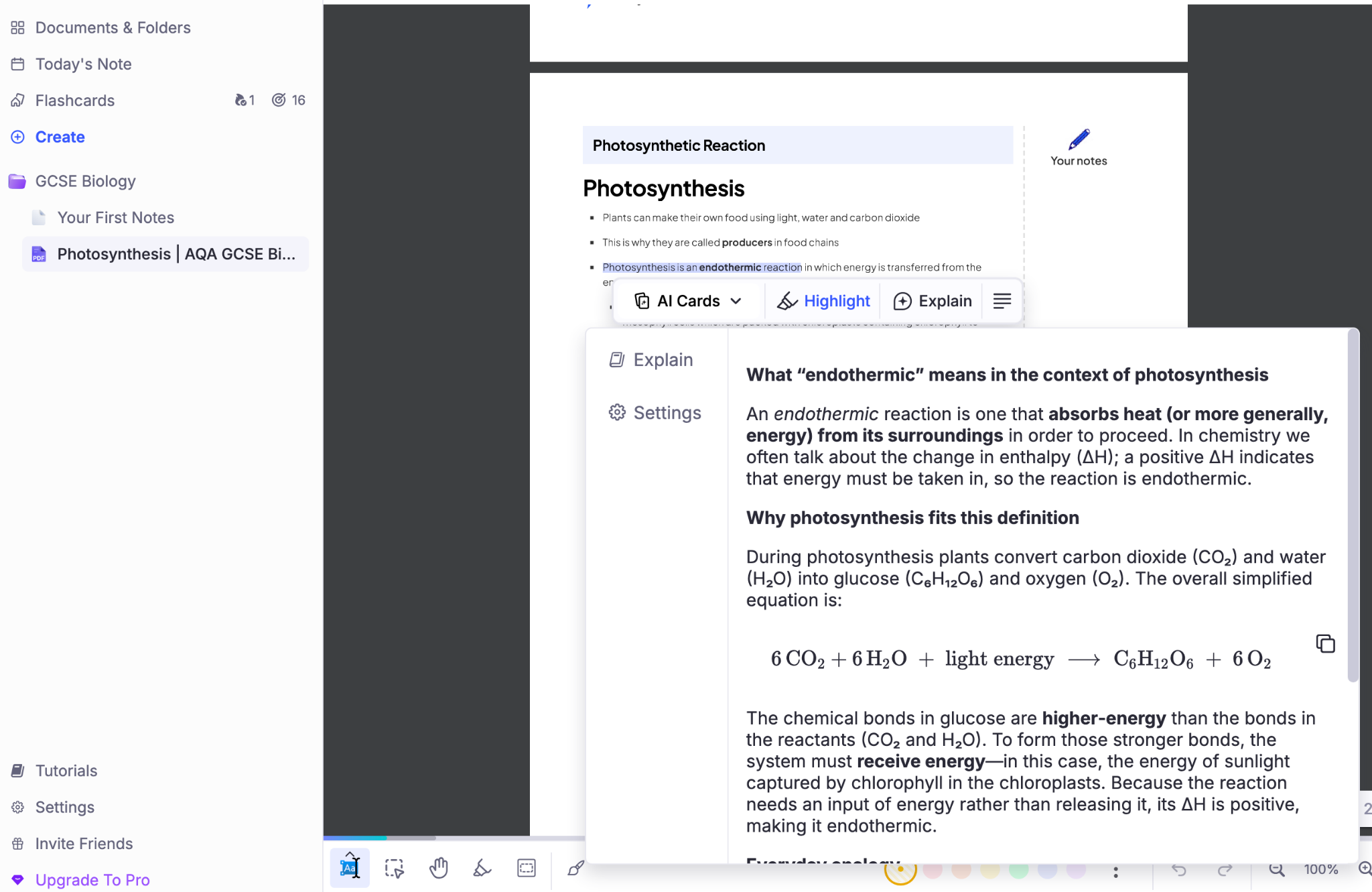
What impressed us most was how closely the note-taking and flashcard features worked together. Students who like building their own revision resources are likely to get more value from RemNote than those who simply want a quick set of flashcards.
Standout features
Strong integration between notes and flashcards
Helpful memory aids and mnemonics
Flexible flashcard formats
AI Tutor support
Unlimited flashcard generation on the free plan
Limitations
Some explanations felt dense and text-heavy
Initial onboarding pushes paid plans quite heavily
May feel more complex than simpler flashcard tools
Pricing
A free plan is available with unlimited flashcard generation. Paid plans unlock additional AI features and study tools. At the time of writing, the Pro plan was USD $10 per month ($8 per month or $96 per year on an annual subscription). The “Pro with AI” subscription at $20 per month ($18 per month or $216 per year on an annual subscription) gives unlimited access to all features.
Best for
Students who want to combine note-taking, flashcards, and revision planning in one place.
Sample flashcard
Anki
A powerful spaced repetition system that rewards students willing to invest time in learning how it works.
Anki is one of the most established flashcard platforms available and remains popular with serious learners thanks to its highly effective spaced repetition system.
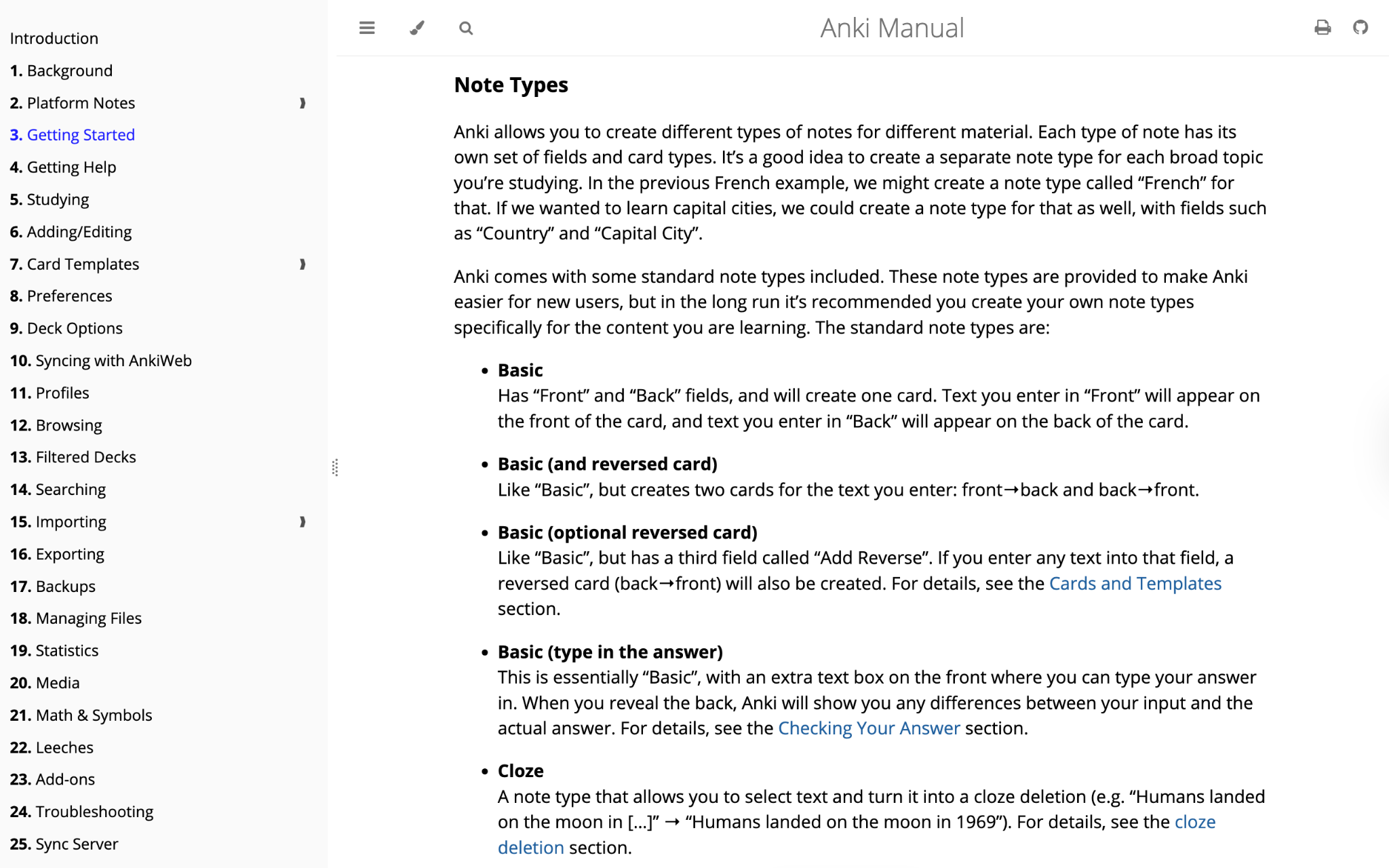
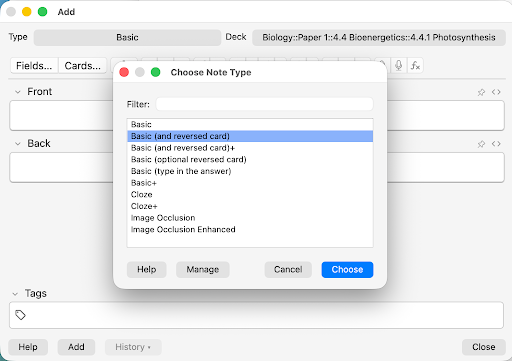
Unlike most of the other tools we tested, Anki is not designed as a plug-and-play AI flashcard generator. We used Ankify to convert our revision notes into flashcards before importing them into Anki. Once we discovered the workflow, the process was quick, but getting started required significantly more setup than any other platform in this roundup.
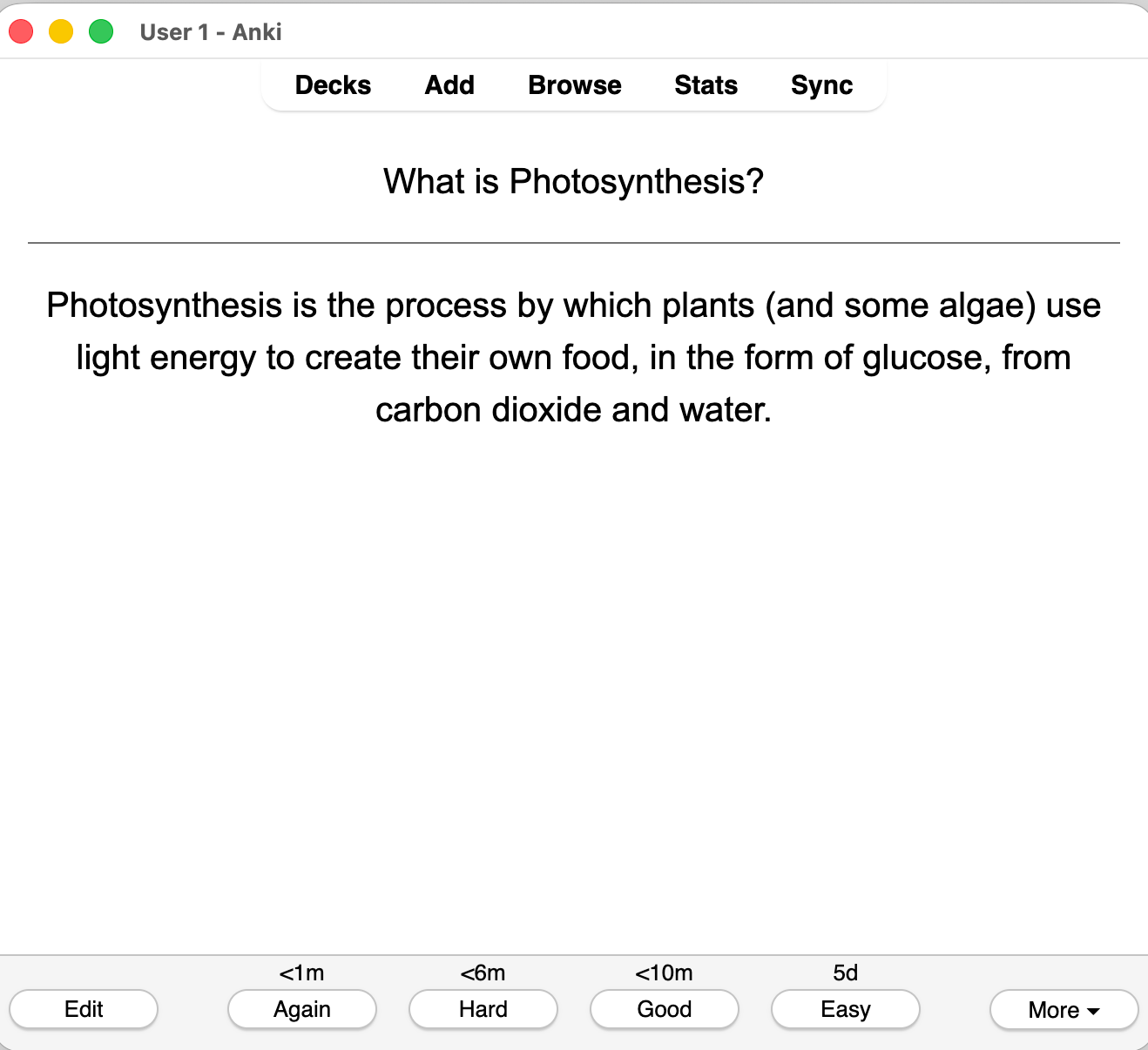
Anki's interface feels dated compared with modern competitors, but there is a reason so many students continue to use it. The platform gives users a huge amount of control over how flashcards are created, organised, and reviewed. Students can customise cards with images, audio, formatting, tags, and advanced card types, while the spaced repetition system automatically prioritises information they are most likely to forget.
We also found a large library of community-created decks covering entire courses. While this can save a huge amount of time, students should remember that the quality and accuracy of community resources can vary.
Anki is not the easiest platform to learn, but students who are prepared to invest time setting it up may find it one of the most powerful revision tools available.
Standout features
Excellent spaced repetition system
Free to use
Huge library of community-created decks
Highly customisable flashcards
Strong support for long-term revision
Limitations
Steeper learning curve than any other platform we tested
Requires more setup to generate AI flashcards
Interface feels dated
Community-created decks vary in quality
Pricing
Free
Best for
Students who are willing to spend time building a personalised revision system and want full control over their flashcards.
Sample flashcard
StudyGlen
A flexible AI study platform that combines flashcards, quizzes, and visual learning tools.
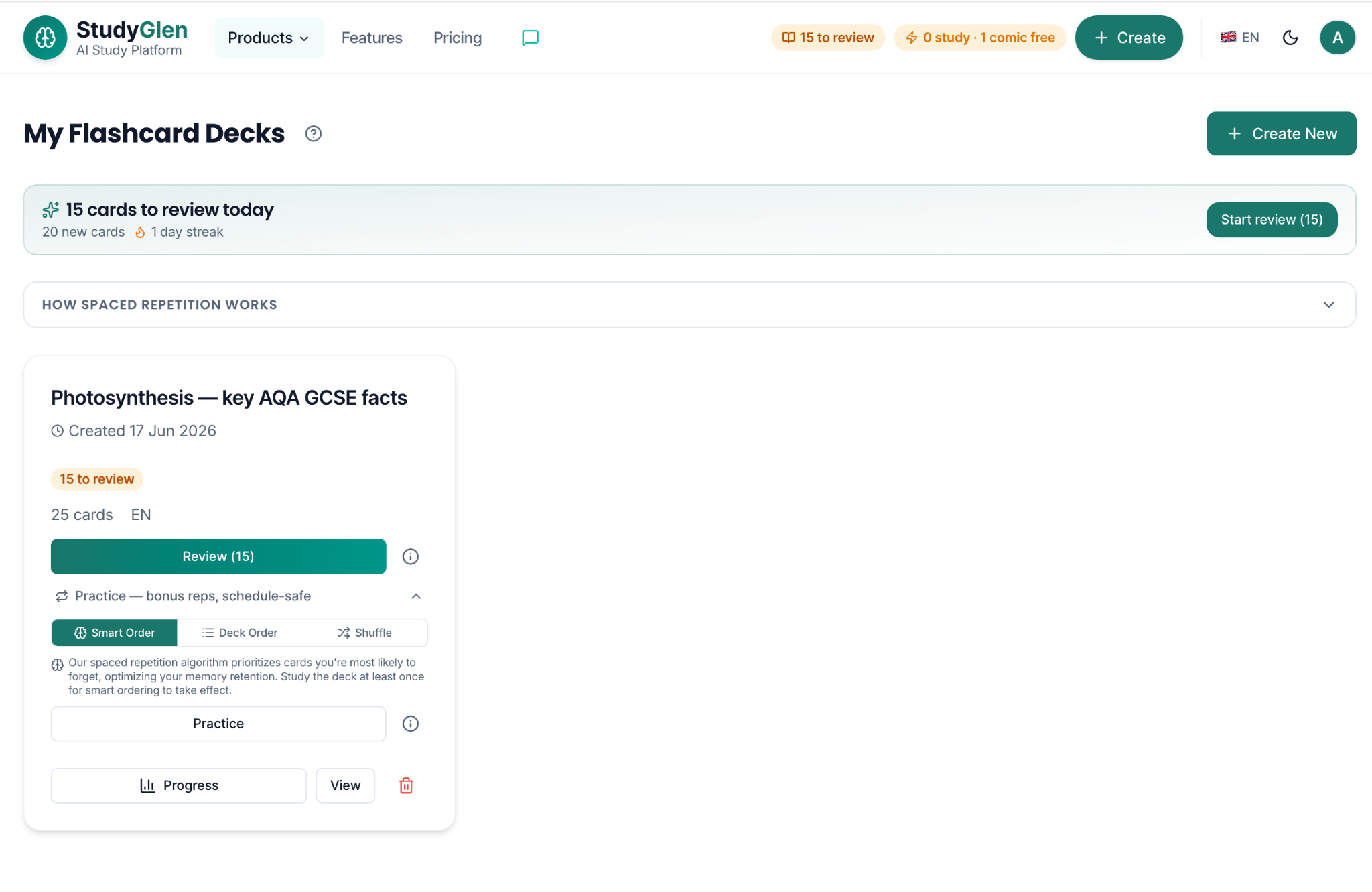
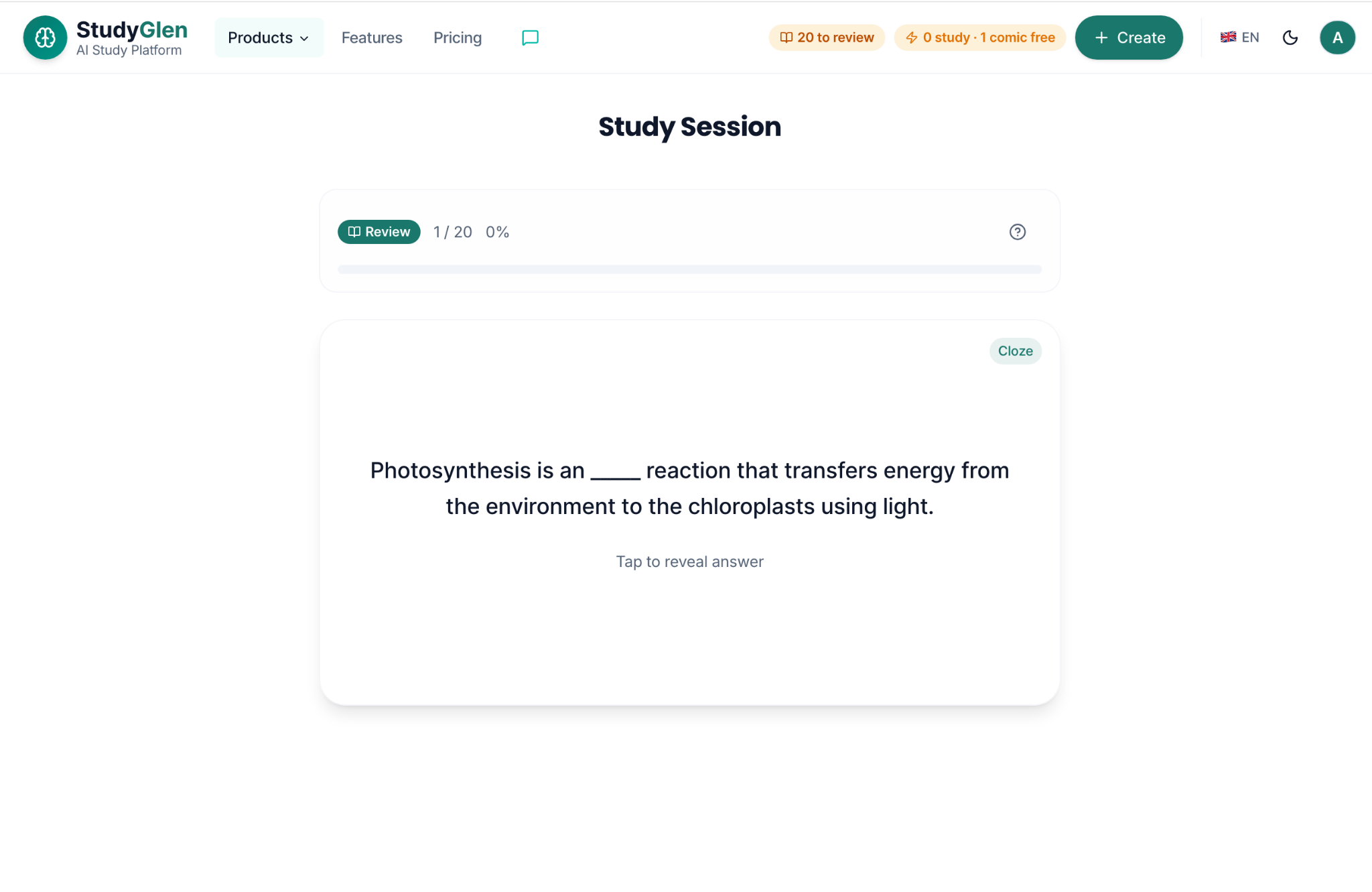
StudyGlen offers much more than simple flashcard generation. During testing, we were able to create quizzes, flashcards, and other study resources from PDFs, text, images, and YouTube videos.
Uploading our GCSE Biology notes was straightforward, and the platform generated a quiz before we had even created an account. Once we signed in, we were able to generate a flashcard deck from the same materials, choosing the number of cards, language, and flashcard style. The resulting flashcards were accurate and easy to study from.
One feature we particularly liked was the use of visual content. Some flashcards included diagrams and flowcharts, which could be especially useful for visual learners studying subjects such as Biology.
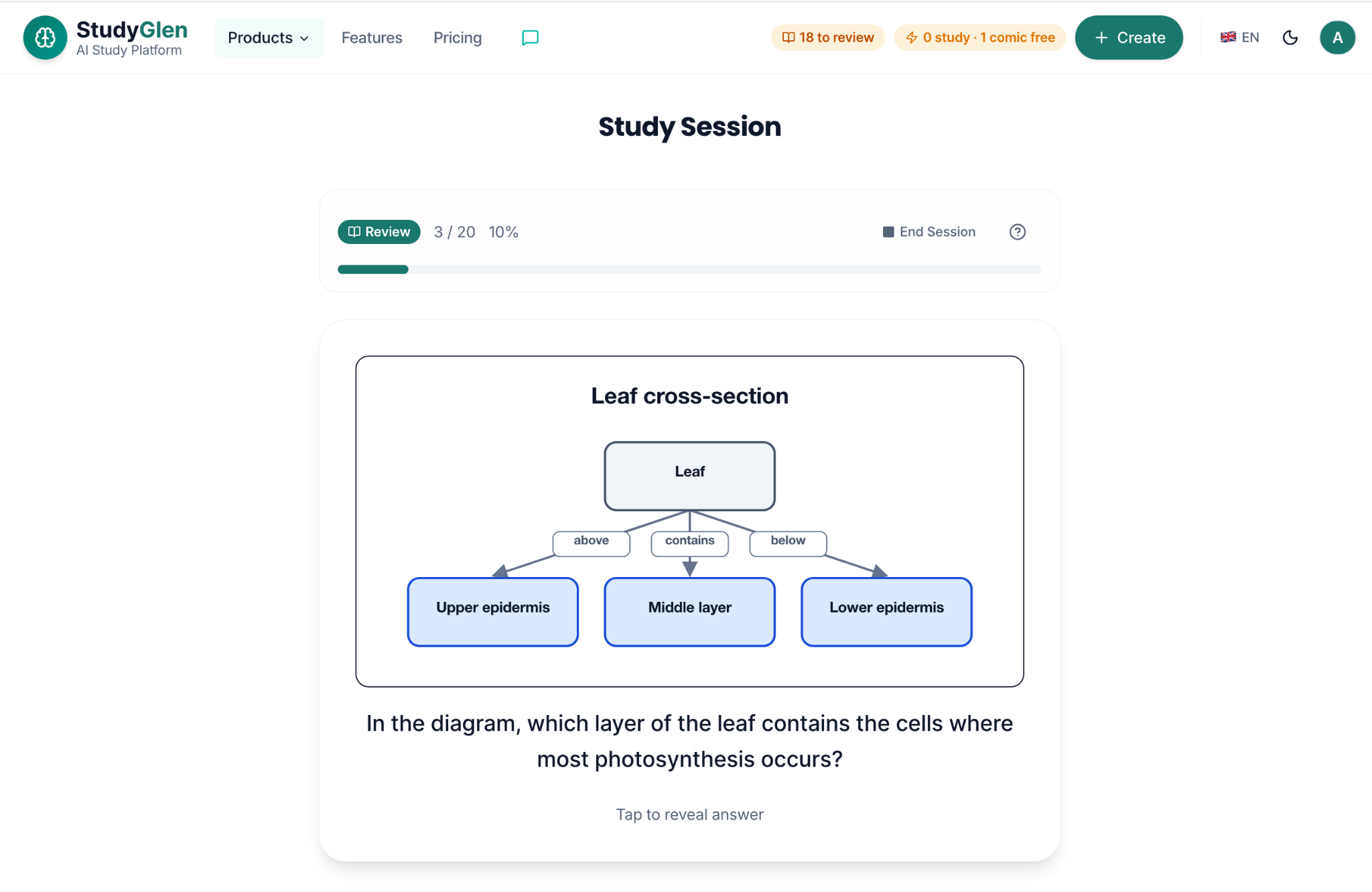
The onboarding experience was excellent. A guided tour helped us quickly find our way around the platform, and the study interface was clean and easy to use. We also liked the built-in progress tracking and spaced repetition system.
However, StudyGlen was less helpful when we wanted to understand a topic in greater depth. Unlike NotebookLM, there was no easy way to jump back to the original source material. Unlike Gizmo, there were no explanation tools to help unpack difficult concepts. The flashcards themselves were accurate, but there was less support available when something wasn't clear.
StudyGlen also includes features such as AI-generated educational comics, live quiz sessions, and a range of additional study tools that go beyond traditional flashcards. Students who enjoy experimenting with different revision formats are likely to find plenty to like here.
Standout features
Supports PDFs, text, images, and YouTube videos
Visual flashcards with diagrams and flowcharts
Educational comics and live quizzes
Built-in spaced repetition
Excellent onboarding and guided tour
Limitations
Flashcards were harder to locate than on some competitors
Limited free flashcard generation
No easy way to link back to source materials
Weaker explanation tools than NotebookLM and Gizmo
Pricing
A free version is available, although flashcard generation and other AI features are limited. Paid plans use a credit-based system that unlocks additional flashcards, comics, and AI-generated resources. At the time of writing, a Starter Pack of credits costs EUR €4.99, a Plus Pack €24.99 and a Pro Pack €49.99. Credits don’t expire, so you can use and renew them as you need.
Best for
Students who enjoy a variety of revision formats and want more than just flashcards.
Sample flashcard
Revisely
A clean and flexible flashcard maker with some of the strongest editing tools we tested.
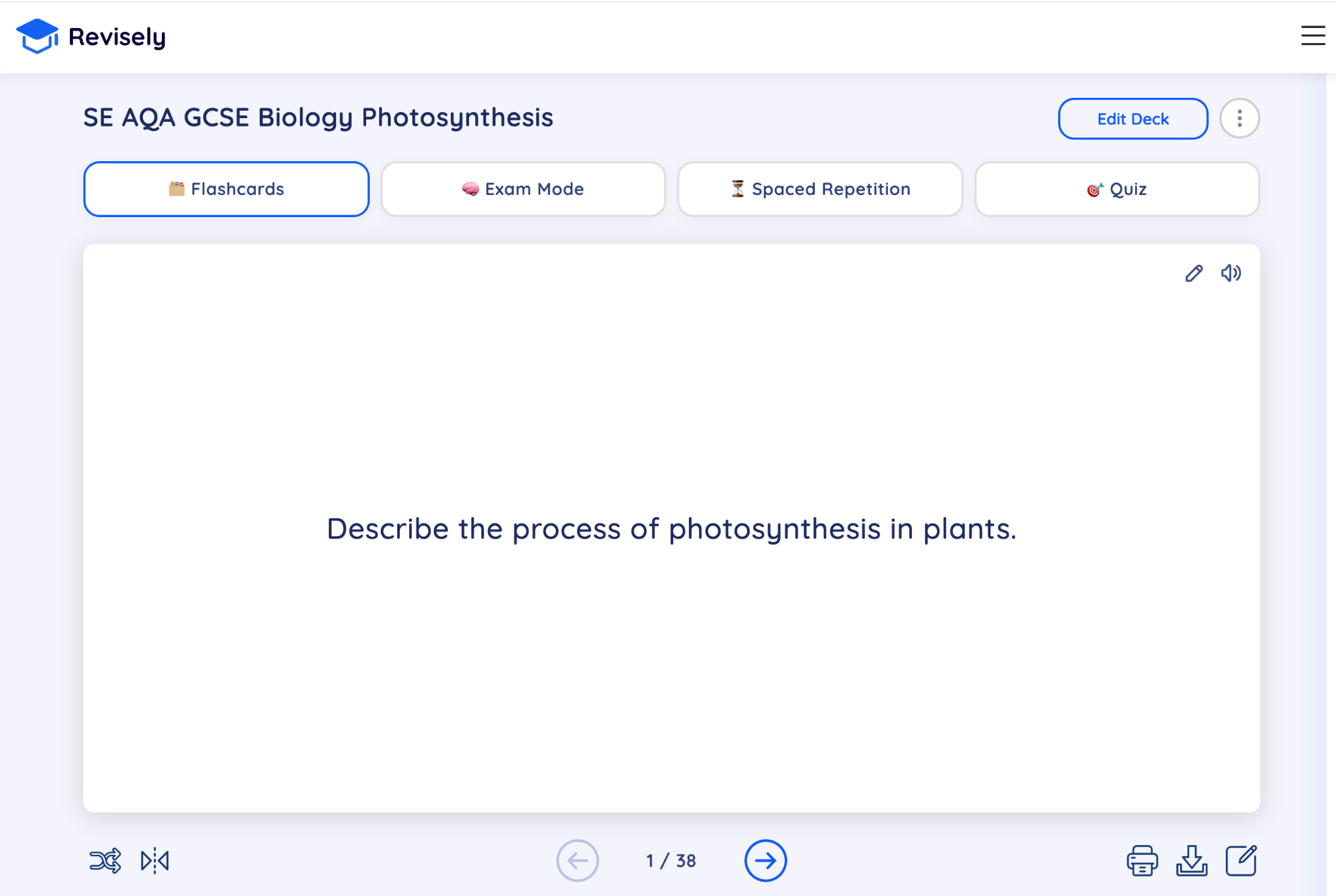
Revisely generated flashcards almost instantly from our GCSE Biology notes and produced an impressive number of cards from a relatively small amount of source material. Even using the free upload limit, it created 38 flashcards from just five pages of notes.
One of Revisely's biggest strengths is the amount of control it gives students over their flashcards. Before generating cards, we could choose the flashcard format, card length, and level of detail.
Once the cards had been created, there were even more editing options, including adding images, highlighting keywords, adjusting formatting, simplifying content, and reducing the number of cards.
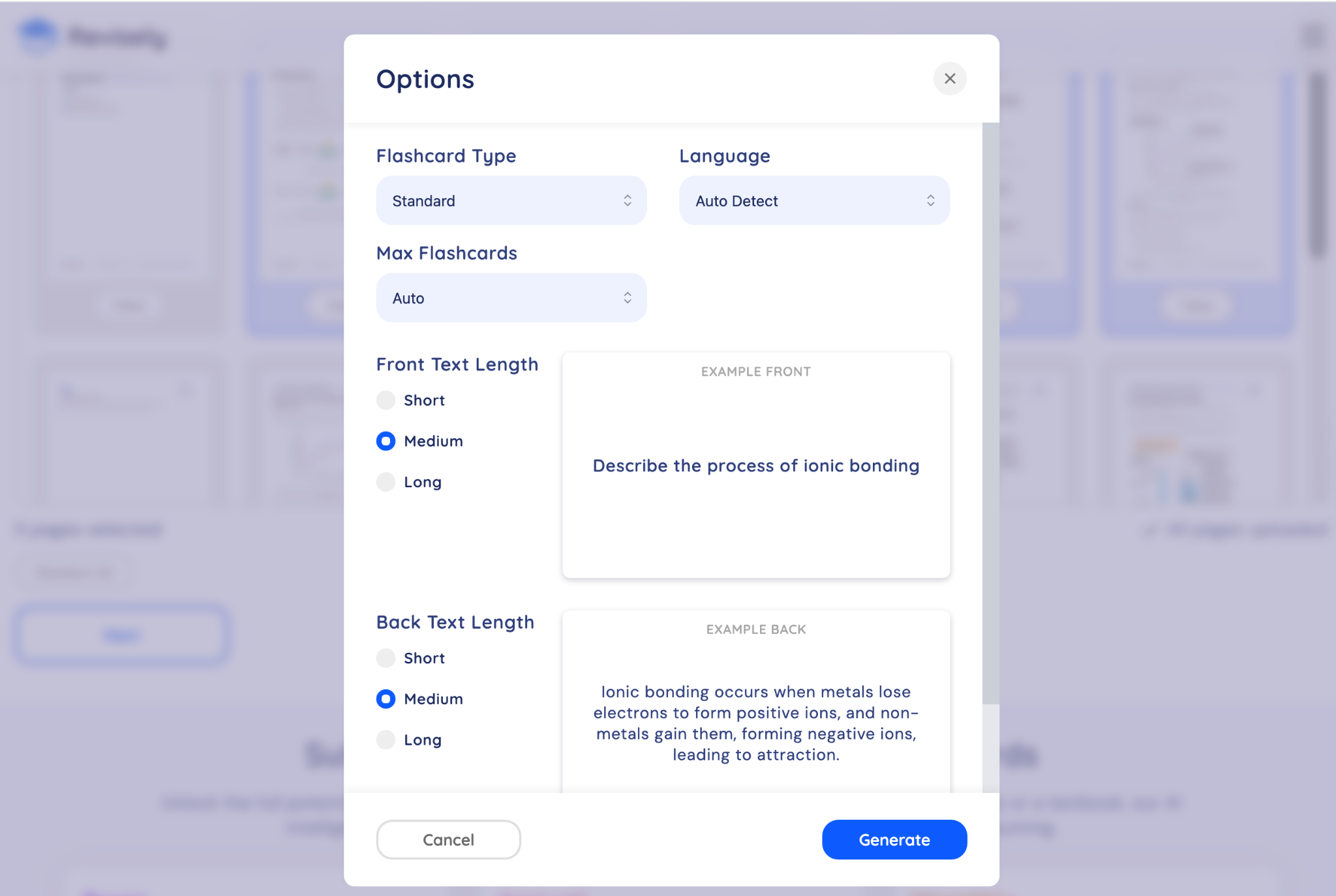
The study interface was clean, intuitive, and easy to navigate. We also liked the ability to answer flashcards in an exam-style format and receive feedback on our responses.
However, Revisely was less impressive when we asked for help understanding concepts. Features such as "Explain Briefly" often repeated information already shown on the flashcard, while more detailed explanations were overly formal and difficult to engage with.
Similarly, the feedback provided on incorrect answers, while technically correct, lacked the supportive, step-by-step guidance that students might receive from a teacher or tutor.
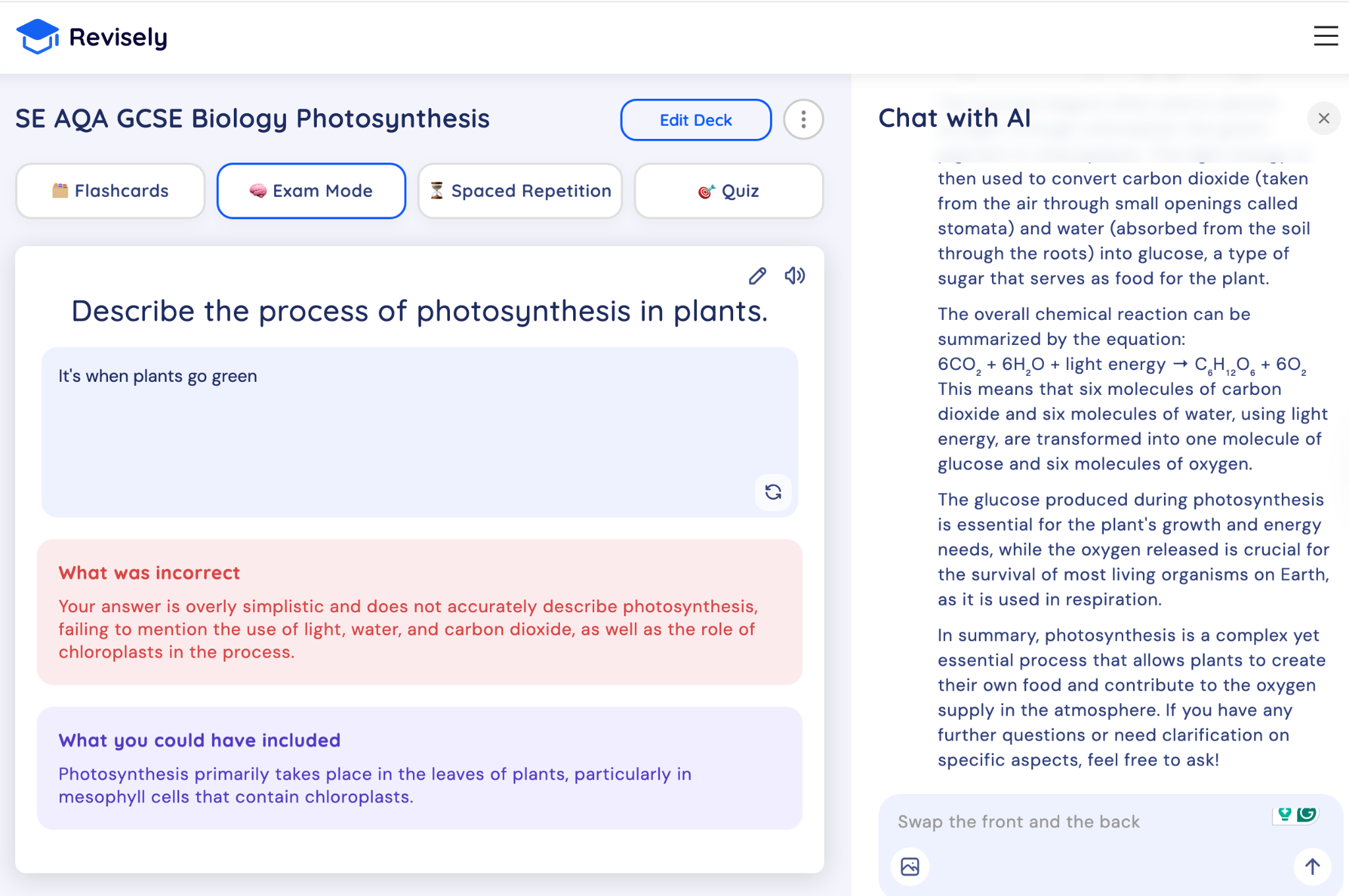
As a result, Revisely felt strongest as a flashcard creation and editing tool rather than a platform for developing a deeper understanding. Students who already have good revision notes and simply want to turn them into flashcards are likely to get more value from it than students looking for AI-powered teaching support.
Standout features
Excellent flashcard editing options
Fast flashcard generation
Flexible flashcard formats
Clean study interface
Strong customisation tools
Limitations
Free uploads are limited
AI explanations often repeat existing content
Feedback on incorrect answers can feel basic
Less effective for understanding difficult concepts than NotebookLM or Gizmo
Pricing
A free plan is available with limits on uploads and AI features. Paid plans increase document limits and unlock additional study tools. At the time of writing, an annual plan to the AI Flashcard generator costs GBP £2.49 per month (£29.88 per year). Upgrade to access all AI Generators (Flashcards, quizzes, notes and video summarisers) at £4.49 per month (£53.88 per year).
Best for
Students who want maximum control over creating and customising their own flashcard decks.
Sample flashcard
Already Know Your Exam Board?
AI flashcard makers are useful when you want to turn your own notes into revision resources. However, during our testing, we found that the quality of AI-generated explanations varied across platforms, and it remains important to check outputs for accuracy.
If you're studying for GCSEs, IGCSEs, or A Levels, pre-made flashcards can sometimes be a better option than generating your own. Save My Exams Flashcards are written by subject experts, organised by topic, and aligned to specific exam board requirements. They’re designed to help students practise active recall while focusing on the exact definitions, equations, quotes, and terminology needed for their exams.
If you're new to flashcard revision, check out our guide to How to Use Flashcards for Revision, which explains how to use Save My Exams flashcards effectively as part of your revision strategy.
How to Choose the Right AI Flashcard Maker for You
The best AI flashcard maker depends on how you like to study. During testing, we found that different platforms excelled at different things.
If you want the best all-round revision experience
Choose NotebookLM.
It generated accurate flashcards quickly, linked explanations back to the original source material, and offered useful study tools such as summaries and mind maps. It was the platform that felt most like a complete revision environment rather than just a flashcard maker.
If you need help understanding difficult topics
Choose Gizmo AI.
Features such as Explain Like I'm 5, Ask a Question, and More Detail helped break down complex ideas in different ways. It was the strongest platform we tested for turning confusion into understanding.
If you enjoy active recall and revision games
Choose Quizlet.
Quizlet offers multiple study modes, quizzes, and games that encourage students to revisit information repeatedly. Its Blast game was one of the most engaging revision tools we tested.
If you want to build a long-term revision system
Choose Anki.
The learning curve is steeper than most competitors', but its spaced repetition system remains one of the most effective ways to retain information over time.
If you prefer to create and customise your own flashcards
Choose Revisely.
It offers excellent editing tools and gives students a high level of control over the format and content of their flashcards.
If you already know your exam board
Consider using pre-made flashcards alongside AI tools.
Save My Exams Flashcards are organised by exam board and topic, making them a useful option if you want revision materials that already match your specification.
Our Verdict: The Best AI Flashcard Maker for Students
After testing seven popular AI flashcard makers with the same GCSE Biology materials, NotebookLM impressed us most.
It generated accurate flashcards quickly, linked explanations directly back to the original source material, and made it easy to move between notes, flashcards, and AI explanations in a single workspace. Of all the platforms we tested, it came closest to bringing the different parts of revision together in one place.
That said, there is no perfect tool for every student.
If you need help understanding difficult concepts, Gizmo AI offers some of the best explanation tools we tested. If you enjoy active recall and game-based revision, Quizlet remains one of the most engaging platforms available.
For most students, however, NotebookLM offers the strongest combination of speed, accuracy, usability, and value. It was the platform we found ourselves returning to most often during testing, and it is the tool we would recommend to the widest range of students.
Frequently Asked Questions
What is the best AI flashcard maker for students?
Based on our testing, NotebookLM is the best overall AI flashcard maker for students.
It generated high-quality flashcards quickly, linked explanations back to the source material, and offered useful additional study tools such as summaries and mind maps.
Are there any free AI flashcard makers for studying?
Yes. NotebookLM, Anki, Quizlet, Gizmo, RemNote, StudyGlen, and Revisely all offer free plans or free tiers, although some features are restricted. During testing, we found that most students could get a good sense of a platform's strengths before needing to upgrade.
ChatGPT can also generate flashcards from your notes, but dedicated flashcard platforms generally provide better study modes, progress tracking, and revision features.
Which AI flashcard maker is easiest to use?
NotebookLM and Gizmo were the easiest tools to use during testing. Both generated flashcards quickly and required very little setup, making it possible to start revising within minutes.
Is it worth paying for an AI flashcard maker?
It depends on how often you study and which features you need. Many students will find that free plans provide enough functionality for everyday revision.
However, paid plans can be worthwhile if you want unlimited flashcard generation, additional study modes, AI explanations, or an ad-free experience.
What should I look for when choosing an AI flashcard maker?
The best AI flashcard makers do more than simply generate questions and answers. Look for a platform that creates accurate flashcards, supports easy file uploads, and offers revision features that match the way you like to study.
You should also consider whether the platform helps you understand difficult concepts, provides useful progress tracking, and offers good value for money.
Final Thoughts
AI flashcard makers can save a huge amount of time by turning revision notes into study resources in minutes. After testing seven popular platforms using the same GCSE Biology materials, NotebookLM stood out as the strongest overall option thanks to its excellent flashcard generation, source-linked explanations, and ease of use.
That doesn’t mean it will be the best choice for every student. Gizmo is an excellent option if you need help understanding difficult concepts, while Quizlet offers some of the strongest active recall and revision games we tested. Students looking for a long-term spaced repetition system may prefer Anki, while RemNote and Revisely offer a good degree of control over creating and managing flashcards.
The right tool depends on how you like to revise. Whichever platform you choose, the most effective flashcards are the ones you return to regularly, using active recall and spaced repetition to strengthen your memory over time.
References:
Was this article helpful?
Sign up for articles sent directly to your inbox
Receive news, articles and guides directly from our team of experts.

Share this article

 written revision resources that improve your