Analytical Techniques (OCR A Level Chemistry A): Exam Questions

Exam code: H432

4 hours42 questions
1
1 mark

The structure of 2-chloropropane is shown below.
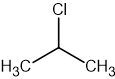
Chemical structure of 2-chloropropane, with a central carbon bonded to a chlorine atom and two methyl groups (CH3) branching off.

Which description of the peaks in the 1H NMR spectrum of 2-chloropropane is correct?

  • 1 peak with a relative intensity of 6

  • 2 peaks with relative intensities of 3 : 4

  • 3 peaks with relative intensities of 3 : 1 : 3

  • 2 peaks with relative intensities 6 : 1

2
1 mark

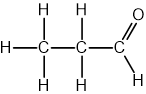
How many peaks are shown in the 1H NMR spectrum of propanal?

Structural formula of propanal, showing a chain of three carbon atoms with attached hydrogen atoms and an aldehyde group at the end.
  • 2

  • 3

  • 4

  • 6

3
1 mark

Which gas is suitable for use as the carrier gas in gas chromatography?

  • Carbon dioxide

  • Chlorine

  • Nitrogen

  • Oxygen

4
1 mark

Which of the following can be the mobile phase in chromatography?

  • Liquid only

  • Liquid or gas

  • Solid or liquid

  • Gas only

5
1 mark

Primary alcohols can be oxidised to aldehydes.

Which row correctly identifies the reagents and observations for this reaction?

Reagent

Observation

A

Acidified silver nitrate solution

White precipitate forms

B

Fehling's solution

Brick-red precipitate forms

C

Tollens' reagent

Silver mirror forms

D

Acidified potassium dichromate(VI)

Colour change from orange to green

    1
    Sme Calculator
    1 mark

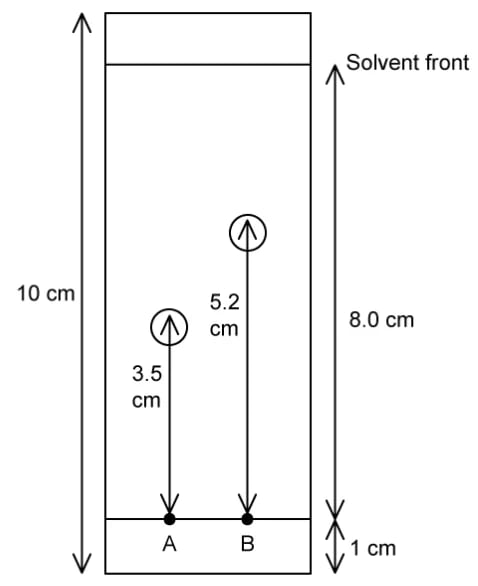
    A chromatogram of two compounds, A and B, is shown.

    Diagram of a chromatography paper showing solvent front at 10 cm, with two spots marked A and B at 3.5 cm and 5.2 cm from the origin respectively.

    What is the Rf value of compound B?

    • 0.21

    • 0.44

    • 0.65

    • 1.54

    2
    1 mark

    Which of the following do components with a high Rf value have a greater affinity for?

    • No phase

    • The mobile phase

    • The stationary phase

    • The latent phase

    3
    1 mark

    Which statement(s) is/are correct for gas chromatography?

    1. The relative peak areas give the proportions of components in a mixture.

    2. The components in a mixture can be identified from their retention time.

    3. The components in a mixture are separated by their force of attraction to the liquid stationary phase.

    • 1, 2 and 3

    • Only 1 and 2

    • Only 2 and 3

    • Only 1

    4
    1 mark

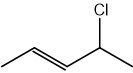
    Functional group analysis is performed on E-4-chloropen-2-ene below.

    Chemical structure of E-4-chloropen-2-ene.

    Which statement(s) is/are correct about the chemical tests performed?

    1. Warming with silver nitrate and ethanol will form a white precipitate

    2. Bromine water will change from orange to green

    3. Warming with Tollens' reagent will form a silver mirror

    • 1, 2 and 3

    • Only 1 and 2

    • Only 2 and 3

    • Only 1 

    5
    1 mark

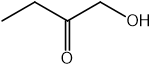
    Which chemical test and observation for 2-oxobutanol is correct?

    Chemical structure of 2-oxobutanol.


    Chemical test

    Observation

    A

    Add aqueous sodium carbonate

    Effervescence

    B

    Add 2,4-dinitrophenylhydrazine

    White precipitate

    C

    Warm with acidified potassium dichromate

    Colour change from orange to green

    D

    Warm with Tollens' reagent

    Silver mirror

      6
      1 mark

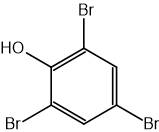
      The product formed from an analytical test using bromine is shown below.

      Chemical structure of 2,4,6-tribromophenol, a benzene ring with three bromine atoms and one hydroxyl group attached to alternating carbon atoms.

      Which chemical was tested for using bromine?

      • Benzoic acid

      • 2,5-Cyclohexadiene-1-ol

      • 4-Hydroxybenzoic acid

      • Phenol

      7
      1 mark

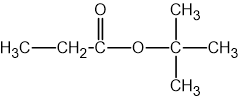
      Which description of the splitting pattern observed on the 1H NMR spectrum for organic compound is correct?

      Chemical structure of tert-butyl propanoate.
      • One doublet and four triplets

      • One triplet, one quartet and one singlet

      • One triplet, one doublet and three singlets

      • One triplet, one quartet and three singlets

      8
      1 mark

      Which compound is used as the standard in NMR chemical shift measurements?

      • D2O

      • CD3OD

      • DMSO

      • Si(CH3)4 

      9
      1 mark

      Which organic compound reacts with aqueous sodium carbonate to produce effervescence, and reacts with bromine water to form a white precipitate?

      • Benzoic acid

      • Phenol

      • 4-hydroxybenzoic acid

      • Benzyl alcohol

      1
      1 mark

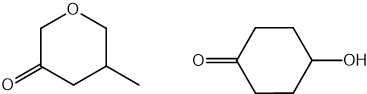
      5-methyloxan-3-one and 4-hydroxycyclohexan-1-one, shown below, are isomers of C6H10O2.

      Chemical structures of 5-methyloxan-3-one (left) and 4-hydroxycyclohexan-1-one (right).

      Which statement is correct for both isomers?

      • Both isomers produce 4 peaks in their 13C NMR spectrum

      • Both isomers effervesce with the addition of sodium hydrogen carbonate solution

      • One isomer produces a doublet with an integral of 3 in its 1H NMR spectrum

      • One isomer reacts with 2,4-dinitrophenylhydrazine to form an orange precipitate

      2
      1 mark

      Which compound could produce the spectrum shown below?

      Butanone 1H NMR spectrum.
      • CH3CH2OCH2CH3

      • CH3CH(OH)CH2CH3

      • CH3COCH2CH3

      • CH3COCH2CH2CH3

      3
      1 mark

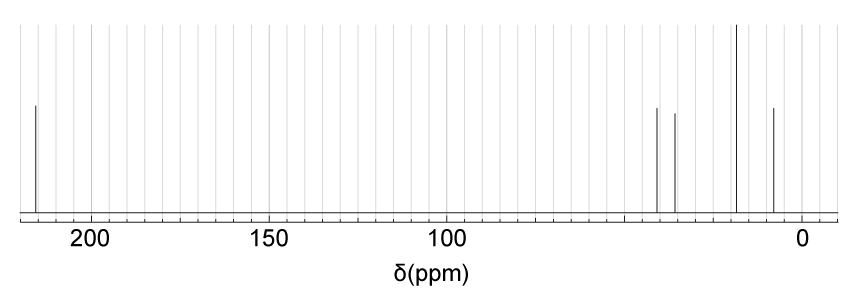
      Which compound could produce the spectrum shown below?

      2-methyl-3-pentanone 13C NMR spectrum.
      • CH3CH2COCH(CH3)2 

      • CH3CH2CH(OH)CH(CH3)2 

      • CH3CH2COCH2CH3 

      • CH3CH2COC(CH3)3 

      4
      Sme Calculator
      1 mark

      Which statement(s) is/are true about pentan-3-one?

      1. It will have a triplet and a quartet in its 1H NMR spectrum.

      2. It will create mass spectrum peaks at 87 m/z and 57 m/z.

      3. It has a composition of 66.6% carbon, 22.1% oxygen and 11.2% hydrogen.

      • 1, 2 and 3

      • Only 1 and 2

      • Only 2 and 3

      • Only 1

      5
      1 mark

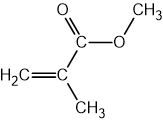
      The monomer used to make perspex is methyl methacrylate, shown below.

      Chemical structure of methyl methacrylate, showing a carbonyl group and ester linkage, with labelled atoms and bonds.

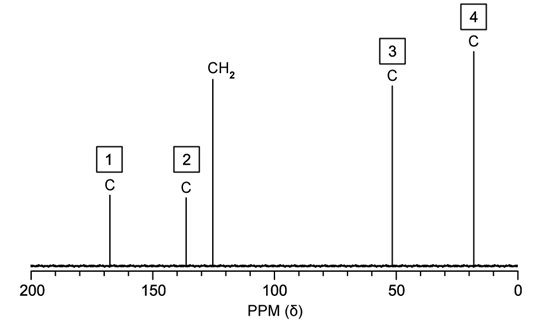
      The 13C NMR spectrum of methyl methacrylate is shown below.

      Labelled 13C NMR spectrum of methyl methacrylate showing chemical shifts from 0 to 200 PPM with peaks labelled as carbon atoms 1 to 4 and CH₂ group between 100 and 50 PPM.

      What is the correct identity of the carbon labelled in peak 3?

      • -C-CH3

      • -COOCH3

      • -O-CH3

      • =C-CH3

      6
      1 mark

      Which statement about the chromatographic separation of a mixture of amino acids using thin layer chromatography (TLC) is correct?

      • The stationary phase is usually a non-polar solvent.

      • Separation depends on the relative volatility of the amino acids.

      • The chromatogram must be developed using a locating agent such as ninhydrin or UV light.

      • An amino acid with a stronger adsorption to the stationary phase will have a larger Rf value.