States of Matter (AQA GCSE Combined Science: Synergy: Life & Environmental Sciences): Exam Questions

Exam code: 8465

2 hours13 questions
1a
1 mark

A student investigated the mass, volume and density of some solid metal cubes.

Figure 2 shows one of the cubes. The length of one side is shown.
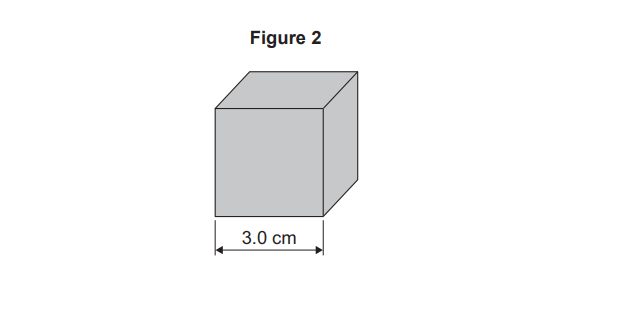
Diagram of a grey cube labelled “Figure 2”, with one edge along the front face marked as 3.0 cm in length.

Name a piece of equipment the student could use to measure the length of one side of the cube.

1b
1 mark

What is the volume of the cube in Figure 2?

  • 6.0 cm³

  • 9.0 cm³

  • 27.0 cm³

  • 54.0 cm³

1c
Sme Calculator
3 marks

A different cube has a mass of 13 g.

The volume of this cube is 8 . 0 \textrm{ }\text{cm}^{3}.

Calculate the density of the cube.

Use the equation:

\text{density} = \frac{\text{mass}}{\text{volume}}

Give your answer to 2 significant figures.

1d
1 mark

The student also investigated the density of a key.

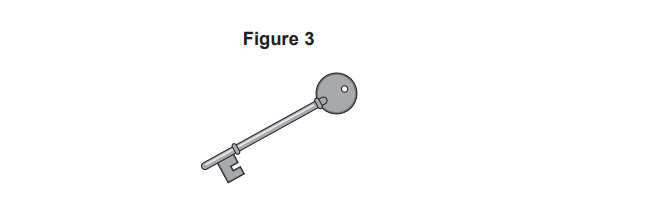
Figure 3 shows the key.

Figure 3: simple grey metal key with a round bow and a small hole, shown at a slight angle on a plain white background

Which piece of equipment could be used to measure the mass of the key?

  • Balance

  • Stopwatch

  • Thermometer

1e
2 marks

Figure 4 shows a measuring cylinder containing water.
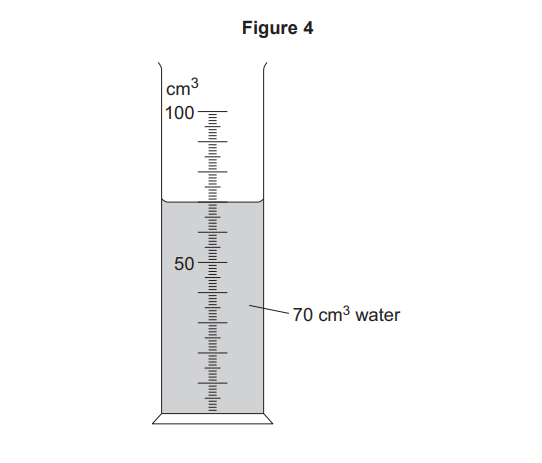
Diagram of a measuring cylinder labelled in cubic centimetres, showing the water level at 70 cm³ between the 50 and 100 cm³ graduation marks.

Describe how the equipment in Figure 4 could be used to measure the volume of the key.

2a
1 mark

Different substances change state at different temperatures.

Table 1 shows the melting points and boiling points of three substances.

Table 1

Substance

Melting point in °C

Boiling point in °C

Sodium

98

883

Sodium chloride

801

1413

Water

0

100

What is the state of sodium at 90 °C?

  • Gas

  • Liquid

  • Solid

2b
1 mark

Complete the sentence.

Choose the answer from the box.

10

100

1000

Sodium chloride is a liquid at _________°C.

2c
3 marks

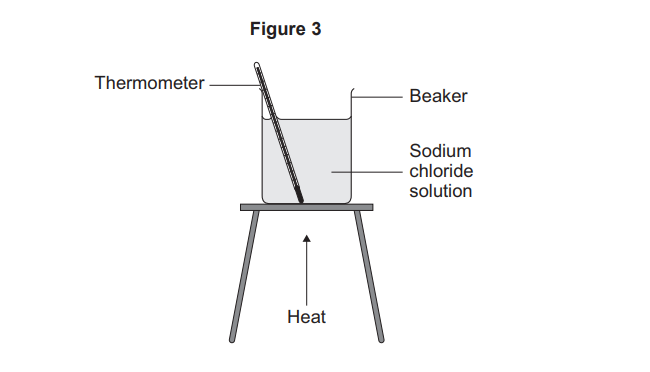
A student investigated the boiling point of different concentrations of sodium chloride solutions.

Figure 3 shows the apparatus.

Diagram of a beaker of sodium chloride solution on a tripod being heated, with a thermometer angled into the solution to measure temperature

This is the method used.

  1. Add 100 \text{cm}^{3} of water to a beaker.

  2. Add 10 g of sodium chloride to the water.

  3. Heat the beaker until the solution boils.

  4. Record the boiling point of the solution.

  5. Repeat steps 1 to 4 with different masses of sodium chloride.

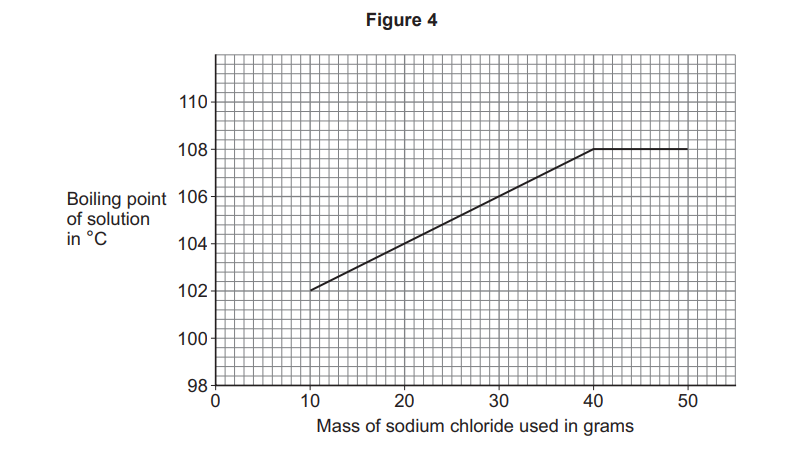
Figure 4 shows the results.

Line graph showing boiling point of a sodium chloride solution rising from 102°C at 10 g to 108°C at 40 g, then remaining constant up to 50 g

Determine the difference between the boiling point of the solution using:

  • 15 g of sodium chloride

and

  • 30 g of sodium chloride

Use Figure 4.

2d
3 marks

Describe the pattern of the results in Figure 4.

Include data from Figure 4 in your answer.

2e
Sme Calculator
3 marks

The student heated water at its boiling point until all the liquid water changed to water vapour.

mass of water = 0.20 kg

specific latent heat of vaporisation of water = 2 260 000 J/kg

Calculate the energy required to change the liquid water into water vapour.

Use the equation:

text energy for the change of state  end text equals text mass end text cross times text specific latent heat of vaporisation end text

Choose the unit from the box.

°C

kg

J

J/kg

2f
1 mark

Boiling water can be used to cook food.

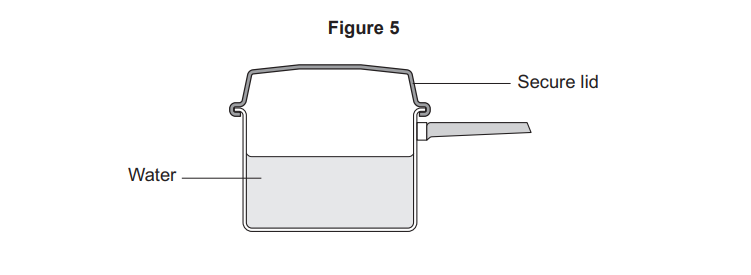
Food can be cooked in a pressure cooker.

Figure 5 shows a pressure cooker.

Cross-section of a saucepan half-filled with water, labelled “Water”, showing a securely fitted lid and side handle, titled “Figure 5”.

What will happen to the water particles as the temperature of the water increases?

  • The kinetic energy of the particles will decrease.

  • The particles will hit each other less often.

  • The particles will move faster.

2g
1 mark

The pressure inside the pressure cooker changes during heating.

Table 2 shows the boiling point of the water in the pressure cooker at different pressures.

Table 2

Pressure in kPa

Boiling point in °C

101

100

150

112

200

120

280

131

360

141

What happens to the boiling point of the water as the pressure in the pressure cooker increases?

Use Table 2.

2h
2 marks

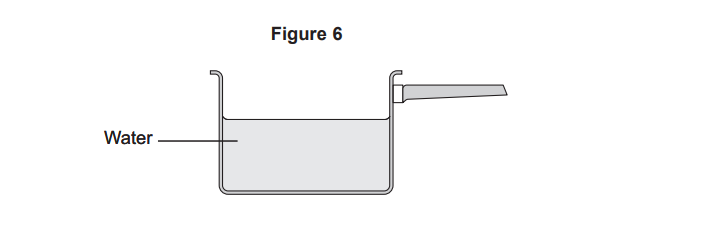
Figure 6 shows a saucepan.

Diagram of a beaker half filled with water, labelled “Water”, with a horizontal thermometer inserted from the right at the surface level.

The boiling point of water in a saucepan is 100 °C.

Explain one advantage of using a pressure cooker instead of a saucepan to cook food.

3a
4 marks

Keys are usually made from metal.

Figure 3 shows a metal key.

Simple illustration labelled “Figure 3” showing a single old-fashioned metal key with a round head and a small hole near the edge

Describe a method to determine the density of the metal the key is made from.

You should include the measuring instruments you would use.

Use the Physics Equations Sheet.

3b
Sme Calculator
5 marks

A manufacturer of keys buys metal as small solid cubes.

A solid metal cube has a density of 2.70 × 10^{3} kg/\text{m}^{3}.

The cube has a mass of 0.0216 kg.

Calculate the surface area of the cube.

Use the Physics Equations Sheet.

4a
1 mark

Matter can exist in different states.

Table 7 shows the melting points and boiling points of four substances.

Table 7

Substance

Melting point in °C

Boiling point in °C

Carbon dioxide

−78

−78

Methane

−183

−162

Nitrogen

−210

−196

Water

0

100

Give the temperature at which nitrogen condenses.

4b
1 mark

Nitrogen gas is transported in cylinders at high pressure.

Figure 10 shows a cylinder containing nitrogen gas.

Simple illustration of a single upright gas cylinder with a dark top and valve, labelled Figure 10, on a plain white background

What causes the pressure on the inside walls of the gas cylinder?

4c
1 mark

Carbon dioxide sublimates.

What happens when carbon dioxide sublimates?

Use Table 7.

4d
1 mark

Solid carbon dioxide is used during the transport of frozen food.

Using solid carbon dioxide keeps the food cold for longer than using frozen water.

Suggest one other advantage of using solid carbon dioxide instead of using frozen water during the transport of frozen food.

4e
1 mark

The planet Saturn has a moon called Titan.

The surface temperature of Titan is −179.6 °C.

Features similar to rivers have been seen on Titan.

Which substance in Table 7 could be the liquid in the rivers on Titan?

4f
2 marks

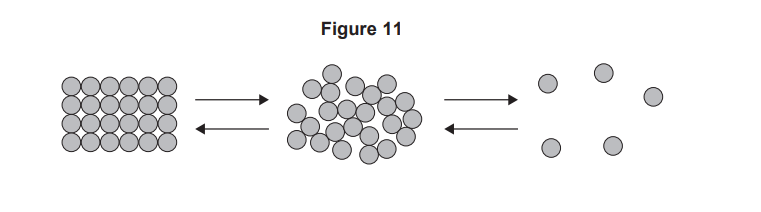
Figure 11 shows a simple model which can be used to describe changes of state.

Diagram of particles changing state: ordered solid on the left, irregular liquid in the middle, and widely spaced gas on the right with two-way arrows

Give two limitations of using this model to describe changes of state.

4g
Sme Calculator
6 marks

Some water at 15 °C is heated until it all turns to steam at 100 °C.

The total energy supplied to the water is 1 320 000 J.

mass of water = 500 g

specific heat capacity of water = 4200 J/kg °C

Calculate the specific latent heat of vaporisation of water.

Use the Physics Equations Sheet.

[6 marks]

5a
3 marks

Heaters can be used to heat homes and gardens.

Gas heaters can be used to heat gardens.

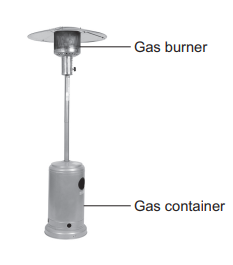
The gas is stored in a container with a fixed volume.

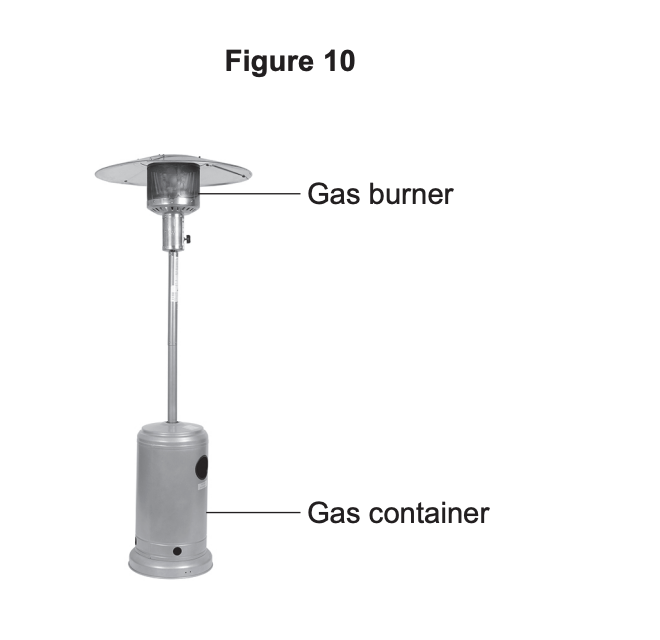
Figure 10 shows a gas heater.

Diagram of a tall outdoor gas patio heater labelled to show the gas burner at the top under a metal hood and the gas container in the cylindrical base


On a sunny day the burner is not lit.

The temperature of the gas in the container increases.

Complete Table 3.

Put one tick (✓) in each row.

Table 3

Increases

Stays the same

Decreases

Average kinetic energy of the gas particles

Average speed of the gas particles

Pressure exerted on the inside of the container

5b
Sme Calculator
1 mark

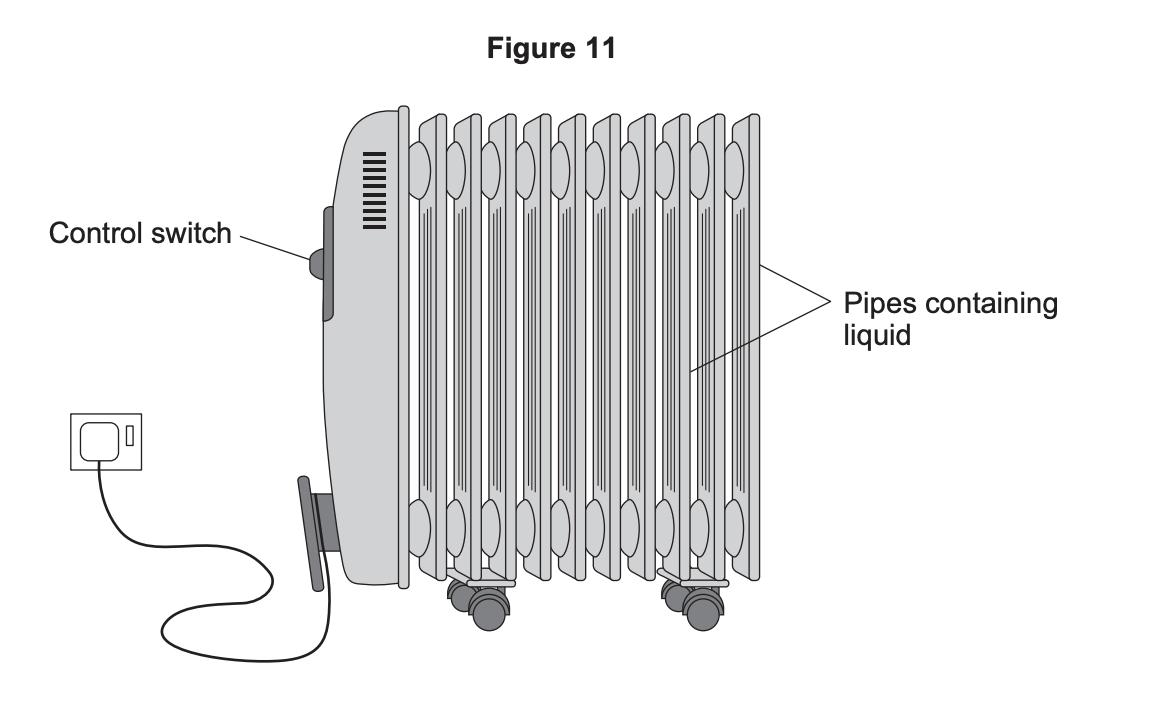
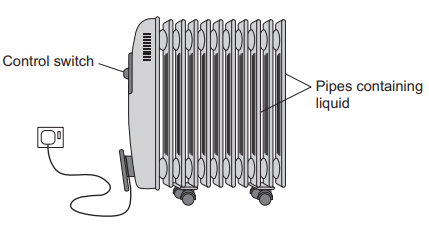
Figure 11 shows an electric heater.

The heater is filled with a liquid.

Diagram of an electric oil-filled radiator on wheels, labelled with control switch, pipes containing liquid, and a power lead plugged into a wall socket.


When the heater is switched on, the temperature of the liquid in the heater increases.

On one day, the starting temperature of the liquid was 15.0 °C.

The final temperature of the liquid was 57.5 °C.

What was the temperature change of the liquid?

Temperature change = _______ °C

5c
Sme Calculator
1 mark

The change in thermal energy of the liquid in the heater was 892 500 J.

What was the change in thermal energy of the liquid in kJ?

1000 J = 1 kJ

Change in thermal energy = _______kJ

5d
Sme Calculator
2 marks

On another day, the temperature change of the liquid was 45.0 °C.

The mass of liquid in the heater is 5.0 kg.

specific heat capacity of liquid = 4200 J/kg °C

Calculate the change in thermal energy of the liquid in the heater in joules.

Use the equation:

change in thermal energy = mass × specific heat capacity × temperature change

Change in thermal energy = ______J

5e
1 mark

The liquid in the heater was replaced with a new liquid.

The new liquid had a greater specific heat capacity.

What happened to the energy required to increase the temperature of the liquid in the heater by 1 °C?

Tick (✓) one box.

  • The energy required decreases.

  • The energy required stays the same.

  • The energy required increases.

6a
1 mark

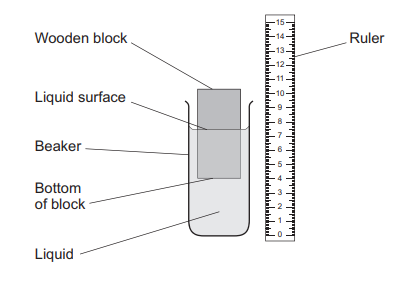
A student investigated how the density of a liquid affects the position of a wooden block floating in the liquid.

Figure 18 shows the apparatus.

Figure 18

Figure 18: a beaker contains a coloured liquid in which a wooden block is floating. A vertical ruler is held alongside the beaker so that 0 cm is at the bottom and 15 cm is at the top. Labels point to the wooden block, the liquid surface, the bottom of the block, the beaker, and the liquid.

This is the method used:

  1. Put the wooden block in the beaker of liquid

  2. Allow the wooden block to come to rest so that it is floating in the liquid

  3. Measure the distance between the liquid surface and the bottom of the block

  4. Repeat steps 1 to 3 with liquids of different densities

Give the independent variable in the investigation.

6b
1 mark

Give one control variable for the investigation.

6c
1 mark

Give one possible source of error when the student measured the distance between the liquid surface and the bottom of the block.

6d
1 mark

Table 6 shows the results.

Table 6

Liquid

Density of liquid in g/\text{cm}^{3}

Distance between liquid surface and bottom of the block in cm

A

1.4

5.5

B

1.2

6.4

C

1.0

7.7

D

0.9

8.5

Give one conclusion from the results.

6e
1 mark

Use the Physics Equations Sheet to answer questions 08.5 and 08.6.

Which equation links density (\rho), mass (m) and volume (V)?

Tick (✓) one box.

  • \rho = m \times V

  • \rho = \dfrac{m}{V}

  • \rho = m \times V^{3}

  • \rho = \dfrac{V}{m}

6f
Sme Calculator
3 marks

The density of the wooden block was 0.85 g/\text{cm}^{3}.

The mass of the wooden block was 30.6 g.

Calculate the volume of the wooden block in \text{cm}^{3}.

Volume of wooden block = \text{cm}^{3}

6g
2 marks

Liquid C is water.

When liquid water is heated to its boiling point the water changes state.

What happens to the density of the liquid water as it changes state?

Tick (✓) one box.

  • The density decreases

  • The density stays the same

  • The density increases

Give a reason for your answer.

7a
Sme Calculator
5 marks

Figure 6 shows an electric heater. This type of heater is filled with a liquid.

Figure 6

Figure 6: an electric oil-filled radiator on wheels, with a control switch on the side and a row of vertical pipes containing liquid. A plug on a cable runs from the heater to a wall socket.

The heater contained 5.0 kg of water.

When the heater was switched on, the temperature of the water in the heater increased to 75 °C.

The change in thermal energy of the water was 1260 kJ.

specific heat capacity of water = 4200 J/kg °C

Calculate the starting temperature of the water in the heater.

Use the Physics equations sheet.

Starting temperature = ----------------°C

7b
2 marks

An identical heater contains 5.0 kg of oil instead of 5.0 kg of water.

specific heat capacity of oil = 1970 J/kg °C

specific heat capacity of water = 4200 J/kg °C

Explain the difference in the energy needed to cause the same temperature change in the oil and in the water.

7c
3 marks

Gas heaters may be used to heat gardens.

The gas is stored in a container with a fixed volume.

Figure 7 shows a gas heater.

Figure 7

Figure 7: a tall outdoor patio gas heater with a cylindrical gas container at the base, a vertical pipe rising from it and a flat circular reflector at the top labelled “Gas burner”. The base is labelled “Gas container”.

On a sunny day the burner is not lit.

The temperature of the gas in the container increases.

Explain why the pressure inside the container changes.

8a
Sme Calculator
3 marks

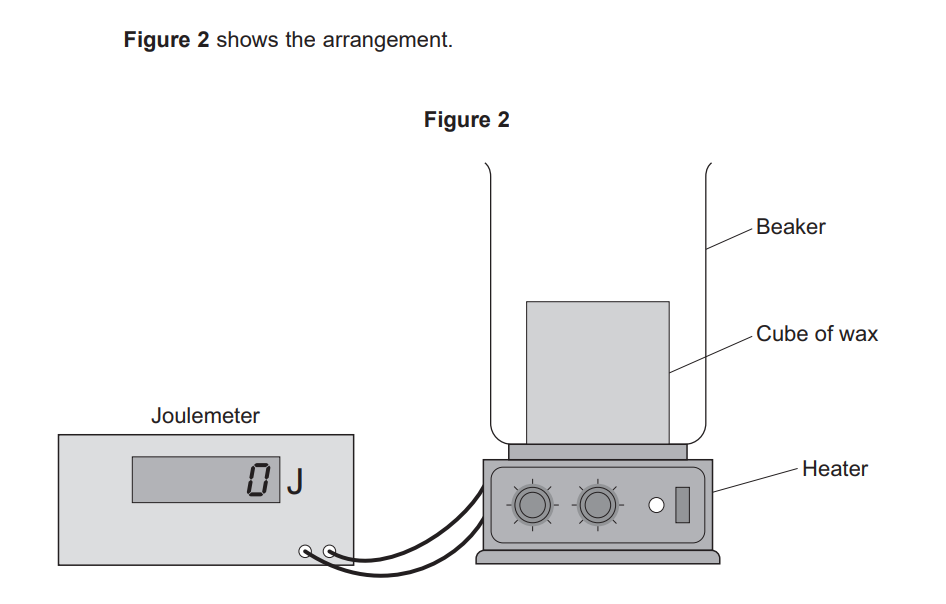
A student investigated the heating of some wax.

This is the method used.

  1. Put a cube of wax in a beaker.

  2. Place the beaker on a heater connected to a joulemeter.

  3. Turn on the heater.

  4. When the wax begins to melt, turn on the joulemeter.

  5. When all the wax has melted, record the reading shown on the joulemeter.

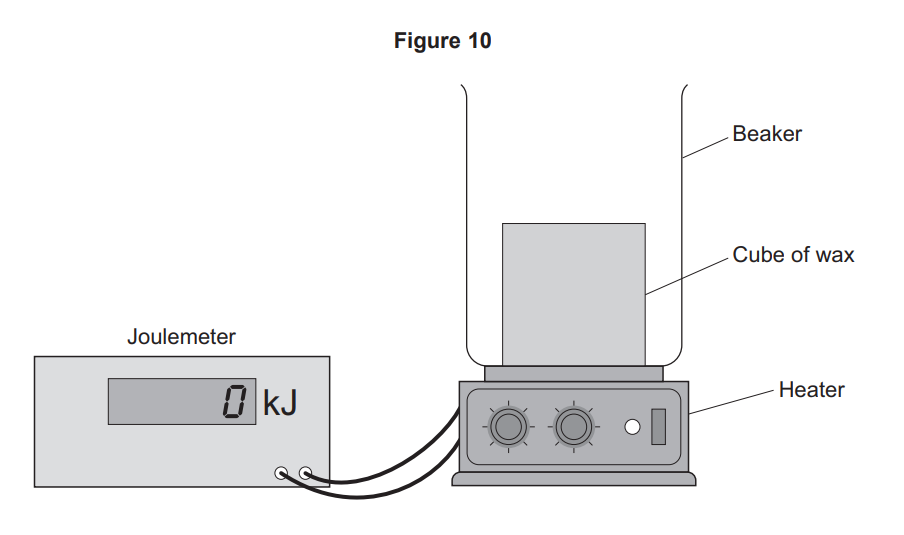
Figure 2 shows the arrangement.

Diagram of a joulemeter connected to an electric heater warming a beaker containing a solid cube of wax, used to measure energy supplied for heating.

The mass of the cube of wax was 0.15 kg.

The energy transferred to melt the wax was 31 500 J.

Calculate the specific latent heat of fusion of wax.

Use the equation:

\text{specific latent heat} = \frac{\text{energy for a change of state}}{\text{mass}}

Choose the unit from the box.

J

J/Kg

Kg

Specific latent heat of fusion = ________ Unit _________

8b
1 mark

Not all of the energy transferred by the heater was used to melt the wax.

What happened to the energy that was not used to melt the wax?

  • The energy decreased the temperature of the wax.

  • The energy increased the mass of the wax.

  • The energy was transferred to the surroundings.

8c
2 marks

Which two of the following would increase the accuracy of the student's results?

  • Completing the investigation in a colder environment.

  • Insulating the sides of the beaker that the wax was in.

  • Stirring the wax as it was melting.

  • Using a beaker with a larger volume.

  • Using a smaller mass of wax.

8d
1 mark

The student continued to heat the wax after it had melted.

The student measured the temperature of the wax every 10 seconds.

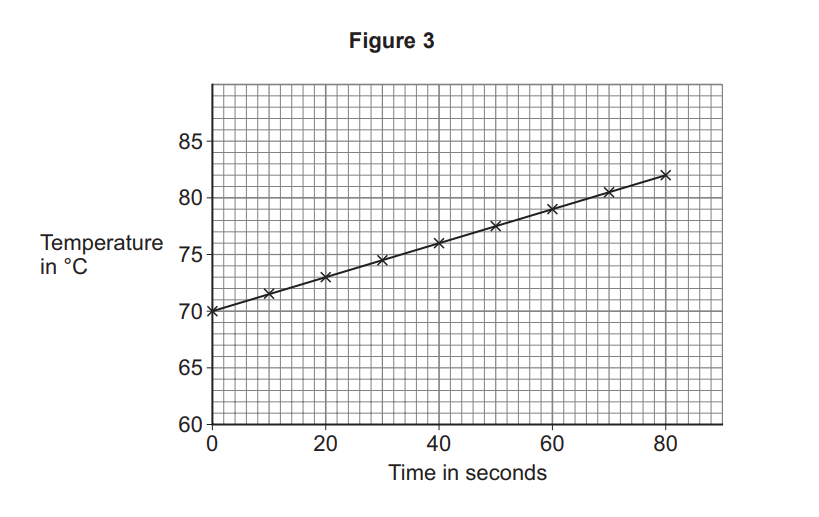
Figure 3 shows how the temperature of the liquid wax varied with time.

Line graph titled Figure 3 showing temperature rising from 70°C to about 82°C over 0–80 seconds, with plotted points joined by a straight line

What was the temperature change between 0 seconds and 80 seconds?

  • 12 °C

  • 70 °C

  • 82 °C

8e
Sme Calculator
2 marks

Between 0 seconds and 80 seconds, 3600 J of energy was transferred to the wax.

The mass of wax was 0.15 kg.

Calculate the specific heat capacity of the wax using the student's data.

Use your answer to Question 02.4 and the equation:

\text{specific heat capacity} = \frac{\text{change in thermal energy}}{\text{mass} \times \text{temperature change}}

Specific heat capacity = ______________J/kg °C

9
1 mark

In chemistry, a pure substance is a single element or compound.

Describe how measurements taken during a change of state can show if a substance is pure.

10a
Sme Calculator
4 marks

A student investigated the heating of some wax.

Method:

  1. Put a cube of wax in a beaker.

  2. Place the beaker on a heater connected to a joulemeter.

  3. Turn on the heater.

  4. When the wax begins to melt, turn on the joulemeter.

  5. When all the wax has melted, record the reading shown on the joulemeter.

Figure 10 shows the arrangement.

Diagram of a beaker on an electric heater containing a cube of wax, with a joulemeter connected by leads to measure energy supplied.

The student made these measurements:

  • mass of the cube of wax = 0.15 kg

  • energy transferred to melt the wax = 33 kJ

Calculate the specific latent heat of fusion of wax using the student's measurements.

Use the Physics Equations Sheet.

Specific latent heat of fusion of wax =____________ J/kg

10b
2 marks

The student's value for specific latent heat of fusion is not accurate because some energy was dissipated to the surroundings.

Explain how the dissipation of energy affected the student's calculated value.

10c
Sme Calculator
4 marks

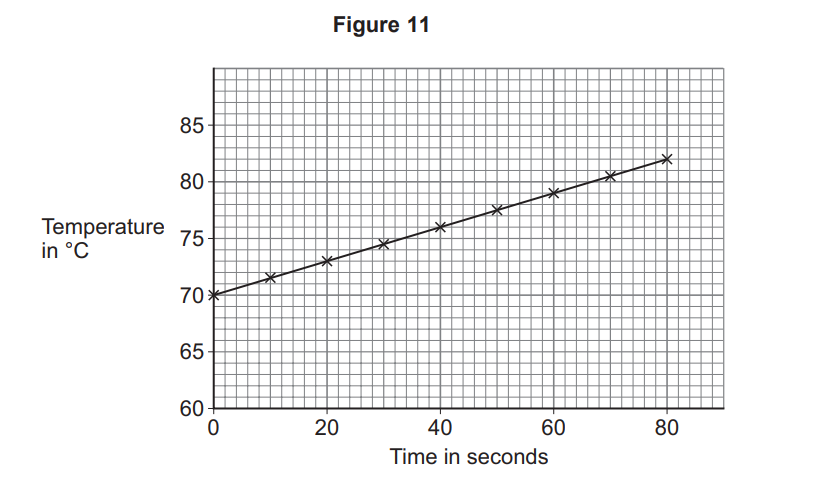
The student continued to heat the wax after it had melted. The student measured the temperature of the wax every 10 seconds.

Figure 11 shows how the temperature of the wax varied with time.

Line graph labelled Figure 11 showing temperature rising steadily from 70°C to 82°C over 0 to 80 seconds, with time on x‑axis and temperature on y‑axis.

Between 0 seconds and 80 seconds, 4950 J of energy was transferred to the wax.

The mass of the wax was 0.15 kg.

Determine the specific heat capacity of the wax.

Use the Physics Equations Sheet.

Specific heat capacity = _____________J/kg°C

11a
1 mark

Density can be explained using the particle model.

What is the unit of density (ρ)?

Tick one box.

  • joules, J

  • joules per kilogram, J/kg

  • kilograms, kg

  • kilograms per metre cubed, kg/m³

11b
2 marks

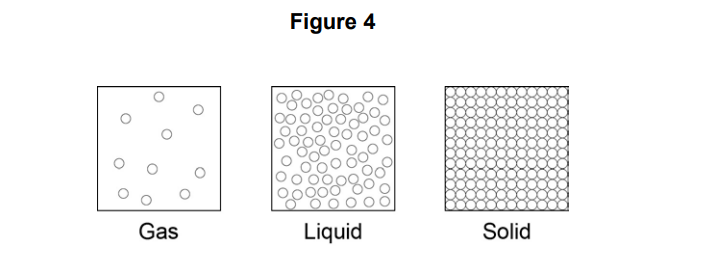
Figure 4 shows particles of the same substance in three states of matter

Diagram labelled Figure 4 showing particle arrangements in gas, liquid, and solid: sparse particles, closely packed random particles, and tightly ordered grid.

Use Figure 4 to explain why the solid has the highest density.

11c
2 marks

Complete the sentences.

Use answers from the box.

downwards  

kinetic

nuclear  

potential

randomly

slowly

The particles in a gas are constantly moving.

The particles move___________________________ .

When the temperature of the particles in a gas is increased the particles have more ______________________ energy.

11d
1 mark

A gas is put into a closed container.

The container and the gas inside it are heated.

What will happen to the pressure inside the container?

12a
6 marks

A student investigated the specific heat capacity of metals.

Describe an experiment the student could do to measure the specific heat capacity of a metal.

12b
Sme Calculator
3 marks

The student calculated the specific heat capacity of four metals.

Table 7 shows the student's results.

Table 7

Metal

Mass (kg)

Time (min)

Δθ (°C)

ΔE (J)

SHC (J/kg °C)

Aluminium

1

10

2

4 780

2 390

Brass

1

10

4

4 660

1 165

Copper

1

10

?

4 600

657

Steel

1

10

5

4 690

938

Use data from Table 7 to calculate the temperature change for copper. Use the correct equation from the Physics Equation Sheet.

Temperature change = ________________°C

12c
1 mark

What is the independent variable in the student's investigation?

Tick one box.

  • Mass of material

  • Power used

  • Time in minutes

  • Type of material

12d
2 marks

The student calculated the specific heat capacity of aluminium to be 2390 J/kg °C.

The 'true' specific heat capacity of aluminium is 900 J/kg °C.

Suggest why the student's result for aluminium is different from the 'true' value.

12e
2 marks

The teacher suggested that putting bubble wrap round the metal block would change the results.

How would using bubble wrap change the results?

Give a reason for your answer.

13a
1 mark

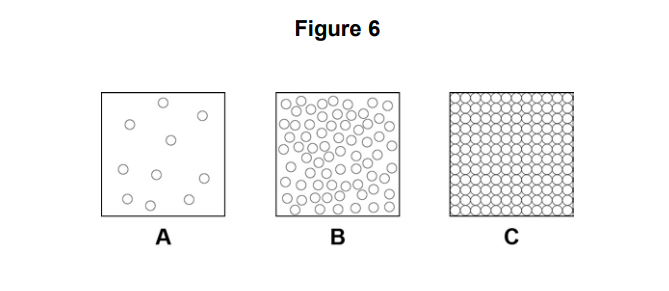
Figure 6 shows a simple model of the three states of matter

Figure 6 shows diagrams A, B and C with circles becoming progressively more numerous and tightly packed from sparse to dense within identical squares.

What is the correct equation to work out the density of a material?

13b
2 marks

A student explains density to his teacher using the particle model in Figure 6.

His teacher says there are limitations to the model.

Give two limitations of the particle model in Figure 6.

  1. _________________________________________________________

  2. _________________________________________________________

13c
4 marks

When the gas in a container with a fixed volume is heated, the pressure increases as the temperature increases.

Explain why the pressure increases.

Use the model in Figure 6 to help you.