Flaccid - GCSE Biology Definition
Reviewed by: Dr Natalie Lawrence
Last updated
Key Takeaways
A flaccid cell is a plant cell that has lost water through osmosis and no longer pushes firmly against its cell wall
Flaccid cells have low or zero turgor pressure, which is why under-watered plants wilt and droop
Flaccidity sits between two extremes: turgid (swollen with water) and plasmolysed (severely dehydrated, with the membrane pulled away from the wall)
The effect is reversible: giving a wilting plant water allows its cells to take in water by osmosis and become turgid again
Flaccid Meaning in Biology
In biology, the word flaccid refers to a plant cell that has lost enough water for the cytoplasm to stop pressing outward against the cell wall.
This matters because turgor pressure (the force of water pushing the cell contents against the wall) is what keeps plant tissue rigid. When cells become flaccid, that internal support disappears. The vacuole shrinks slightly, and the cell membrane no longer presses tightly against the cell wall. The plant begins to wilt.
Think of it like a partially deflated football. The outer casing (cell wall) keeps its shape, but there's no pressure from inside pushing it outward. The cell isn't damaged, but it isn't firm either. Flaccid is the halfway point between a fully turgid cell and a plasmolysed one.
How Osmosis Causes Flaccidity
Osmosis is the net movement of water molecules from a region of higher water potential (a dilute solution) to a region of lower water potential (a more concentrated solution) through a partially permeable membrane.
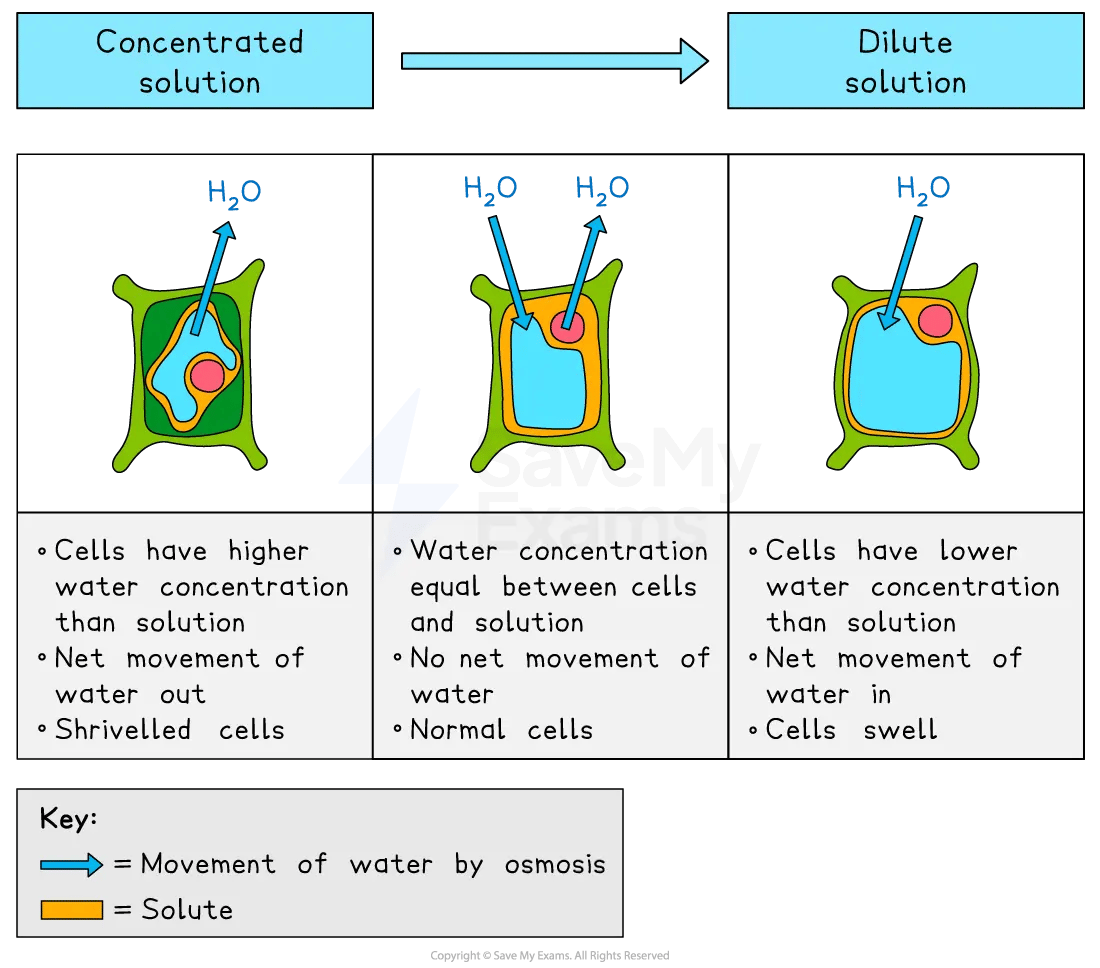
When a plant cell sits in a solution that's more concentrated than its cytoplasm, water moves out of the cell by osmosis. The vacuole loses volume, turgor pressure drops, and the cell becomes flaccid. No energy is needed for this. It's a passive process driven entirely by the difference in water potential between the cell and its surroundings.
Turgid vs Flaccid
Understanding the difference between turgid and flaccid cells explains a lot about how plants behave day to day.
Feature | Turgid cell | Flaccid cell |
|---|---|---|
Water content | High | Low |
Turgor pressure | High (cytoplasm pushes against cell wall) | Low or zero |
Vacuole | Large, full of water | Smaller, partially empty |
Cell membrane | Pressed firmly against cell wall | Pulling away slightly from cell wall |
Plant appearance | Upright, firm stems and leaves | Wilting, drooping stems and leaves |
Water movement | Net water movement into cell | Net water movement out of cell (or balanced) |
A well-watered plant has turgid cells throughout its stems and leaves. That internal pressure acts like scaffolding, holding the plant upright. When water becomes scarce, cells lose water by osmosis, become flaccid, and the plant wilts. This is why a houseplant left without water for a few days looks sad and droopy, but perks up within hours of being watered.
What Happens in Animal Cells
Animal cells don't have a cell wall, so the turgid/flaccid distinction doesn't apply in the same way. Without that rigid outer layer, animal cells respond differently to osmotic changes.
In a solution with higher water potential than the cell (a dilute or hypotonic solution), an animal cell swells as water moves in. It can keep swelling until the membrane bursts. This is called lysis. In a solution with lower water potential (a concentrated or hypertonic solution), the cell loses water and shrivels. This is called crenation. There's no intermediate "flaccid" state because there's no cell wall to maintain shape while pressure drops.
Plasmolysis: When Flaccidity Goes Further
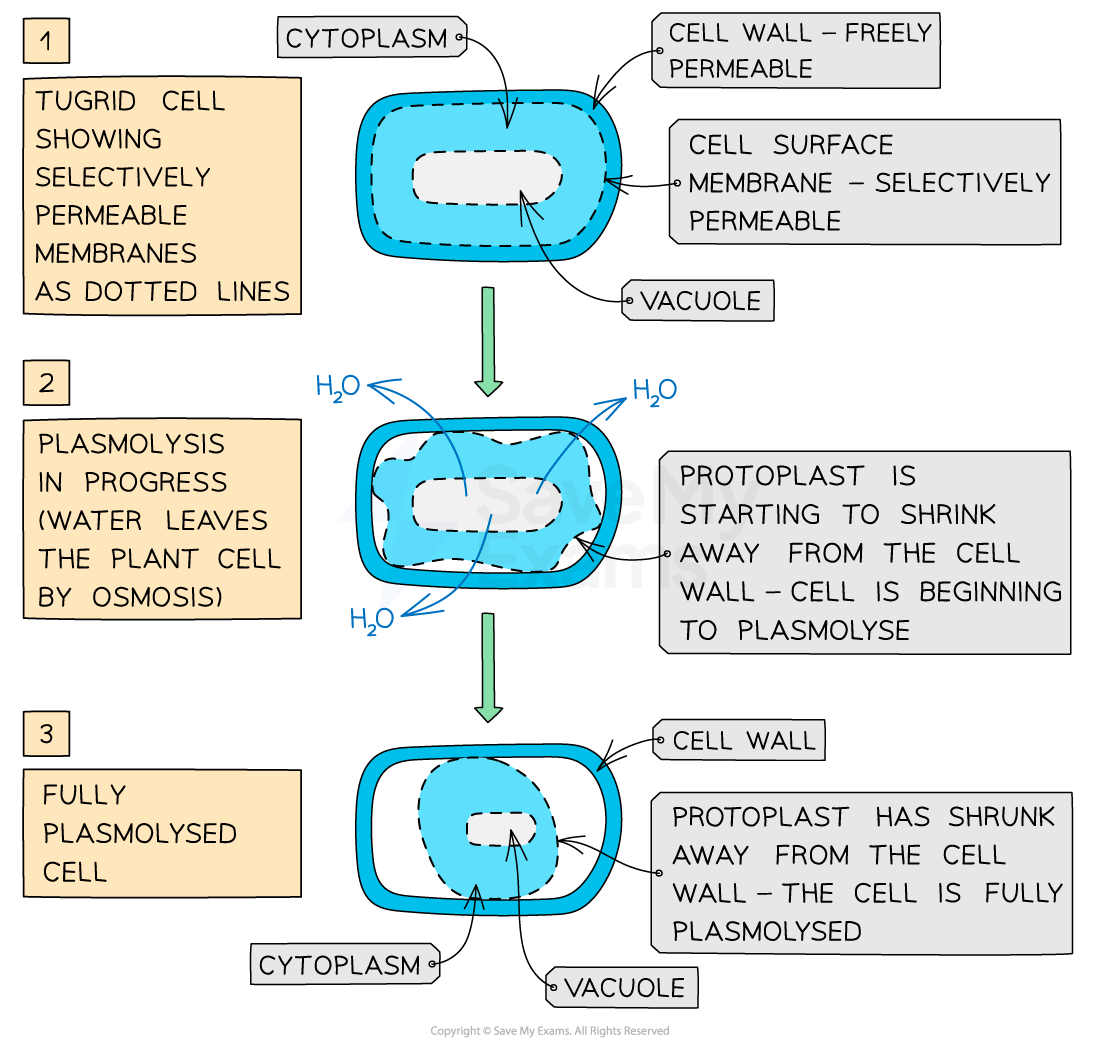
Flaccidity isn't the worst-case scenario for a plant cell. If the surrounding solution becomes much more concentrated, even more water leaves the cell by osmosis. The cell membrane eventually peels away from the cell wall entirely. This is plasmolysis.
During plasmolysis, the gap between the membrane and the wall fills with the external solution. The cell is still alive at this stage, but its normal functions are seriously disrupted. If conditions don't change, the cell can die.
You can observe plasmolysis under a microscope using red onion cells placed in a strong salt or sugar solution. The purple-stained vacuole shrinks visibly as water leaves, and the membrane pulls inward from the corners of the cell wall. Real-world situations include over-fertilising soil (which makes the soil solution too concentrated) or the effect of salt on plant roots near gritted roads in winter.
Examples of Flaccid Cells
Wilting houseplants are the classic example. When soil dries out, the water potential of the soil drops below that of the root cells. Water moves out of the roots by osmosis, cells become flaccid, and the stems and leaves lose their rigidity. Give the plant a good watering and the process reverses within hours.
Limp lettuce works the same way. Lettuce leaves left out lose water to the surrounding air. Their cells become flaccid and the leaves go floppy. Soak them in cold water for 20 minutes and they crisp up again as the cells absorb water and regain turgor pressure.
Celery in salt water shows the opposite effect. Fresh celery sticks placed in salty water lose water from their cells, becoming bendy and soft. Transfer them to plain water and they stiffen back up. It's a simple demonstration of how the concentration of the surrounding solution determines whether cells gain or lose water.
If you're studying osmosis and want to build a stronger understanding of how water moves in and out of cells, Save My Exams has detailed revision notes on this topic. Our AQA GCSE Osmosis revision notes cover the principles, required practicals, and examiner tips, all written by experienced teachers and examiners. You can also find the specific notes tailored to your course.
Frequently Asked Questions
What is the difference between flaccid and plasmolysed?
A flaccid cell has lost some water and its turgor pressure is low, but the cell membrane is still mostly in contact with the cell wall. A plasmolysed cell has lost so much water that the membrane has pulled away from the wall completely. Flaccid is the milder state; plasmolysis is the extreme.
Can a flaccid cell recover?
Yes. Place a flaccid plant cell in a dilute solution (one with a higher water potential than the cell) and water will move back in by osmosis. The vacuole refills, turgor pressure builds, and the cell becomes turgid again. This is why watering a wilted plant brings it back to life.
Why do plant cells become flaccid but not burst?
The cell wall prevents it. When water moves into a plant cell, the rigid cellulose wall stops the cell from expanding beyond a certain point. Animal cells lack this wall, which is why they can burst (lyse) in very dilute solutions. The cell wall acts as a physical limit on how much the cell can swell.
What does flaccid mean in everyday language compared to biology?
In everyday English, flaccid simply means soft, limp, or lacking firmness. In biology, the meaning of flaccid is more precise: it describes a plant cell with low turgor pressure because water has moved out by osmosis. The everyday meaning captures the general idea, but the biology definition ties it specifically to water loss and cell structure.
How can you tell if a cell is flaccid under a microscope?
Look at the gap between the cell membrane and the cell wall. In a turgid cell, the membrane is pressed right against the wall with no visible gap. In a flaccid cell, the membrane starts to pull away slightly, and the cell looks less plump. If the cell is plasmolysed, you'll see a clear gap where the membrane has separated from the wall entirely.
Examiner-written GCSE Biology revision resources that improve your grades 2x
- Written by expert teachers and examiners
- Aligned to exam specifications
- Everything you need to know, and nothing you don’t

Was this glossary entry helpful?

Share this article

 written revision resources that improve your