Turgid - GCSE Biology Definition
Reviewed by: Dr Natalie Lawrence
Last updated
Key Takeaways
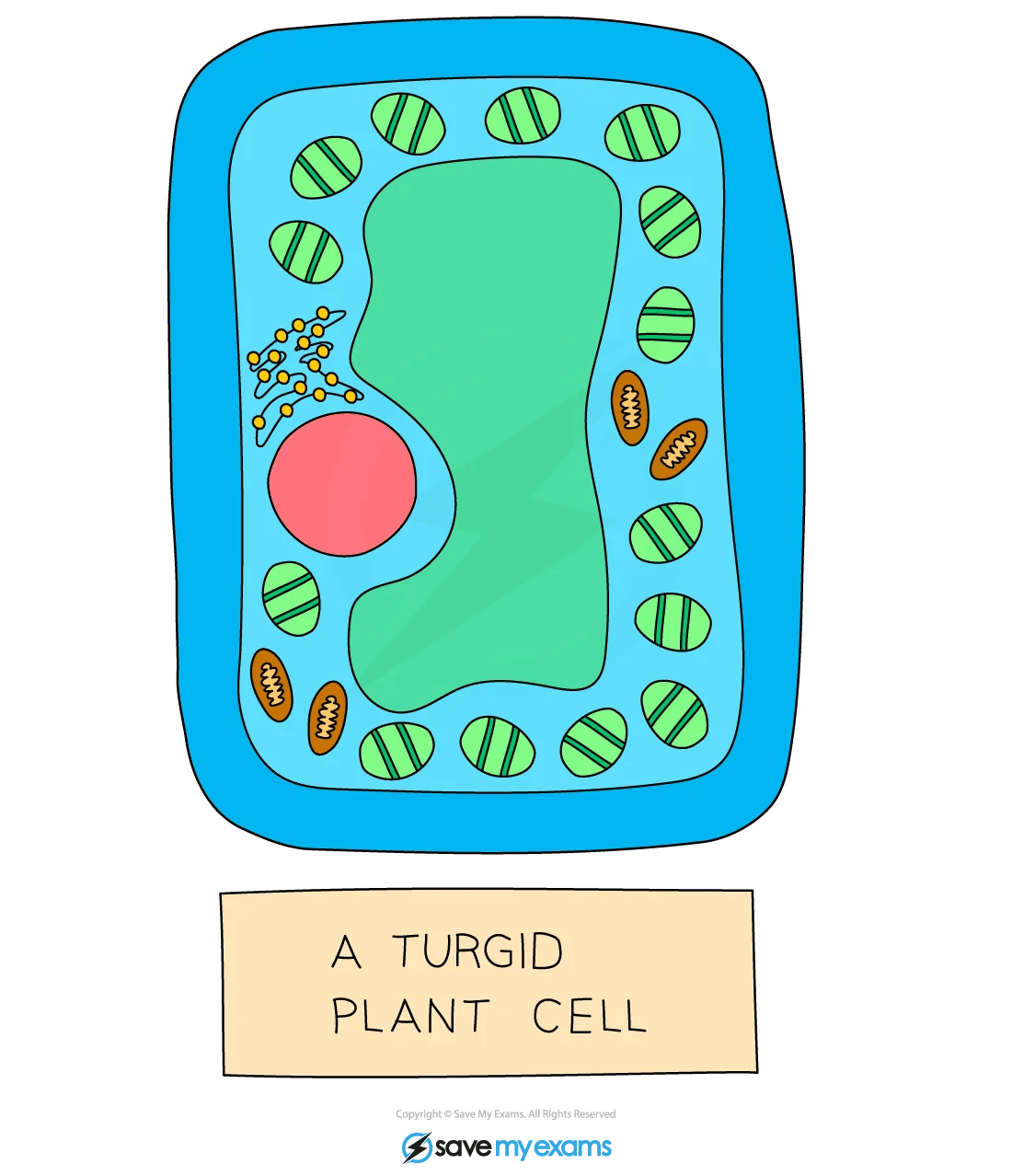
A turgid cell is swollen with water, with its cell membrane pressed firmly against the cell wall.
Cells become turgid when water enters by osmosis from a dilute solution.
Turgid cells give plants their structural support, keeping stems upright and leaves firm.
The cell wall prevents turgid plant cells from bursting, unlike animal cells which can lyse.
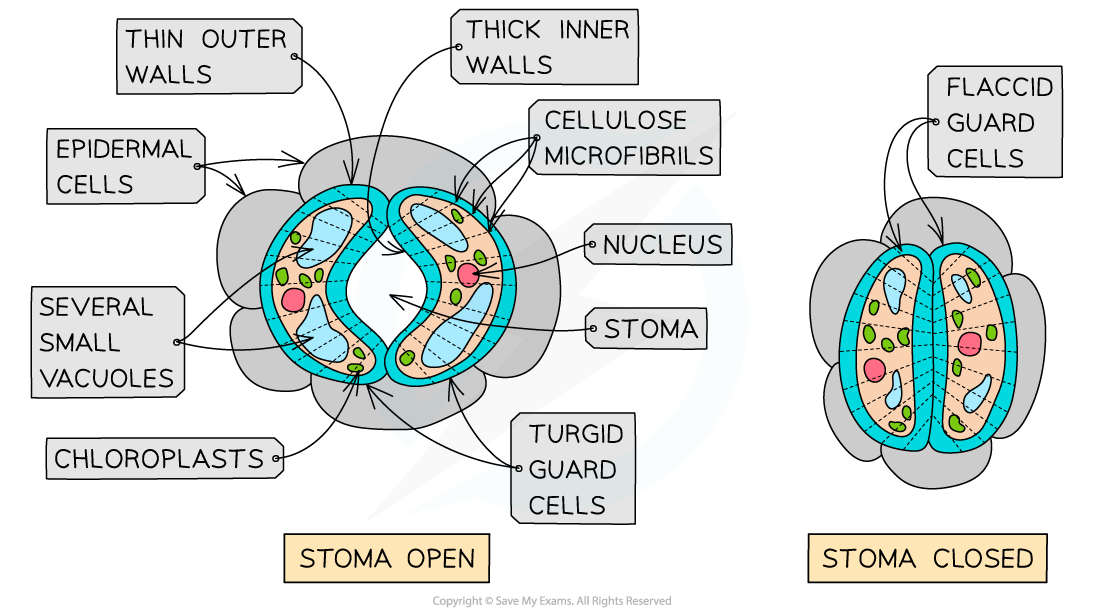
Guard cells use turgidity to open stomata for gas exchange.
What Does Turgid Mean in Biology?
In biology, a turgid cell is one that has absorbed water and become swollen. It is used specifically to refer to plant cells that are full of water, with the cell contents pushing outward against the cell wall. This outward push is called turgor pressure.
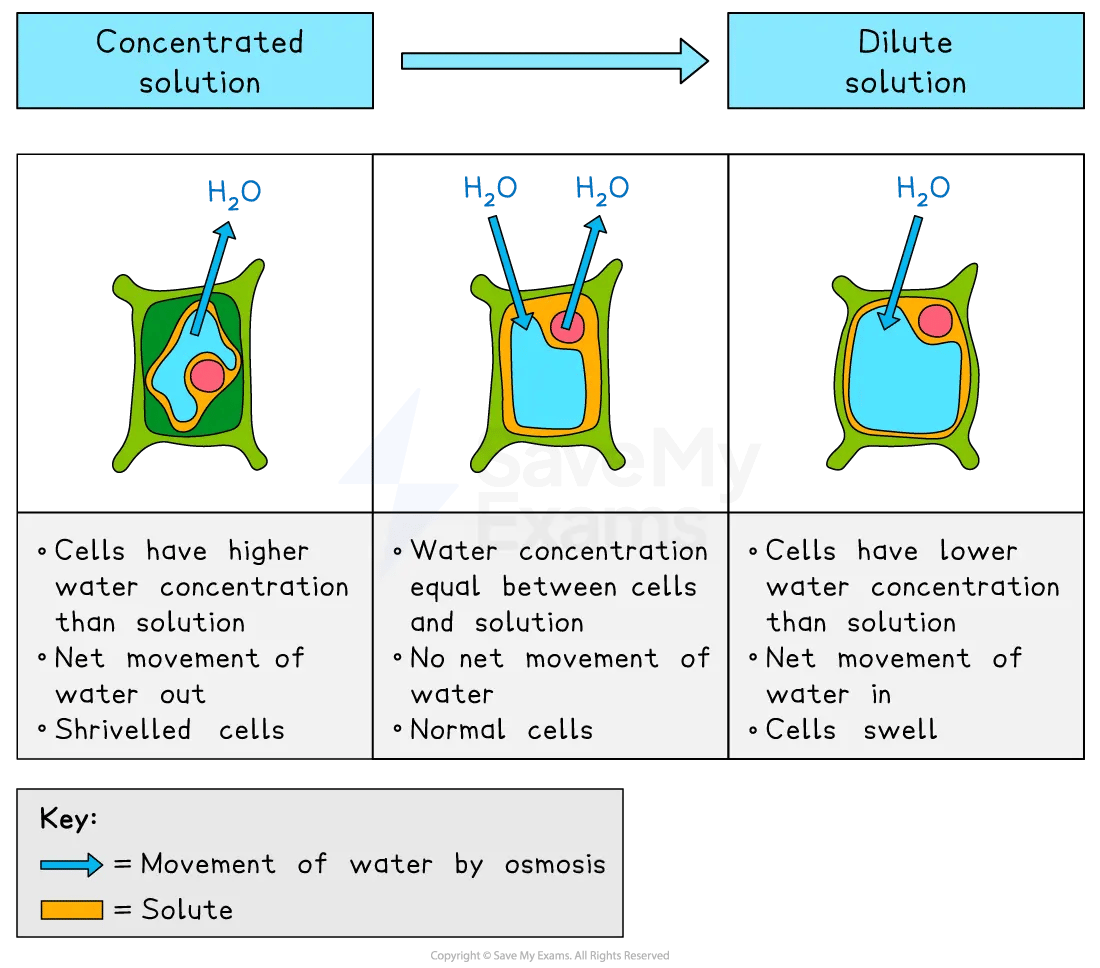
When a plant cell sits in a dilute solution, water moves into the cell by osmosis through the partially permeable membrane. The cell vacuole fills with water and expands. As it grows, it pushes the cell membrane against the rigid cell wall, which stops the cell from bursting.
Think of a turgid cell like an inflated balloon inside a cardboard box. The balloon (cell membrane and vacuole) pushes outward, but the box (cell wall) prevents it from expanding further.
How Does a Cell Become Turgid?
A cell becomes turgid through osmosis. Water molecules move from an area of higher water potential (outside the cell) to an area of lower water potential (inside the cell) through the partially permeable membrane.
The step-by-step process:
The solution outside the cell is more dilute than the cell contents
Water molecules pass through the cell membrane into the cell by osmosis
The vacuole swells as water accumulates
The expanding vacuole pushes the cell membrane against the cell wall
The cell wall resists further expansion, creating turgor pressure
The cell is now turgid
The whole process is passive. It doesn't require any energy from the cell.
Turgid Cell: Structure and Features
A turgid plant cell has several distinctive features:
Feature | Turgid cell | Non-turgid cell |
|---|---|---|
Vacuole | Large, full of water | Small or shrunken |
Cell membrane | Pressed against cell wall | Pulled away from cell wall |
Cell wall | Under tension | Relaxed |
Turgor pressure | High | Low or zero |
Cell appearance | Firm and swollen | Soft and limp |
The cell wall is the key structure here. Made of cellulose, it's strong enough to withstand turgor pressure without breaking.
Animal cells don't have this protection. They lack a cell wall entirely. Place an animal cell in a very dilute solution and water enters by osmosis. With nothing to resist the pressure, the cell swells until the membrane ruptures. This is called lysis.
Why Turgidity Matters for Plants
Turgid cells are the reason plants can stand upright without a skeleton. Each cell filled with water acts like a tiny pressurised unit. Collectively, millions of turgid cells create enough rigidity to support stems, hold leaves flat, and keep the whole plant standing. When plants don't get enough water, their cells lose turgidity and become flaccid.
“Everyday examples always help: imagine a wilting houseplant with drooping leaves and a soft stem. Water the plant, and the cells absorb water by osmosis, become turgid again, and the plant recovers.”
– Natalie Lawrence, Biology Tutor.
Guard cells offer a second example. These specialised cells sit in pairs around each stoma on the underside of leaves. When guard cells are turgid, they curve apart and the stoma opens. This allows carbon dioxide in for photosynthesis and lets oxygen out. When water is scarce, guard cells lose water, become flaccid, and close the stoma to reduce water loss. The plant effectively shuts its windows to conserve water.
Turgid vs Flaccid: What Is the Difference?
Plant cells can exist in three states depending on the solution around them:
State | Solution type | What happens | Cell appearance |
|---|---|---|---|
Turgid | Dilute (hypotonic) | Water enters by osmosis; vacuole swells; membrane presses against wall | Firm and swollen |
Flaccid | Equal concentration (isotonic) | No net water movement; vacuole partially filled | Soft, slightly limp |
Plasmolysed | Concentrated (hypertonic) | Water leaves by osmosis; vacuole shrinks; membrane pulls away from wall | Shrivelled, membrane detached |
A turgid cell is the optimal state for most plant cells. Flaccid cells still function but can't provide structural support. Plasmolysis is more severe and can damage the cell if it continues for too long.
You can observe these states with a simple experiment. Place potato cylinders in distilled water and concentrated sugar solutions, then weigh them after a few hours. The potato in distilled water gains mass and feels firm (turgid cells). The one in the sugar solution loses mass and feels flaccid or even plasmolysed (depending on the concentration of the sugar solution).
Save My Exams has detailed revision notes on Osmosis for AQA GCSE and other Biology courses that cover osmosis theory, the effect on plant tissue, and the required practical. Written by experienced teachers and examiners, they're tailored to your specification so you can revise exactly what you need.
Frequently Asked Questions
What is the opposite of turgid in biology?
The opposite of turgid is flaccid. A flaccid cell has lost water and its vacuole has shrunk, so the cell membrane is no longer pressed against the cell wall. If water loss continues further, the cell becomes plasmolysed, where the membrane pulls completely away from the wall.
What happens if a turgid cell is placed in a concentrated solution?
The cell loses water by osmosis. Water moves out of the cell into the surrounding concentrated solution because the solution has a lower water potential. The vacuole shrinks, turgor pressure drops, and the cell becomes flaccid. In extreme cases, the cell becomes plasmolysed.
Can animal cells become turgid?
Not in the same way as plant cells. Animal cells lack a cell wall, so nothing resists the inward pressure of water. If an animal cell absorbs too much water by osmosis, it swells until it bursts (lysis). Plant cells avoid this because their cell walls provides structural resistance, allowing turgor pressure to build safely.
How do turgid cells help plants stay upright?
Each turgid cell acts as a pressurised support unit. The turgor pressure inside pushes outward against the cell wall, making the cell rigid. When millions of cells across a stem or leaf are turgid, the combined effect holds the plant upright. Without a skeleton, plants rely entirely on turgor pressure for support.
What is the difference between turgor pressure and osmotic pressure?
Turgor pressure is the physical force of the cell contents pushing against the cell wall from inside. Osmotic pressure is the tendency of water to move into a solution by osmosis. In a turgid cell, turgor pressure builds as water enters by osmosis. The two forces eventually balance, and no more water enters the cell.
Examiner-written GCSE Biology revision resources that improve your grades 2x
- Written by expert teachers and examiners
- Aligned to exam specifications
- Everything you need to know, and nothing you don’t

Was this glossary entry helpful?

Share this article

 written revision resources that improve your