Hypotonic - GCSE Biology Definition
Reviewed by: Dr Natalie Lawrence
Last updated
Key Takeaways
A hypotonic solution has a lower concentration of solute than the cell cytoplasm
Water moves into cells by osmosis when they're placed in a hypotonic solution
Animal cells swell and can burst (cytolysis) in a hypotonic solution because they lack a cell wall
Plant cells become turgid in a hypotonic solution, which helps keep the plant upright
Hypotonic drinks are used for rapid rehydration because water is absorbed quickly into the bloodstream
What Is a Hypotonic Solution?
A hypotonic solution is one where the concentration of dissolved solutes is lower than the concentration inside the cell. The prefix "hypo" comes from Greek, meaning "under" or "below", so think of it as the solution being under the cell's concentration.
When a cell sits in a hypotonic solution, there's more water outside the cell than inside. Water molecules move into the cell through the partially permeable membrane by osmosis. This happens because water always moves from a region of higher water potential (the dilute solution) to a region of lower water potential (the more concentrated cell contents).
Pure water is the most hypotonic solution possible. It contains no dissolved solutes at all, creating the steepest concentration gradient with living cells.
How Osmosis Works in a Hypotonic Solution
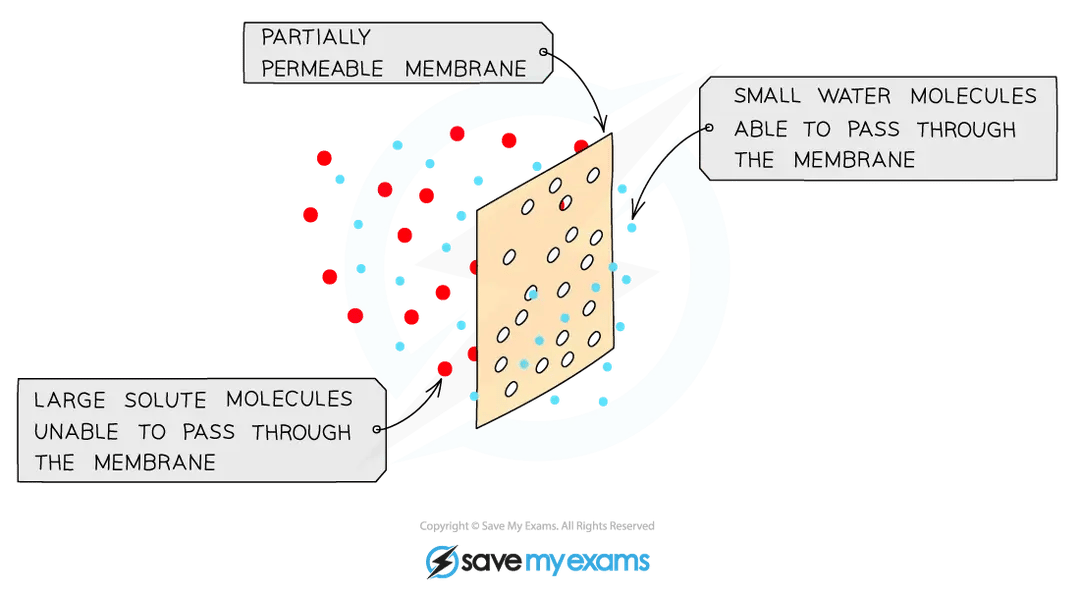
Osmosis is the net movement of water molecules from a dilute solution to a more concentrated solution through a partially permeable membrane.
The membrane allows small water molecules to pass through but blocks larger solute molecules like sugars and salts.
In a hypotonic solution, water potential is higher outside the cell than inside. Water molecules move in both directions through the membrane, but more move into the cell than out. This net inward flow continues until the water potential on both sides is equal, or until something stops it (like a cell wall).
The speed of this water movement depends on how big the difference in concentration is. A very dilute solution creates a steep gradient, so water moves in faster.
“I always remind my students that molecules don’t ‘care’ where they are moving, their movement is random. The effect of osmosis is the result of the initial difference in water molecule concentration on either side of a partially permeable membrane.”
– Natalie Lawrence, Biology Tutor.
Effect on Animal and Plant Cells
Animal cells and plant cells respond very differently to a hypotonic solution, and the reason comes down to one structure: the cell wall.
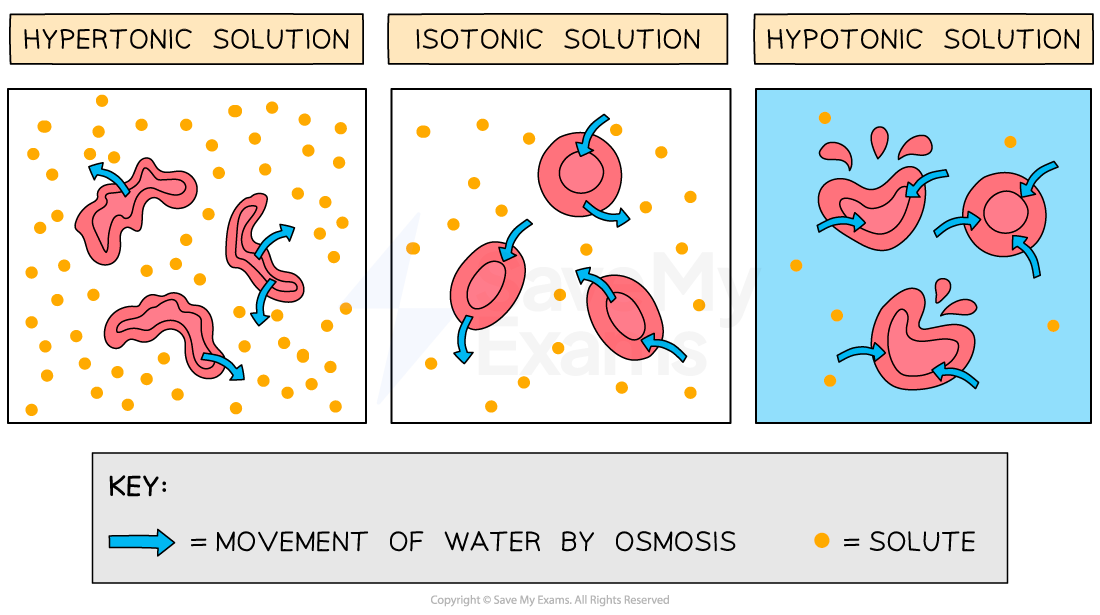
Animal cells don't have a cell wall. When placed in a hypotonic solution, water floods in by osmosis, and the cell swells. If the concentration difference is large enough, the cell membrane stretches beyond its limit and the cell bursts. This is called cytolysis. Red blood cells are a classic example. Drop them in distilled water and they swell until they pop.
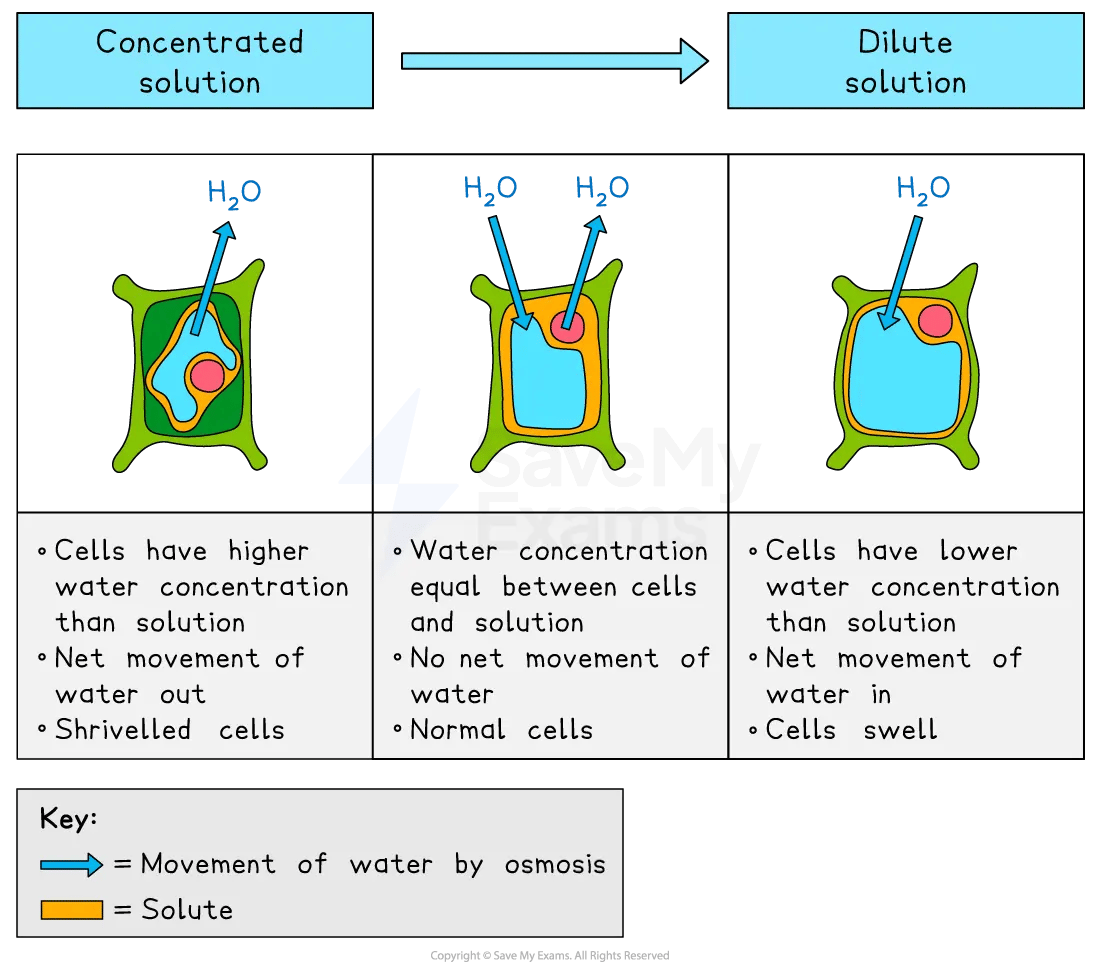
Plant cells do have a rigid cell wall surrounding the membrane. Water enters by osmosis and the vacuole expands, pushing the cell membrane firmly against the cell wall. The cell becomes turgid. But it won't burst because the cell wall is strong enough to resist the pressure. This turgor pressure is actually a good thing. It's what keeps stems upright and leaves firm. When plants don't get enough water, cells lose their turgidity and the plant wilts, becoming flaccid.
Animal Cell | Plant Cell | |
|---|---|---|
What happens | Swells, may burst | Swells, becomes turgid |
Why | No cell wall to resist | Cell wall provides support |
Term | Cytolysis (lysis) | Turgid |
Outcome | Cell destruction | Healthy, firm cell |
Hypertonic vs Hypotonic vs Isotonic Solutions
These three terms describe the concentration of a solution relative to the cell. They're not fixed labels for specific liquids. The same solution could be hypotonic to one cell type and isotonic to another.
Hypotonic – lower solute concentration than the cell. Water moves into the cell. Cells swell.
Isotonic – same solute concentration as the cell. No net movement of water. Cells stay the same size.
Hypertonic – higher solute concentration than the cell. Water moves out of the cell. Cells shrink (crenation in animal cells, plasmolysis in plant cells).
The key question is always: which side has more water? The net movement of water is always toward the side with less water (higher solute concentration). If you can work out which side is more concentrated, you can predict which way water will move.
Hypotonic Solutions in Everyday Life
Hypotonic drinks and sports drinks contain lower concentrations of sugar and salt than your blood. After exercise, drinking a hypotonic fluid creates a concentration gradient between your gut and bloodstream, with higher water potential in the small intestine. Water gets absorbed rapidly into the blood by osmosis. That's why athletes choose hypotonic sports drinks when fast rehydration matters more than replacing energy.
Watering plants is osmosis in action. Tap water is hypotonic compared to the cytoplasm of the root hair cells. When you water a plant, water moves into the roots by osmosis, travels up through the xylem, and keeps cells turgid.
Medical IV fluids sometimes use hypotonic solutions (like 0.45% saline) to rehydrate patients whose cells need water. The fluid has a lower solute concentration than blood, so water moves from the bloodstream into cells that are dehydrated.
To build a deeper understanding of how osmosis works in cells, Save My Exams offers revision notes written by experienced teachers and examiners that cover the full detail of this topic. Check out our AQA GCSE Principles of Osmosis revision notes for diagrams, worked examples, and examiner tips. You can find the notes tailored to your specific course too.
Frequently Asked Questions
What happens if you put a red blood cell in a hypotonic solution?
The red blood cell absorbs water by osmosis and swells. Because red blood cells have no cell wall, the membrane stretches until it ruptures. The cell bursts open in a process called cytolysis (or haemolysis, specifically for red blood cells). This is why blood samples must be stored in isotonic solutions.
Why do plant cells not burst in a hypotonic solution?
Plant cells have a rigid cell wall made of cellulose that surrounds the cell membrane. As water enters by osmosis and the vacuole expands, the cell wall pushes back against the swelling. This creates turgor pressure that prevents the cell from bursting. The cell becomes turgid rather than lysing.
Is pure water a hypotonic solution?
Yes. Pure water contains no dissolved solutes, so it always has a higher water potential than any living cell. Place any cell in pure water and water will move into that cell by osmosis.
What is the difference between a hypotonic drink and an isotonic drink?
A hypotonic drink has lower sugar and salt concentrations than your blood, so water is absorbed into the bloodstream quickly by osmosis. It's best for fast rehydration. An isotonic drink matches your blood's concentration and replaces both fluids and energy at a moderate rate. Athletes pick between them depending on whether rehydration speed or energy replacement is the priority.
Examiner-written GCSE Biology revision resources that improve your grades 2x
- Written by expert teachers and examiners
- Aligned to exam specifications
- Everything you need to know, and nothing you don’t

Was this glossary entry helpful?

Share this article

 written revision resources that improve your