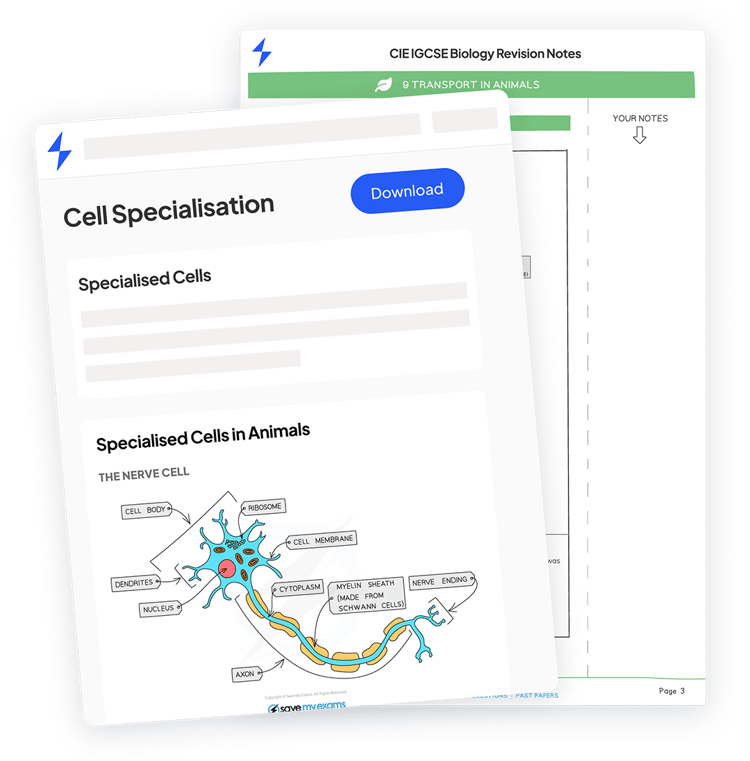
A sensory neuron is a type of nerve cell that plays a key role in our nervous system by helping us understand the world around us. It collects information from our senses, such as sight, sound, touch, taste, and smell, and sends these signals to the brain to be processed. For example, if you touch something hot, sensory neurons carry the message to your brain, so that you react quickly by pulling your hand away. In GCSE Psychology, understanding sensory neurons is important because they help explain how we perceive and respond to different stimuli in our environment.
Examiner-written GCSE Psychology revision resources that improve your grades 2x
- Written by expert teachers and examiners
- Aligned to exam specifications
- Everything you need to know, and nothing you don’t
Was this glossary entry helpful?

Share this article
 written revision resources that improve your