Political, Legal & Economic Changes (DP IB History: SL): Revision Note

Summary
The feminist movement achieved significant legal and political reforms during the 1960s and 1970s, including new laws addressing workplace discrimination, education equality, and reproductive rights
Feminist organisations successfully lobbied government institutions and used courts to challenge gender discrimination, leading to key rulings such as Roe v. Wade (1973)
Women gained greater political representation and influence, supported by groups such as the National Women's Political Caucus (NWPC)
Economic opportunities improved through legislation such as the Equal Pay Act of 1963 and the Civil Rights Act of 1964
Political changes
Increased political representation
Feminist activism contributed to a gradual increase in women participating in politics and government
This challenged traditional male dominance in political institutions
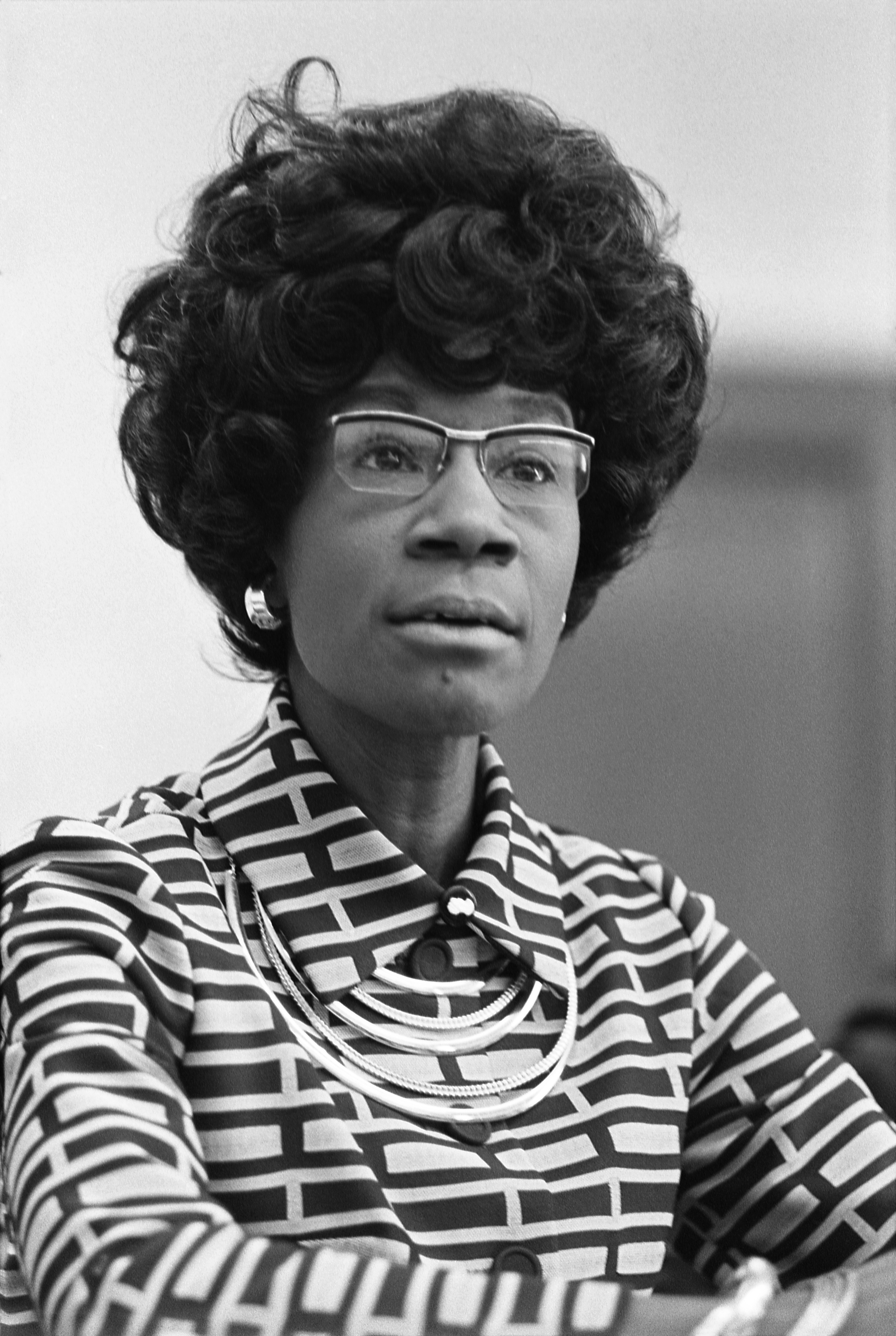
The National Women's Political Caucus was founded in 1971 by figures such as Gloria Steinem, Betty Friedan and Shirley Chisholm
It aimed to increase the number of women elected to political office
The caucus worked by:
Supporting female candidates
Lobbying political parties
Encouraging women to run for office
Shirley Chisholm became the first Black woman elected to Congress in 1968
Chisholm later ran for the Democratic presidential nomination in 1972
This demonstrated growing political opportunities for women
The number of women in Congress increased gradually during the 1970s
This reflected the growing acceptance of women in political leadership roles
Historiography
Jo Freeman
The Politics of Women’s Liberation (1975)
Freeman argued that feminist groups successfully used political lobbying to increase women’s influence in government and public life.
Equal Rights Amendment (ERA)
The Equal Rights Amendment became a central political goal of feminist organisations
The ERA aimed to guarantee equal legal rights regardless of sex
In 1972, Congress passed the ERA and sent it to the states for ratification
Feminist organisations such as National Organization for Women (NOW) lobbied state legislatures to ratify the amendment
By 1977, 35 states had ratified the ERA
The amendment ultimately failed to reach the required 38 states
Opposition led by Phyllis Schlafly argued that the ERA would undermine traditional gender roles and family structures
The failure of the ERA demonstrated the limits of feminist political influence
Historiography
Phyllis SchlaflyThe Power of the Positive Woman (1977)
Schlafly argued that women should value traditional family roles, stating that “A woman should have the right to be in the home as a wife and mother.”
She believed the ERA would remove legal distinctions that protected women and undermine the family.
Legal changes
Workplace equality legislation
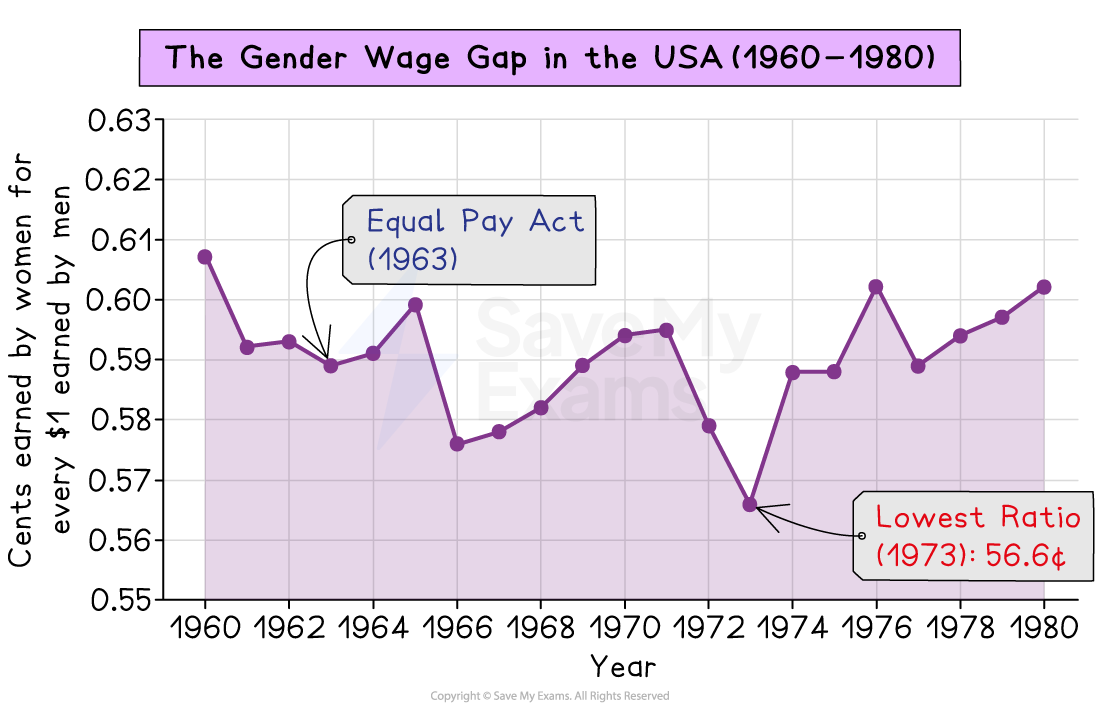
The Equal Pay Act of 1963
This Act aimed to reduce wage differences between men and women performing the same work
The Civil Rights Act of 1964, particularly Title VII,
Banned employment discrimination based on sex, race, religion, or national origin
Feminist organisations used these laws to challenge discriminatory employment practices
The Equal Employment Opportunity Commission became an important institution for enforcing workplace equality
Title IX (1972)
Title IX prohibited gender discrimination in education programs receiving federal funding
Title IX significantly expanded women's access to higher education and professional careers
Universities increased funding for women’s sports and educational opportunities
Title IX helped challenge institutional authority by forcing educational institutions to change discriminatory policies
Supreme Court cases
Ruth Bader Ginsburg played a major role in advancing women's legal rights through her work with the ACLU Women's Rights Project
Reed v. Reed (1971)
The Supreme Court ruled that gender discrimination violated the Constitution
Frontiero v. Richardson (1973)
The Court ruled against gender discrimination in military benefits
These rulings helped establish the legal principle that gender discrimination was unconstitutional
Reproductive rights
The Supreme Court ruling in Roe v. Wade (1973) legalised abortion nationwide
The Court ruled that the Constitution protected a woman's right to privacy, which extended to abortion
This decision represented a major legal challenge to state authority and traditional gender roles
Case Study
Roe v. Wade (1973)
The case was brought by Norma McCorvey (“Jane Roe”), challenging a Texas law banning most abortions
The Court ruled 7–2 that a woman’s right to an abortion is protected by the right to privacy under the Constitution
Introduced the trimester system:
1st trimester: abortion allowed
2nd trimester: some regulation
3rd trimester: states could restrict/ban
Significance:
Major victory for second-wave feminism → expanded women’s reproductive rights
Sparked long-term political and social conflict between pro-choice and pro-life groups
Became a central issue in U.S. politics for decades
Economic changes
Employment opportunities
Women’s participation in the workforce increased significantly during this period
Rates among married women rose from approximately 38% in 1960 to over 50% by 1980
This reflected a major shift in traditional gender roles
Legal reforms such as the Civil Rights Act of 1964 (Title VII) and Equal Pay Act of 1963 enabled women to enter previously male-dominated professions, including:
Law
Medicine
Business
Feminist activism helped challenge workplace discrimination and barriers to promotion
Laws banning employment discrimination improved opportunities for women in business, education, and government
Historiography
Alice Kessler-Harris
Out to Work: A History of Wage-Earning Women in the United States (1982)
Kessler-Harris argues that increased workforce participation changed expectations but did not eliminate inequality
She emphasises that economic change was real but incomplete
Wage equality
Despite the Equal Pay Act of 1963, women continued to earn significantly less than men
During the early 1970s, women earned approximately 60% of male wages on average
This demonstrated that legal reforms had limited immediate impact on economic equality
Many women remained in lower-paid sectors such as clerical work, retail, and service industries
This highlighted structural barriers that persisted despite feminist activism
Wage gaps began to narrow gradually during the late 1970s
Increasing numbers of married women entered the workforce, reflecting changing economic roles
Expansion of education
Title IX increased female participation in universities
Women gained access to previously male-dominated professions such as law and medicine
Greater educational access contributed to long-term economic improvements
Examiner Tips and Tricks
In your analysis for Paper 3 essay questions, you must try to write thematically. That means do not write a chronological narrative, but choose different 'themes' or 'factors' to analyse and compare to gain higher marks.
In this topic, your themes would be political, legal and economic!

Unlock more, it's free!
Join the 100,000+ Students that ❤️ Save My Exams
the (exam) results speak for themselves:

Was this revision note helpful?
