2D Shapes (WJEC GCSE Maths & Numeracy (Double Award)): Revision Note
Exam code: 3320

Properties of 2D shapes
What are the names of common 2D shapes?
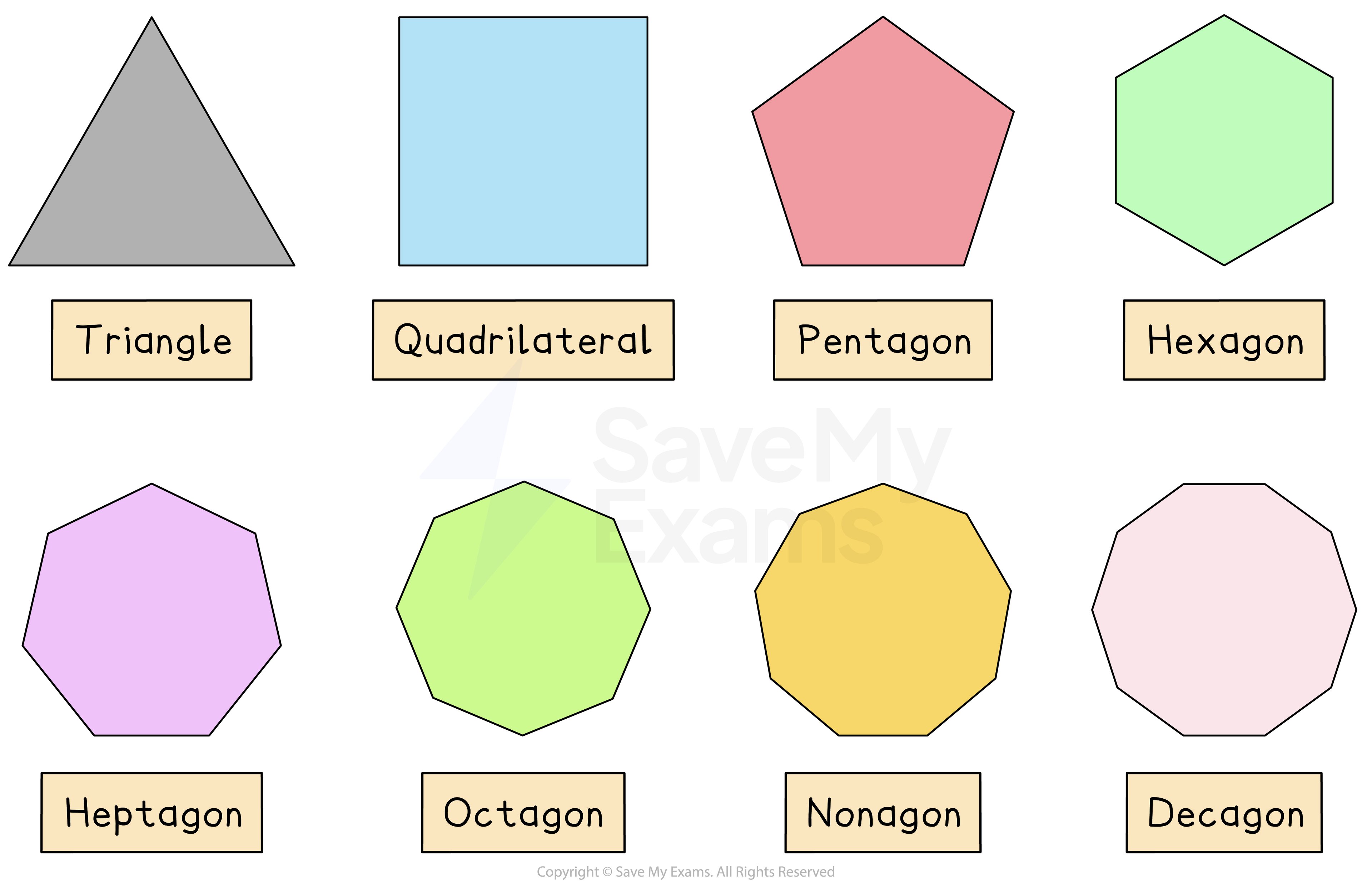
You should know the general names of all the 2D polygons
A triangle has 3 sides
A quadrilateral has 4 sides
A pentagon has 5 sides
A hexagon has 6 sides
A heptagon has 7 sides
An octagon has 8 sides
A nonagon has 9 sides
A decagon has 10 sides
A polygon is a flat (plane) shape with n straight sides
A regular polygon has all sides the same length and all angles the same size
What are the names of the different types of triangles?
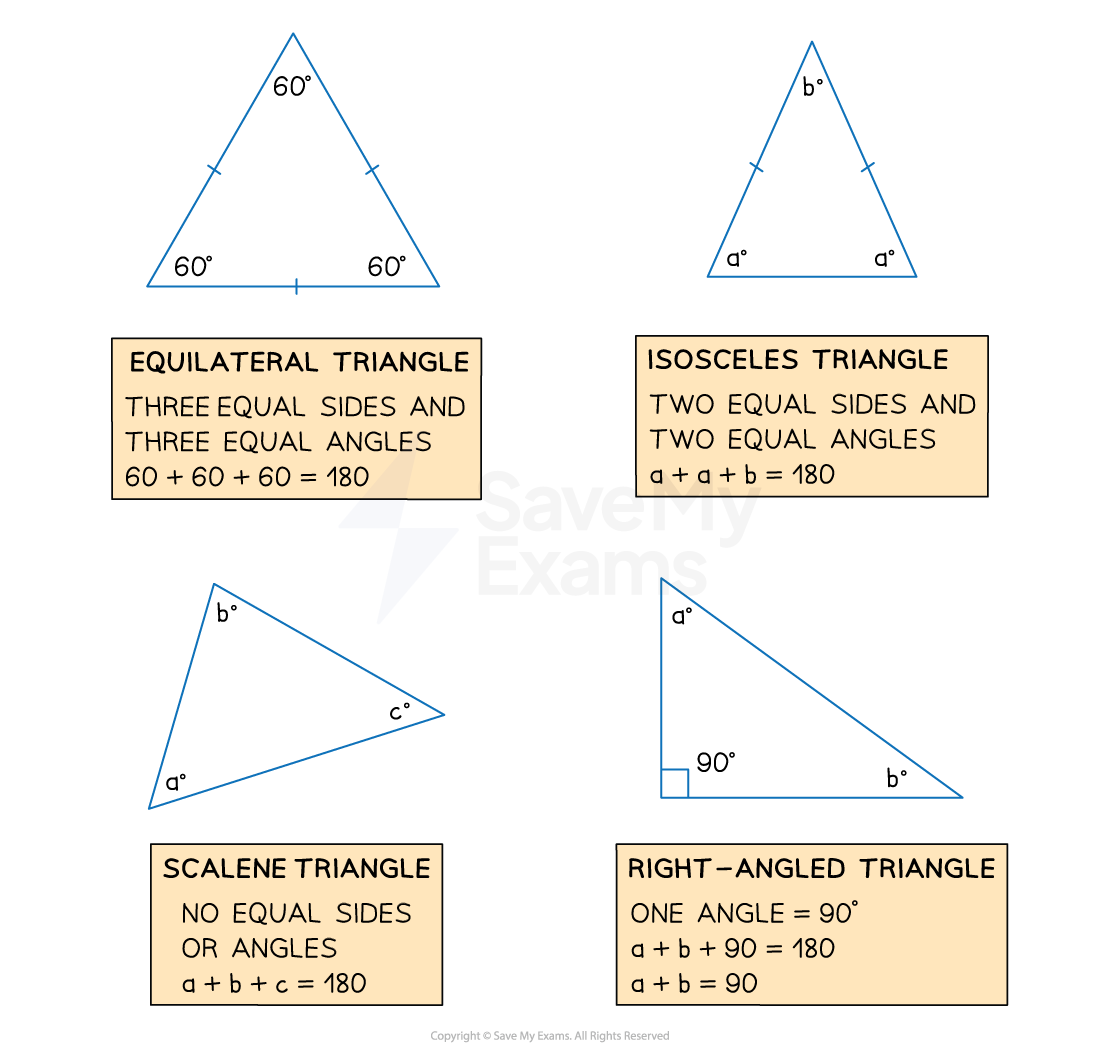
You should know the names and properties of the different types of triangles
An equilateral triangle has 3 equal sides and 3 equal angles
An isosceles triangle has 2 equal sides and 2 equal angles
A right-angled triangle has one 90° angle
A scalene triangle has 3 sides all of different lengths
What are the names of the different types of quadrilaterals?
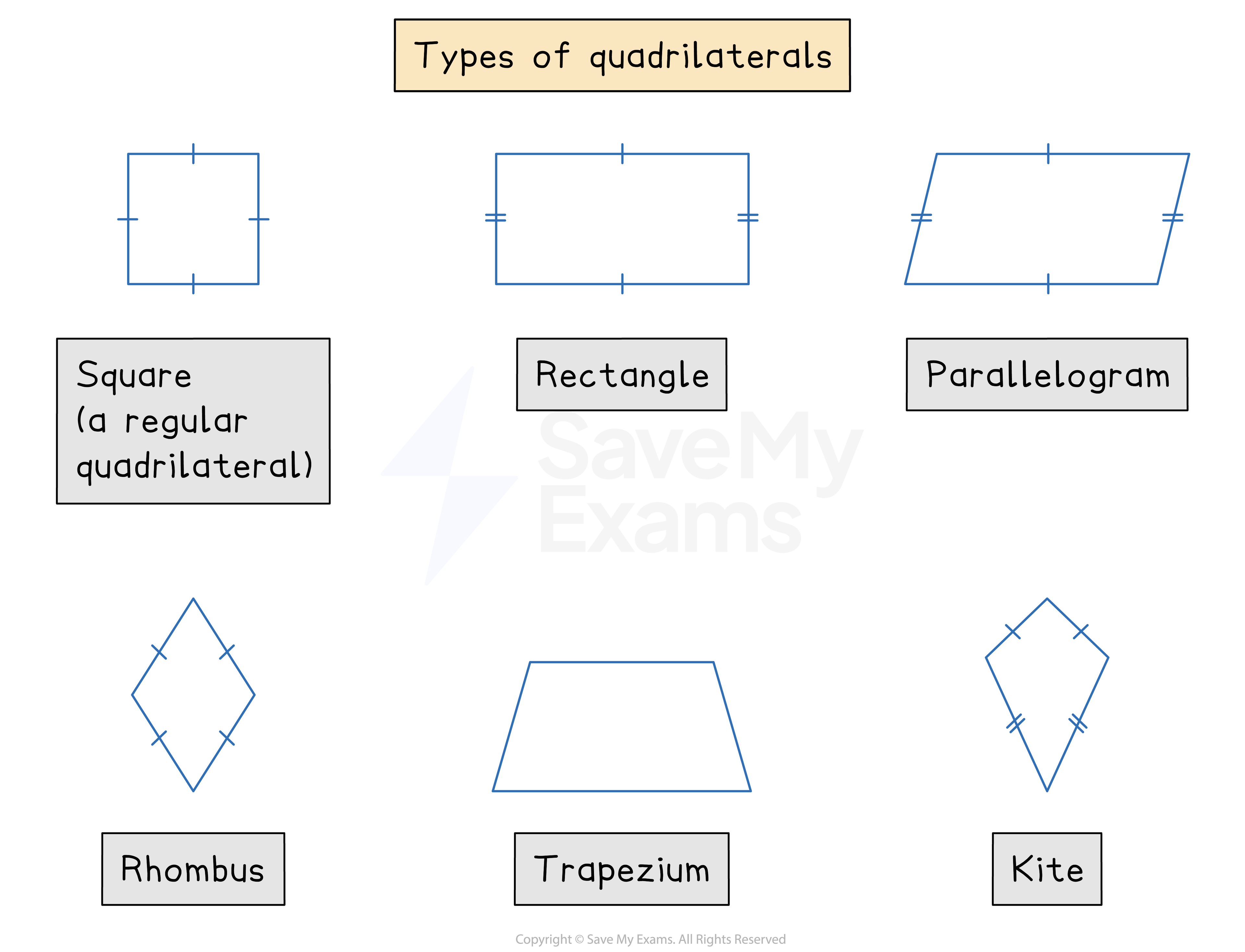
You should know the names and properties of the different types of quadrilaterals
These are squares, rectangles, parallelograms, rhombuses, trapeziums and kites
What are the properties of rectangles and squares?
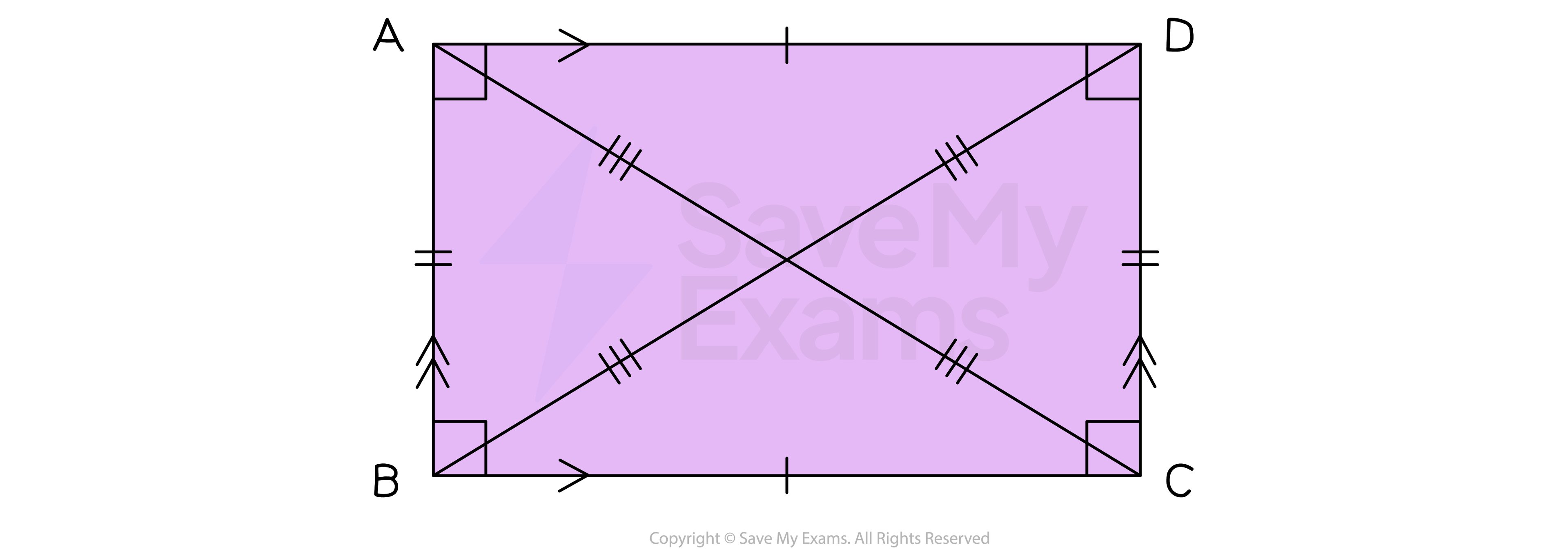
A square is a rectangle where all the sides have the same length
The table below shows the properties of a rectangle and square
Rectangle | Square | |
|---|---|---|
Sides |
|
|
Angles |
|
|
Diagonals |
|
|
Symmetries |
|
|
What are the properties of parallelograms and rhombuses?
A rhombus is a parallelogram where all the sides have the same length
The table below shows the properties of a parallelogram and rhombus
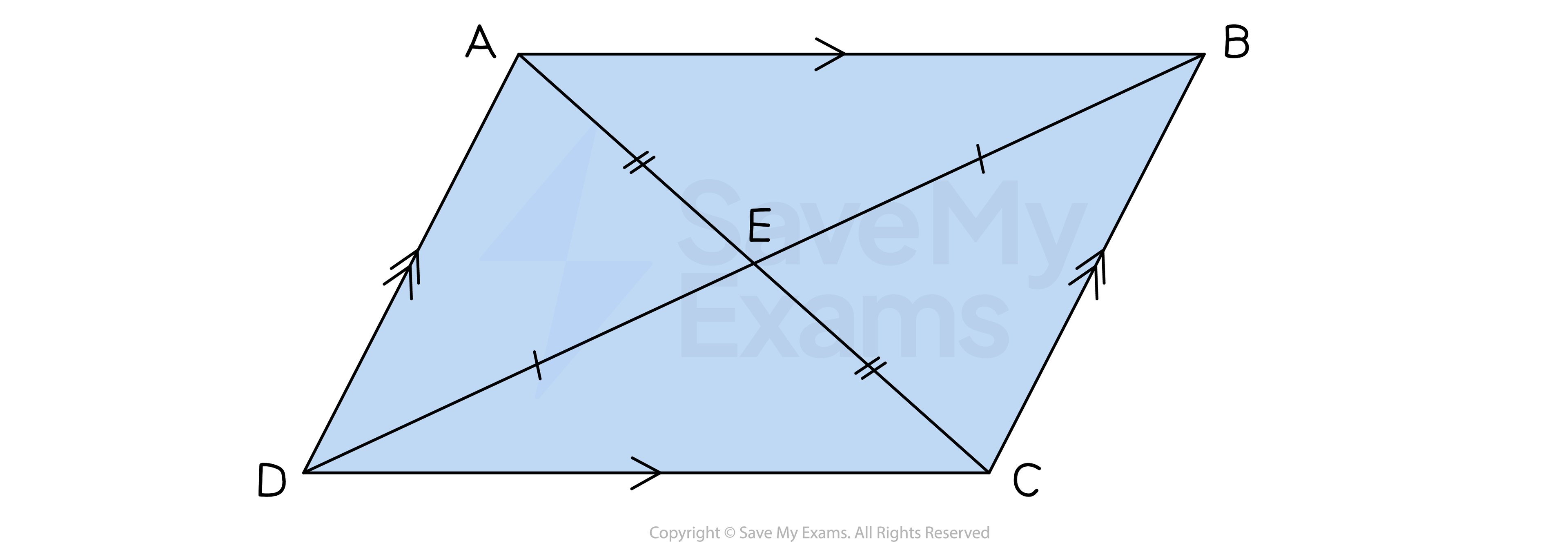
Parallelogram | Rhombus | |
|---|---|---|
Sides |
|
|
Angles |
|
|
Diagonals |
|
|
Symmetries |
|
|
What are the properties of trapeziums?
The table below shows the properties of a trapezium and an isosceles trapezium
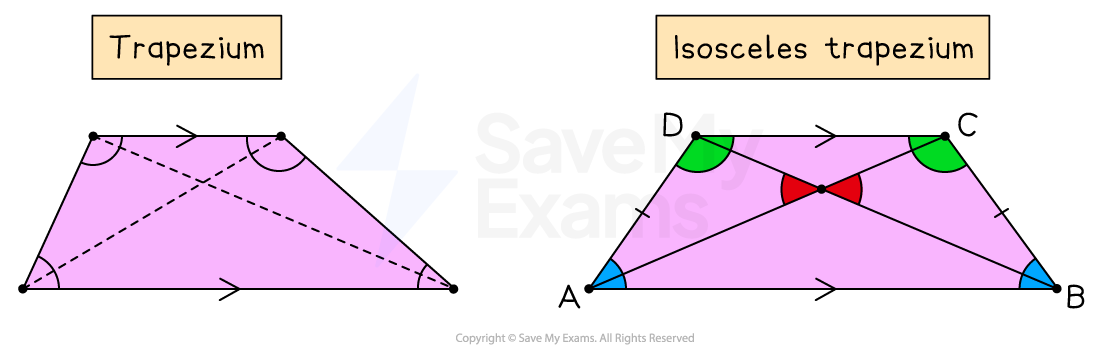
Trapezium | Isosceles trapezium | |
|---|---|---|
Sides |
|
|
Angles |
|
|
Diagonals |
|
|
Symmetries |
|
|
What are the properties of kites?
The table below shows the properties of a kite

Kite | |
|---|---|
Sides |
|
Angles |
|
Diagonals |
|
Symmetries |
|
What terms related to circles do I need to know?
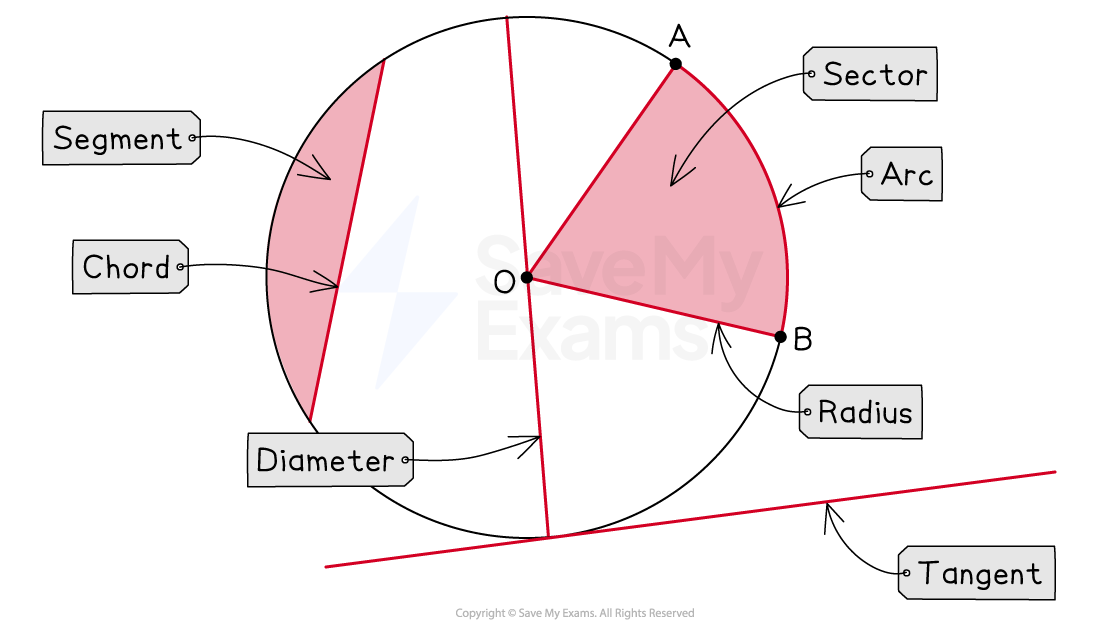
Circles have several specific terms that you need to be familiar with:
A circle's perimeter is called a circumference
Its line of symmetry is called a diameter
The line from the centre of the circle to its circumference is called a radius
The diameter is equal to 2 × the radius
A portion of the circumference is called an arc
A portion of the area, contained between two radii and an arc, is called a sector
A line between two points on the circumference is called a chord
The area formed between a chord and an arc is called a segment
A line which intersects the circumference at one point only, is called a tangent
The ratio
 is equal to 𝝅 (3.14159...)
Circles have many angle properties and you will need to learn some of them
These properties are known as circle theorems
Examiner Tips and Tricks
Always double check if a measurement is the diameter or the radius. This is a really common error in exams.
Diameter = 2 × Radius.

Unlock more, it's free!
Join the 100,000+ Students that ❤️ Save My Exams
the (exam) results speak for themselves:

Was this revision note helpful?
