This question is about atomic structure.
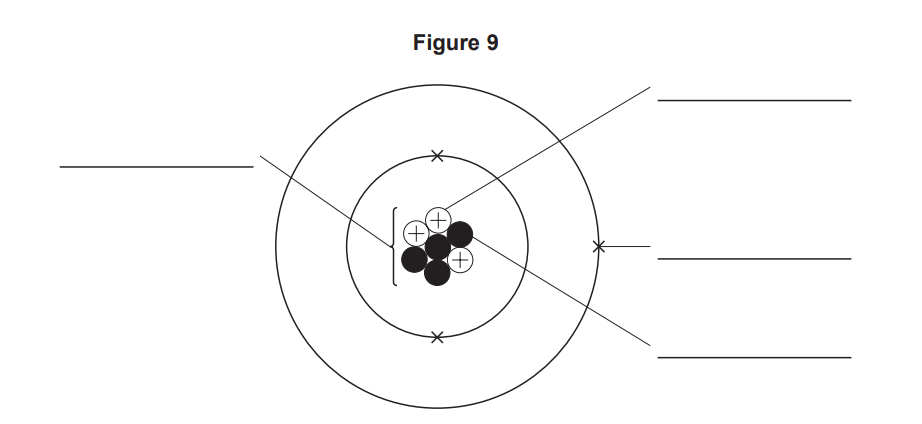
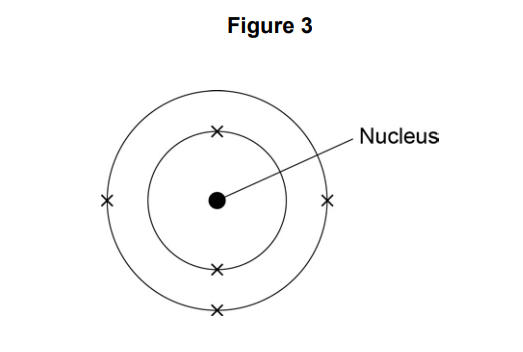
An atom contains three types of particles.
Table 1 shows some information about the particles.
Table 1
Name of particle | Charge |
|---|---|
Electron | -1 |
Neutron | |
Proton |
Complete Table 1.
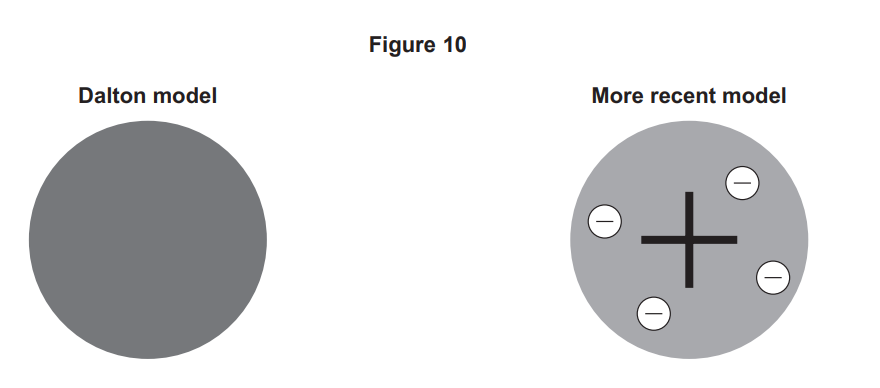
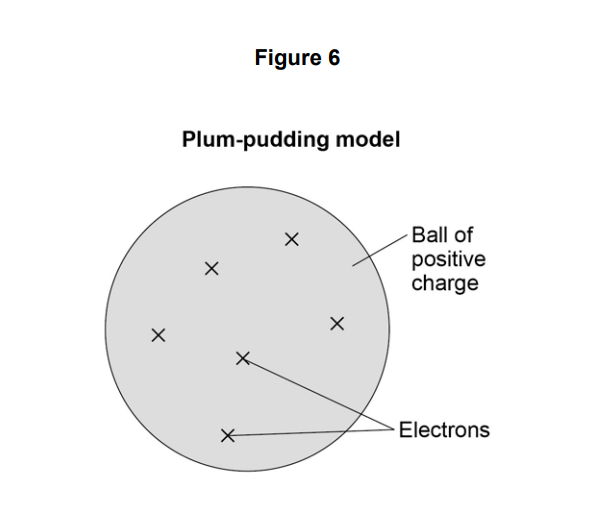
Models of the atom have changed over time.
Figure 10 shows an early model of the atom.
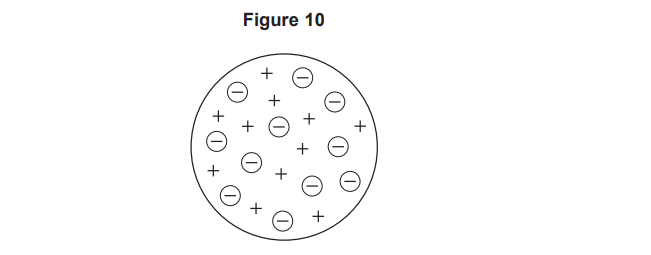
What is the name of the model of the atom in Figure 10?
Dalton's model
Nuclear model
Plum pudding model
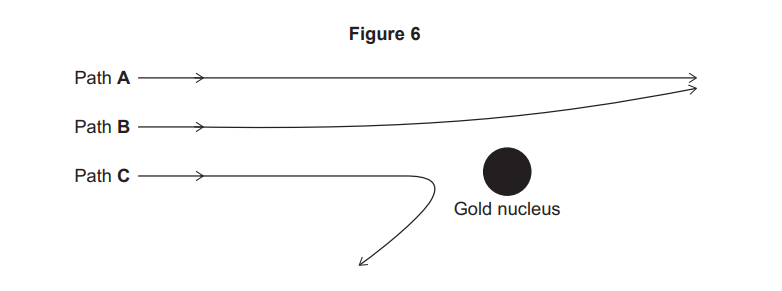
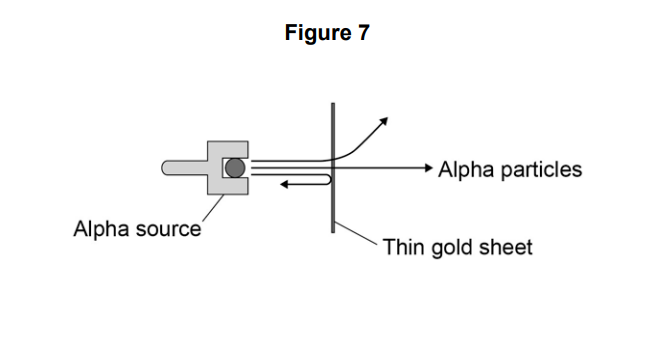
Alpha particles from a source were directed at thin gold foil.
Figure 11 shows some of the paths the alpha particles followed.
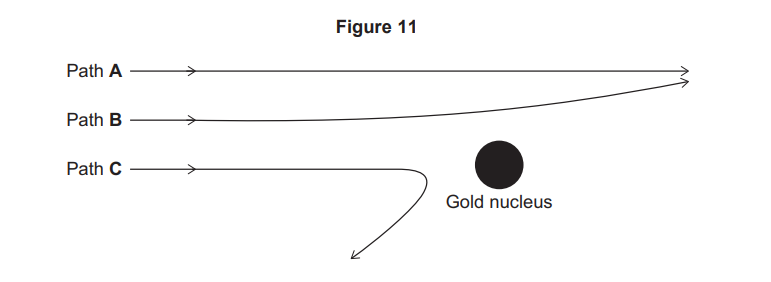
Table 2 shows the number of alpha particles that followed paths A, B and C.
Path | Number of alpha particles |
|---|---|
A | 8 289 864 |
B | 7 920 |
C | 198 |
The number of alpha particles on path A was greater than the number of alpha particles on path B.
Calculate how many times greater.
The ratio of alpha particles on path B to alpha particles on path C can be shown as:
What is written as its simplest ratio?
40 : 1
500 : 1
8000 : 1
How does Figure 11 provide evidence for a nucleus in a gold atom?
Alpha particles following path C are bounced back.
Most alpha particles follow path A.
The alpha particles from the source travel in straight lines.
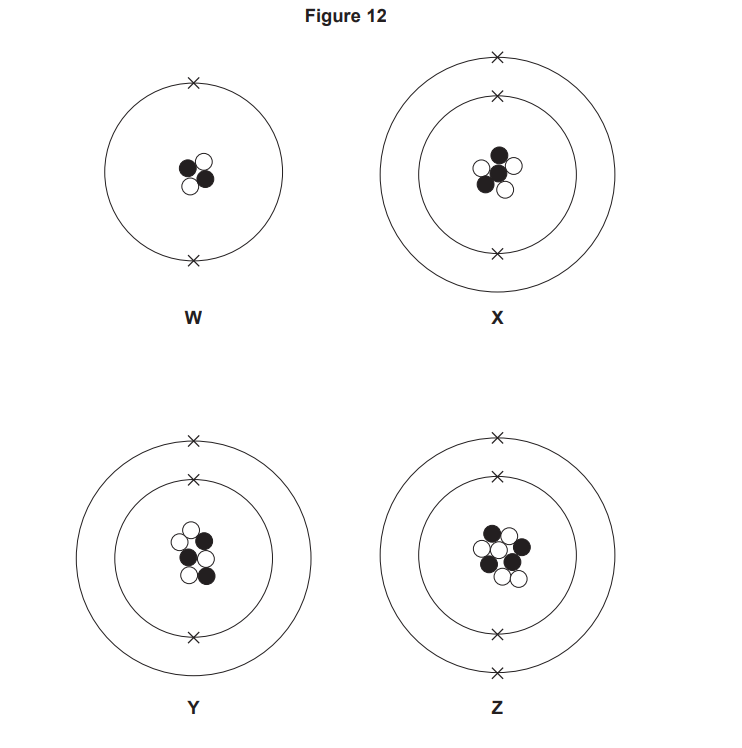
Figure 12 represents four atoms.
On the periodic table, helium is shown as:

Which atom in Figure 12 represents an atom of helium?
W
X
Y
Z
Which two atoms in Figure 12 represent isotopes of the same element?
W and X
W and Z
X and Y
Y and Z
An atom has a radius of nm.
Calculate the radius of the atom in metres.
Was this exam question helpful?