Cell Structures (AQA GCSE Combined Science: Synergy: Life & Environmental Sciences): Revision Note
Exam code: 8465

Cell Types

All cells have a number of features in common with each other
For a cell to be a cell, it has to have the following components:
Cellular components & functions table

There are two distinct types of cell – eukaryotic and prokaryotic
Eukaryotic cells
Plant and animal cells are both eukaryotic cells
They have the components listed in the table above (so a cell membrane, cytoplasm and ribosomes), as well as others
A defining feature of eukaryotic cells is that their genetic material (DNA) is enclosed within a nucleus
Eukaryotic cells vary in size, usually between 10 and 100 µm

Animal and plant cells are both eukaryotic cells as their genetic material is packaged in a nucleus
Prokaryotic cells
Bacterial cells are a type of prokaryotic cell
A defining feature of prokaryotic cells is that their genetic material is not enclosed within a nucleus, it is found as a single loop of DNA within the cytoplasm
Additional smaller, circular pieces of DNA called plasmids may also be present
The cell membranes of all prokaryotic cells are surrounded by a cell wall (usually made from a substance called peptidoglycan)
Prokaryotic cells are much smaller in comparison to eukaryotic cells, with many measuring ~ 1 µm in size

Prokaryotic cells do not have a nucleus, and are much smaller than eukaryotic cells
Prokaryotic cells table

Animal Cells
Eukaryotic cells have subcellular structures, each carrying out a particular function
Organelles are subcellular ‘compartments’ where specific processes take place within the cell
The main subcellular structures in animal cells are:
The nucleus
Cell membranes
Mitochondria
Ribosomes
Cytoplasm
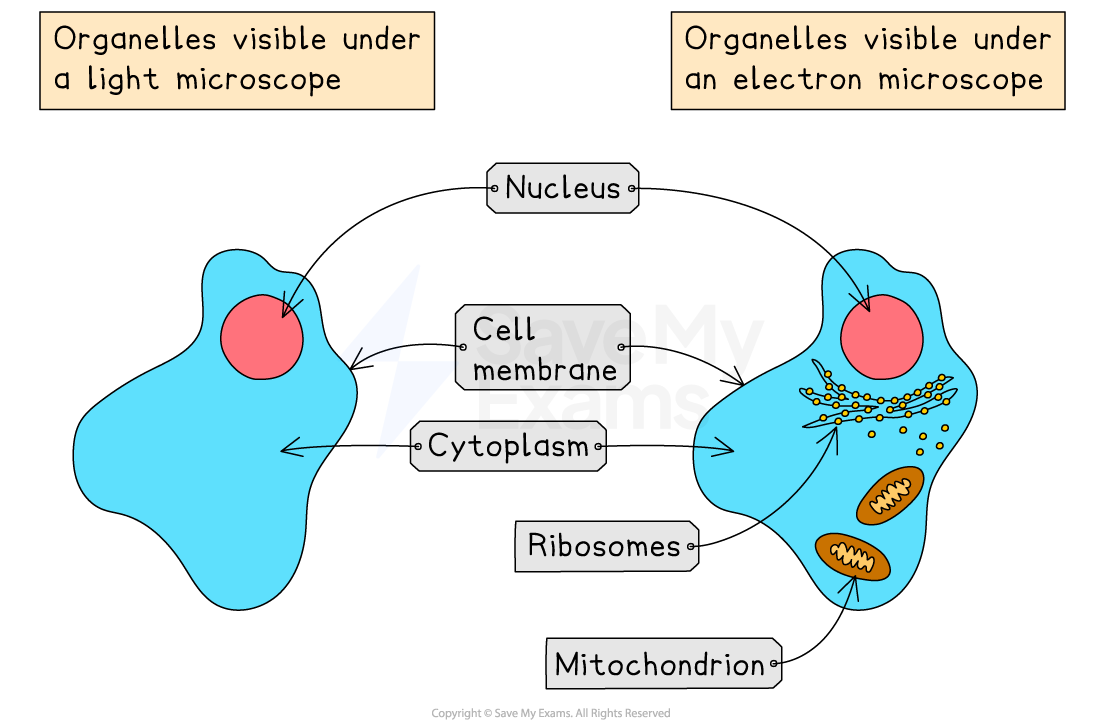
Some cellular structures can only be seen when viewed with an electron microscope
Cell structures table

Plant Cells
In addition to the subcellular parts found in animal cells, plant cells have:
A cell wall made of cellulose (algal cells also have this structural feature)
A permanent vacuole filled with cell sap
Plant cells found in the leaf and stem may also contain chloroplasts

The plant cell shown above contains chloroplasts, so it would be found in the leaves of a plant
Plant cell structure & function table

Examiner Tips and Tricks
You need to be able to recognise, draw and interpret images of cells, so make sure to get some practice of drawing and labelling animal and plant cells as part of your revision.

Unlock more, it's free!
Join the 100,000+ Students that ❤️ Save My Exams
the (exam) results speak for themselves:

Was this revision note helpful?
Build on this topic