Development Of The Earth’s Atmosphere (AQA GCSE Combined Science: Synergy: Life & Environmental Sciences): Revision Note
Exam code: 8465

Written by: Stewart Hird
Updated on
Evolution of the atmosphere
Theories on the development of Earth’s atmosphere have altered and developed over time as instrumental analysis has improved
It is difficult to gather evidence about the early atmosphere because it happened 4.6 billion years ago
The surface of the early Earth was molten for millions of years with no atmosphere
As cooling slowly occurred, the molten surface began to slowly solidify into land masses
Volcanoes formed on the land masses
One theory of how the early atmosphere formed suggests that the volcanoes released gases from the Earth’s interior through violent eruptions
These eruptions released large amounts of carbon dioxide and water vapour, as well as nitrogen, hydrogen, and other gases which may have included small proportions of ammonia and methane
At this stage, the Earth's atmosphere may have been similar to the atmospheres of Mars and Venus today, consisting mainly of carbon dioxide, with little or no oxygen
How volcanoes affected the atmosphere

Volcanoes spewed out water, carbon dioxide and other gases from the Earth's interior
While the surface of the Earth was still very hot the large quantities of water vapour remained in the gaseous state
When conditions cooled sufficiently, the water vapour later condensed and fell to the surface of the Earth, forming the oceans
Carbon dioxide is a water soluble gas (it is the gas used in fizzy drinks) and dissolves readily
When the water vapour condensed large amounts of CO2 dissolved in the oceans
Carbonate substances were precipitated during this process which later formed sediments
These processes reduced the amount of carbon dioxide in the atmosphere
Examiner Tips and Tricks
For this topic you should be able to describe this theory of how the atmosphere and oceans came about. You may be given information on alternative theories which you could be asked to evaluate.
Why did oxygen levels increase?
Primitive plants and algae began photosynthesising which used up carbon dioxide from the atmosphere and released oxygen
Algae first evolved around 2.7 billion years ago and during the next billion years or so small green plants began to appear
As more and more plants began to appear the levels of oxygen began to increase which allowed for more complex life forms to evolve

The balanced symbol equation for photosynthesis is:
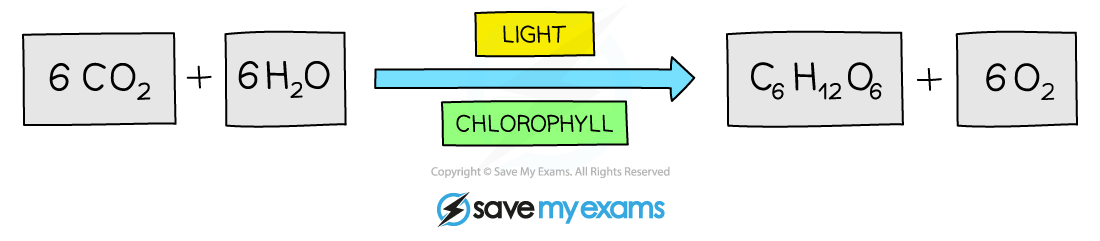
Over billions of years, photosynthesis caused the amount of oxygen in the atmosphere to increase and the amount of carbon dioxide to decrease
This trend continued until around 200 million years ago when the composition of the atmosphere reached similar characteristics as today
Removal of carbon dioxide
Carbon dioxide is a water soluble gas (it is the gas used in fizzy drinks) and dissolves readily
There were high concentrations of carbon dioxide in the early atmosphere
,The levels of carbon dioxide have decreased because:
When the water vapour in Earth’s early atmosphere condensed, large amounts of CO2 dissolved in the oceans
Carbonates were precipitated during this process which later formed sediments on the seabed
Green plants and algae began to evolve and absorbed considerable amounts of carbon dioxide during photosynthesis
Animals fed on the plants which transferred carbon to their tissues including bones and shells and when these organisms died, their remains formed sedimentary rocks
Dead organisms turn into fossil fuels, such as crude oil, natural gas and coal which 'locked up' the carbon
Examiner Tips and Tricks
Giving reasons for why carbon dioxide levels decreased is a common exam question so make sure you learn the reasons!

Unlock more, it's free!
Join the 100,000+ Students that ❤️ Save My Exams
the (exam) results speak for themselves:

Was this revision note helpful?
Build on this topic