Plant Structures (AQA GCSE Combined Science: Synergy: Life & Environmental Sciences): Revision Note
Exam code: 8465

Transport Systems
Plant organs
Multicellular organisms usually have transport systems, as diffusion, osmosis and active transport are too slow to meet all of a larger organism’s needs
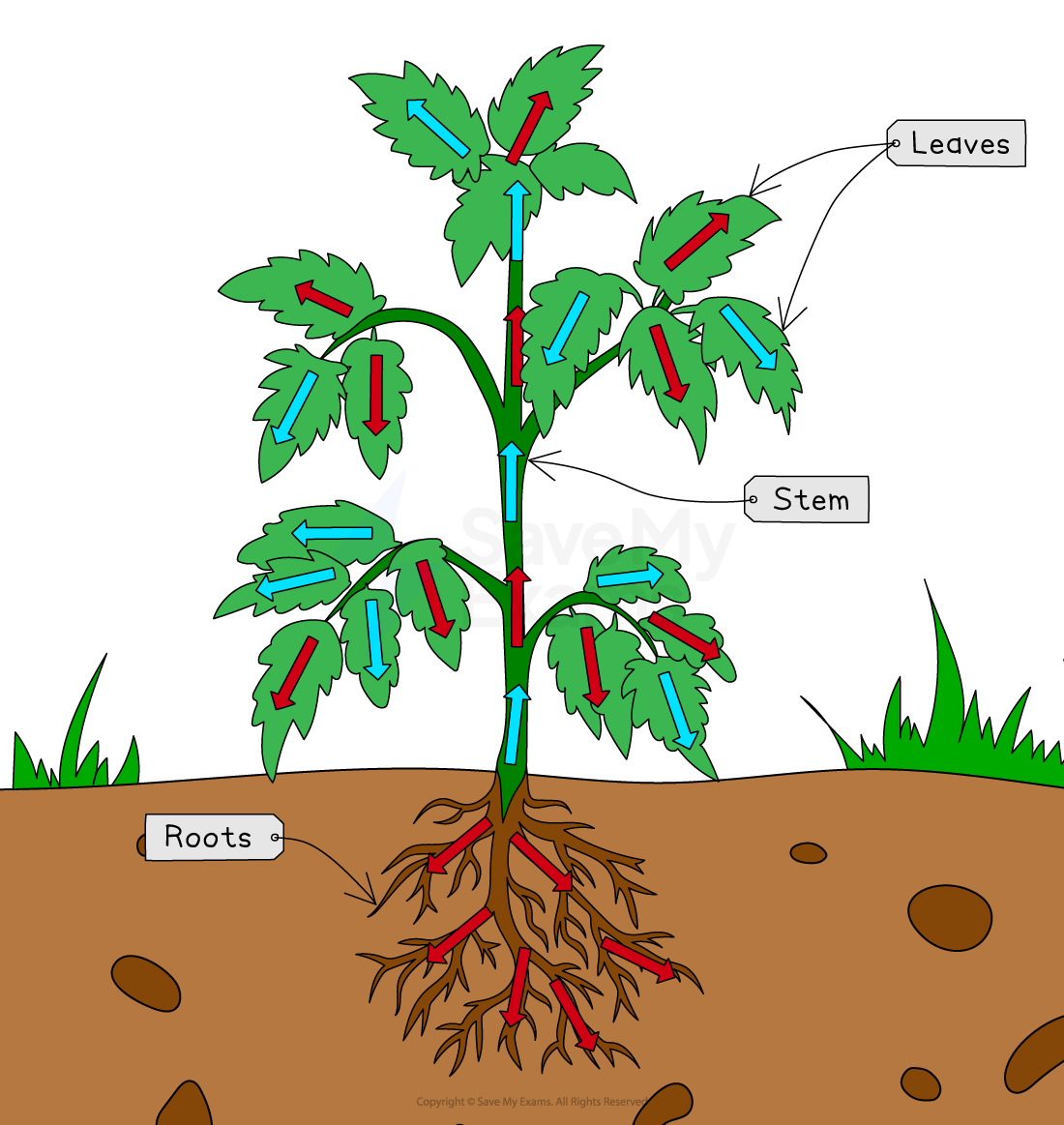
In plants, transport systems are required to move substances between plant organs, including:
roots
stems
leaves
Transport systems in plants allow:
movement of water and mineral ions from the roots to the stems and the leaves
movement of sugars and amino acids from where they are produced or stored, to where they are needed
Exchange of Materials in Plants
Exchange in the leaf
Plants take in carbon dioxide from the air for photosynthesis
Plants take in oxygen for respiration
Gas exchange during respiration
Respiration occurs all the time in plant cells, day and night
Aerobic respiration requires oxygen and produces carbon dioxide
At night, when no photosynthesis occurs:
Oxygen diffuses into the leaf down a concentration gradient
Oxygen is used in respiration so its concentration stays low inside cells
Carbon dioxide diffuses out of the leaf down a concentration gradient

Gas exchange during photosynthesis
Photosynthesis occurs in daylight in cells with chloroplasts
Photosynthesis requires carbon dioxide and releases oxygen
When photosynthesis is occurring:
Carbon dioxide diffuses into the leaf down a concentration gradient
Oxygen diffuses out of the leaf down a concentration gradient
Some oxygen produced in photosynthesis is used in respiration

Exchange in the roots
Plant roots have root hairs to increase the surface area for absorption of water and mineral ions from the soil
Root hair cells take in mineral ions from the soil either by active transport when dissolved in water
Important mineral ions for plants include:
Nitrate ions are needed to make proteins
Magnesium ions are needed to make chlorophyll
The uptake of minerals lowers the water potential of the root hair cells
Water is then absorbed from the soil by the roots by osmosis
Water is used in the process of photosynthesis

Unlock more, it's free!
Join the 100,000+ Students that ❤️ Save My Exams
the (exam) results speak for themselves:

Was this revision note helpful?
Build on this topic