Preventing, Treating & Curing Diseases (AQA GCSE Combined Science: Synergy: Life & Environmental Sciences): Exam Questions

Exam code: 8465

2 hours17 questions
1a
1 mark

Some medical drugs can be produced using genetically modified (GM) bacteria.

How are GM bacteria produced?

  • All genes are removed from the bacteria.

  • Bacteria are grown in a solution of the drug.

  • Genes are transferred into the bacteria.

1b
1 mark

What is one benefit of producing drugs using GM bacteria?

  • Large quantities of the drug can be produced.

  • Non-GM bacteria live longer than GM bacteria.

  • The GM bacteria that produce the drug are very infectious.

1c
1 mark

Scientists are investigating the production of organs from GM animals for transplanting into humans.

What is an advantage of using organs from GM animals compared with using organs from human donors?

  • Organs from GM animals are less likely to be rejected by the human immune system.

  • Organs from GM animals are not likely to function correctly.

  • There are more human donors than the number of people who need a transplant.

1d
1 mark

Suggest one reason why some people disagree with the use of GM animals.

2
1 mark

Chlamydia, HIV and human papillomavirus (HPV) are sexually transmitted diseases (STDs).

Which other disease is sexually transmitted?

  • Flu

  • Gonorrhoea

  • Malaria

  • Measles

3a
1 mark

The human immune system responds to pathogens entering the body.

Which part of the blood is responsible for an immune response?

  • Platelets

  • Red blood cells

  • White blood cells

3b
1 mark

Some pathogens release toxins in the body.

Name the type of substance produced in the body that destroys the toxins.

3c
1 mark

Cells in the immune system engulf pathogens.

What is the name of this process?

3d
2 marks

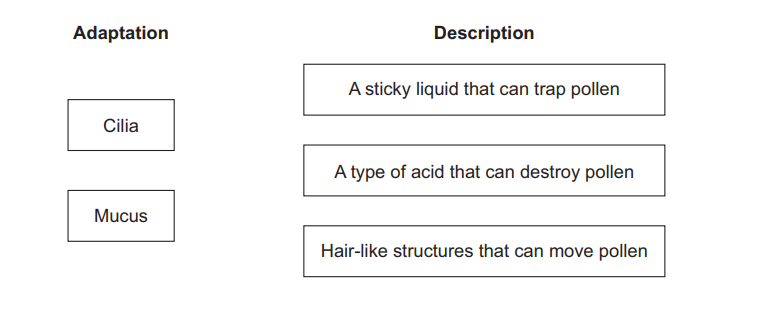
Plants release pollen.

The human breathing system has defences against the entry of pollen and pathogens.

Draw one line from each adaptation of the breathing system to the description of that adaptation.

Diagram showing adaptations cilia and mucus to be matched with descriptions: sticky liquid trapping pollen, acid destroying pollen, and hair-like structures moving pollen.
3e
2 marks

The immune response to pollen is an example of an allergy.

Suggest two symptoms of an allergy to pollen.

3f
1 mark

An allergy to pollen cannot be treated using antibiotics.

Suggest why.

3g
2 marks

Explain one problem caused by the overuse of antibiotics.

4a
3 marks

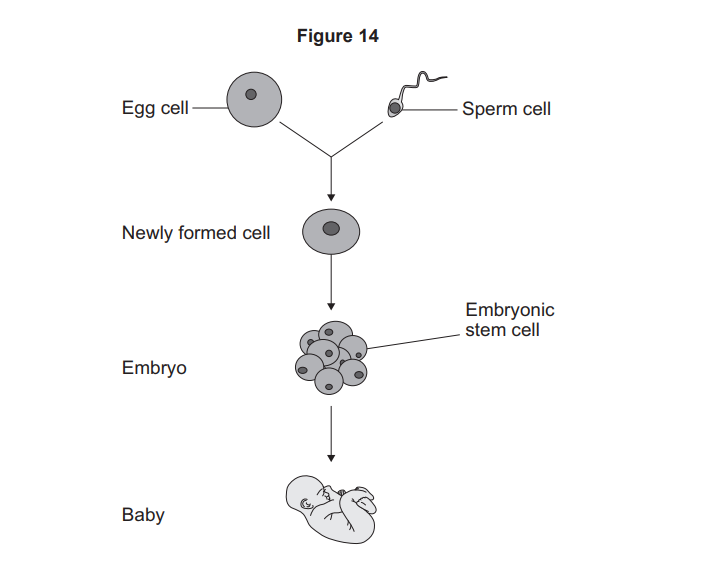
New cells are produced during the formation of an embryo.

Figure 14 shows how a human baby is formed.

Diagram showing egg and sperm joining to form a new cell, which develops into an embryo containing embryonic stem cells, then grows into a baby

Complete the sentences about the processes shown in Figure 14.

Choose answers from the box.

differentiation

fertilisation

inbreeding

mitosis

variation

The egg cell and the sperm cell fuse together during ___________.

Stem cells are produced when the newly formed cell divides by ___________ .

Stem cells become specialised cells during the process of ___________ .

4b
1 mark

Some people believe using embryonic stem cells in medical research is unethical.

Give one reason why.

4c
1 mark

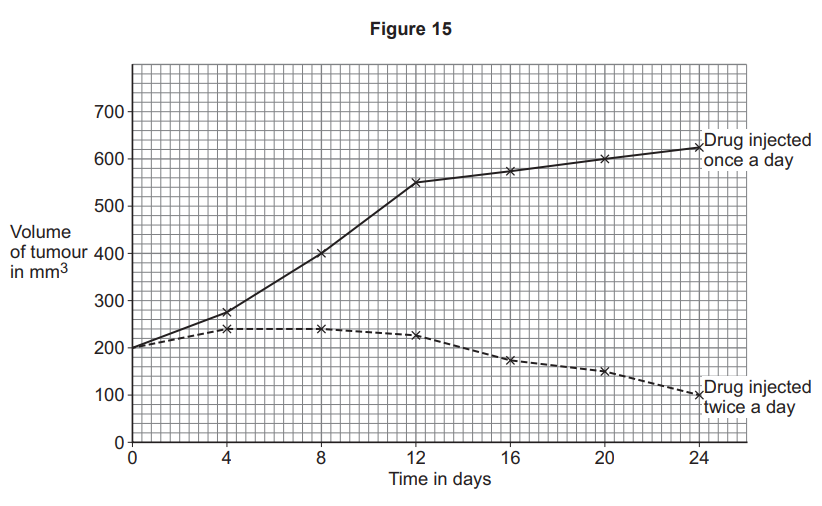
Scientists tested a new drug to treat tumours in mice.

All the mice had the same type of tumour.

This is the method used.

  1. Inject six mice with the drug once a day for 24 days.

  2. Measure the volume of the tumour every 4 days.

  3. Repeat steps 1 and 2, injecting a new group of mice with the drug twice a day.

Figure 15 shows the results.

Line graph of tumour volume over 24 days showing growth with once-daily drug injections and gradual shrinkage with twice-daily injections.

Six other mice were given an injection that did not contain the drug.

Why did the scientists use mice that were not given the drug?

  • As a clinical trial

  • As a control

  • As an anomaly

4d
3 marks

Describe how the drug injected once a day and the drug injected twice a day affected the volume of the tumour.

Use data from Figure 15.

5a
1 mark

Organisms have been genetically modified (GM) for many reasons.

What has been genetically modified to produce a hormone that reduces blood glucose concentration?

  • Algae

  • Bacteria

  • Viruses

5b
1 mark

Scientists are researching the production of GM pigs.

Organs from GM pigs could be transplanted into humans.

What is one advantage of using organs from GM pigs instead of using organs from human donors?

5c
2 marks

Describe how a human gene could be used to genetically modify a pig embryo.

6a
2 marks

This question is about health.

Some pathogens cause food poisoning.

Explain how the stomach is adapted to prevent food poisoning.

6b
1 mark

Different types of disease may interact.

Suggest one type of disease that may be triggered by infection with human papillomavirus (HPV).

6c
1 mark

Chlamydia, HIV and HPV are sexually transmitted diseases (STDs).

Chlamydia is caused by the same type of microorganism as gonorrhoea.

Suggest how chlamydia infections are treated.

6d
1 mark

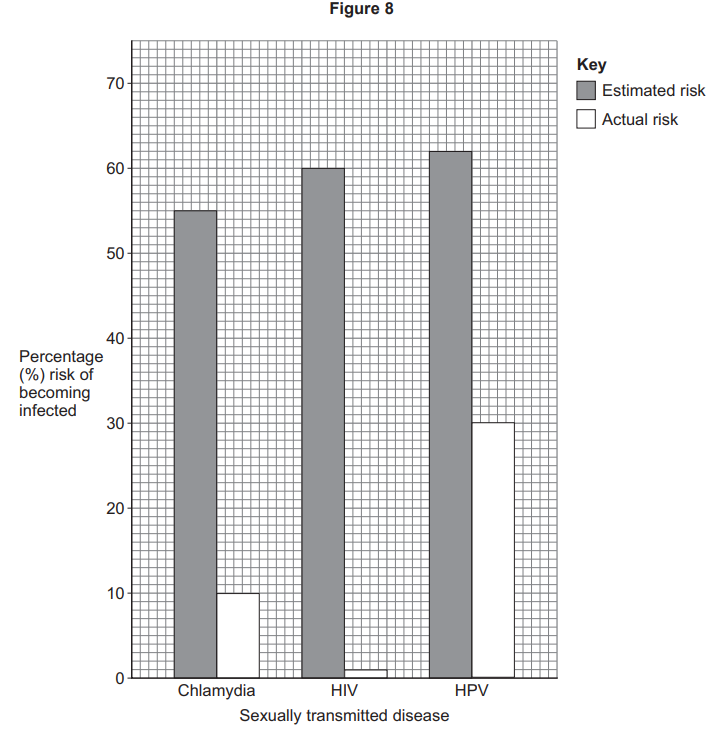
Students were asked to estimate the percentage risk of a person becoming infected with different STDs.

The estimate was compared to the actual percentage risk of infection.

Figure 8 shows the results.

Bar chart comparing estimated vs actual infection risk for chlamydia, HIV and HPV; perceived risk is far higher than actual for all three STDs.

Why is the data in Figure 8 plotted as a bar chart and not as a line graph?

6e
2 marks

The difference between the estimated risk and the actual risk is not the same for each STD.

Suggest two reasons why.

6f
4 marks

Explain why patients with late-stage HIV infection or AIDS are likely to become very ill from other infections.

7a
1 mark

A tumour is a group of abnormal cells that form a lump.

Give one factor that causes cells to form tumours.

7b
2 marks

Tumours can be benign or malignant.

Malignant tumours are cancers.

Give two ways a malignant tumour is different from a benign tumour.

7c
2 marks

Scientists tested a new drug to treat tumours in mice.

All the mice:

  • had the same type of tumour

  • were the same age

  • were female.

This is the method used.

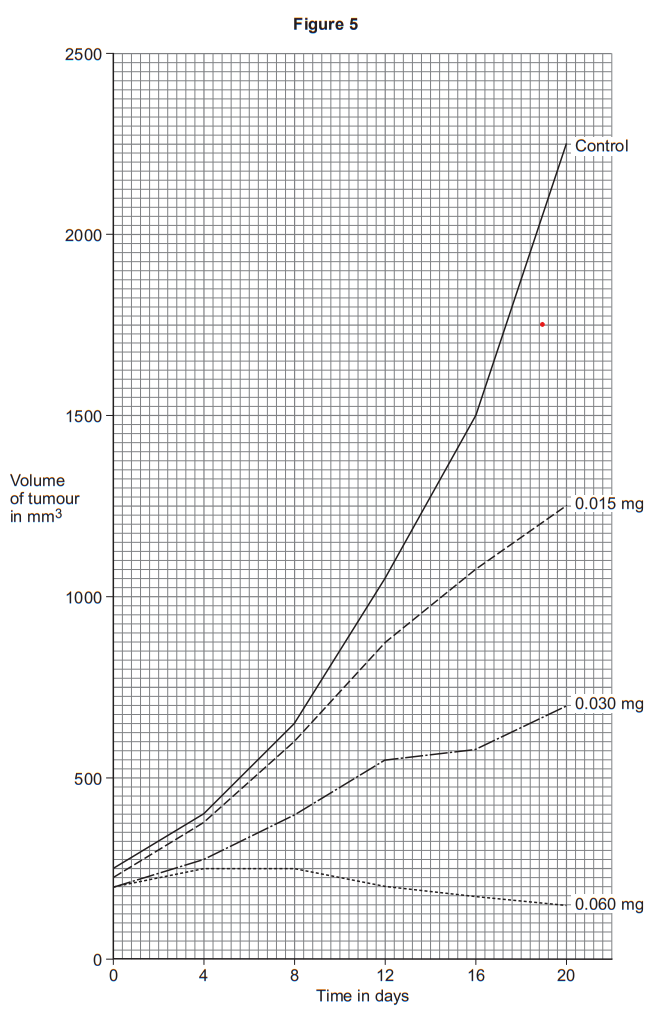
  1. Inject the mice with a dose of 0.015 mg of the drug every day for 20 days.

  2. Measure the volume of the tumour every 4 days.

  3. Repeat steps 1 and 2 with new groups of mice using doses of:

  • 0.030 mg of the drug

  • 0.060 mg of the drug.

Give two control variables the scientists should have used in the drug test.

Do not refer to the type of tumour, the age of the mice or the sex of the mice.

7d
1 mark

Some mice were used as a control group.

Suggest what treatment was given to the control group.

[1 mark]

7e
1 mark

Give one reason why the scientists used a control group.

7f
Sme Calculator
3 marks

Figure 5 shows the results.

Line graph of tumour volume over 22 days showing rapid growth in untreated control and dose-dependent tumour suppression at 0.015, 0.030 and 0.060 mg drug

Calculate the percentage increase in the volume of the tumour in the control group between 0 and 20 days.

7g
2 marks

Give two conclusions about the effectiveness of the different doses of the drug.

Use Figure 5.

7h
1 mark

Suggest why the scientists measured the volume of the tumour instead of measuring the width of the tumour.

7i
1 mark

The scientists tested the drug in two stages:

  • stage 1: drug tested on pieces of tumour tissue

  • stage 2: drug tested on mice with tumours.

What extra information will the scientists gain by testing the drug on mice at stage 2?

8
2 marks

Some mosquitos can transmit malaria.

Describe how a mosquito transmits malaria.

9
4 marks

The human body protects itself from pathogens.

Describe how the skin and the stomach protect the human body from pathogens.

10
1 mark

Earwax is produced by specialised skin cells in the ear.

Suggest one advantage of producing earwax.

11a
1 mark

The symptoms of a measles infection include:

  • a fever

  • a red skin rash.

Why do antibiotics not treat measles?

    • Antibiotics cause the measles pathogen to release toxins.

    • Antibiotics do not kill viruses.

    • Antibiotics increase body temperature.

11b
2 marks

Cilia are small hair-like structures in the trachea and bronchi.

Describe how mucus and cilia defend against the entry of pathogens into the lungs.

Mucus__________________________________________________

Cilia____________________________________________________

11c
1 mark

How does stomach acid defend the body against pathogens?

11d
1 mark

People can be vaccinated against measles.

What does the measles vaccine contain?

  • Hormones

  • Two types of blood cell

  • Weakened pathogen

11e
1 mark

Which part of the blood produces antibodies after receiving the measles vaccination?

  • Platelets

  • Red blood cells

  • White blood cells

11f
2 marks

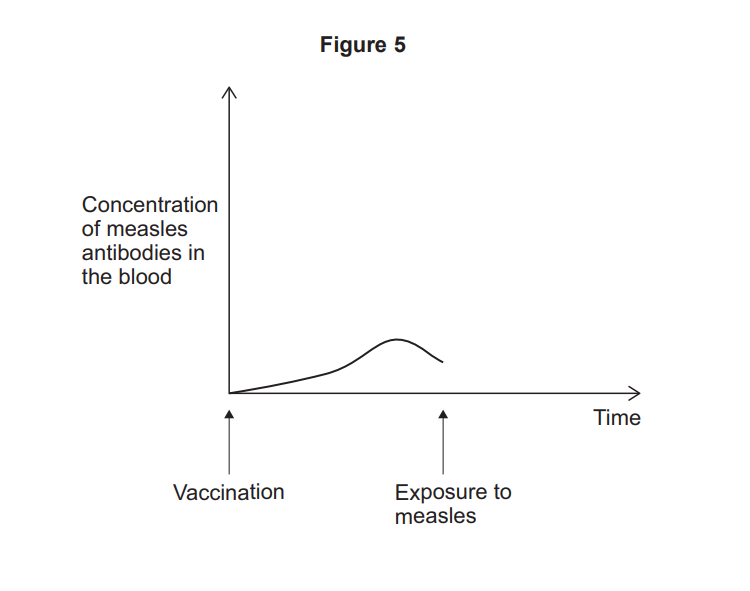
Figure 5 shows how the concentration of measles antibodies in the blood changes after vaccination.

Graph showing measles antibody concentration in blood over time, rising slowly after vaccination then peaking and declining after later exposure to measles

Complete Figure 5 to show how the concentration of measles antibodies will change after the exposure to measles pathogens.

11g
1 mark

In one group of people:

  • 25 people have been vaccinated against measles

  • 5 people have not been vaccinated against measles.

What is the simplest ratio of people who have been vaccinated to people who have not been vaccinated?

  • 30 : 1

  • 25 : 1

  • 5 : 1

11h
1 mark

Scientists recommend that over 95% of the population should be vaccinated against measles.

What is the advantage of a large percentage of the population being vaccinated against measles?

12a
2 marks

The protein from the spider allows heart muscle tissues to function in low concentrations of oxygen.

Complete Table 4 to show the risks and benefits of the new drug.

Tick (✓) one box in each row.

Table 4

Statement

Risk

Benefit

The drug could be toxic

The drug could keep hearts for transplantation functioning for more time

The drug could treat coronary heart disease

The drug could stop other drugs working

12b
2 marks

The drug made from the protein would be tested in a drug trial.

Part of the drug trial would involve a placebo.

Explain why a placebo is used in a drug trial.

12c
2 marks

The results of drug trials are peer reviewed.

Which are two advantages of peer review?

Tick (✓) two boxes.

  • People who are not experts simplify the results during peer review.

  • Scientists not involved in the drug trial assess whether the results are valid.

  • Scientists who planned the drug trial decide whether the results are published.

  • The peer reviewers decide the dose for testing the drug on animals.

  • The process of peer review reduces the chance of bias.

13a
1 mark

The symptoms of a measles infection are:

  • a fever

  • a red skin rash.

Why can measles not be treated with antibiotics?

13b
2 marks

Describe two ways the human body defends against the entry of the measles pathogen into the lungs.

13c
1 mark

How do white blood cells respond to a vaccination against measles?

13d
Sme Calculator
1 mark

In the UK, most people have been vaccinated against measles.

In a sample population, the ratio of vaccinated people to unvaccinated people is: 594 000 : 99 000

Give 594 000 : 99 000 as the simplest whole number ratio.

Simplest whole number ratio = ______: ______

13e
2 marks

Explain why it is important that the ratio of vaccinated people to unvaccinated people is high.

14a
1 mark

Suggest what type of cell has the CCR5 protein in its cell membrane.

14b
1 mark

What type of drug is used to treat HIV?

15a
3 marks

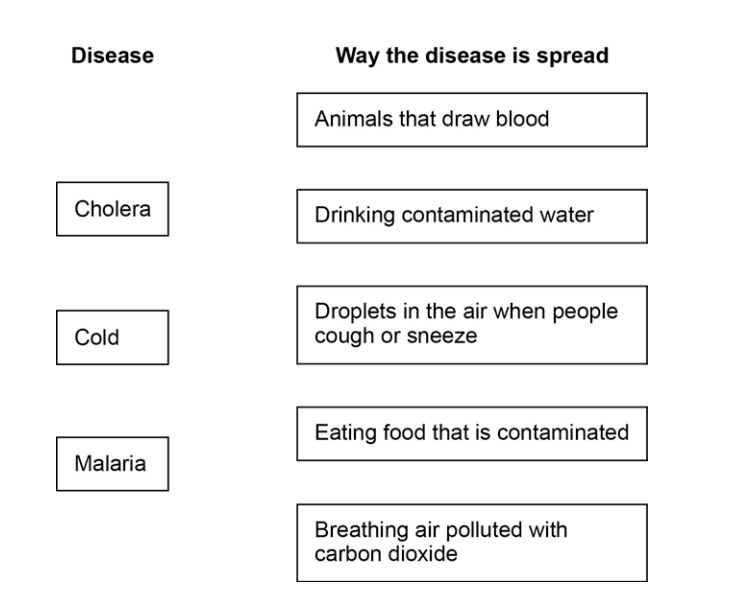
Pathogens are microorganisms that cause infectious disease.

Draw one line from each disease to the way the disease is spread.

Diagram for matching diseases (cholera, cold, malaria) with ways they spread: blood-drawing animals, contaminated water or food, cough droplets, polluted air.
15b
2 marks

One way the human body protects itself against the entry of pathogens is by producing antimicrobial chemicals.

Antimicrobial chemicals kill pathogens.

Give two other ways the human body protects itself against the entry of pathogens.

15c
1 mark

Measles is a childhood disease caused by a microorganism.

Measles is not treated by antibiotics.

Give the reason why.

15d
1 mark

Vaccinations help people become immune to infections.

In 2013, 92% of children in the UK had two vaccination injections against measles.

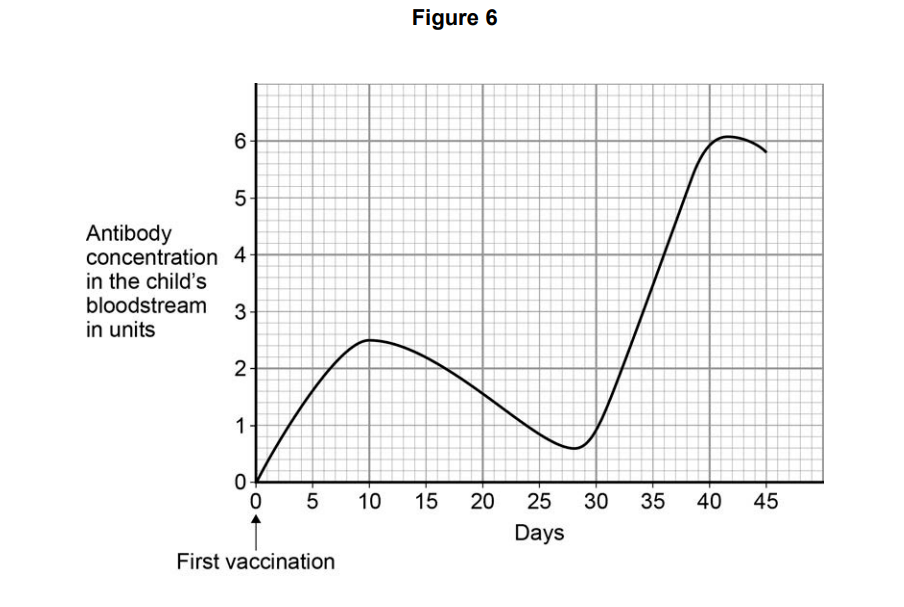
Figure 6 shows how the concentration of antibodies in the blood changes after each measles vaccination.

Line graph of a child’s antibody concentration over 45 days after first vaccination, rising then falling to day 28, then rapidly increasing to about 6 units

Suggest what day the second vaccination was given.

15e
1 mark

What is the highest concentration of antibodies produced by the first vaccination?

15f
2 marks

How will the number of children getting measles change as more children are vaccinated against measles?

Give a reason for your answer.

Change: ________________________________________________

Reason: _________________________________________________

16a
2 marks

Statins are drugs used to treat coronary heart disease (CHD).

New drugs must be trialled before they can be licensed for use.

Some scientists trialled two different types of statin.

The scientists:

  • conducted the trial on 325 patients with a history of CHD in their family

  • used a double-blind trial method

  • measured the change in blood cholesterol levels over two years

  • measured the change in thickness of an artery wall over two years.

During the trials the statins are tested for side effects.

Give two other reasons why the statins are trialled before use.

16b
2 marks

Describe how the double-blind method is used in this trial.

16c
1 mark

The results of drug trials are peer reviewed before they are published.

Why are peer reviews important in drug trials?

Tick one box.

  • To calculate the best dose

  • To check the drug works

  • To make sure the scientist gets credit

  • To prevent false claims

16d
2 marks

Table 2 shows the results of the trial.

Table 2

Drug A

Drug B

Number of patients who died during the trial

1

2

Number of patients who reported aching muscles

16

17

Number of patients who reported mild abdominal cramps

18

16

Change in blood cholesterol level in percentage

−50.5

−41.2

Change in thickness of artery wall in mm

−0.0033

+0.032

Drug A is more effective than Drug B.

Give two reasons that support this conclusion.

Use information from Table 2.

16e
2 marks

A scientist concludes that Drug A is a safer drug than Drug B.

Give two reasons why this is not a valid conclusion.

17a
2 marks

Bacteria can cause disease.

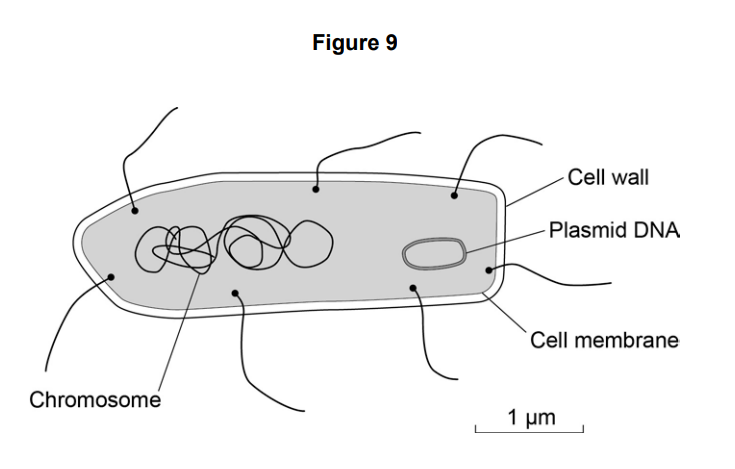
Figure 9 shows some features of a Salmonella bacterium

Diagram of a bacterial cell showing chromosome, plasmid DNA, cell membrane and cell wall, with a 1 µm scale bar indicating the cell’s small size.

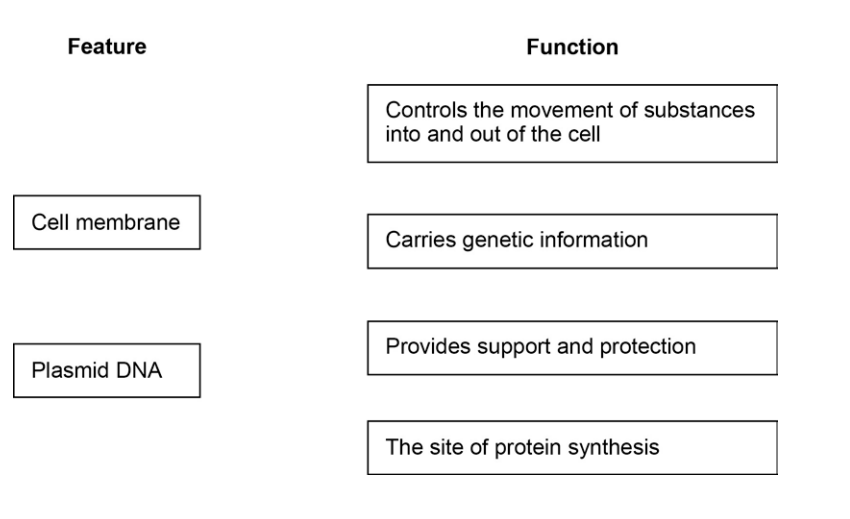
Draw one line from each feature of the Salmonella bacterium to the function.

Worksheet showing a table to match cell features, such as cell membrane and plasmid DNA, with their functions, including control of substances and protein synthesis
17b
1 mark

How is Salmonella spread between people?

Tick one box.

  • Animal bites

  • Contaminated food

  • Sneezing

  • Sexual contact

17c
2 marks

Give two ways you could stop Salmonella from spreading.

17d
1 mark

Harmful bacteria can also be useful. Scientists are doing research to find out if Salmonella can be used in a vaccine to treat cancer.

The Salmonella vaccine can be injected into the blood or swallowed in a tablet.

One benefit of injecting the vaccine is that it gets to the cancer quickly in the blood.

What is another benefit?

Tick one box.

  • All cancers can be treated by the injection

  • It will not cause sickness and diarrhoea side effects

  • The injection is not painful to the patient

  • The injection introduces cancer cells into the body

17e
3 marks

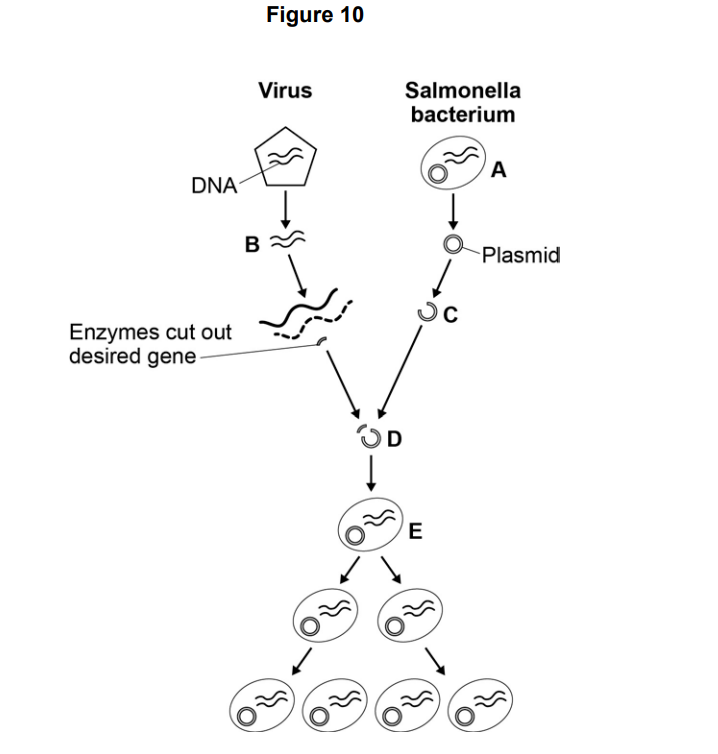
The Salmonella bacterium used in the vaccine is genetically modified using part of a virus.

Look at Figure 10.

Diagram of genetic engineering: viral DNA gene cut by enzymes, inserted into a Salmonella plasmid, then taken up and copied in dividing bacteria.

Complete the sentences. Use the letters from Figure 10.

Bacteria reproduce quickly in part ____________ .

DNA with the desired gene is removed from the virus in part ________.

The chosen gene is inserted into the plasmid in part ____________.