Carbon Chemistry (AQA GCSE Combined Science: Synergy: Physical Sciences): Exam Questions

Exam code: 8465

1 hour8 questions
1a
1 mark

This question is about hydrocarbons.

Complete the sentence.

Hydrocarbons are made from atoms of carbon and atoms of _________ .

1b
1 mark

What is the maximum number of bonds that one carbon atom can form?

  • 2

  • 3

  • 4

  • 6

1c
1 mark

Most of the compounds in crude oil are hydrocarbons.

Crude oil is the remains of an ancient biomass.

What did the ancient biomass mainly consist of?

  • Methane

  • Plankton

  • Rocks

1d
1 mark

Fractional distillation is used to separate the hydrocarbons in crude oil into fractions.

Which property of hydrocarbons is used to separate them?

  • Boiling point

  • Flammability

  • Viscosity

1e
1 mark

Name one fuel produced from the fractional distillation of crude oil.

1f
2 marks

What are the two products of the complete combustion of a hydrocarbon?

Tick two boxes.

  • Ammonia

  • Carbon dioxide

  • Nitrogen

  • Oxygen

  • Water

1g
1 mark

How does the size of the molecules affect the viscosity of hydrocarbons?

  • Smaller hydrocarbon molecules have greater viscosity.

  • The size of the hydrocarbon molecules does not affect the viscosity.

  • Larger hydrocarbon molecules have greater viscosity.

2a
1 mark

This question is about hydrocarbons.

Methane is a hydrocarbon with the formula CH₄

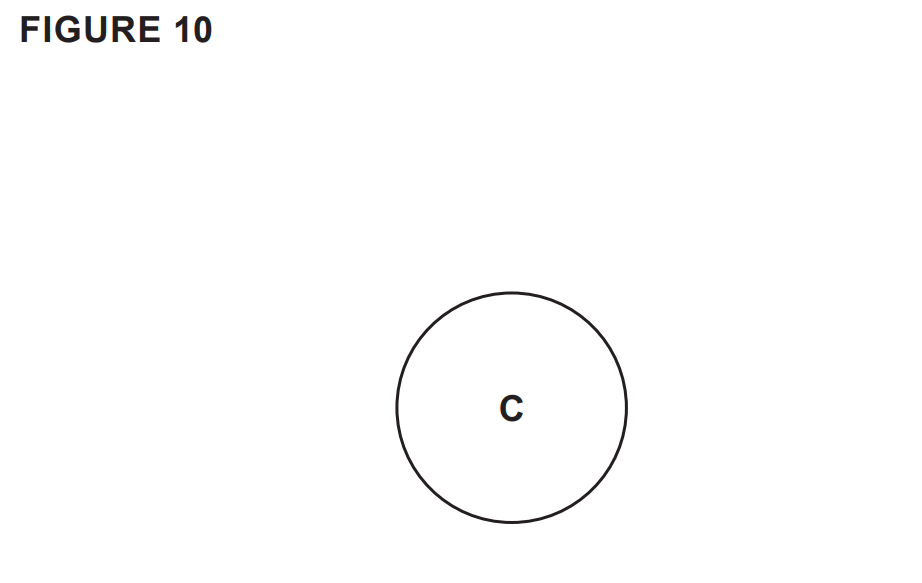
FIGURE 10 shows part of the dot and cross diagram that represents a methane molecule.

Figure 10 showing a single outlined circle labelled “C” in the lower half of an otherwise blank page

Complete the dot and cross diagram for the methane molecule. [1 mark]

2b
4 marks

Crude oil is a mixture of compounds.

Most of the compounds in crude oil are hydrocarbons.

The hydrocarbons can be separated into fractions by fractional distillation.

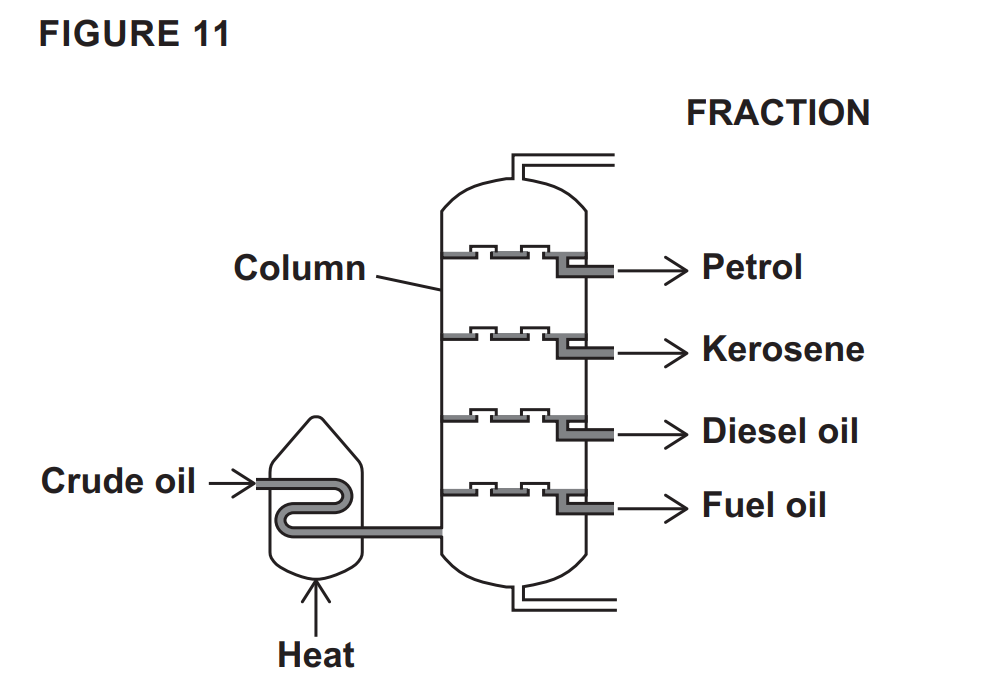
FIGURE 11 shows a fractional distillation column.

Diagram of fractional distillation: heated crude oil enters a column, separating into petrol at the top, then kerosene, diesel oil and fuel oil below

Explain how the hydrocarbons in crude oil are separated into fractions by fractional distillation. [4 marks]

2c
2 marks

Explain how the size of the molecules in kerosene and fuel oil affects their:

  • relative viscosity

  • relative flammability.

Use FIGURE 11, on page 32. [2 marks]

2d
1 mark

C₁₀H₂₂ is a hydrocarbon in the kerosene fraction.

How does the formula show that C₁₀H₂₂ is an alkane? [1 mark]

3a
1 mark

This question is about hydrocarbon fuels.

The complete combustion of a hydrocarbon fuel produces carbon dioxide and one other product.

Name the other product of the complete combustion of a hydrocarbon fuel.

Do not refer to carbon dioxide. [1 mark]

3b
2 marks

Describe the test for carbon dioxide.

Give the result if carbon dioxide is present. [2 marks]

Test __________________________________________________

Result_________________________________________________

3c
2 marks

The combustion of hydrocarbon fuels releases energy.

A student investigated the energy released by three different fuels A, B and C.

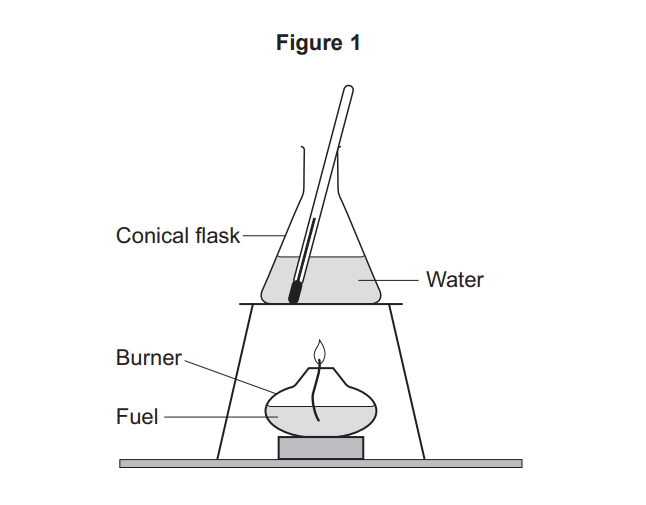
FIGURE 1 shows the apparatus.

Diagram of a laboratory setup with a burner heating fuel beneath a stand holding a conical flask of water, containing a thermometer for measuring temperature

This is part of the method used.

  1. Put fuel A in the burner.

  2. Pour 100 cm³ of water into the conical flask.

  3. Record the temperature of the water.

  4. Light the fuel and heat the water for 5 minutes.

  5. Record the final temperature of the water.

  6. Repeat steps 1 to 5 using fuel B and then using fuel C.

The student also determined the mass of fuel burnt.

Describe how the student could determine the mass of fuel burnt. [2 marks]

3d
1 mark

Give one control variable in the investigation. [1 mark]

3e
Sme Calculator
2 marks

TABLE 1 shows the results.

TABLE 1

Fuel

Mass of fuel burnt in grams

Temperature increase of water in ˚C

A

1.72

40

B

1.65

45

C

1.23

50

Explain how TABLE 1 shows that fuel C released the most energy per gram of fuel. [2 marks]

3f
1 mark

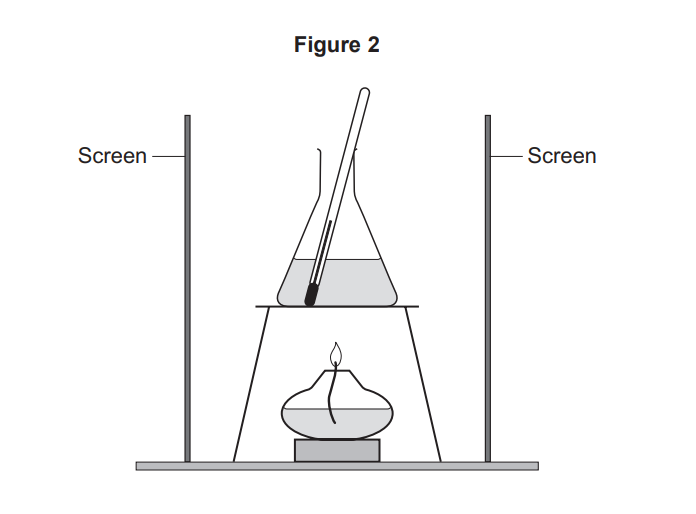
The student repeated the investigation with screens around the apparatus.

FIGURE 2 shows the apparatus with screens.

Laboratory setup with a flask of liquid and thermometer heated by a burner on a tripod, with two vertical screens positioned on either side

Give one reason why putting screens around the apparatus could improve the accuracy of the investigation. [1 mark]

3g
1 mark

How would stirring the water improve the accuracy of the investigation? [1 mark]

4a
1 mark

This question is about carbon and hydrocarbons.

Which is a form of carbon?

  • Diamond

  • Gold

  • Silicon

4b
1 mark

Graphite is a form of carbon.

Which is a property of graphite?

  • Conducts electricity

  • Has a low melting point

  • Is very hard

4c
1 mark

Buckminsterfullerene is a carbon molecule.

What is the formula of buckminsterfullerene?

  • C6

  • C12

  • C60

  • C72

4d
1 mark

Hydrocarbons are molecules made up of hydrogen atoms and carbon atoms only.

Ethane is a hydrocarbon.

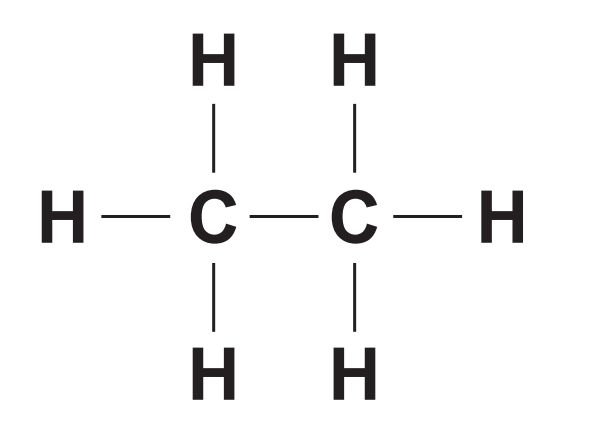
FIGURE 4 represents an ethane molecule.

FIGURE 4

Structural formula of ethane showing two carbon atoms single bonded, each bonded to three hydrogen atoms in a staggered arrangement

Complete the formula of an ethane molecule.

C_ H_

4e
2 marks

FIGURE 5 represents a bond between a carbon atom and a hydrogen atom in ethane.

Simple chemical diagram showing a single covalent bond between a carbon atom (C) and a hydrogen atom (H) on a plain white background

Which TWO words describe the C—H bond in ethane?

Tick TWO boxes.

  • Covalent

  • Double

  • Intermolecular

  • Ionic

  • Strong

4f
Sme Calculator
3 marks

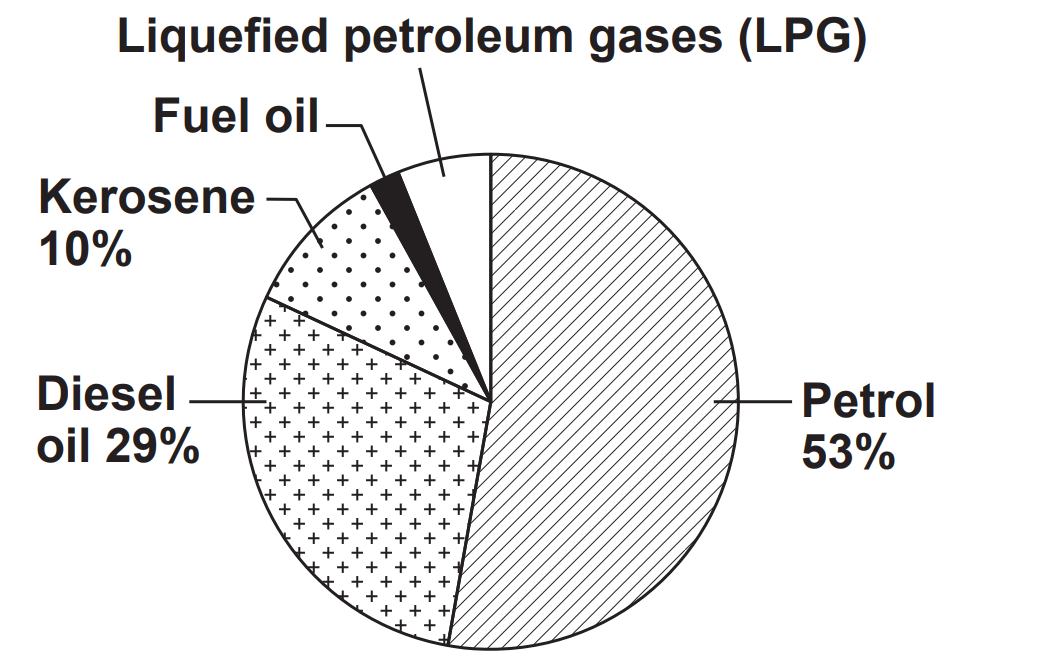
FIGURE 6 shows the percentage (%) of different hydrocarbon fractions in a sample of crude oil.

FIGURE 6

Pie chart of crude oil products: petrol 53%, diesel oil 29%, kerosene 10%, fuel oil 4%, liquefied petroleum gases (LPG) 4%

Determine the percentage of LPG AND the percentage of fuel oil in this sample of crude oil.

Complete the following steps.

Calculate the total percentage of petrol, diesel oil and kerosene.

Calculate the total percentage of LPG and fuel oil.

Calculate the percentage of LPG AND the percentage of fuel oil.

Use the ratio:

Percentage of LPG : percentage of fuel oil = 3 : 1

Percentage of LPG =_________________________%

Percentage of fuel oil =_______________________%

4g
2 marks

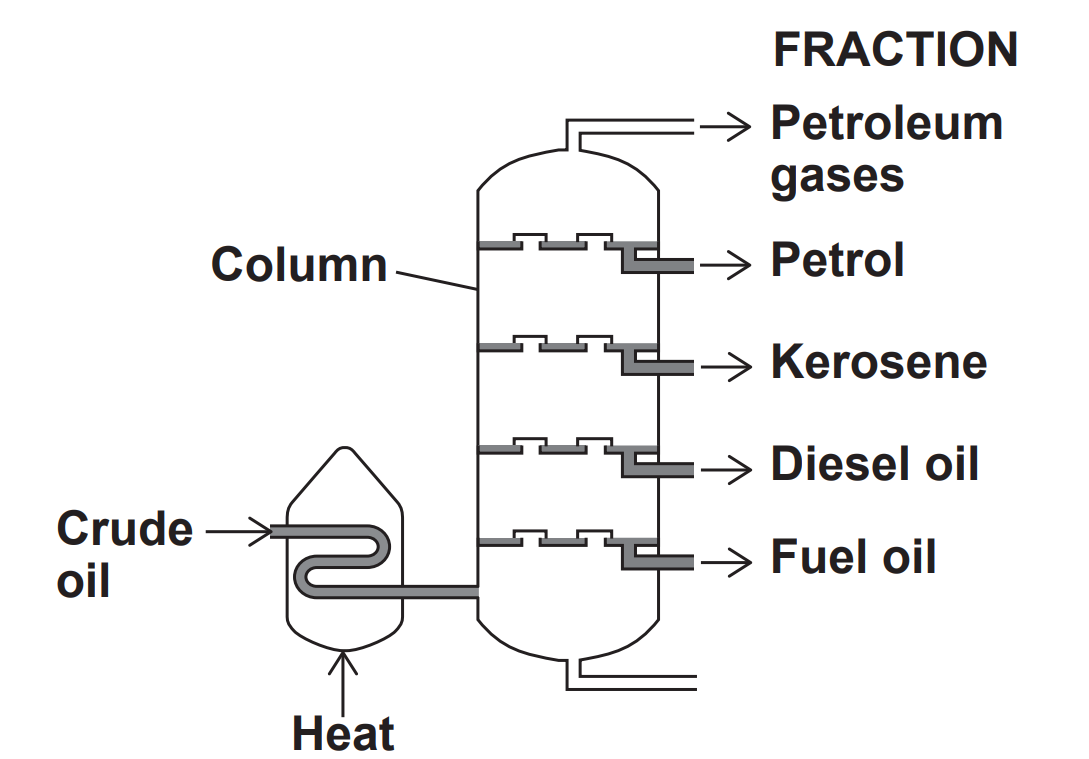
Fractional distillation is used to separate crude oil into hydrocarbon fractions.

FIGURE 7 shows a fractional distillation column.

FIGURE 7

Diagram of fractional distillation: heated crude oil enters a column, separating into fractions—petroleum gases, petrol, kerosene, diesel oil and fuel oil.

Complete the sentences.

Choose answers from the list below.

CONDENSE

  FREEZE

MELT   

VAPORISE

   The liquid crude oil is heated and the hydrocarbons _____________ .

The hydrocarbons rise up the column.

The hydrocarbons cool and _________________ .

4h
1 mark

Complete the sentence.

Choose the answer from the list below.

BOILING POINT

FLAMMABILITY

   VISCOSITY 

  The hydrocarbons separate at different temperatures because each hydrocarbon has a different __________ .

4i
1 mark

Large hydrocarbon molecules can be broken down into smaller hydrocarbon molecules.

What is the name of this type of reaction?

  • Cracking

  • Oxidation

  • Polymerisation

5a
1 mark

This question is about hydrocarbons.

Hexane (C₆H₁₄) and pentane (C₅H₁₂) are hydrocarbons in the same homologous series.

Give the name of the homologous series that includes hexane and pentane.

5b
1 mark

Give the general formula of the homologous series that includes hexane and pentane.

5c
3 marks

Explain why the boiling point of hexane is higher than the boiling point of pentane.

5d
2 marks

Complete the equation for the cracking of hexane (C₆H₁₄) into ethene and one other molecule.

C₆H₁₄ → C₂H₄ + _

5e
Sme Calculator
5 marks

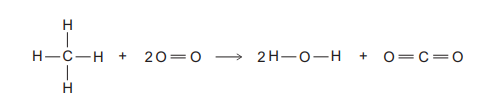
Methane undergoes complete combustion with oxygen.

Figure 10 represents the equation for the reaction.

Figure 10: CH₄ + 2 O=O → 2 H–O–H + O=C=O

(Methane (4 C–H bonds) + 2 oxygen molecules (each with one O=O double bond) → 2 water molecules (each with two O–H bonds) + 1 carbon dioxide molecule (with two C=O double bonds).)

The energy released forming the new bonds is 814 kJ/mol greater than the energy needed to break the existing bonds.

Table 4 shows some bond energy values.

Table 4

Bond

Bond energy in kJ/mol

C–H

Y

O=O

498

O–H

464

C=O

803

Calculate value Y in Table 4.

6a
2 marks

This question is about hydrocarbons.

Name the two elements in a hydrocarbon.

6b
2 marks

Which two of the following substances are hydrocarbons?

Tick (✓) two boxes.

  • Ammonia

  • Ethene

  • Graphite

  • Methane

  • Steam

6c
1 mark

C₆H₁₄ is a hydrocarbon.

C₆H₁₄ can be broken down into smaller molecules.

Complete the equation for the breakdown of C₆H₁₄ into smaller molecules.

C₆H₁₄ → C₄H₁₀ + _

6d
1 mark

What is the name of the process that breaks down C₆H₁₄ into smaller molecules?

Tick (✓) one box.

  • Cracking

  • Distillation

  • Neutralisation

6e
2 marks

How does the boiling point of C₆H₁₄ compare with the boiling point of C₄H₁₀?

Give one reason for your answer.

Tick (✓) one box.

Reason: ___________________________________________

  • C₆H₁₄ has a lower boiling point.

  • C₆H₁₄ and C₄H₁₀ have the same boiling point.

  • C₆H₁₄ has a higher boiling point.

6f
1 mark

The complete combustion of C₆H₁₄ produces water and one other product.

Name the other product of the complete combustion of C₆H₁₄.

Do not refer to water in your answer.

7a
1 mark

Hydrocarbons are used to make useful products.

What are the elements in hydrocarbons?

Tick (✓) one box.

  • Carbon and hydrogen only

  • Carbon, hydrogen and oxygen

  • Carbon and nitrogen only

  • Carbon, nitrogen and oxygen

7b
2 marks

Ethene can be produced from long-chain hydrocarbons by cracking.

Give the conditions needed for cracking.

8a
1 mark

There are several different forms of carbon and many different carbon compounds.

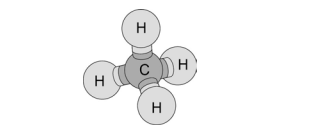
Figure 6 shows a 3D model of a molecule of methane (CH₄) — a tetrahedral arrangement with one carbon atom at the centre and four hydrogen atoms at the corners.

Draw the 2D structure of a methane molecule.

8b
3 marks

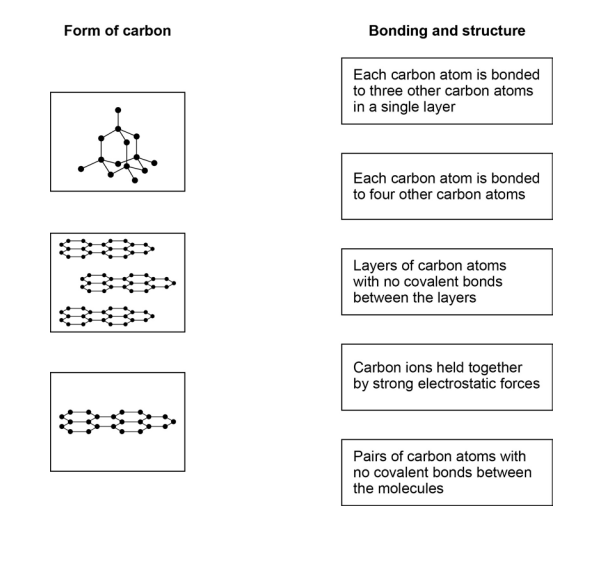
Different forms of carbon have different bonding and structure.

Draw one line from the form of carbon to the bonding and structure.

Forms of carbon (left):

  • A 3D tetrahedral structure (each carbon bonded to four neighbours) — diamond

  • A structure showing several stacked layers of hexagonally-bonded carbon atoms — graphite

  • A single layer of hexagonally-bonded carbon atoms — graphene

Bonding and structure (right):

  • Each carbon atom is bonded to three other carbon atoms in a single layer

  • Each carbon atom is bonded to four other carbon atoms

  • Layers of carbon atoms with no covalent bonds between the layers

  • Carbon ions held together by strong electrostatic forces

  • Pairs of carbon atoms with no covalent bonds between the molecules

8c
2 marks

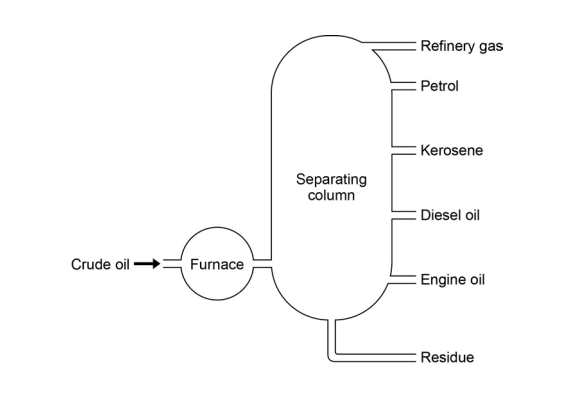
Crude oil is a mixture of many different carbon compounds.

Crude oil can be separated into useful fractions by fractional distillation.

Figure 7 shows a fractional distillation column used to separate crude oil (a tall vertical column, heated at the base; fractions are removed at different heights — refinery gases near the top, then petrol, kerosene, diesel oil, fuel oil and bitumen lower down).

Complete the sentences. Use words from the box.

Box: condense, evaporate, freeze

Crude oil is heated so that most of the compounds .

At different temperatures the compounds cool and .

8d
1 mark

Which fraction is the most viscous?

Tick (✓) one box.

  • Engine oil

  • Diesel oil

  • Kerosene

  • Petrol

8e
1 mark

Which fraction is the most flammable?

Tick (✓) one box.

  • Diesel oil

  • Kerosene

  • Petrol

  • Refinery gas

8f
1 mark

Why does kerosene separate out of the mixture before diesel oil?