Magnesium reacts with hydrochloric acid.
A student investigated the effect of changing the hydrochloric acid concentration on the rate of this reaction.
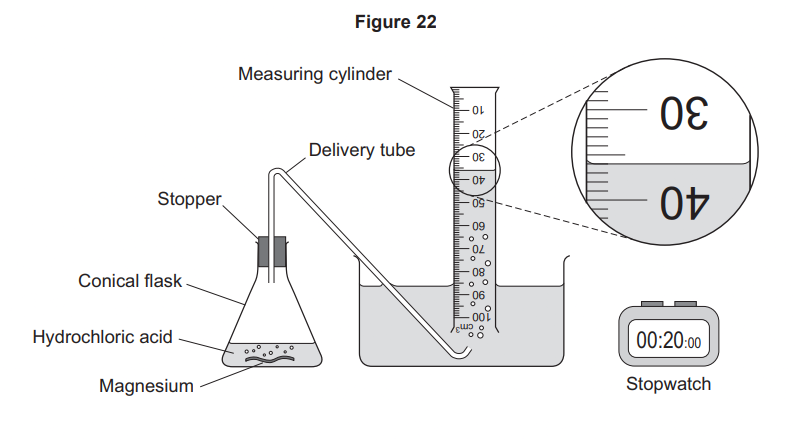
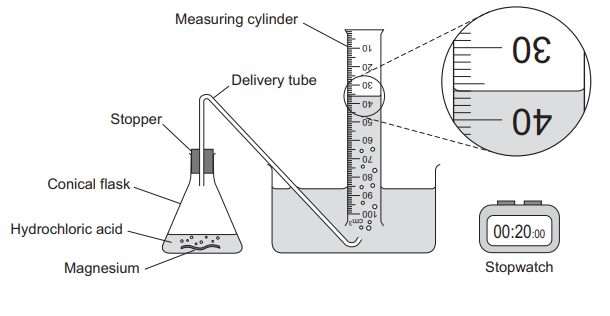
Figure 2 shows the apparatus.
Figure 2
This is the method used.
Add 50 cm3 of hydrochloric acid to the conical flask.
Add a 3 cm strip of magnesium to the hydrochloric acid in the conical flask.
Fit the stopper and delivery tube to the top of the conical flask and start timing.
Record the volume of hydrogen gas collected in the measuring cylinder every 20 seconds for a total of 100 seconds.
Repeat steps 1 to 4 with a different concentration of hydrochloric acid.
What volume of hydrogen gas has been collected in the measuring cylinder in Figure 2?
The stopper and delivery tube were fitted to the conical flask in step 3.
Explain why the time taken to fit the stopper and delivery tube may cause an error in this investigation.
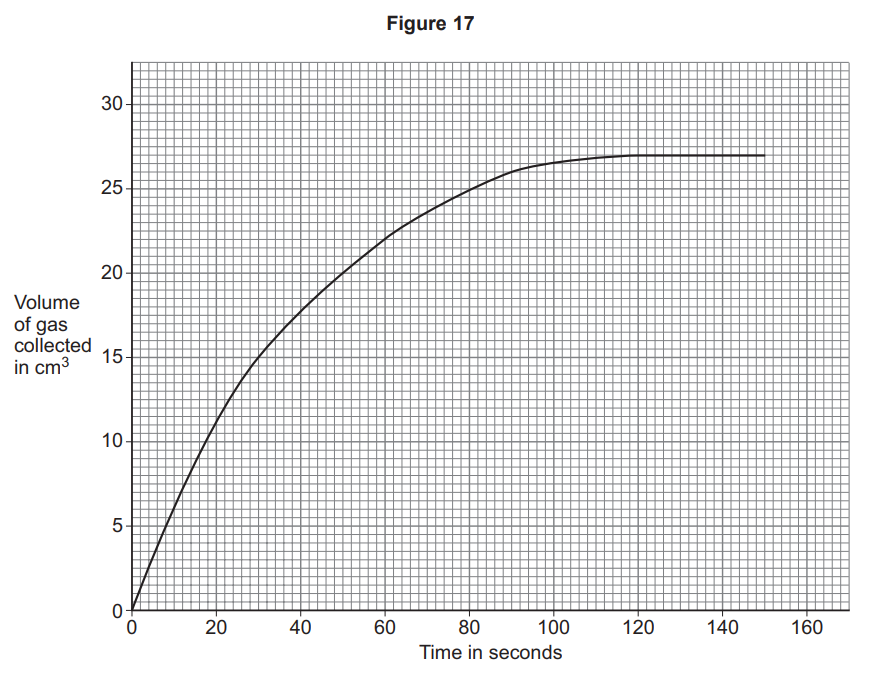
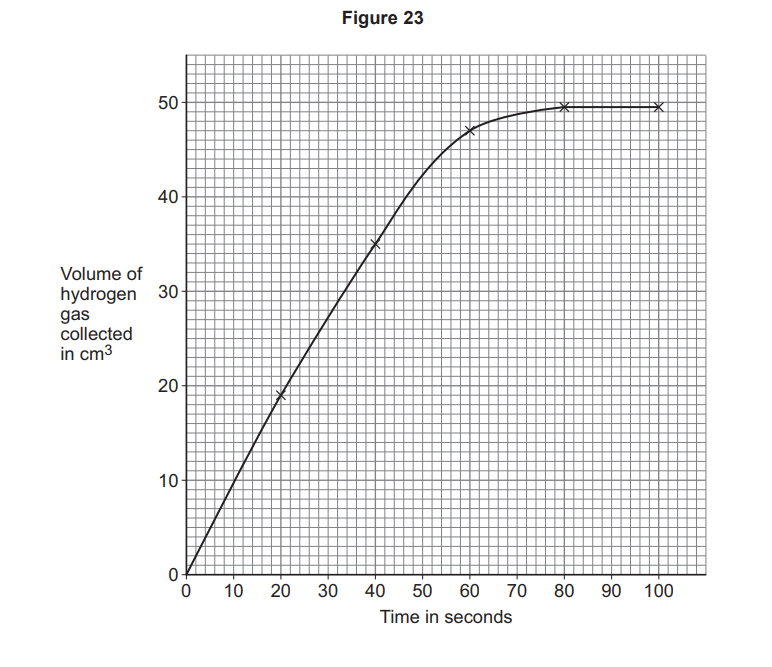
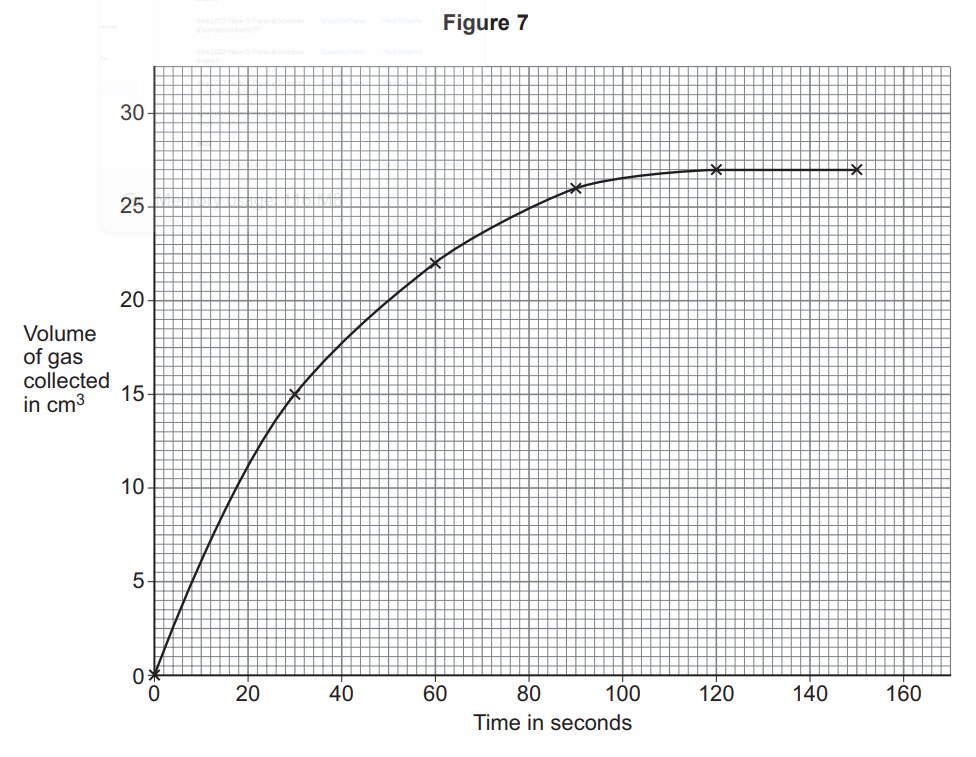
Figure 3 shows the results for one concentration of hydrochloric acid.
Figure 3
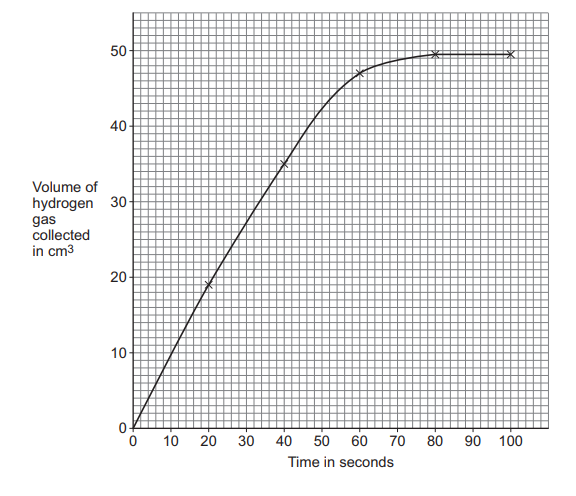
Determine the time taken for the reaction to be complete.
Use Figure 3.
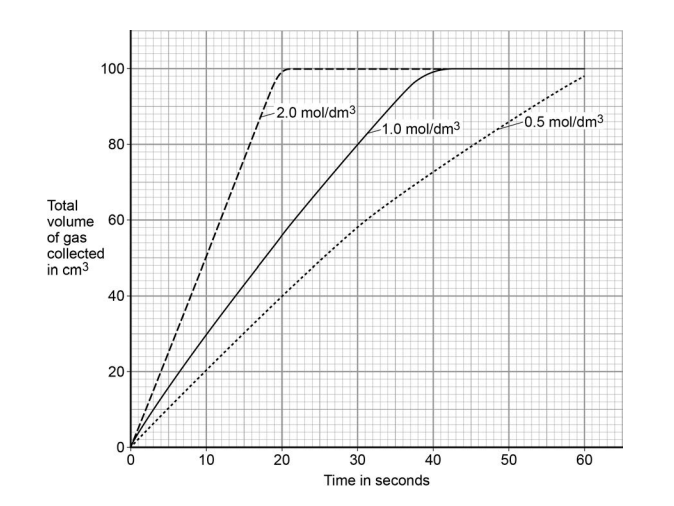
The student repeated the method using a higher concentration of hydrochloric acid.
How would the line of best fit for a higher concentration of hydrochloric acid compare with the line of best fit on Figure 3?
Select your answer.
Initially the line of best fit would have a lower gradient.
Initially the line of best fit would have the same gradient.
Initially the line of best fit would have a higher gradient.
Was this exam question helpful?