Resource Management (Edexcel A Level Business): Exam Questions

Exam code: 9BS0

3 hours20 questions
1
Sme Calculator
4 marks

Read the following extracts (E to H) (opens in a new tab) before answering

Using the data in Extract F, explain one implication of the level of capacity utilisation for the soft drinks manufacturer A, compared to B. You are advised to show your working

2
4 marks

Read the following extracts (A to D) (opens in a new tab) before answering

Explain one likely reason why Pura Cosmetics chooses to use batch production

3
4 marks

Read the following extracts (A to C) (opens in a new tab) before answering

Explain one benefit to Bon Bon’s of continuing to pack its bagged sweets products by hand

4
4 marks

Read the following extracts (E to G) (opens in a new tab) before answering

Explain one benefit to Zara of using a just in time stock control system in its Spanish and Portuguese factories

5
4 marks

Read the following extracts (E to H) (opens in a new tab) before answering

Explain one benefit of quality control for a business such as Cadbury

6
Sme Calculator
4 marks

Read the following extracts (E to H) (opens in a new tab) (opens in a new tab)before answering 

Using the data in Extract F, calculate the difference in labour productivity if the car manufacturer recruits 23 additional workers and output increases by 10 per cent

7
Sme Calculator
4 marks

Read the following extracts (A to D) (opens in a new tab) before answering

Explain one effect on easyJet plc of the reduced capacity utilisation of its aircraft in 2020.

8
Sme Calculator
4 marks

Read Extracts A to D (opens in a new tab) before answering.

Explain one reason why Brompton might use job production.

9
Sme Calculator
4 marks

Read Extracts A to D (opens in a new tab)before answering.

Using the data in Extract B, calculate the change in labour productivity between 2019 and 2020. State your answer to two decimal places. You are advised to show your working.

10
Sme Calculator
4 marks

Read extracts A to H before answering questions

Extract E

PulseTech plc

PulseTech plc is a UK-based public limited company that designs and sells wearable technology products, including fitness trackers and smart health monitors. Its products are sold online and through electronics retailers in the UK, Europe and North America.

PulseTech’s strategy focuses on innovation and data analytics. Its products allow users to track physical activity, sleep patterns and heart rate. The business invests heavily in research and development (R&D) to differentiate its products and maintain a competitive advantage.

Extract F

PulseTech plc – selected financial information (2023)

Table displaying financial data for 2023 in million pounds: Revenue 412, Cost of sales 268, Operating expenses 121, Non-current assets 310, Shareholders’ funds 285.

PulseTech’s directors are under pressure from shareholders to improve profitability, following a slowdown in revenue growth during 2023.

Extract G

Production capacity and outsourcing

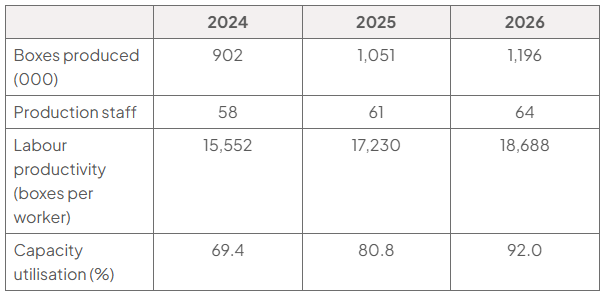
PulseTech currently assembles its products at a factory in Eastern Europe. The factory is operating at 92% capacity utilisation.

Demand forecasts suggest that sales could increase by up to 30% over the next two years if PulseTech launches a new health-monitoring device. To meet this demand, PulseTech is considering two options:

  • Expanding its existing factory

  • Outsourcing production to a specialist electronics manufacturer in Asia

Outsourcing would reduce PulseTech’s control over production but could lower unit costs.

Extract H

The global wearable technology market

The global wearable technology market has grown rapidly over the past decade. The market was valued at $61.3bn in 2020 and is forecast to reach $150.6bn by 2030, representing strong long-term growth.

Growth is driven by increased health awareness, advances in sensor technology and the integration of wearable devices with smartphones and health apps.

However, the market is characterised by:

  • Rapid technological change

  • Short product life cycles

  • High levels of research and development spending

PulseTech’s senior managers must decide how best to position the business to benefit from future market growth.

Explain one reason why operating at high capacity utilisation may create problems for PulseTech plc.

1
Sme Calculator
8 marks

Read the following extracts (E to H) (opens in a new tab) before answering

Assess two benefits of quality control for a business, such as Cadbury

2
Sme Calculator
10 marks

Read the following extracts (E to G) (opens in a new tab) before answering

Assess the extent to which Zara’s use of just in time (JIT) may have contributed to its success

3
12 marks

Read the following extracts (E to H) (opens in a new tab) before answering

Following a sharp fall in demand for household appliances, Buy It Direct's distribution hubs were operating at an average 124% capacity in 2020

Assess the likely consequences for Buy it Direct of holding excess stock

4
Sme Calculator
10 marks

Read the following extracts (A to D) (opens in a new tab)before answering

Assess the importance of capacity utilisation during the Commonwealth Games.

5
Sme Calculator
10 marks

Read Extracts A to C (opens in a new tab) before answering

Using the data in Extracts A and B, assess the importance of just in time (JIT) management of stock for UK car manufacturers.

1
Sme Calculator
20 marks

Read the following extracts (E to G) (opens in a new tab) before answering

Zara is planning to open another 200 stores and is considering the best way to maintain the quality of its clothes. Zara is considering using either quality control or total quality management (TQM)

Evaluate these two options and recommend which one would be the best way for Zara to maintain the quality of its clothes

2
20 marks

Read the following extracts (A to D) (opens in a new tab) before answering

Pura Cosmetics has been awarded a supply contract with a leading department store. In order to fulfil varying order quantities it is considering either holding buffer stock or introducing a just in time stock management system

Evaluate these two options and recommend which one is most suitable for Pura Cosmetics to fulfil varying order quantities from the department store

3
Sme Calculator
12 marks

Read extracts A to D before answering the question

Extract A

Aurelia Kitchens Ltd

Aurelia Kitchens Ltd is a privately owned UK manufacturer of premium fitted kitchens. The business designs, manufactures and installs kitchens for domestic customers across the UK. Aurelia positions itself as a high-quality brand, competing on design, durability and customer service rather than low prices.

Aurelia Kitchens Ltd was founded in 2008 by two former furniture designers. The business operates from a single manufacturing site in the West Midlands and employs 165 people. Aurelia sells its kitchens through a network of 12 UK showrooms, all owned by the business.

Demand for fitted kitchens increased during 2020 and 2021, as more people invested in home improvements. Aurelia experienced strong sales growth during this period and expanded its workforce by recruiting additional skilled production workers and installation teams.

Aurelia’s management team believes that long-term growth will depend on improving productivity at its factory and making strategic investment decisions to support future demand.

Extract B

Employment and productivity at Aurelia Kitchens Ltd

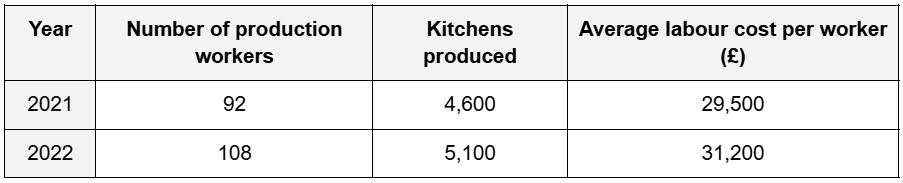
Table showing production data for 2021 and 2022: workers increased from 92 to 108, kitchens from 4,600 to 5,100, costs rose from £29,500 to £31,200.

Aurelia’s managers are reviewing labour productivity and unit costs. Some experienced workers have raised concerns that recent recruitment has reduced average skill levels on the factory floor, increasing the need for supervision and training.

Extract C

Investment options under consideration

Aurelia is considering investing in new computer-controlled cutting and assembly machinery. The machinery would automate several stages of the production process and reduce reliance on manual labour.

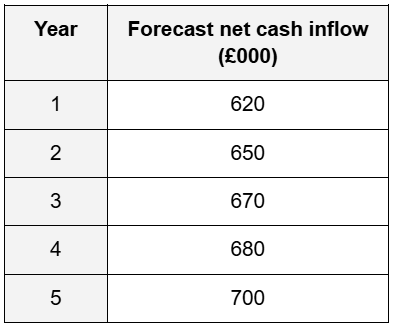
The proposed investment would cost £2.4 million and is expected to last five years, with no residual value. Forecast cash inflows from the investment are shown below.

Table showing forecast net cash inflow over five years: £620k, £650k, £670k, £680k, and £700k for years 1 to 5, respectively.

Aurelia’s management uses a discount rate of 9% when appraising investment projects.

Table showing discount factors by year: Year 0 is 0.917, Year 1 is 0.842, Year 2 is 0.772, Year 3 is 0.708, Year 4 is 0.650, Year 5 is 0.596.

Extract D

Growth strategy

Aurelia’s sales director has suggested expanding into the European market, beginning with Ireland and the Netherlands. This would involve exporting kitchens manufactured in the UK and working with local installation partners.

However, some directors favour focusing on the UK market and increasing capacity at the existing factory. They argue that exporting would increase complexity, currency risk and delivery times, potentially damaging Aurelia’s reputation for customer service.

The directors must decide which growth strategy is most suitable for Aurelia over the next five years.

Assess the likely impact of recruiting additional production workers on Aurelia Kitchens Ltd's operations.

4
12 marks

Read extracts A to D before answering questions

Extract A

UK chocolate and sugar confectionery market data (2020-2024)

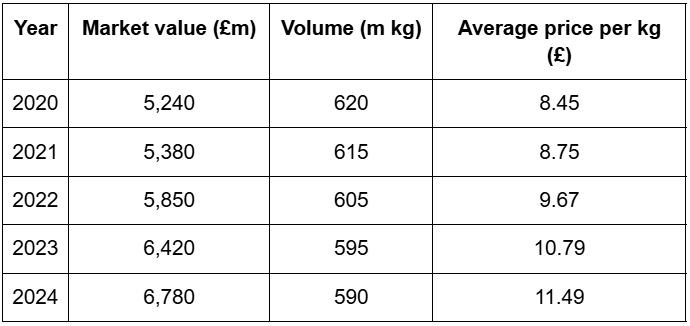
Table showing yearly market value, volume, and average price per kilogram from 2020 to 2024. Values increase while volume decreases over time.

The UK market has grown in value from £5.24bn (2020) to £6.78bn (2024), but volume sales fell from 620 million kg to 590 million kg. Value growth reflects price rises, not increased demand. Average price per kg rose 36% since 2020, driven by commodity inflation and supply chain disruptions in 2022-23.

Volume decline was most pronounced in sugar confectionery due to health concerns. Premium and dark chocolate outperformed milk chocolate.

Source: adapted from Kantar Worldpanel UK Confectionery Report 2024

Extract B

Mondelez to close Cadbury factory in Ireland with loss of 400 jobs

Mondelez International will close its Cadbury facility in Rathmore, Ireland, with 400 job losses. The 50-year-old factory produces Cadbury Dairy Milk bars and seasonal products for UK and Irish markets.

The company cited changing consumer preferences, overcapacity in its European network, and efficiency needs. Production will consolidate into larger Birmingham and Poland facilities where Mondelez has invested in automation.

"This was an incredibly difficult decision," said a Mondelez spokesperson. "We must adapt our manufacturing footprint to remain competitive." Unions and politicians criticised the closure.

Industry experts note this reflects broader rationalisation. Similar Nestlé and Mars closures across Europe show companies seeking economies of scale while responding to declining volumes in mature markets.

Source: adapted from BBC News, The Irish Times, Food Manufacture (January 2025)

Extract C

The rise of functional and better-for-you confectionery

Consumer preferences are shifting towards products with functional benefits or health credentials. Research shows 42% of UK consumers seek reduced-sugar confectionery, while 38% want products fortified with vitamins or protein.

Major brands have launched lower-sugar variants using alternative sweeteners or reduced portions. Start-ups offer protein-enriched chocolate, sugar-free sweets, and vegan chocolate made with oat or coconut alternatives.

These products command 30-50% price premiums. However, taste remains the primary purchase driver, and reformulated products must deliver on flavour.

Mintel predicts functional and better-for-you products will reach 15-18% of the UK market by 2028, up from 8% in 2024. Success requires balancing health credentials with taste while managing costs.

Source: adapted from Mintel UK Confectionery Market Report 2024

Extract D

UK sugar tax extended to confectionery sector

The UK government announced plans to extend sugar taxation beyond soft drinks to include confectionery, targeting childhood obesity. The proposed levy, effective April 2027, will apply to chocolate, sugar confectionery, and sweet biscuits containing over 5g sugar per 100g.

Products will be categorised into two bands:

  • Band 1: 5-10g sugar per 100g - 18p levy per 100g

  • Band 2: Over 10g sugar per 100g - 24p levy per 100g

The government estimates the tax could raise £500m annually for children's health programmes. Public health organisations welcomed the move, citing links between sugar consumption and obesity, diabetes, and dental problems.

The confectionery industry strongly criticised the proposals. The Food and Drink Federation warns the levy will disproportionately impact smaller manufacturers lacking reformulation resources. Major manufacturers will likely pass costs to consumers through higher prices, potentially reducing demand and causing job losses.

Retailers are concerned about administrative burdens and sales impact. Trade unions fear job losses if the tax leads to factory closures or overseas production shifts.

Source: adapted from UK Government press release, The Guardian, Food Manufacture (December 2024)

Using the information in Extract B and your knowledge of business, assess the likely impact on Mondelez of investing in automation at its Birmingham and Poland manufacturing facilities

5
10 marks

Read extracts E to H before answering questions

Extract E

Company profile: Sweetcraft Ltd

Sweetcraft Ltd is a family-owned business based in Burnley, Lancashire, specialising in traditional boiled sweets, toffee, and fudge. Founded in 1992, the company employs 72 people and generates annual revenue of approximately £9.8 million.

Operating from a single site, Sweetcraft sells through independent retailers, farm shops, garden centres, tourist attractions, and its website. The business has built a reputation for high-quality, handcrafted products using traditional recipes, priced 40-60% above mass-market equivalents.

The core customer base consists of older consumers valuing traditional British confectionery. The company has developed a growing gift range, with seasonal assortments popular for Christmas and Easter.

Co-founders Sarah and Michael Chen remain hands-on in operations. Sweetcraft faces rising ingredient costs, competition from larger manufacturers, and difficulties attracting younger consumers.

Extract F

Financial performance 2022-2024

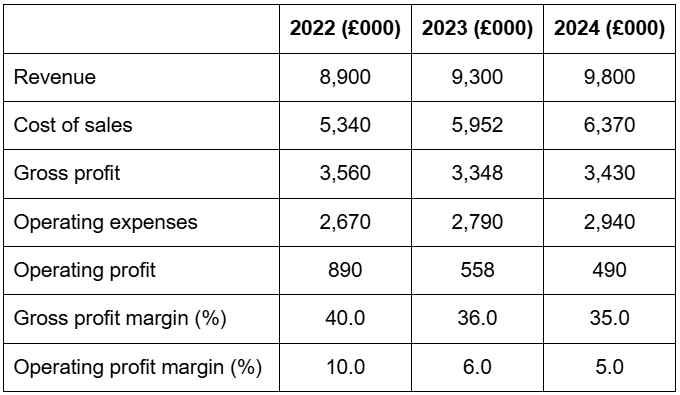
Financial table showing revenue, costs, and margins from 2022 to 2024, with decreasing operating profit margins: 10% in 2022 to 5% in 2024.

Additional data (2024)

  • Non-current assets: £3.2m

  • Current assets: £1.8m

  • Current liabilities: £1.4m

  • Long-term loans: £1.5m

  • Rising cost of sales (sugar, glucose syrup, butter, packaging) increased from 60% to 65% of revenue

    • Competitive pressures and retailer price sensitivity limited price increases.

  • Operating expenses rose due to higher energy costs, wage inflation, and digital marketing investment.

Source: adapted from Sweetcraft Ltd financial statements

Extract G

Operations and workforce challenges

Sweetcraft's factory operates at 68% capacity, producing around 780 tonnes annually using traditional batch production with semi-automated packaging. Production is highly seasonal, peaking before Christmas and Easter. During peaks, the factory runs extended shifts with up to 20 temporary workers. Outside peaks, underutilisation causes fixed cost inefficiencies.

Labour turnover averaged 24% in 2024, above the industry average of 15%. Employees leave for higher-paid positions in nearby distribution centres. The workforce is aging - 45% of production employees are over 50 - and the company struggles to attract younger workers.

Sarah Chen commented: "We're competing with logistics operators offering higher wages. Our traditional sweet-making roles require specialist skills that are increasingly rare. Training takes time and impacts productivity."

Extract H

Strategic options

Sweetcraft's management has identified two growth strategies:

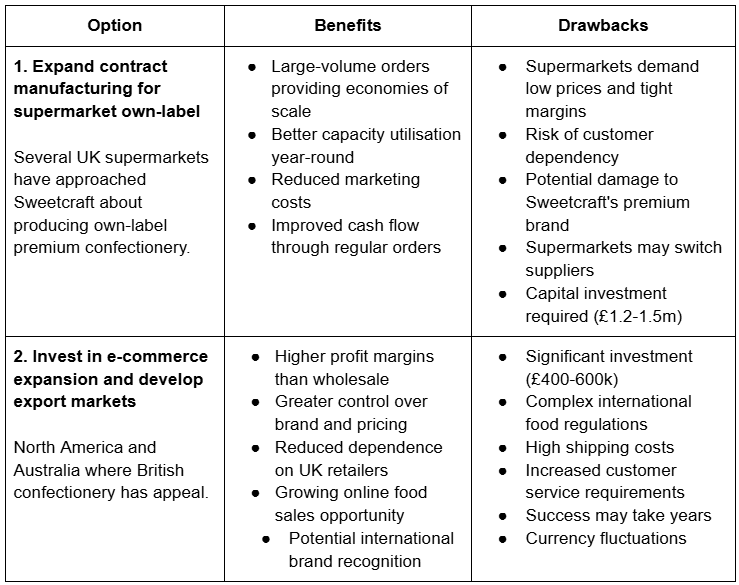
Table showing two options for Sweetcraft: contract manufacturing for supermarkets and e-commerce expansion. Lists benefits and drawbacks for each option.

Management is divided. Some argue contract manufacturing offers lower-risk capacity utilisation, while others believe protecting the Sweetcraft brand and pursuing direct sales creates greater long-term value.

Source: adapted from strategic planning documents

Assess the usefulness of capacity utilisation data for Sweetcraft Ltd when making operational decisions.