Combustion & Free Radical Substitution of Alkanes (AQA A Level Chemistry): Video
Exam code: 7405
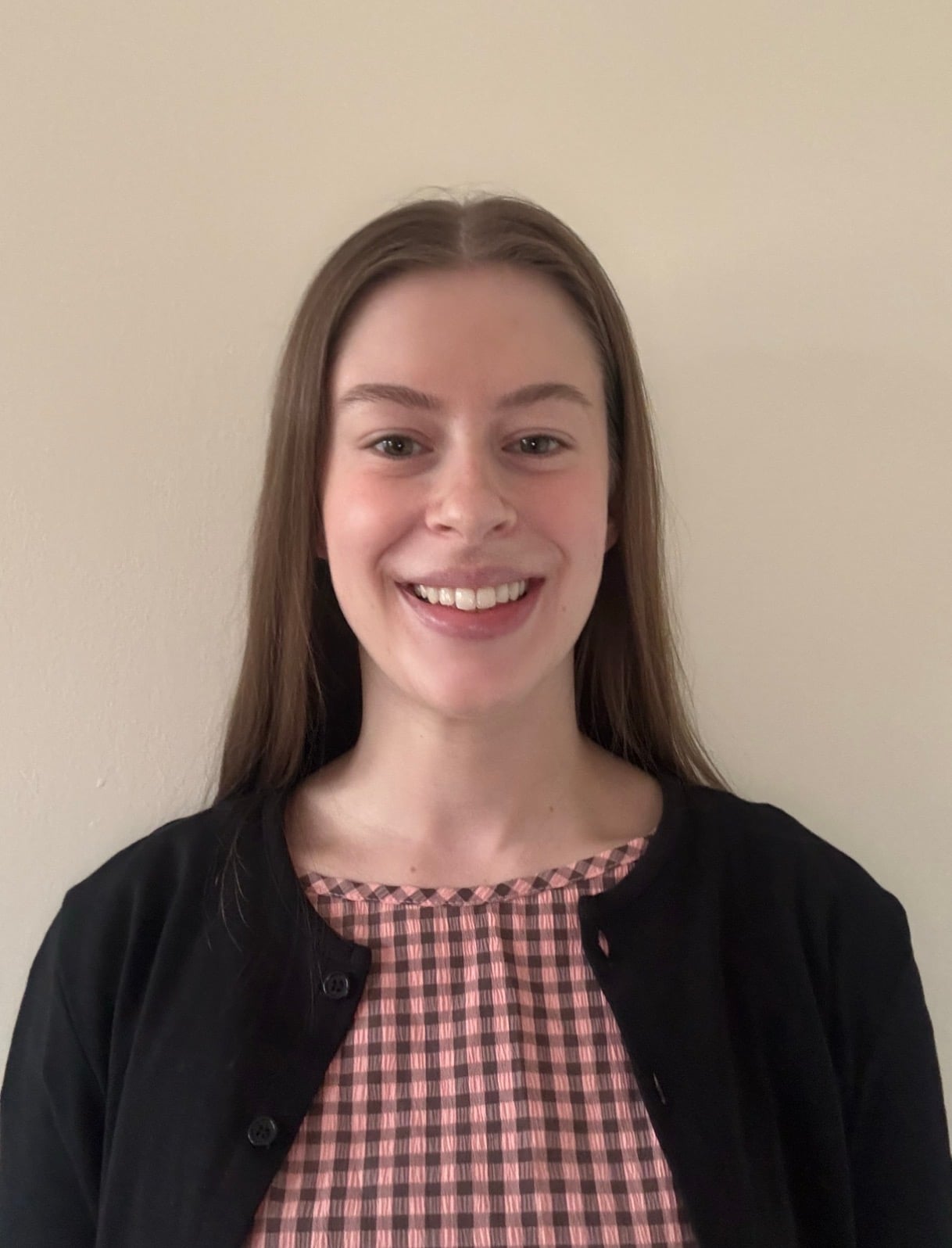
Presented by: Eleanor Lomax
Reviewed by: Abi Blackham
Hi, I'm Eleanor with 3 years of experience teaching Chemistry, and this video is about the combustion of alkanes and the free radical substitution that happens when they react with chlorine.
In both reactions the conditions, not the alkane, decide what you get.
Alkanes are burnt on a large scale as fuels, and they also react with halogens such as chlorine and bromine by free radical substitution. What joins the two is that in each case the products depend on the conditions: how much oxygen is present decides whether combustion gives carbon dioxide, carbon monoxide or carbon, and how much chlorine is present decides how far substitution goes.
We'll take complete and incomplete combustion first, then the pollutants that combustion in a car engine produces and how they are removed. After that, the free radical substitution mechanism and its three steps, and finally the mixture of products it gives.
Alkanes are combusted on a large scale for their use as fuels. When they burn in excess oxygen, complete combustion occurs: all the carbon atoms are oxidised to carbon dioxide, and all the hydrogen atoms to water.
When they burn in limited oxygen, incomplete combustion occurs and the carbon is not fully oxidised. Some of it is only partially oxidised to carbon monoxide, and with a further reduced supply of oxygen, carbon is produced in the form of soot. Incomplete combustion often takes place inside a car engine, where the amount of oxygen is limited. The supply of oxygen is the condition that decides which of those three products you get.
Two of the three main pollutants in exhaust fumes come from the incomplete combustion just described: carbon monoxide, and the unburnt hydrocarbons that make up the volatile organic compounds. Carbon monoxide is toxic, colourless and odourless, and it binds strongly to haemoglobin in red blood cells, reducing its ability to bind and transport oxygen. Nitrogen is normally too unreactive to react with oxygen in the air, but the very high temperatures and pressures reached in a car engine allow it to form nitrogen monoxide, which is oxidised further in air to nitrogen dioxide. These nitrogen oxides dissolve and react in water with oxygen to form nitric acid, which is a cause of acid rain.
Most modern cars are fitted with catalytic converters, in which platinum, palladium and rhodium are coated onto a ceramic honeycomb structure to provide a large surface area. They oxidise carbon monoxide and unburnt hydrocarbons to carbon dioxide and water, and reduce nitrogen monoxide to nitrogen. Sulfur dioxide is removed separately, by passing waste gases through a scrubbing tower where a slurry of calcium oxide or calcium carbonate is sprayed into them.
Alkanes also undergo free radical substitution, in which a hydrogen atom is replaced by a halogen atom such as chlorine or bromine. Because alkanes are relatively unreactive, ultraviolet light is required to initiate the reaction: the reaction between an alkane and bromine only occurs in sunlight.
The reaction has three steps. In the initiation step, the chlorine-chlorine or bromine-bromine bond is broken by energy from the UV light; each atom takes one electron from the covalent bond, which is homolytic fission, and two halogen radicals are formed. In the propagation step, a radical attacks the alkane, a carbon-hydrogen bond breaks homolytically, and an alkyl radical is produced; that alkyl radical attacks another halogen molecule to form a halogenoalkane and regenerate the halogen radical, which then repeats the cycle. In the termination step, two radicals collide and form a single unreactive molecule, which stops the chain reaction. The condition that matters here is the UV light, without which none of this starts.
This reaction is not very suitable for preparing specific halogenoalkanes, because a mixture of substitution products is formed. If there is enough chlorine or bromine present, all the hydrogens in the alkane will eventually get substituted. Ethane, for example, is substituted first to chloroethane, and then further, until full substitution gives hexachloroethane with chlorine, or hexabromoethane with bromine. The amount of halogen present is what decides how far along that sequence you end up.
Although carbon dioxide is not toxic, it is considered a pollutant, because it is a greenhouse gas that contributes to global warming and climate change.
If you are asked to give an equation for the termination step of a free radical mechanism, you should not give the equation that reforms the original halogen. Although it is technically a termination reaction, giving extra termination steps is often marked as ignore on mark schemes.
Alkanes burn in excess oxygen to give carbon dioxide and water, and in limited oxygen to give carbon monoxide or carbon. The carbon monoxide, nitrogen oxides and unburnt hydrocarbons leaving a car engine are removed by catalytic converters, and sulfur dioxide by lime scrubbing. Free radical substitution replaces a hydrogen with a halogen, initiated by UV light, propagated by radicals that regenerate themselves, and terminated when two radicals collide.
In both reactions the conditions decide the products: how much oxygen is present, and how much halogen is present.
Was this video helpful?
Build on this topic
Presenter: Eleanor Lomax
Expertise: Chemistry Curriculum Expert
Eleanor is a Trainee Clinical Scientist working in the NHS, alongside completing a Master’s degree in Clinical Science. She holds a BSc in Biological Sciences from Durham University and has experience teaching and tutoring GCSE and A-level Chemistry and Biology. Through her development of a tutoring organisation, she has supported over 1,600 students and has also taught science in both primary and secondary schools.
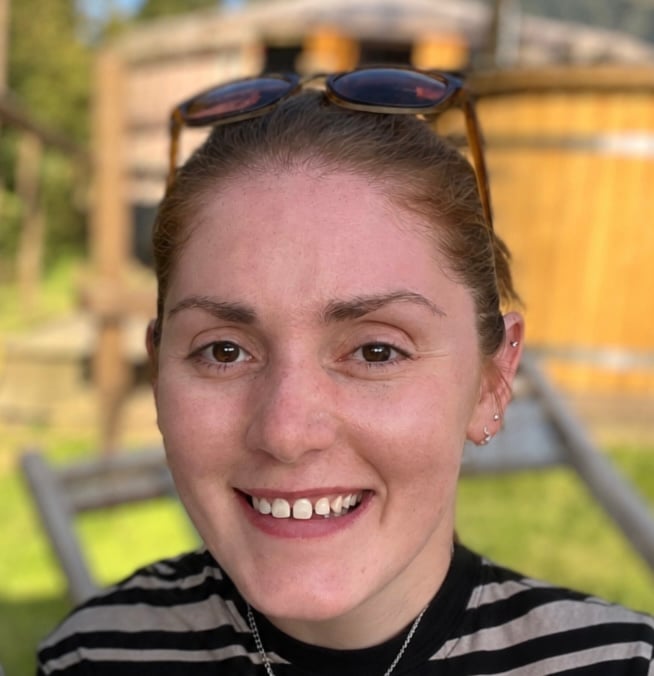
Reviewer: Abi Blackham
Expertise: Chemistry Curriculum Expert
Abi is a Chemistry teacher with a First Class BSc in Biochemistry and Genetics from the University of Sheffield. She has taught and tutored students across GCSE and A-level Chemistry and Biology and brings her classroom experience into her work as a Chemistry content creator for EdTech companies. Abi particularly enjoys breaking down challenging Chemistry topics into clear, manageable ideas and helping students build the knowledge and confidence they need to succeed in their exams.