Integration by Parts (OCR A Level Maths A: Pure): Revision Note
Exam code: H240

Written by: Paul
Updated on
Integration by parts
What is integration by parts?

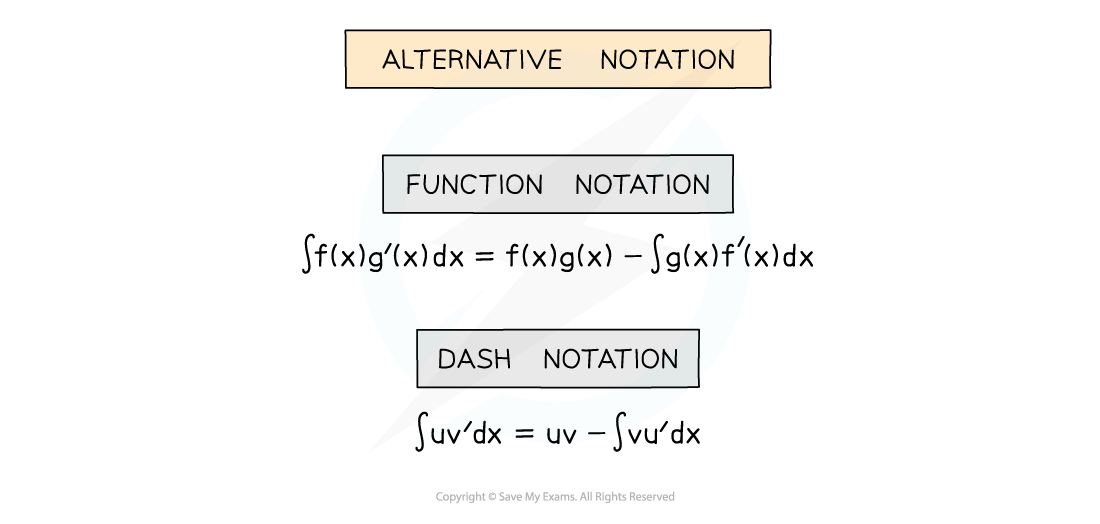
For integrating the product of two functions - reverse product rule
Crucially the product is made from u and dv/dx (rather than u and v)
Alternative notation may be used
How do I use integration by parts?
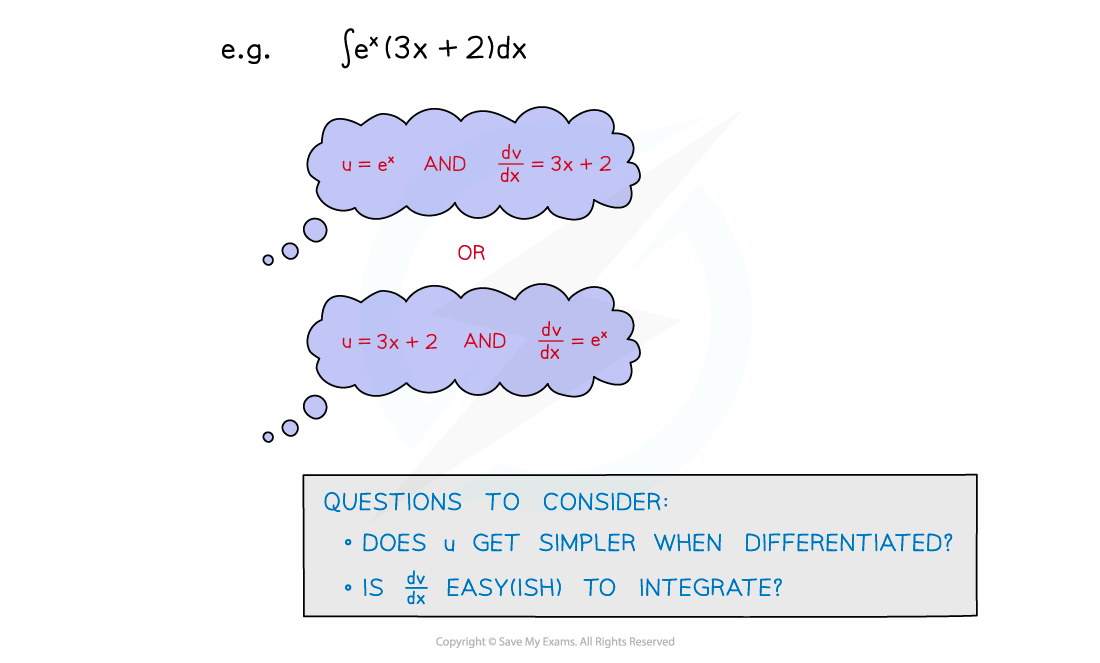
The hardest part is choosing u and dv/dx as there is no method for doing so
u, ideally, becomes simpler when differentiated but this is not always possible
dv/dx should be a function that can be integrated fairly easily
Be wary of functions that ‘cycle’/’repeat’ when differentiated/integrated
ex → ex
sin x → cos x → -sin x → -cos x → sin x

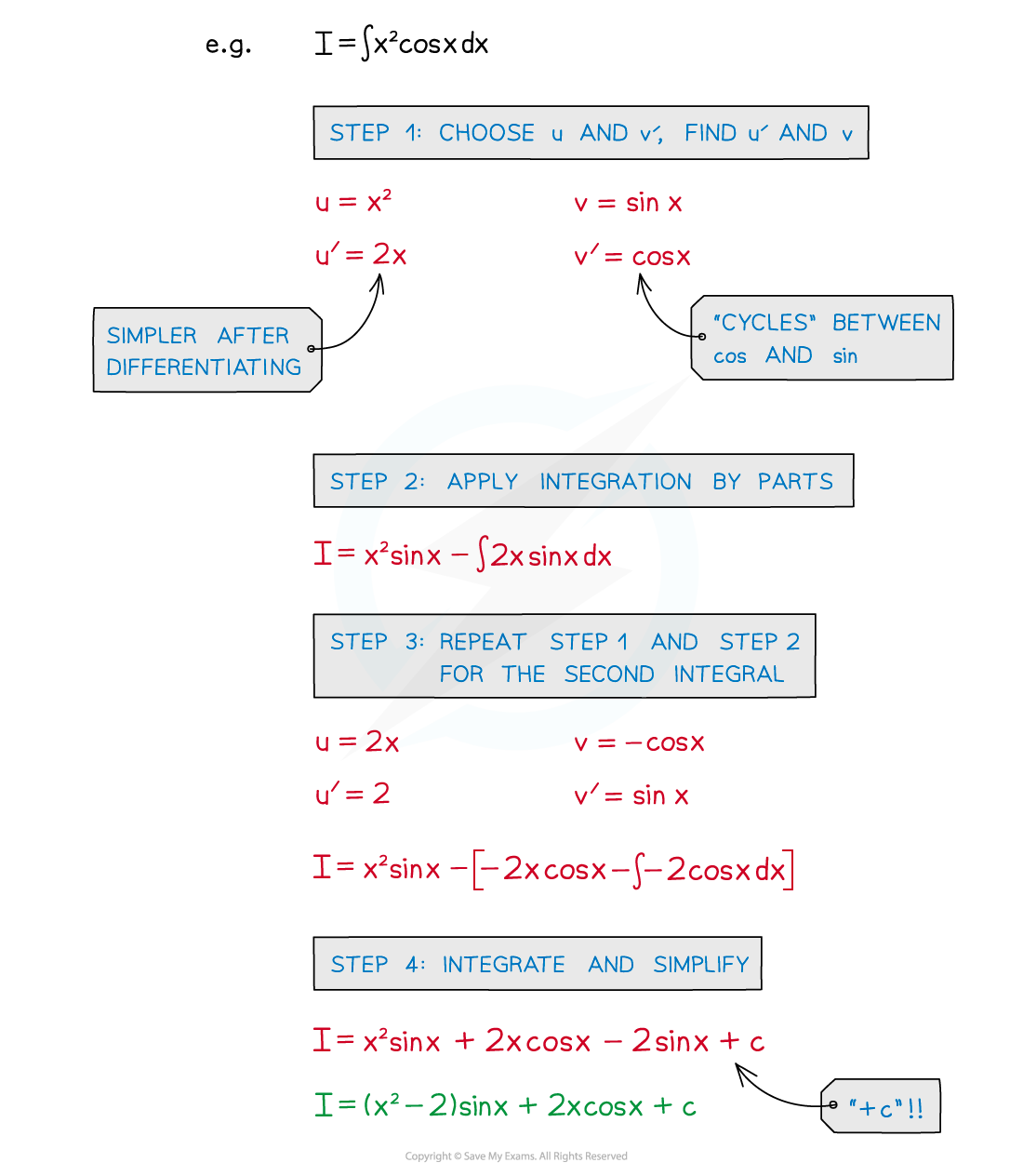
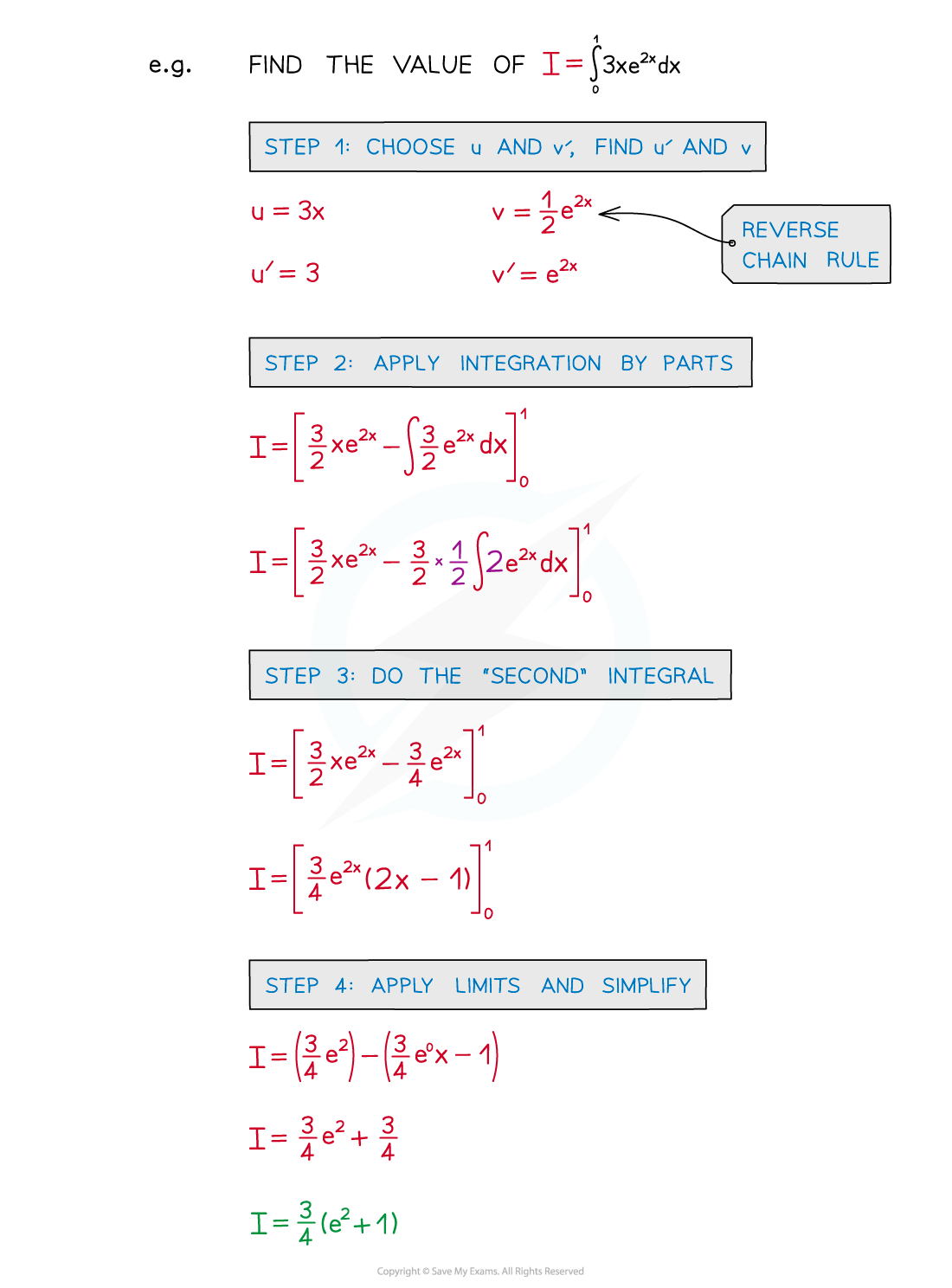
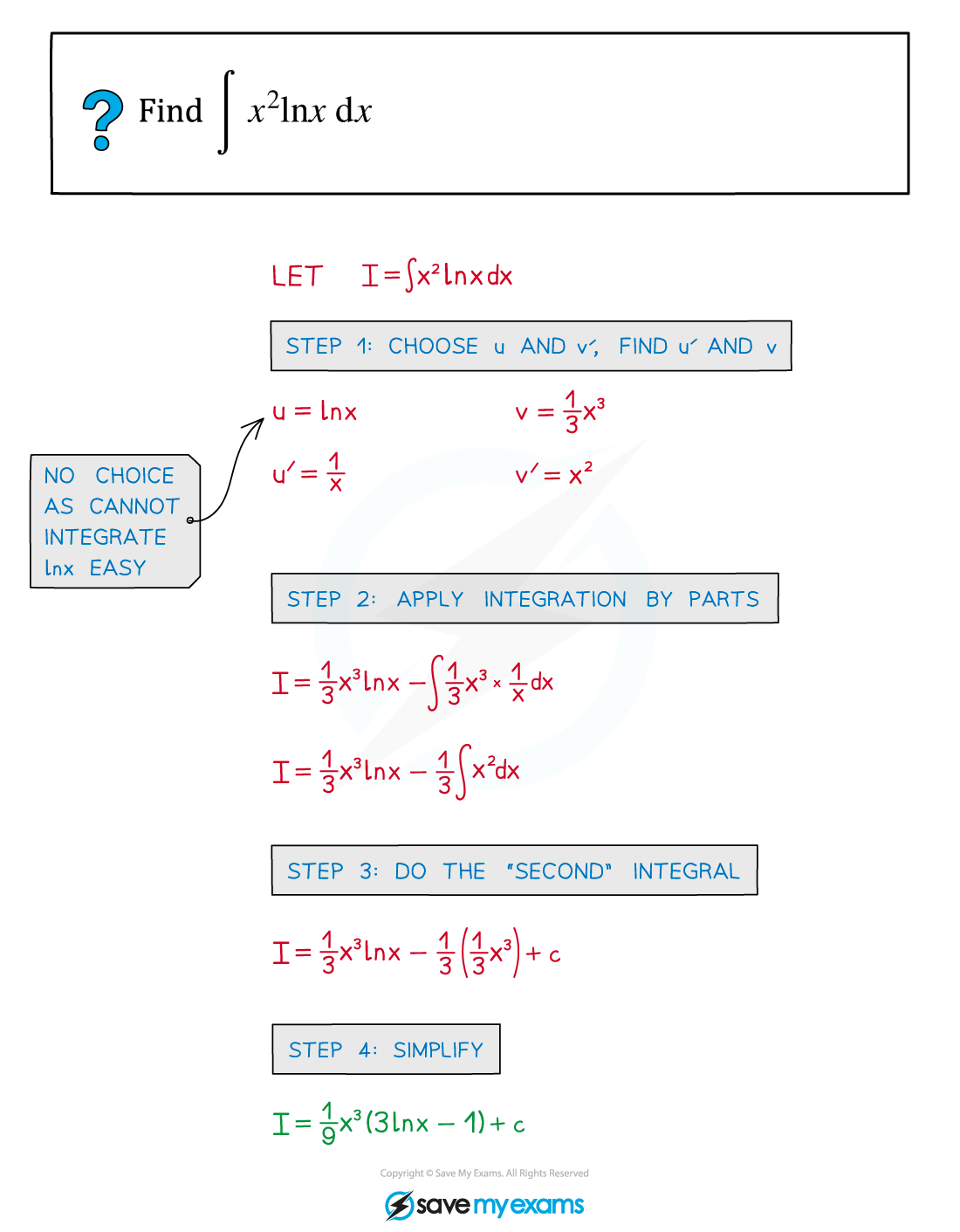
STEP 1
Choose u and v’, find u’ and vSTEP 2
Apply Integration by PartsSimplify anything straightforward
STEP 3
Do the ‘second’ integralIf an indefinite integral remember “+c”, the constant of integration
STEP 4
Simplify and/or apply limits
Can I use integration by parts twice?
It is possible that integration by parts may need to be applied more than once
How do I integrate ln x?
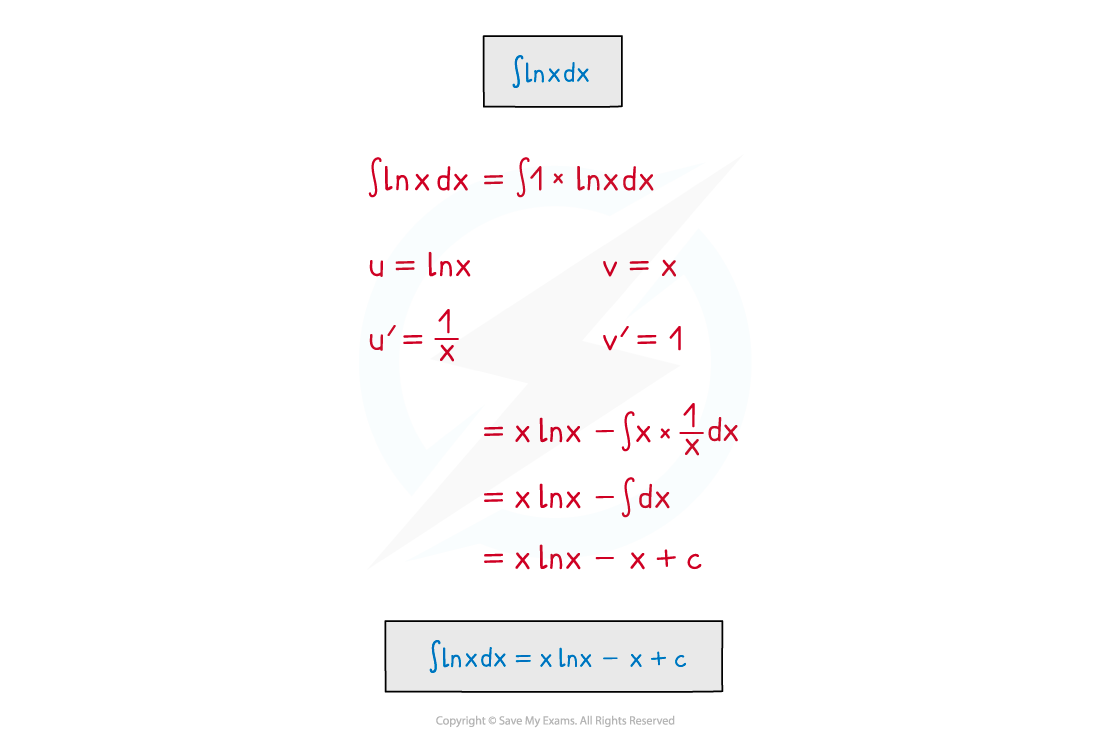
A classic ‘set piece’ in almost every A level maths textbook ever written!
In general, rewriting f(x) as 1×f(x) can be a powerful problem-solving technique
This could be a question in the exam
Can I find definite integrals using integration by parts?
You can find the value of a definite integral using integration by parts
Use the layout shown in the example below
Examiner Tips and Tricks
Always think about what an elegant, slick, professional maths solution looks like – solutions normally get more complicated at first but quickly get simpler.
If your work is continuing to get more complicated, stop and check for an error.
Try to develop a sense of ‘having gone too far down the wrong path’.
This general advice is useful to remember:
Is the second integral harder than the first?
Try swapping your choice of u and dv/dx
It is rare to have to apply integration by parts more than twice
Worked Example

Unlock more, it's free!
Join the 100,000+ Students that ❤️ Save My Exams
the (exam) results speak for themselves:

Was this revision note helpful?