Research Design (AQA AS Sociology): Revision Note
Exam code: 7191

Validity and reliability
Sociological research must be carefully designed to ensure findings are trustworthy and meaningful
Good research design aims to achieve key principles:
Validity
Reliability
Representativeness
Generalisability
Objectivity
Validity
Validity measures whether the method gives a true and meaningful picture of what is being studied
A valid method gives a true picture of the reality of participants' experiences
Qualitative methods such as participant observation often have higher validity because they offer deeper, more truthful insights
In contrast, quantitative methods may overlook the context behind behaviours and responses
Reliability
Refers to the replicability of research and the consistency of research findings
A method is reliable if it produces the same results when repeated by other researchers
In the natural sciences (e.g. physics), experiments are highly reliable because they produce consistent outcomes when repeated
In sociology, quantitative methods such as structured questionnaires are generally more reliable than qualitative methods such as unstructured interviews
E.g. a questionnaire asking fixed questions will yield similar data across researchers
Representativeness and generalisability
Representativeness
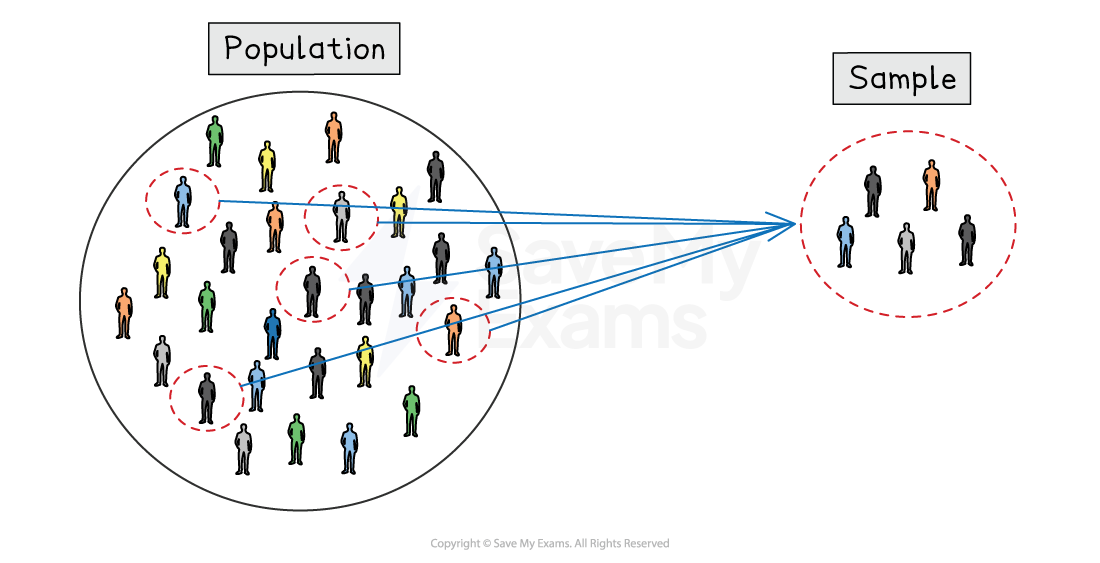
Representativeness refers to whether the sample used in research accurately reflects the wider population being studied
Since it is usually impractical to study everyone of interest, researchers rely on smaller samples
E.g. rather than studying every teacher in the UK, a sociologist might select a sample of 100 teachers whose characteristics mirror those of the broader teaching population
Representativeness is essential for ensuring that research findings can be generalised to the wider population
Quantitative methods, such as large-scale questionnaires that use random or stratified sampling, are more likely to produce representative samples
Generalisability
Generalisability concerns whether the research findings can be applied to the wider population beyond the sample
The larger and more representative the sample, the more generalisable the findings are
Sociologists aim for generalisability to make broader claims about social behaviour or attitudes
Objectivity
Objectivity, closely linked to value freedom, is the principle of keeping personal beliefs, opinions or biases out of the research process
Researchers must ensure their values do not influence:
the way data is collected
their interactions with participants
how they interpret and analyse findings
To enhance objectivity, sociologists can:
use random sampling to reduce selection bias
ask neutral and standardised questions that do not lead participants
avoid developing emotional attachments with participants
train interviewers to stay impartial and avoid influencing responses during data collection
Overall, an effective research design allows sociologists to gather data that is reliable, valid and generalisable, while maintaining objectivity and representativeness
The choice of method should reflect these goals, depending on the research question, sample and practical constraints

Unlock more, it's free!
Join the 100,000+ Students that ❤️ Save My Exams
the (exam) results speak for themselves:

Was this revision note helpful?
