Domestic Energy (WJEC GCSE Science (Double Award): Physics): Exam Questions

Exam code: 3430

2 hours15 questions
1
Sme Calculator
3 marks

(i) A vacuum cleaner has a current of 2 A.

Circle the correct value for the fuse that should be used in the vacuum cleaner.

[1]

1 A

3 A

13 A

(ii) Tick (✓) the box that correctly states the purpose of a fuse:

[1]

Fuses are safety features designed to prevent electric shocks box enclose space space space space end enclose

Fuses are safety features designed to prevent fires box enclose space space space space end enclose

Fuses are safety features designed to prevent explosions box enclose space space space space end enclose

(iii) Circle the device that has the same purpose as a fuse.

[1]

earth wire

miniature circuit breaker

residual current circuit breaker

2a
Sme Calculator
3 marks

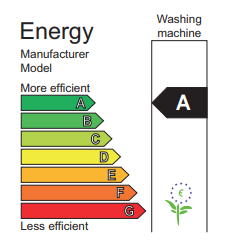
Energy rating labels are compulsory on most household appliances such as fridges, dishwashers, washing machines and televisions. These labels allow customers to compare appliances. In addition, the labels give other information about the appliances such as how noisy they are.

Labels used to rate appliances are from A, the most efficient, to G, the least efficient.

Energy label for a washing machine showing efficiency scale from A (green, most efficient) to G (red, least), with this model rated A.

As manufacturers have designed more efficient devices, new categories, e.g. A+, A++ and A+++ have been added to the labels.

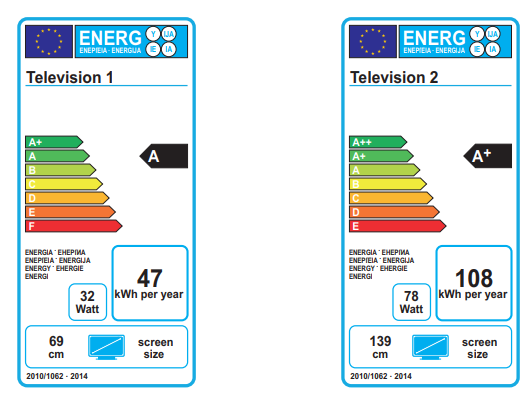
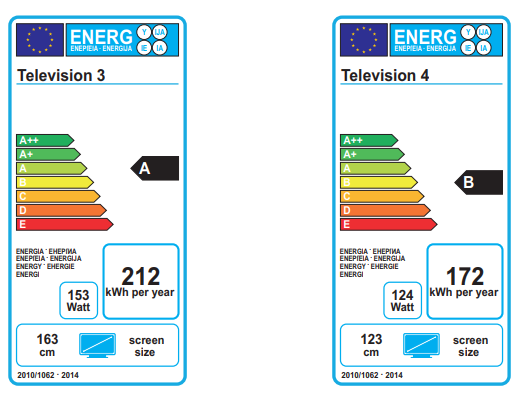
The energy rating labels of four televisions are given below and opposite.

EU energy labels comparing Television 1 (A, 47 kWh/year, 69 cm) with Television 2 (A+, 108 kWh/year, 139 cm), showing power use and screen size
EU energy labels comparing Television 3 and 4, showing A to E rating bars, yearly kWh use, wattage and screen size in centimetres for each set

Information on the cost of each television is given below.

Television

Purchase cost (£)

1

280

2

1 000

3

1 500

4

800

Use the information from the labels and the table to tick (✓) the three correct statements below.

Television 1 uses less energy per second than television 2 box enclose space space space space space space end enclose

The largest televisions always use the most energy box enclose space space space space space space end enclose

The purchase cost of television 2 is 1.5 times that of television 3 box enclose space space space space space space end enclose

More expensive televisions always use less energy box enclose space space space space space space end enclose

Television 3 uses 40 units more per year than television 4 box enclose space space space space space space end enclose

Televisions with the same energy rating, e.g. A+, don’t always have the same power box enclose space space space space space space end enclose
2b
Sme Calculator
3 marks

It is claimed that power is proportional to screen size. Use the data for television 1 and television 2 to determine if this claim is true.

2c
Sme Calculator
9 marks

(i) Use the equation:

\text{time (h)} = \frac{\text{units used (kWh)}}{\text{power (kW)}}

and data from the energy label to calculate how many hours the label suggests that television 2 is used for in 1 year.

[2]

Hours used = ..........

(ii) Use an equation to calculate the cost of using television 2 for 1 year if 1 unit (kWh) of electricity costs 16 p. Give your answer in pounds (£).

[2]

Cost = £ ..........

(iii) The expected lifespan of a television is 10 years. Simon concludes that it will be more cost effective to buy and run television 2 for 10 years but Sarah disagrees and claims that television 4 will be cheaper. Use the data to determine who is right.

[3]

(iv) Other than to save money, why should consumers be encouraged to choose appliances that use less energy?

[2]

3a
Sme Calculator
9 marks

The Energy Saving Trust aims to help everyone save energy every day in order to reduce the environmental damage that energy production does to the environment. It provides advice to households and businesses and gives tips for energy savings such as not leaving appliances on standby and choosing the most energy efficient appliances.

The efficiency of washing machines depends on how they are used as they can wash clothes at a variety of temperatures. Many clothes retailers and washing detergent manufacturers recommend washing clothes at 30°C in order to be more energy efficient. According to the Energy Saving Trust “Washing clothes at 30°C rather than at higher temperatures uses around 40% less energy.”

The table below gives data for different washing temperatures for a particular washing machine.

Washing temperature (°C)

Mean power (W)

Wash time (minutes)

30

500

60

40

500

90

50

500

120

(i) Use equations to calculate the cost of washing clothes at 40°C. The cost of one unit of electricity is 16 p.

[4]

Cost = .......... p

(ii) The Energy Saving Trust suggests that washing clothes at 30°C reduces energy use by at least 40% compared to washing at higher temperatures. Use the data in the table to investigate the validity of this claim.

[3]

(iii) Washing clothes at 30°C saves money on household bills. Explain why reducing energy consumption also helps the environment.

[2]

3b
3 marks

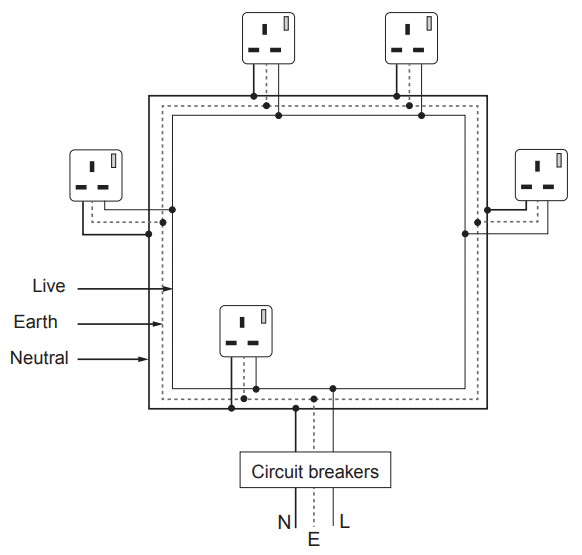
The washing machine is connected to the ring main shown below. The voltage in the ring main is 230 V.

Diagram of a ring mains circuit showing live, earth and neutral cables from circuit breakers looping around wall sockets in a square layout

(i) State which wire the fuse must be connected to.

[1]

(ii) Describe the function of the earth wire.

[2]

3c
Sme Calculator
3 marks

When the voltage is 230 V, the mean power of the washing machine during a wash is 500 W. However when heating the water it must be able to produce a maximum power of 2 400 W. The householder has 3 A, 5 A and 13 A fuses available and chooses to fit a 3 A fuse into the plug. Investigate whether or not this is a suitable choice.

4a
Sme Calculator
1 mark

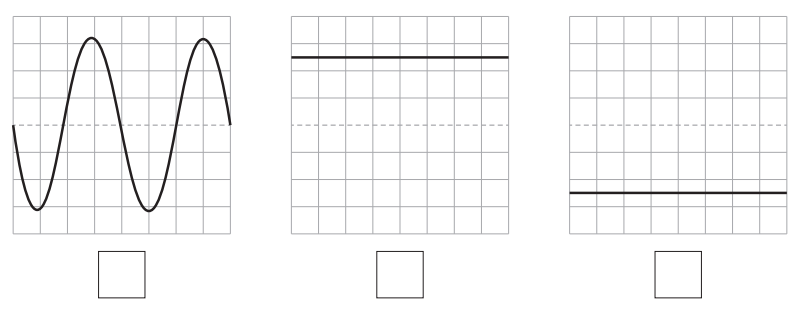
Domestic electricity in the UK is supplied to houses at a voltage of 230 V.

It is an alternating current (a.c.) supply.

Tick (✓) the box below the diagram which shows the voltage from an a.c. supply.

Three side‑by‑side grid graphs: left shows a rising and falling sine‑like wave; middle a bold horizontal line near the top; right a bold horizontal line near the bottom.
4b
Sme Calculator
4 marks

(i) To use electricity safely in the home, some safety features are used.

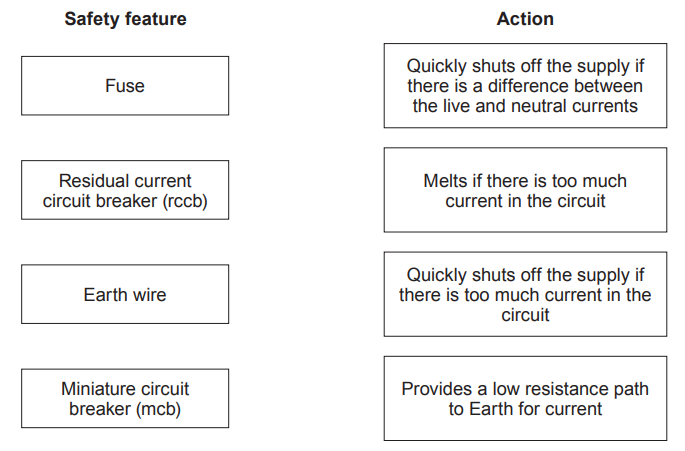
Draw a line to match the safety feature in the list on the left with its action on the right. Each action should only be selected once.

[3]

Table matching electrical safety features (fuse, RCCB, earth wire, MCB) with actions such as melting or quickly switching off supply and providing a low-resistance earth path

(ii) One purpose of safety features is to prevent fires.

State one other purpose of safety features.

[1]

5
Sme Calculator
3 marks

A power station produces 1 200 MW at a voltage of 50 kV. This voltage is increased to 400 kV by a step-up transformer before being transmitted by the National Grid. Use an equation from page 2 to calculate the current in the wires of the grid. Assume that the transformer is 100% efficient.

Current = .......... A

6a
2 marks

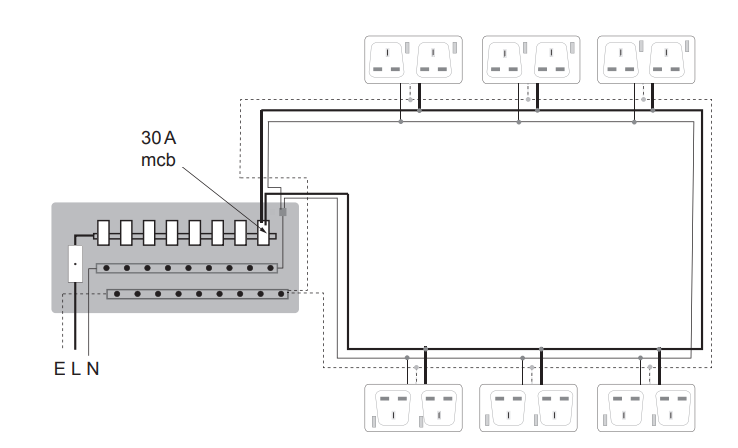
The diagram shows a common domestic ring main circuit.

Wiring diagram showing 30A MCB in consumer unit feeding ring final circuit with multiple twin 13A socket outlets on two walls, labelled E, L and N.

Give two advantages of having a ring main circuit in a house.

6b
3 marks

(i) State the function of the live wire.

[1]

(ii) Describe the function of the earth wire.

[2]

6c
Sme Calculator
6 marks

The following information is printed on the bottom of a domestic kettle:

TYPE: KBZ3001.BQ

230 V ~ a.c.
2 760 W

CAPACITY 1.5 L
SERIAL NUMBER 53023

(i) State the differences between alternating current (a.c.) and direct current (d.c.).

[2]

(ii) The voltage of the mains electricity supply in the U.K. is 230 V. Use equations and information on the kettle to calculate the resistance of the kettle heater.

[4]

Resistance = .......... Ω

7a
Sme Calculator
5 marks

The hairdryer is used to blow hot air. The current supplied is 6 A and the mains voltage is 230 V.

(i) Use the equation:

\text{power} = \text{voltage} \times \text{current}

to calculate the power of the hairdryer.

[2]

power = .......... W

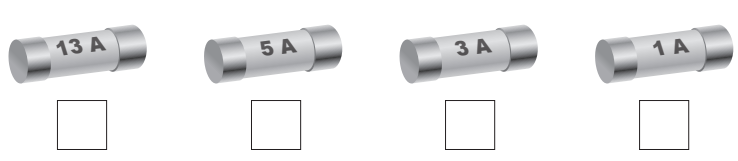
(ii) The following fuses are available.

Tick (✓) the box to show the correct fuse that should be used for the hairdryer.

[1]

Row of four cylindrical electrical fuses labelled 13 A, 5 A, 3 A and 1 A, each above an empty square selection box.

(iii) Complete the following sentence by underlining the correct phrase in the brackets.

[2]

Fuses switch off circuits if the (current is too high / voltage is too high / power is too low) to prevent (electric shocks / wires overheating / power cuts).

7b
Sme Calculator
6 marks

A different hairdryer is now used. The power of this hairdryer is 1.5 kW.

(i) Use the equation:

\text{units used (kWh)} = \text{power (kW)} \times \text{time (h)}

to calculate the units used (kWh) by this hairdryer in 2 hours.

[2]

units used = .......... kWh

(ii) The cost per unit of electrical energy is 30 p.

Use your answer to part (c)(i) and the equation:

\text{cost} = \text{units used} \times \text{cost per unit}

to calculate the cost of using this hairdryer for 2 hours.

[2]

cost = .......... p

(iii) State the cost of using this hairdryer for double the time.

[1]

cost = .......... p

(iv) Tick (✓) the box that correctly shows the power of the 1.5 kW hairdryer in watts (W).

[1]

box enclose space space space space space space end enclose 1 500 000 W

box enclose space space space space space space end enclose 1 500 W

box enclose space space space space space space end enclose 1.5 W

box enclose space space space space space space end enclose 0.015 W

8
Sme Calculator
4 marks

A dairy farm was using 15 000 kWh of electricity every month from the National Grid.

The cost of electricity to the farm was 20 p per unit.

The farmer decided to spend £152 400 on a biogas generator which uses cow dung to generate electricity.

When working at maximum output, it was expected to reduce his demand on the National Grid to only 3 000 kWh a month.

(i) Use an equation (Use cost = units used × cost per unit) to calculate the expected monthly savings in £.

[3]

Savings = £ ..........

(ii) Calculate the payback time for the biogas generator.

[1]

Payback time = .......... months

9a
Sme Calculator
6 marks

In 2015, a householder paid £780 for electricity and £950 for gas. On 1 January 2016 solar panels were installed on the roof to provide hot water for the house. The cost of the solar panels was £4 680. In 2016, the householder paid £830 for electricity and £840 for gas.

(i) Gas was used to heat the water in the house in 2015. State how the figures allow you to come to this conclusion.

[1]

(ii) Calculate the expected payback time to recover the cost of the solar panels.

[2]

Payback time = .......... years

(iii) Explain how an increase in the cost of a unit of electricity and a unit of gas would affect the payback time.

[3]

9b
Sme Calculator
3 marks

During the two years, the cost of a unit of electricity did not change but the number of extra units of electricity used in 2016 was 300 kWh. Use an equation to calculate the cost of a unit of electricity (in pence) during 2015–2016.

Cost of unit = .......... p

10a
Sme Calculator
3 marks

A ring main is used to connect sockets to the fuse box.

The cables include live, neutral and Earth wires.

The fuse box includes miniature circuit breakers (mcb) and residual current circuit breakers (rccb).

Describe the function of each of the following wires.

live:.......................................................

neutral:........................................................

Earth:.................................................................

10b
Sme Calculator
3 marks

Explain the differences between an mcb and an rccb.

11a
Sme Calculator
3 marks

The Government intends to phase out the use of petrol and diesel cars by 2040 and switch to electric vehicles. Two such electric vehicles are the Voltsa and the Ampra. The Voltsa has an electric motor only. The Ampra has both an electric motor and a petrol engine. The table gives information about these electric vehicles and a petrol only car.

Use the information in the table to answer the following questions.

Voltsa

Ampra

Petrol only

Distance travelled on one tank of fuel (km)

450

600

Distance travelled on one charge (km)

150

60

Cost of one full charge (p)

264

90

Mean volume of petrol used (litres/100 km)

0

4

7

Cost of petrol (p/litre)

120

120

Mean CO₂ produced over 100 km (g/100 km)

0

7 000

12 000

Use the information in the table to answer the following questions.

(i) Eric travels 110 km each day. He is concerned about his carbon footprint. Why would he choose a Voltsa rather than an Ampra?

[1]

(ii) Calculate the mass of CO₂ produced if the Ampra is driven 250 km.

[2]

Mass of CO₂ = .......... g

11b
Sme Calculator
4 marks

(i) The Voltsa can be charged fully in six hours using a 4 kW charger. When 1 kWh of electricity is generated it produces 0.4 kg of carbon dioxide. Calculate how much CO₂ is produced to fully charge the Voltsa.

[2]

Mass of CO₂ = .......... kg

(ii) Ian says that the CO₂ data for the Voltsa is misleading. Explain why.

[2]

11c
Sme Calculator
2 marks

Ian drives 600 km every week. He says he is not going to buy the more expensive Voltsa since it will not save him money to run compared to his petrol only car. Explain whether you agree with Ian.

12a
Sme Calculator
6 marks

The table gives information about two kettles.

Kettle

Power (W)

Time to boil 0.5 litres of water (minutes)

Time to boil 0.5 litres of water (hours)

A

3000

2

0.033

B

2400

2.5

(i) Calculate the units used (kWh) by kettle B if it is used to boil 0.5 litres of water 6 times a day.

[2]

units used =.............................kWh

(ii) Kettle B is used 6 times a day.

Calculate the cost of using kettle B for one week.

Cost of 1 unit = 34p.

[2]

cost =.............................p

(iii) James suggests that it would be cheaper to use kettle B because it has a lower power.

Sophia disagrees and suggests it would make no difference.

Explain who is correct.

[2]

12b
Sme Calculator
5 marks

Kettle B is connected into a ring main circuit.

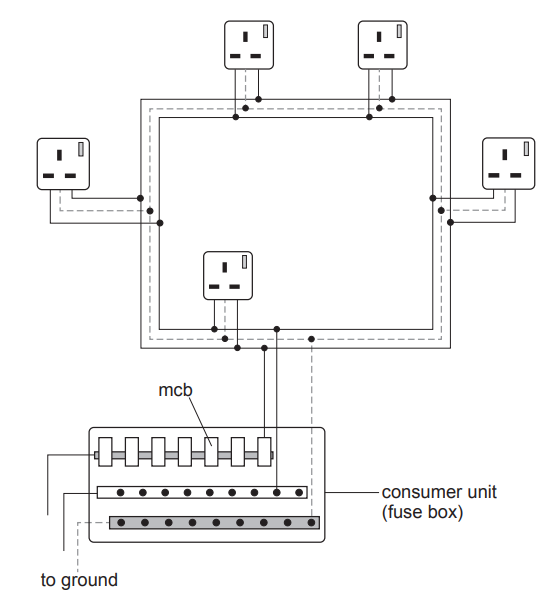
A diagram of a ring main circuit is shown below.

Diagram of a ring main circuit showing sockets wired in a loop back to a consumer unit with MCBs and an earth connection to ground.

(i) State two advantages of a ring main circuit

[2]

(ii) The ring main is protected by an mcb.

State two advantages of an mcb compared to a fuse.

[2]

(iii) The mcb has a rating of 32 A.

The maximum power that the ring main can supply is 7360 W.

The table shows some appliances in a kitchen.

Appliance

Power (W)

kettle

2400

toaster

1200

microwave

800

washing machine

750

dishwasher

1500

iron

1100

Jack states that all these appliances can be connected to the ring main and used at the same time.

Determine whether Jack is correct.

[1]

13a
Sme Calculator
2 marks

A washing machine uses 0.54 kWh per wash cycle.

A customer uses it for 200 wash cycles per year.

Use the equation:

cost = units used (kWh) cross timescost per unit

to calculate the cost of using the washing machine for 1 year in £.

The cost of a unit is £0.30.

cost = £ ..........

13b
Sme Calculator
1 mark

The wash cycle lasts for a time of 4 hours.

Use the information above and the equation:

\text{mean power (kW)} = \frac{\text{units used (kWh)}}{\text{time (h)}}

to calculate the mean power of the washing machine during one wash cycle.

mean power = .......... kW

14
Sme Calculator
5 marks

A biogas generator converts cow dung into biogas which can be burned to generate electricity.

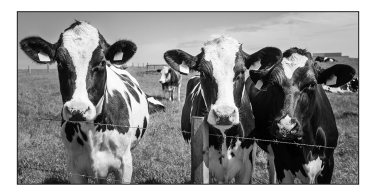
Black-and-white photo of three curious dairy cows standing by a barbed-wire fence in a grassy field, with more cows and farm buildings in the distance

A farmer buys 3 750 kWh of electricity per week from the National Grid.

He plans to buy a biogas generator which should reduce this to 750 kWh per week.

(i) Calculate how many units of electricity he would save per week.

[1]

Units saved = .......... kWh

(ii) Use the equation:

saving per week = units saved × cost per unit

to calculate the saving per week. One unit of electricity costs £0.20.

[2]

Saving per week = £ ..........

(iii) The biogas generator costs £150 000.

I. Use the equation:

payback time = \frac{\text{cost}}{\text{saving per week}}

to calculate the expected payback time in weeks.

[1]

Payback time = .......... weeks

II. Calculate the expected payback time in years. 1 year = 52 weeks.

[1]

Payback time = .......... years

15a
1 mark

The diagram shows an electric hand drier connected to a 230 V a.c. mains supply.

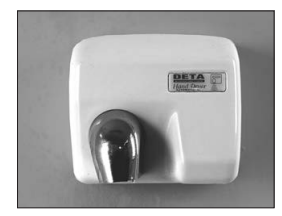
Wall-mounted electric hand dryer with a white rectangular casing and a shiny curved metal nozzle at the bottom front

Complete the following sentence by underlining the correct phrase.

An a.c. or alternating current (continuously changes direction / continuously changes frequency / continuously changes speed).

15b
Sme Calculator
7 marks

The electric hand drier has a label attached to it.

Electric hand drier

Power = 2 600 W 230 V a.c.

(i) Each time the hand drier is used it blows out hot air for 15 seconds. Use an equation from page 2 to calculate the energy transferred by the hand drier if it is used 6 times.

[3]

Energy transferred = .......... J

(ii) Use the equation:

\text{current} = \frac{\text{power}}{\text{voltage}}

to calculate the current when the hand drier is used.

[2]

Current = .......... A

(iii) The hand drier is connected to the mains with a standard three-core cable. Complete the table below with the value of the current in each wire in the connecting cable when the hand drier is operating normally.

[2]

Wire

Current (A)

live

..........

neutral

..........

earth

..........

15c
2 marks

A fault develops and the live wire touches the metal case of the hand drier. Explain how a residual current circuit breaker (rccb) protects the user.

15d
Sme Calculator
2 marks

A salesperson for a replacement hand drier claims it will use fewer units of electricity each time it is used because its power is 1 300 W. When it operates it blows hot air for double the time. Explain if you agree with the claim of the salesperson.