Making Use of Energy (WJEC GCSE Science (Double Award): Physics): Exam Questions

Exam code: 3430

2 hours14 questions
1a
Sme Calculator
5 marks

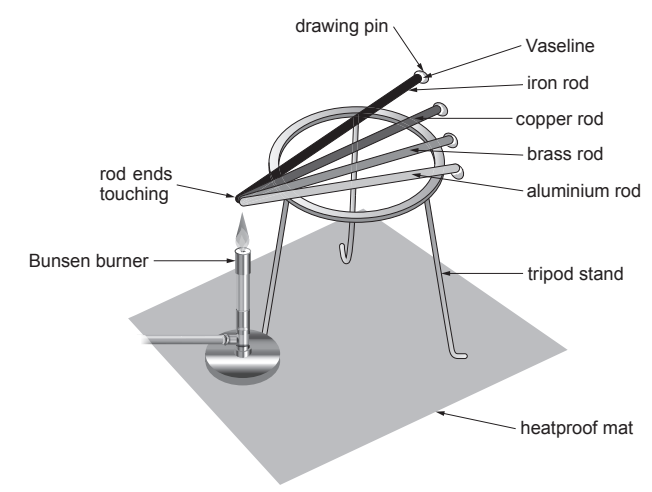
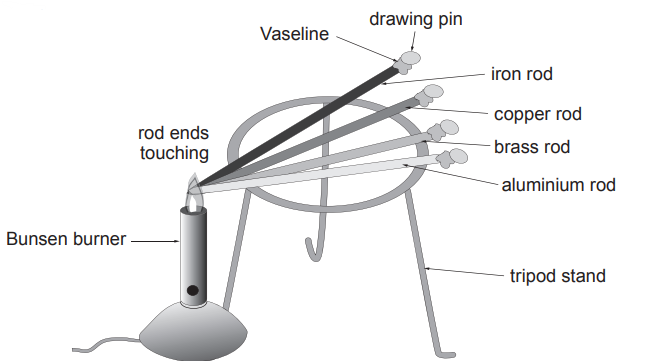
(i) The apparatus shown can be used to compare how well different metals conduct heat.
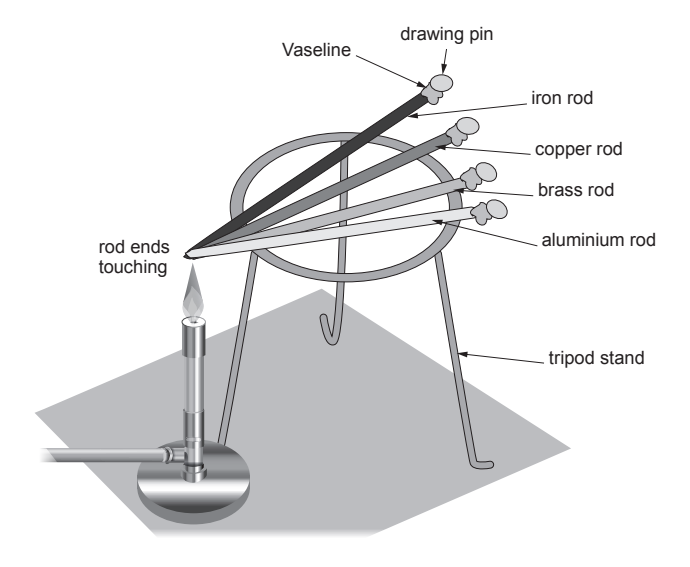
Diagram of a heat conduction experiment: iron, copper, brass and aluminium rods on a tripod, one end over a Bunsen flame, pins on Vaseline at the other ends.

Explain:

  • how the apparatus is used

  • how the results are used to show that copper is the best conductor.

(ii) Describe, in terms of the behaviour of particles, how heat energy is conducted through the metal rods.

[2]

1b
Sme Calculator
4 marks

A teacher demonstrates the process of convection in liquids.

Some purple crystals are placed in the bottom corner of a beaker that is filled with water.

The water is then heated and a current of coloured water is seen to move as shown in the diagram below.
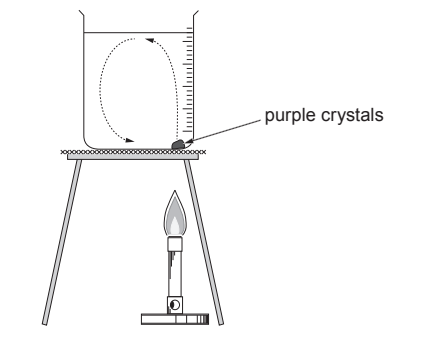
Diagram of a beaker of water on a tripod over a Bunsen burner, showing convection currents and labelled purple crystals at the bottom of the beaker

(i) Explain why the coloured water moves in the way shown above.

[2]

Explain why it is not suitable to put a hot radiator at the top of a wall to warm the room.
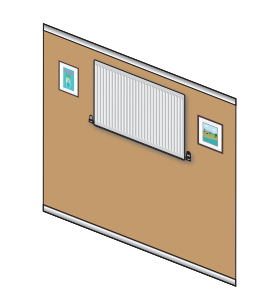
Isometric view of a tan wall with a white horizontal radiator in the centre, flanked by two small framed pictures, skirting boards top and bottom

[2]

2a
Sme Calculator
4 marks

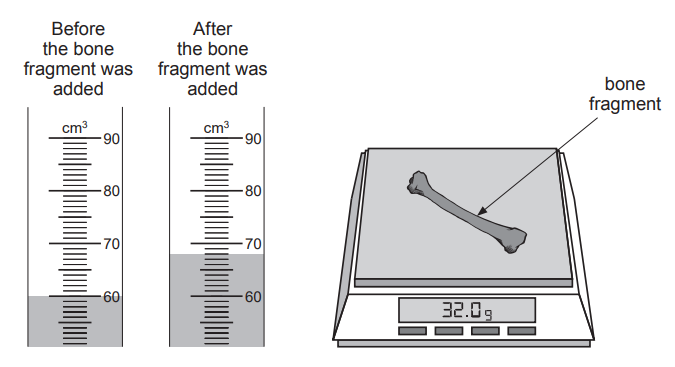
The diagrams below show the apparatus used to find the density of a fragment of bone.

The diagram of the measuring cylinder shows the water level before and after the bone fragment was added.

Diagram showing a bone fragment of mass 32.0 g on a balance and a measuring cylinder where water rises from 62 to 70 cm³ when the bone is added

(i) Use the information in the diagrams to complete the table below.

[2]

Mass of bone

.......... g

Volume of bone

.......... cm³

(ii) Use an equation to calculate the density of the bone fragment.

[2]

Density = .......... g/cm³

2b
Sme Calculator
2 marks

Explain, in terms of particles, why bone has a greater density than water.

3a
6 marks

About 30% of all the heat lost from an uninsulated house escapes through the walls.

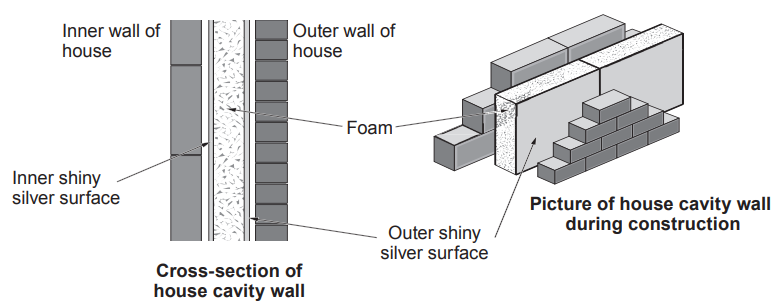
Houses built in Wales since 1990 have wall insulation installed. One type of insulation that is commonly used is cavity board. This is a sheet of solid foam that is covered on both sides with shiny silver foil. During construction, sheets of cavity board are placed between the inner and outer walls of the house.

Diagram of a house cavity wall, showing inner and outer brick walls with shiny silver surfaces and foam insulation filling the gap between them.

Explain why heat is lost through the walls of a house and how cavity board can reduce this heat loss by conduction, convection and radiation.

3b
Sme Calculator
6 marks

The table shows some information about three types of house with cavity board installed. All three houses use gas central heating.

Type of house

Cost of installing cavity board
(£)

Saving per year
(£)

Carbon footprint without cavity board
(kg of CO₂/year)

CO₂ saving with cavity board
(kg/year)

Carbon footprint with cavity board (kg of
CO₂/year)

detached

720

275

5 500

1 100

4 400

semi-detached

480

160

3 640

..........

3 000

mid-terraced

385

110

2 440

440

..........

(i) The payback time of installing cavity board in a semi-detached house is 3 years. A semi-detached house owner claims that she has a longer payback time than the owner of the mid-terraced house. Explain whether you agree with her statement.

[2]

(ii) Complete the table for the two missing values.

[2]

(iii) Use information in the table to explain which of the three types of house has the smallest impact on the environment.

[2]

4a
Sme Calculator
3 marks

A group of students investigated different methods of heat transfer.

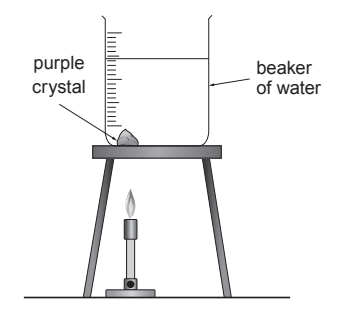
First, they added a purple crystal to a beaker of water and heated it up as shown below.

Laboratory setup with a beaker of water on a tripod, heated by a Bunsen burner, containing a labelled purple crystal at the bottom.

(i) Circle the method of heat transfer that was being investigated.

conduction

convection

radiation

[1]

(ii)

I. State what the students observed. You may add to the diagram if you wish.

[1]

II. Give a reason for your answer to part I.

[1]

4b
Sme Calculator
2 marks

In their next experiment the students placed 4 metal rods on a tripod.

The rods were identical except they were made from different metals.

They attached a drawing pin to the end of each rod with Vaseline.

They heated the other end of each of the rods and recorded the time for each pin to drop off.

Laboratory setup showing Bunsen burner heating four metal rods on a tripod; drawing pin stuck with Vaseline to rod ends to test heat conduction

The students recorded the following results:

Metal

Time for pin to drop off (s)

iron

46

copper

10

brass

23

aluminium

18

List the metals in order from best conductor to worst conductor.

Best conductor: .......................................

.......................................

Worst conductor: .......................................

.......................................

5a
Sme Calculator
3 marks

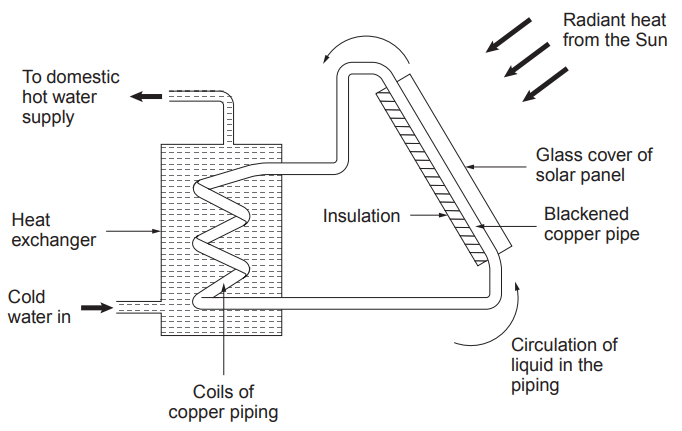
The diagram shows a solar heating panel that is installed on a roof. The liquid in the solar panel becomes heated by radiation from the Sun. The heated liquid passes through coils of copper piping inside a heat exchanger resulting in water heating up.

Diagram of a solar water heating system showing sun-warmed black copper pipes, insulated glass panel, heat exchanger and coils heating domestic water.

Explain, in terms of particles, how heat energy conducts through the walls of the copper piping in the heat exchanger.

5b
Sme Calculator
2 marks

Explain why the liquid in the solar panel circulates in the direction shown.

5c
Sme Calculator
2 marks

In good sunlight, each square metre of the solar panel receives 960 J of energy per second from the Sun. Only \frac{1}{3} of this energy is used to heat the liquid.

Calculate the amount of energy given to the liquid per second if the panel has an area of 2 m².

[2]

Energy given to the liquid per second = .......... J

6
Sme Calculator
6 marks

Describe how the density of a small pebble, which is not a regular shape, can be determined.

7
Sme Calculator
6 marks

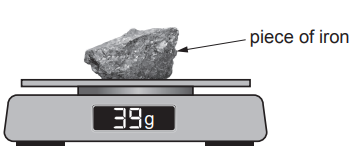
Peter carries out an experiment to find the density of iron.

Stage 1

  • He uses a balance to measure the mass of a piece of iron.

Digital scale weighing a rough piece of iron, with the display reading 39 g and an arrow labelling the metal sample

Stage 2

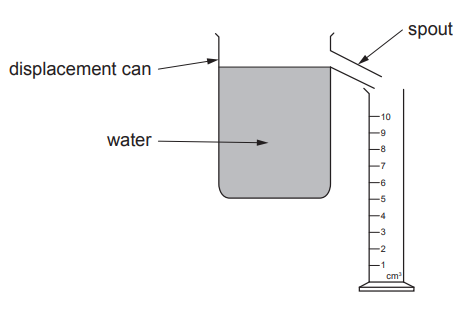
  • He fills a displacement can with water.

  • He waits until water stops flowing from the spout.

  • He then places an empty measuring cylinder under the spout.

Diagram of a displacement can filled with water and a side spout, positioned above a measuring cylinder marked in cubic centimetres up to 10 cm³.

Stage 3

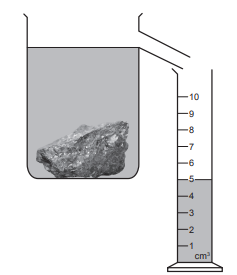
  • He carefully lowers the iron into the water.

  • He collects the water displaced in the measuring cylinder.

Diagram of a rock in a beaker of water beside a measuring cylinder showing water level at 4 cubic centimetres for a displacement experiment

Use information from the diagrams to answer the following questions.

(i) State the mass of the iron.

[1]

mass = .......... g

(ii) State the volume of the iron.

[1]

volume = .......... cm³

(iii) I. Use the equation:

\text{density} = \frac{\text{mass}}{\text{volume}}

to calculate the density of iron.

[2]

density = ..........

II. Underline the correct unit that should be used for the density above.

[1]

g/cm3

g/cm2

cm2 /g

cm3 /g

(iv) State one change to the apparatus that would improve the accuracy of the measurement of the mass of the iron.

[1]

8a
Sme Calculator
6 marks

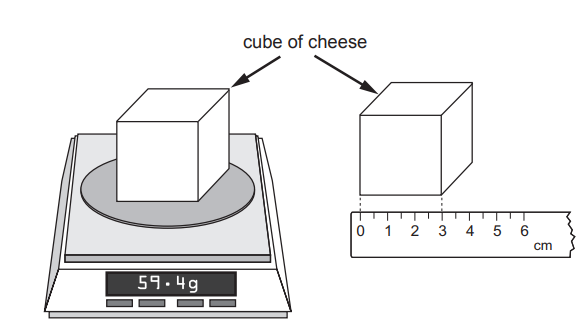
A North Wales cheese producer checks the quality of their cheese by measuring its density. This can be carried out experimentally. The two diagrams show measurements that were carried out on a cube of cheese. The balance read 0.0 g before the cube of cheese was placed on it.

Diagram of a cheese cube on a digital scale reading 59.4 g, and the same cube above a ruler showing its side length is 3 cm.

(i) Write down the mass of the cheese cube.

[1]

.......... g

(ii) Write down the length of one side of the cheese cube.

[1]

.......... cm

(iii) Use the equation:

volume of a cuboid = length × width × height

to calculate the volume of the cheese cube in cm³.

[1]

Volume = .......... cm³

(iv) Use the equation:

\text{density} = \frac{\text{mass}}{\text{volume}}

to calculate the density of the cheese cube and state the unit.

[3]

Density = .......... Unit = ..........

8b
3 marks

(i) A worker at the cheese factory suggests that the mass of the cheese cube should be measured more than once. State two reasons why this is good scientific practice.

[2]

(ii) State how the measurements could be improved.

[1]

8c
2 marks

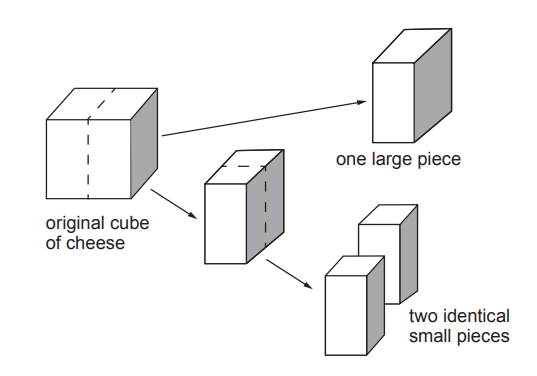
The cube of cheese used in the experiment is now cut into two identical halves. One of these pieces is then cut in half. The sample of cheese has been divided into three pieces, one large piece and two identical small pieces.

Diagram showing an original cube of cheese split along a dashed line into either one larger rectangular block or two identical smaller rectangular pieces

Tick (✓) the two correct statements.

[2]

One of the small pieces of cheese is \frac{1}{3} of the mass of the large piece. box enclose space space space space space space end enclose

One of the small pieces of cheese is \frac{1}{3} of the volume of the large piece. box enclose space space space space space space end enclose

The three pieces of cheese have the same density. box enclose space space space space space space end enclose

The mass of the large piece of cheese is half the mass of the original cube.box enclose space space space space space space end enclose

The mass to volume ratio for each of the three samples is different. box enclose space space space space space space end enclose

9a
7 marks

All properties lose heat through their windows and roof. Energy-efficient installations such as uPVC windows and loft insulation keep homes warmer as well as reducing energy bills.

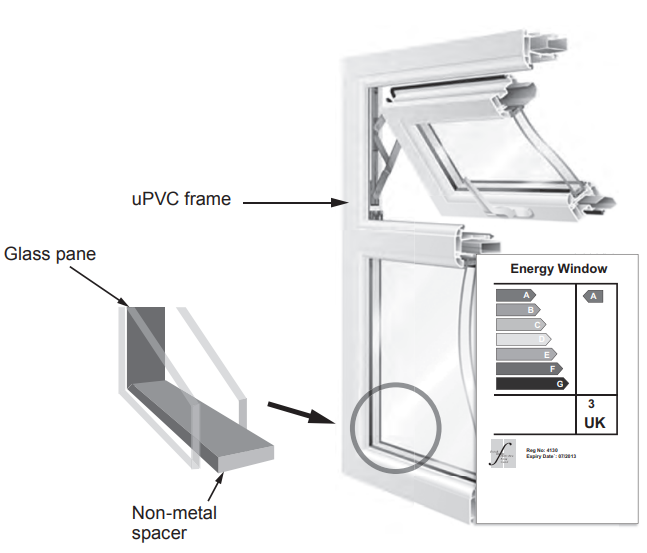
A homeowner replaces aluminium framed double glazed windows which contain metal spacers between the panes of glass with uPVC windows. This new frame is made of uPVC and the window panes are separated by non-metal spacers.

Diagram of a double-glazed uPVC window, labelling the plastic frame, glass panes, non-metal spacer bar and an A-rated UK energy performance label

(i) Explain why the aluminium window loses heat at a faster rate than the new uPVC window. Include reference to particles in your answer.

[4]

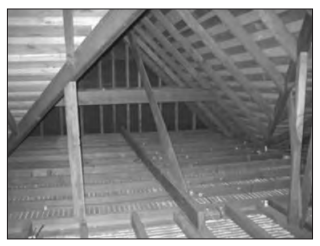
(ii) The photograph shows an uninsulated loft.

Empty house loft with exposed timber rafters, joists and boarded floor, showing roof structure in an unfinished, uninsulated attic space

Explain how heat is lost through the roof of a house when the loft is not insulated.

You should refer to the ceiling, the loft space and the roof tiles in your answer.

[3]

9b
3 marks

Explain why reducing energy losses from our homes benefits the environment.

10a
Sme Calculator
6 marks

A pupil sets up an experiment to investigate the absorption of heat radiation.

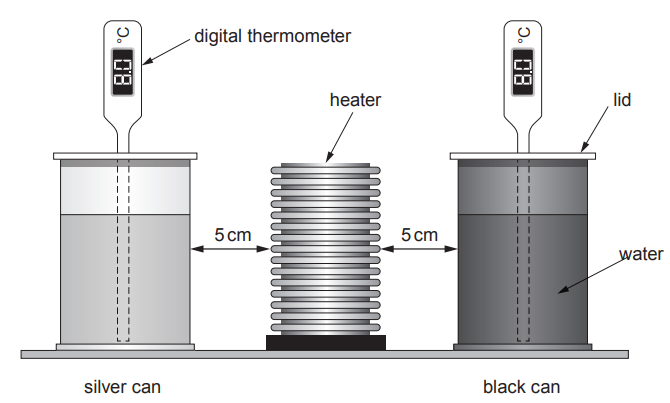
The diagram shows the apparatus set up before the heater was turned on for 8 minutes.

Two identical aluminium cans were both filled with 200 cm³ of water and a digital thermometer was inserted through a small hole in the lid.

One can was painted black and the other painted silver.

Diagram of silver and black cans of water with digital thermometers, placed 5 cm either side of a central heater, showing an experiment on heat absorption.

In the experiment several variables were controlled in order to make a valid conclusion.

Use the information above to describe how this was achieved.

In your answer include:

  • three variables that were controlled

  • an explanation of why each was controlled.

10b
Sme Calculator
4 marks

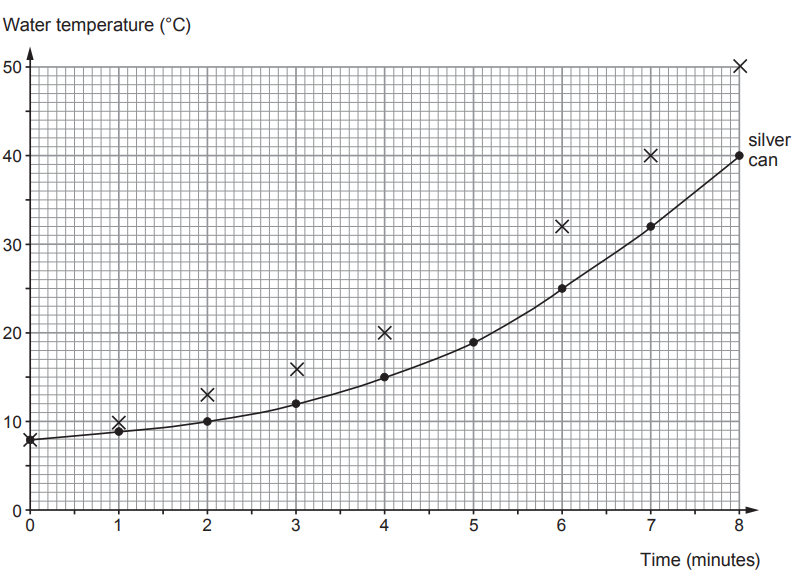
Each minute, the temperature of the water in each can was measured.

The data for the silver can have been plotted on the grid below and its best-fit curve drawn.

Apart from one result, the data points for the black can were also plotted on the grid.

Line graph of water temperature rising from about 8°C to 40°C over 8 minutes in a silver can, with additional higher scattered readings marked by crosses.

(i) At 5 minutes the water temperature in the black can was 25 °C.

Plot this missing data point on the grid above and add the line of best fit.

[2]

(ii) Compare the temperature rise in the black can with the temperature rise in the silver can.

Explain your answer in terms of heat radiation.

[2]

11a
6 marks

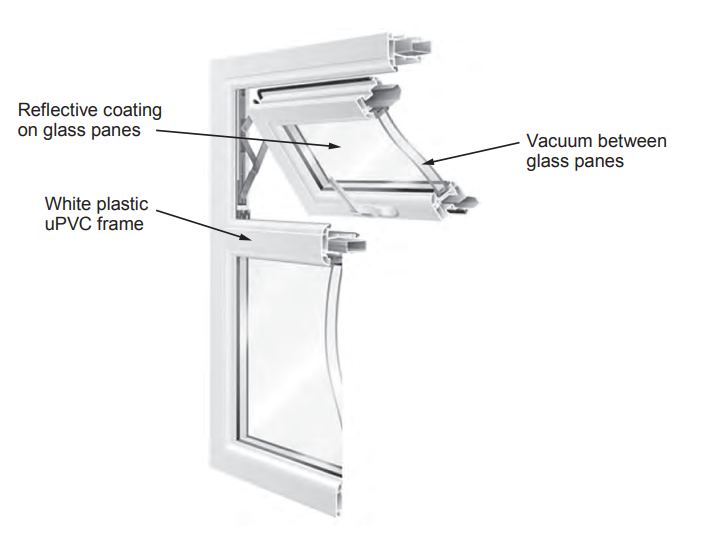
A householder decides to replace his single glazed, aluminium framed windows. A company recommends fitting 'Energy Windows' like the one shown below.

Diagram of a double-glazed window in a white uPVC frame, showing reflective coated glass panes and a vacuum gap for insulation.

Explain in terms of conduction, convection and radiation how the labelled features will help to reduce energy losses from the house. [6 QER]

11b
Sme Calculator
3 marks

A family fits double glazing to their house at a cost of £4 000. They save £80 per year on their heating bill.

(i) Calculate the payback time.

[1]

Payback time = .......... years

(ii) Suggest two reasons why this payback time may change.

[2]

12a
2 marks

A class carries out experiments to study heat transfer in solids and liquids.

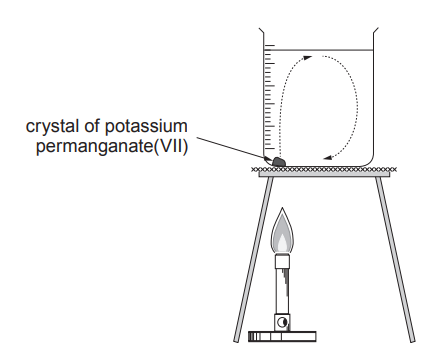
In one experiment, the process of convection is shown by colouring some water with potassium permanganate(VII) crystals in the bottom corner of a beaker. The water is then heated and a clockwise convection current is set up.

Beaker of water on gauze above Bunsen burner, labelled crystal of potassium permanganate at bottom, with arrows showing convection currents in the water

Explain why the coloured water moves in the way described above.

12b
6 marks

In another experiment, four metal rods are tested to compare their ability to conduct heat energy.

Diagram of a heat conduction experiment using iron, copper, brass and aluminium rods on a tripod, heated by a Bunsen burner with Vaseline-held drawing pins

The outcome of the experiment is as follows:

copper (best conductor)

aluminium

brass

iron (poorest conductor)

Explain in detail, the process of conduction in copper in terms of the motion of particles.

13
Sme Calculator
6 marks

Describe how you would find the density of a small irregular-shaped rock.

You may assume that all the usual laboratory apparatus is available for you to use.

Include in your answer:

  • the apparatus you would use

  • a description of the method you would use to obtain results

  • how the density would be calculated.

14
Sme Calculator
6 marks

Joanne moves into an old house and has up to £1500 to spend on improving the insulation.

She finds the following information about different types of insulation.

Type of insulation

Cost to buy
(£)

Estimated annual savings
(£)

Estimated payback time
(years)

Estimated annual reduction in CO₂ emissions
(kg)

additional loft

425

25

17

55

cavity wall

1200

300

4

670

floor

1500

75

20

180

draught proofing

225

45

5

120

Explain which two types of insulation she should fit to her house.

Include in your answer:

  • The advantages of insulating the house

  • The two types of insulation she should fit

  • The reasons why she should choose these two types of insulation.