Klara and the Sun: Writer's Methods and Techniques (Edexcel IGCSE English Literature): Revision Note
Exam code: 4ET1
Klara and the Sun: Writer's Methods and Techniques
In your exam question on Klara and the Sun, examiners will assess your ability to demonstrate a close knowledge and understanding of the text and engage with the text in a personal and informed way. This means that you will be required to write about how you believe Ishiguro creates meaning and conveys ideas across the novel.
There is no assessment on language analysis as such. Examiners are looking for an exploration of how Ishiguro’s overall aims were achieved. Ishiguro conveys ideas through several methods and techniques in Klara and the Sun:
Narrative perspective
Setting
Structure
Narrative perspective
Ishiguro ironically instils a non-human, Klara, as the narrator and first-person voice of the novel:
While such a choice naturally offers a biased perspective, Klara’s innocent mindset suggests her narrative will be balanced and fair
Through this perspective, the reader is able to witness the change that Klara undergoes, from a new, wide-eyed robot for sale in a store to an older robot who understands the flaws and inconsistencies of human nature
There are times in the novel when Klara can only see the world in “boxes”, with different information appearing in a different box:
This happens when Klara’s robot brain is overloaded by information and cannot compute the sheer amount of detail
The implication here is that a robot cannot quickly process and sift complex human emotions in the way a human brain can, even though her processing and observational abilities are emphasised as vastly superior to a human’s
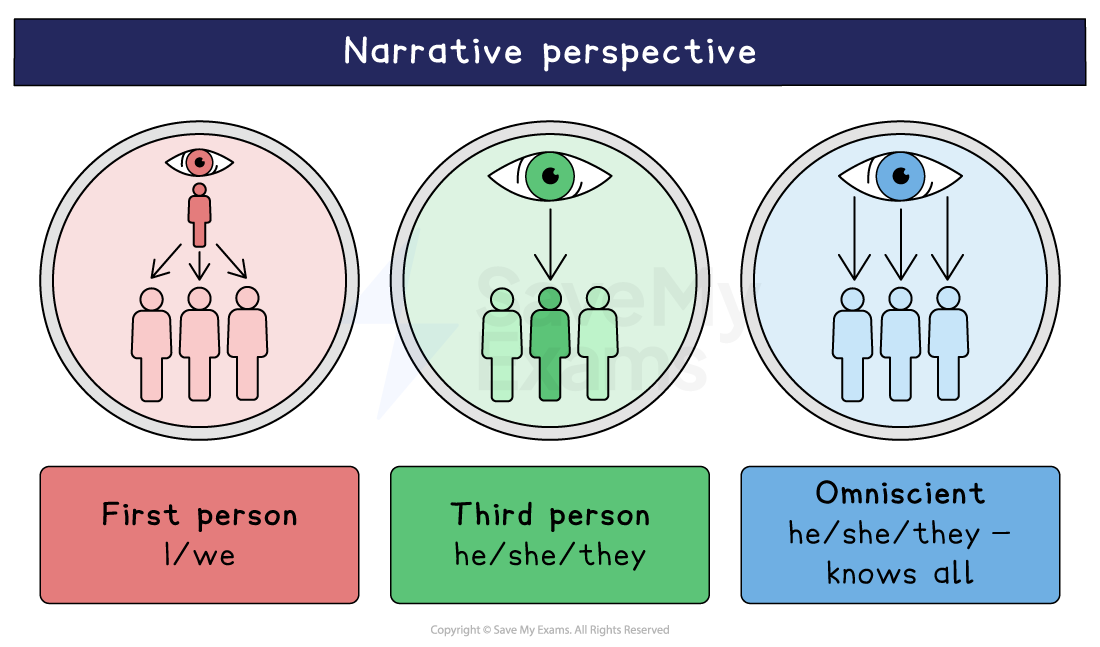
At the start of Part Two, the narrative perspective is revealed to be retrospective, with Klara stating, “Today, as I gather these memories”:
The retrospective nature of the narrative adds an additional layer of wisdom to Klara’s perspective
The perspective further suggests a character arc, with the novel explaining how and why Klara has changed, and how events have influenced her change
The lack of a human perspective means the reader must make sense of the dystopian setting in the same way as Klara:
The references to “lifted” children are relatively vague, forcing the reader to find meaning in an unfamiliar world, mimicking the challenges facing Klara
The narrative perspective flits between Klara’s role as a largely passive observer to her being central to the story, such as her visits to Mr McBain’s barn
Ultimately, the unique perspective presents a hopeful insight into the human condition, even though it ends with a vision of a human backdropped by the image of another machine in the form of a crane
Because of the narrative perspective, language choices are relatively simplistic and childlike, but it is through this childish wonder that Klara is able to make sense of the world
Setting

The story is set in a near-future, dystopian world that is not unfamiliar to our own
The similarity of the setting to our own personal experience ensures a more profound communication of the central concerns
However, in a dystopian world where AFs are seemingly ubiquitous, Klara still ironically struggles to fit in:
The setting of the kitchen in Josie’s home is immediately presented as “especially difficult to navigate”
The city is notably characterised as a place of chaos and change, with the car journey presented as an overwhelming experience for Klara
Together, these ideas give the overall sense that the world is made no better by the technologically-advanced setting of the novel
Within the dystopia, contrast is used, highlighting the difference between rural and urban areas, and places where lifted and unlifted people live
Nonetheless, there is darkness in all settings, from the “bull” in the countryside to the ominous presence of the “Cootings Machine” and Mr Capaldi in the city
At the end of novel, Klara is presented in the “Yard”, suggesting a scrapyard, a place where Klara will be discarded or die:
This end of life setting is the backdrop for Klara to communicate the wisdom of her existence, telling Manager of what she has learned about human compassion and love
Symbolism

The sun is, of course, the central symbol of the novel, its importance underlined by its reference in the title:
Capitalised as “Sun” by Klara, the sun literally “nourishes” robots like the narrator and she thus makes the logical assumption that humans also benefit from the power of the sun
Evidence of this, to Klara, is the incredible resurrection of Beggar Man and his dog, and witnessing this apparent miracle gives credibility to her beliefs
The sun therefore becomes a symbol for hope and faith, and takes on the role of an omnipotent God for the protagonist
Klara’s faith in the sun is never ridiculed and she is allowed by Rick to open the curtains to let in the rays that she believes cure Josie
In Part Six, Klara speaks reflectively about the sun to Manager, observing how it was “very kind” and “particularly kind” to Josie
This personification allies Klara and the sun as equals, satisfactorily linking back to the title of the novel
Klara’s unwavering faith in the healing power of the sun, although child-like, is inspirational
The Cootings Machine is a symbol of modernity, urbanisation and the damaging effect this sort of technology has on the natural world:
Klara is terrified by the Cootings Machine and the “Pollution” it creates, and sees it as an antagonist to the good sun
This terror is ironic as Klara does not appreciate that, like the industrial unit of the Cootings Machine, she is also a machine
When Klara realises that there are multiple Cootings Machines, she reaches her lowest point, acknowledging that “I might have let my posture slump and my head hang down”
Another pessimistic image is the “bull” Klara encounters at Morgan’s Falls, with the animal bringing “fear” into her mind:
The ‘bull’ stands for destruction and violence, and also opposes the symbolic sun
In a dystopian world that appears to lack organised religion, not only does the sun symbolise an omnipotent force, so do Mr McBain’s barn and the apparent resurrection of Beggar Man and his dog stand out as religious imagery:
The barn is presented as a religious building through the description of its architecture and atmosphere, mirroring what one might expect to find in a church
The resurrection is real only to Klara’s eyes, reflecting her innocent viewpoint of the world, but also foreshadowing the importance of hope, with Josie undergoing a similar recovery much later in the novel
Structure

The novel is structured in a linear chronology with Klara as the narrator retrospectively recounting events in chronological order
The story is split into six numbered parts that are unequal in length:
The sections are divided into specific episodes that are important to Klara’s story
Despite the widely differing lengths of these sections, they each stand alone as important milestones in Klara’s increasing appreciation of human nature
Part Six is used as a relatively short concluding chapter:
The return of Manager forms part of the satisfactory conclusion, with Klara able to have open, honest dialogue with Manager in the way she did in Part One
Klara is portrayed as an older robot whose "memories have started to overlap” in the way an older human would lose brain function
Klara’s presentation in the capitalised “Yard” at the end of the novel gives a sense of the structural circle of life, with the story tracing Klara’s journey as a new AF in Part One to her being close to the end of her life in Part Six:
In this way, the novel also works as an unconventional bildungsroman (or coming of age story), focusing on the emotional growth of a robot, as opposed to more typical psychological and moral growth of human protagonists
Sources
Ishiguro, Kazuo. (2021). Klara and the Sun. Alfred A. Knopf.

Unlock more, it's free!
Join the 100,000+ Students that ❤️ Save My Exams
the (exam) results speak for themselves:

Was this revision note helpful?
Build on this topic