Continuous Random Variables (Cambridge (CIE) A Level Maths: Probability & Statistics 2): Exam Questions

Exam code: 9709

4 hours32 questions
1
4 marks

If f(x) is the probability density function for a random variable, X, then the area under the graph of the probability density function must equal 1.

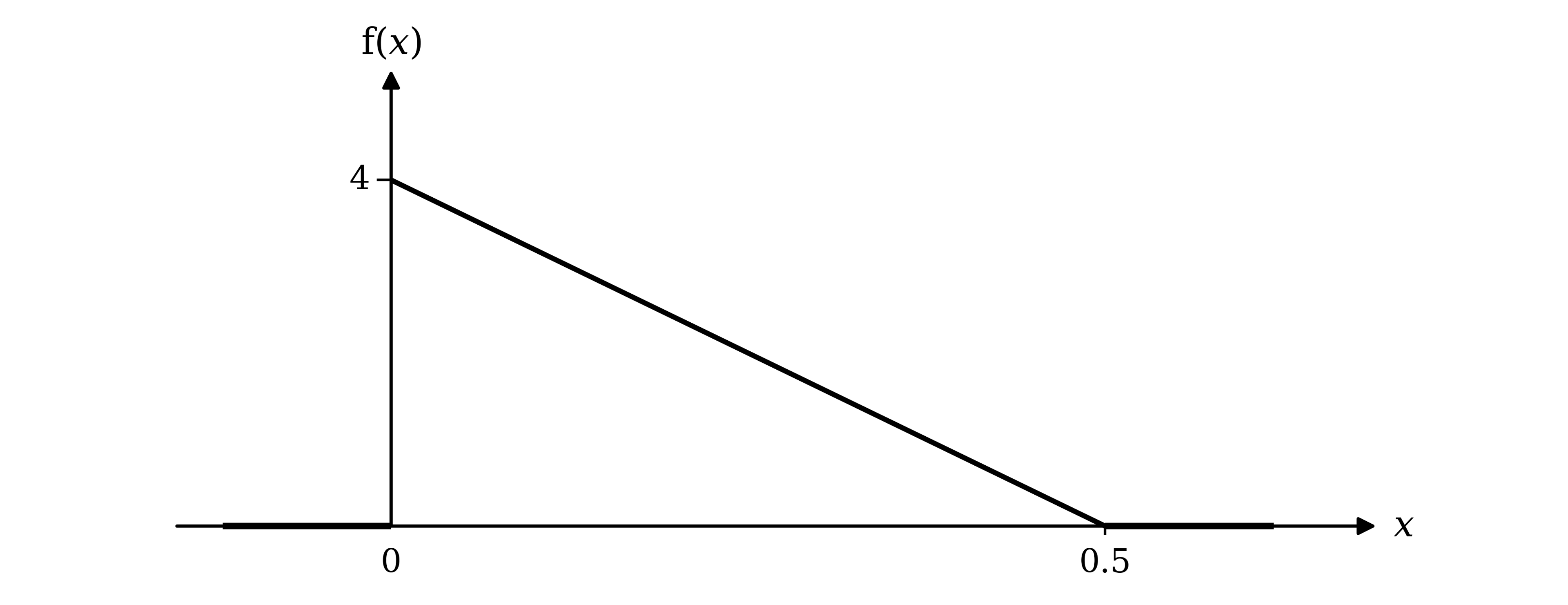
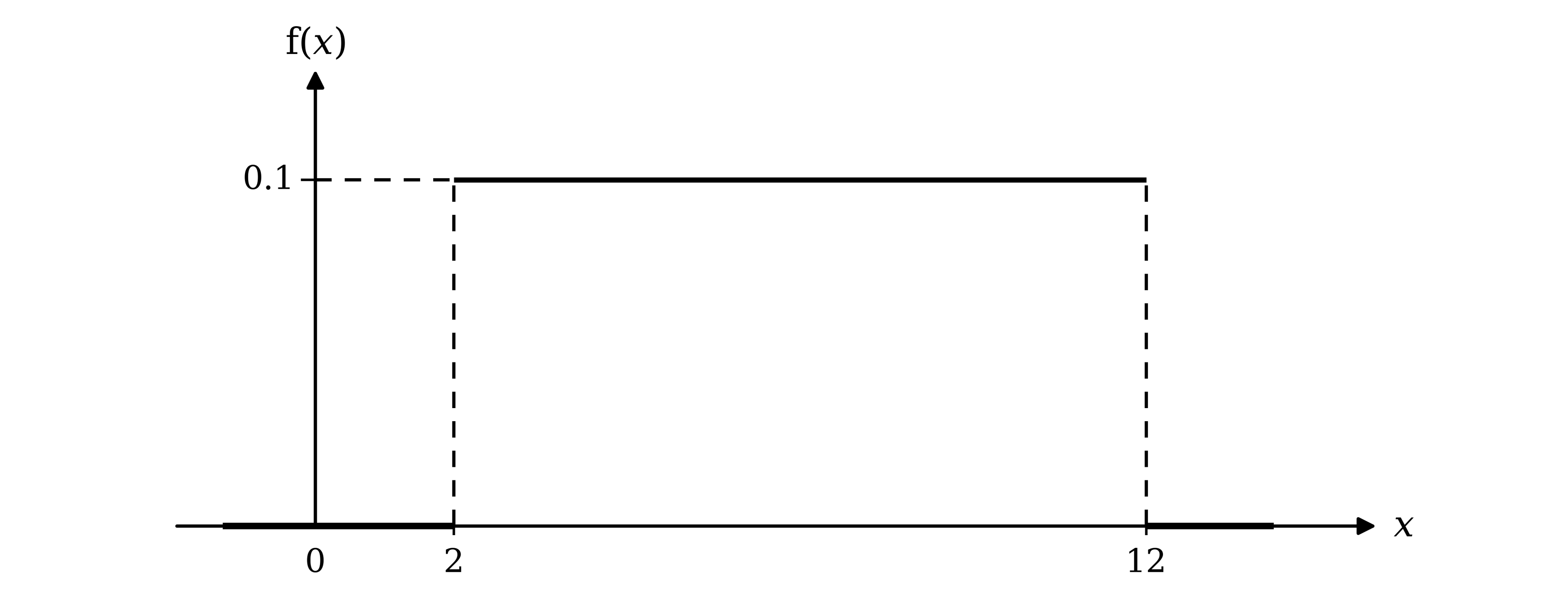
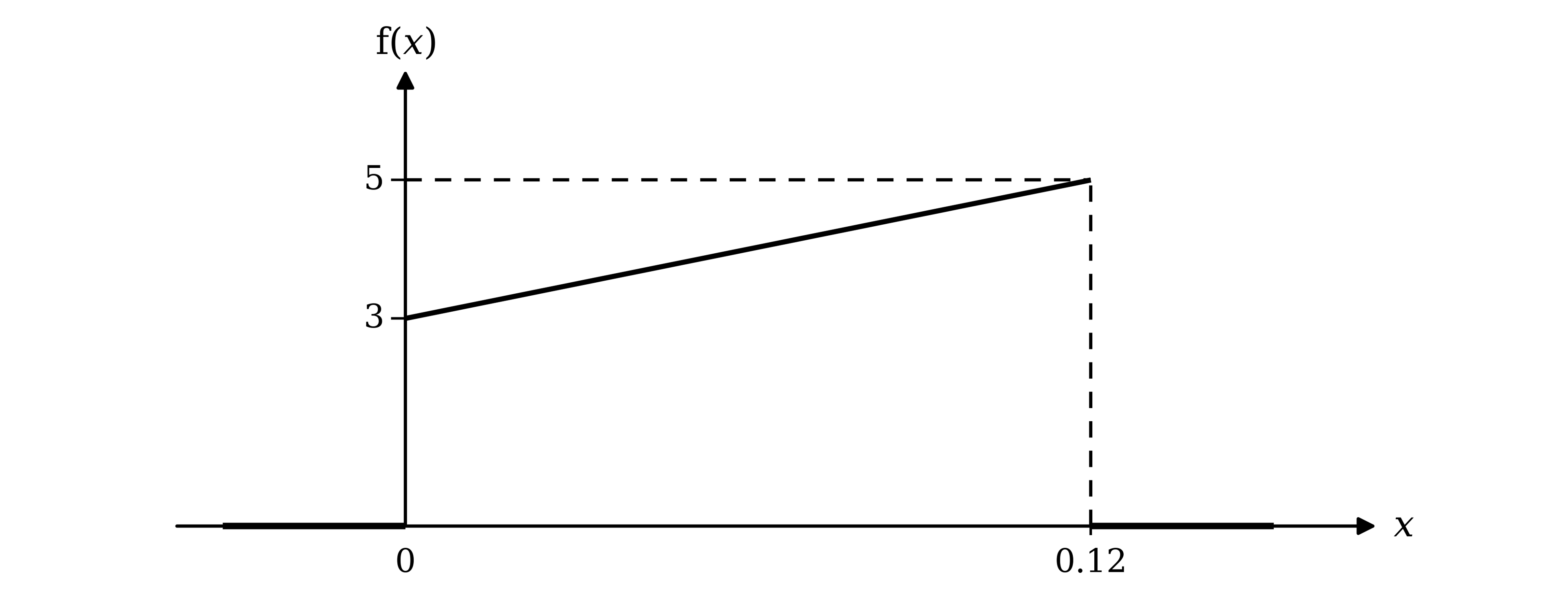
State, with a reason, whether each of the following could be graphs of probability density functions.

(i)
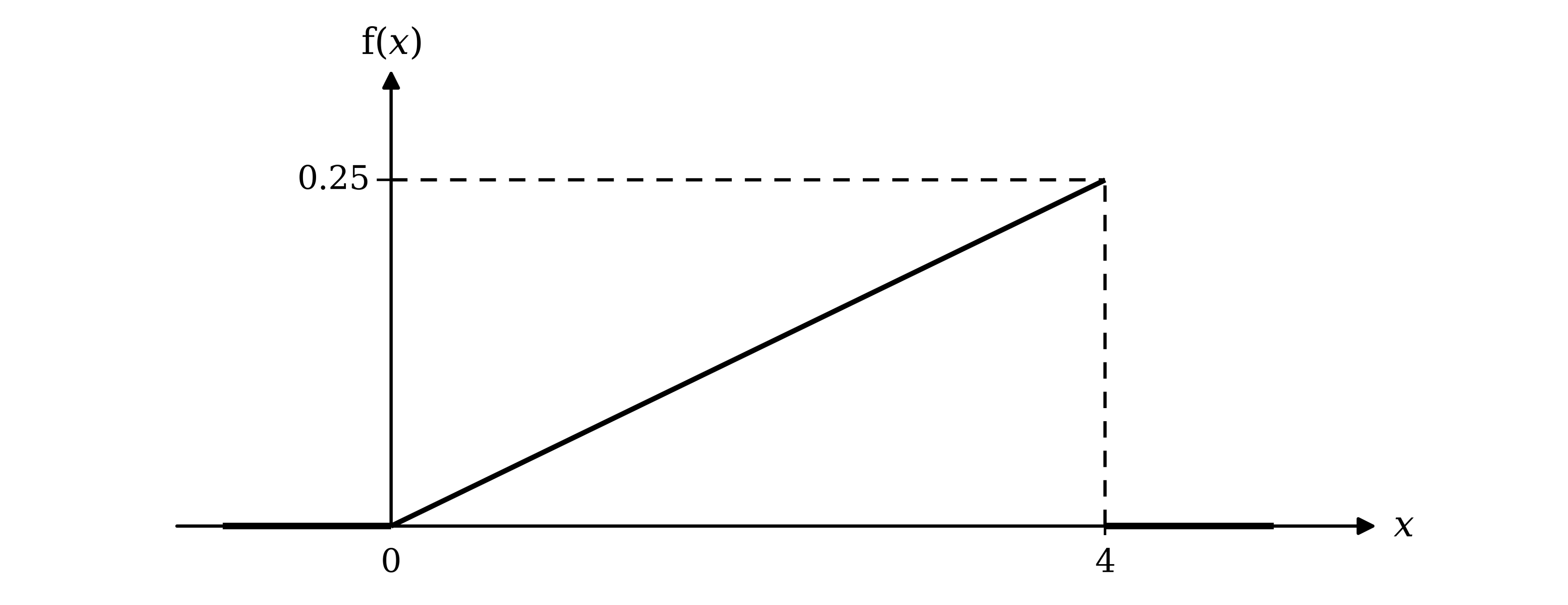
A graph of f(x) against x: a straight line from the origin rising to height 0.25 at x = 4, with f(x) = 0 elsewhere

(ii)

A graph of f(x) against x: a straight line falling from height 4 at x = 0 to 0 at x = 0.5, with f(x) = 0 elsewhere

(iii)

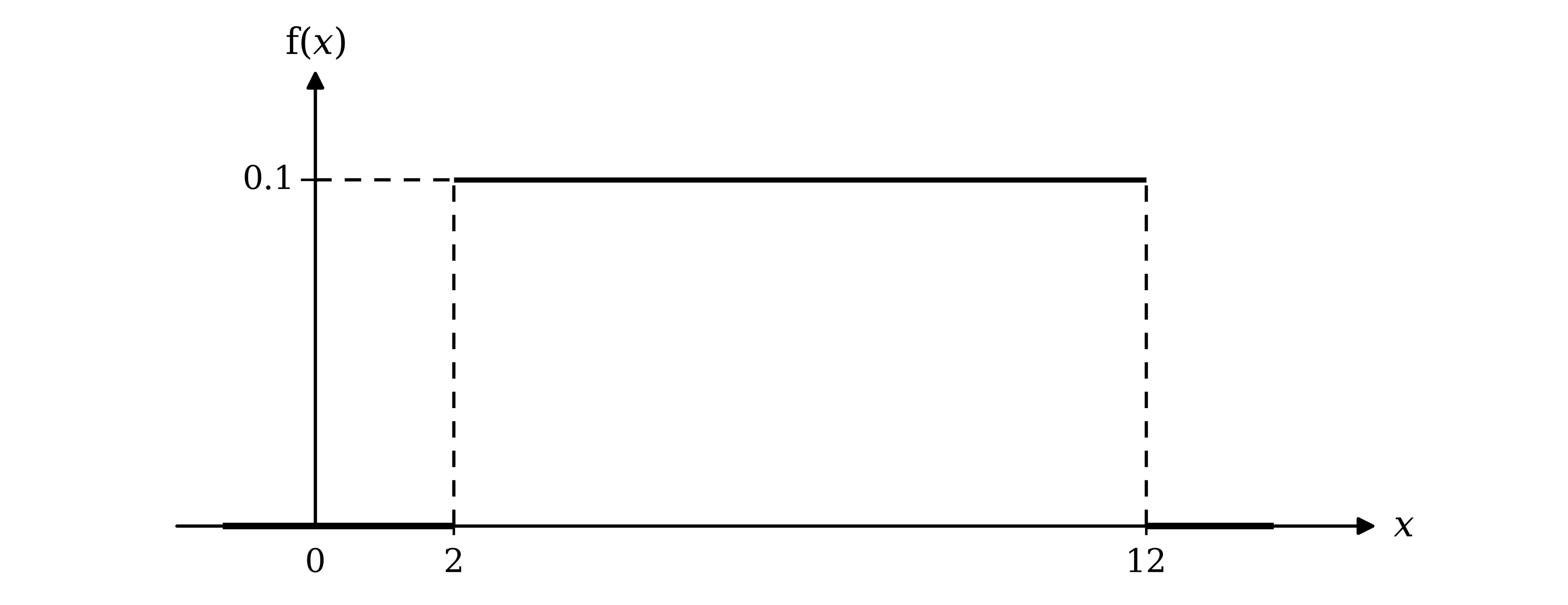
A graph of f(x) against x: a horizontal line at height 0.1 from x = 2 to x = 12, with f(x) = 0 elsewhere

(iv)

A graph of f(x) against x: a straight line rising from height 3 at x = 0 to height 5 at x = 0.12, with f(x) = 0 elsewhere
2
6 marks

If f(x) is the probability density function for a random variable, X, which takes values between a and b, then

∫abf(x) dx=1

Use integration to decide whether the following functions could represent probability density functions.

(i) f(x)={2x    0≤x≤10    otherwise

(ii) f(x)={13x2    1≤x≤40    otherwise

(iii) f(x)={427(x3+1)    −1≤x≤20    otherwise

3a
3 marks

The continuous random variable X has probability density function f given by

f(x)={124(x3+2)    1≤x≤30    otherwise

Find P(1<X<2).

3b
3 marks

Find P(X>2.5).

3c
3 marks

Find E(X).

4
4 marks

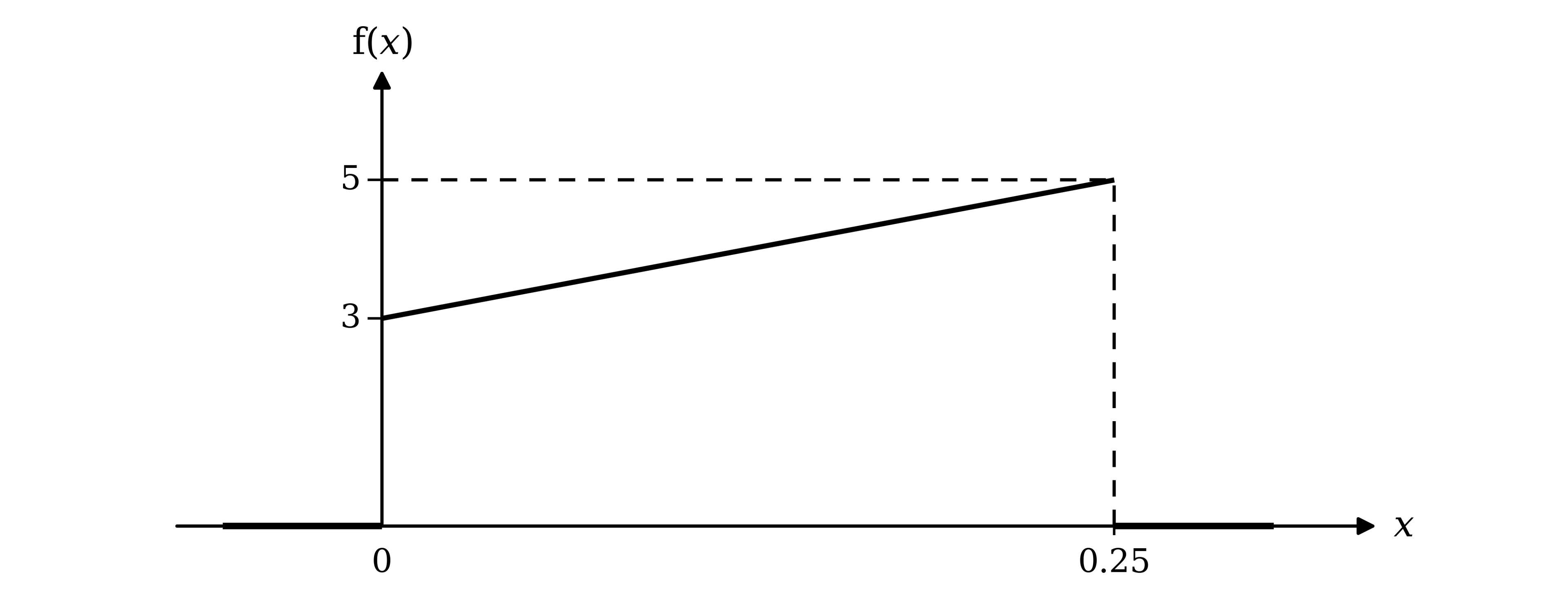
The graph below shows the probability density function of a continuous random variable, X.

A graph of f(x) against x: a straight line rising from height 3 at x = 0 to height 5 at x = 0.25, with f(x) = 0 elsewhere

By finding relevant areas under the graph, find:

(i) P(0<X<0.1)

(ii) P(X>0.15)

(iii) P(0.05<X<0.12)

5a
2 marks

The continuous random variable X has probability density function

f(x)={316(x2−1)    2≤x≤30    otherwise

Find ∫316x(x2−1) dx.

5b
1 mark

Hence find the value of E(X) using the formula

E(X)=∫x f(x) dx

5c
2 marks

Find ∫316x2(x2−1) dx.

5d
1 mark

Hence find the value of E(X2) using the formula

E(X2)=∫x2 f(x) dx

5e
1 mark

Hence find the value of Var(X) using the formula

Var(X)=E(X2)−(E(X))2

6a
1 mark

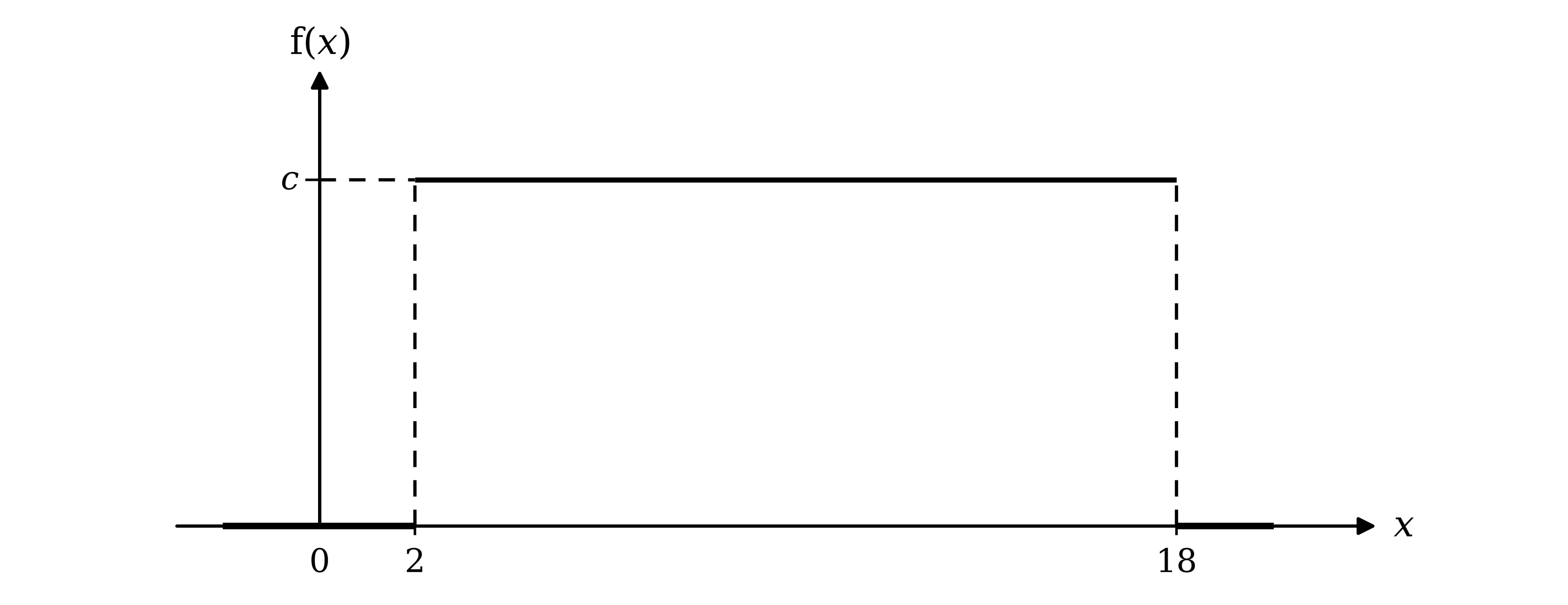
The diagram shows the probability density function, f(x), of a random variable X. For 2≤x≤18, f(x)=c; elsewhere f(x)=0.

A graph of f(x) against x: a horizontal line at height c from x = 2 to x = 18, with f(x) = 0 elsewhere

Find the value of c.

6b
3 marks

(i) State the median of X.

(ii) State the value of E(X).

(iii) Find P(14<X<18).

1a
3 marks

The continuous random variable X has probability density function f given by

f(x)={k(x2+3)    3≤x≤90    otherwise

where k is a constant.

Show that k=1252.

1b
3 marks

Find P(X<6).

2
6 marks

The median, m, of a continuous random variable X, is the value for X which splits the area under the graph of the probability density function exactly in half, such that P(X<m)=0.5.

Find the value of the median of the continuous random variables which have probability density functions shown in the graphs below.

(i)

A graph of f(x) against x: a horizontal line at height 0.1 from x = 2 to x = 12, with f(x) = 0 elsewhere

(ii)

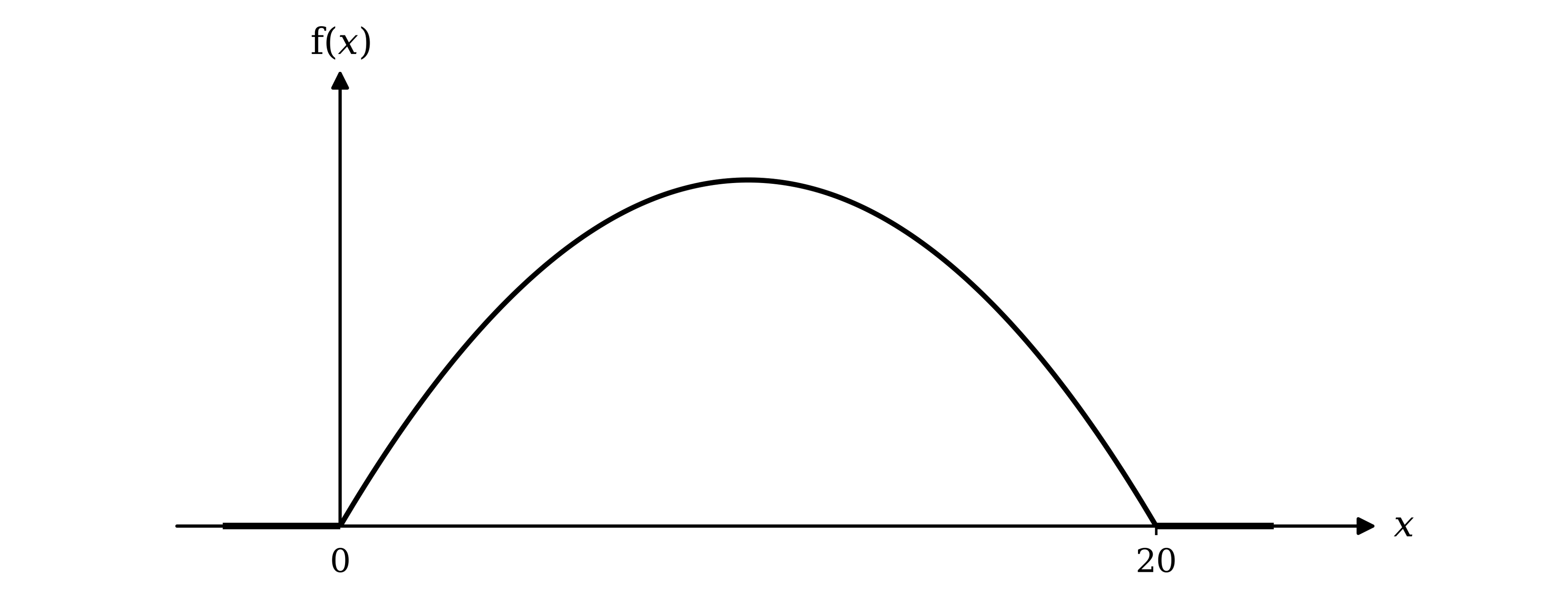
A graph of f(x) against x: a symmetrical arch-shaped curve from x = 0 to x = 20, with f(x) = 0 elsewhere

(iii)

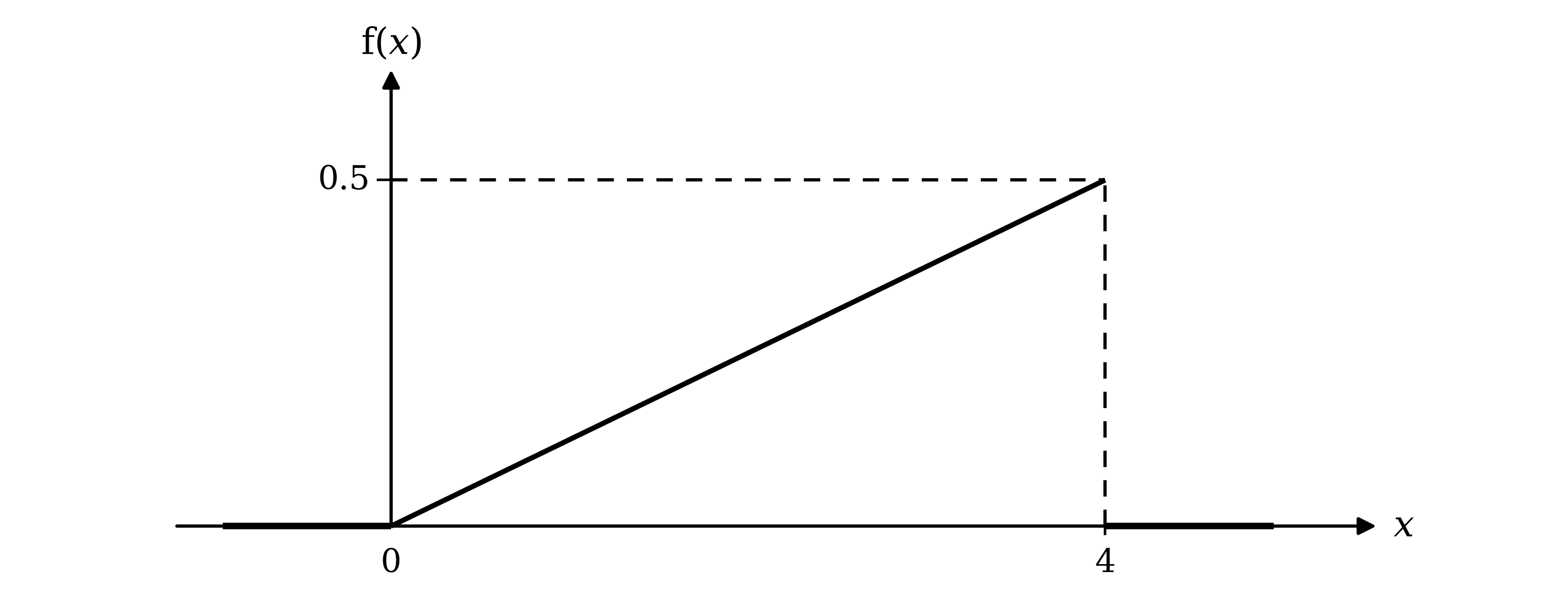
A graph of f(x) against x: a straight line from the origin rising to height 0.5 at x = 4, with f(x) = 0 elsewhere

(iv)

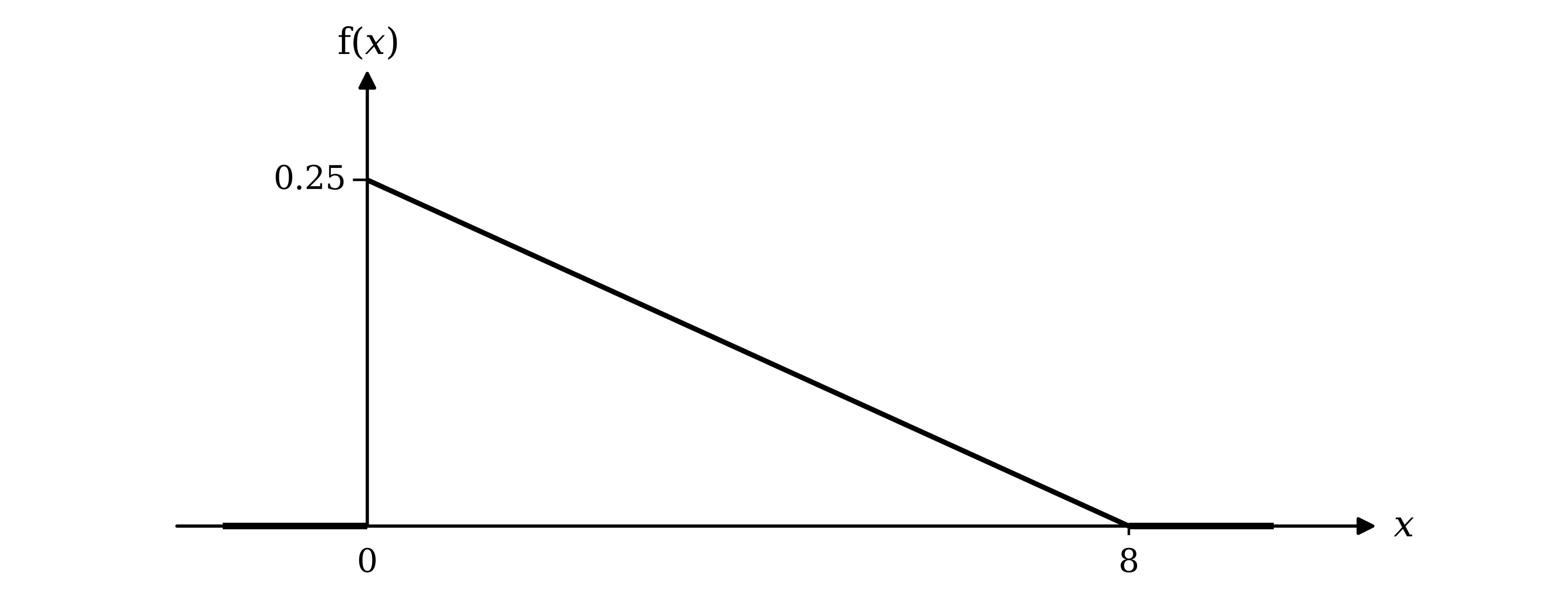
A graph of f(x) against x: a straight line falling from height 0.25 at x = 0 to 0 at x = 8, with f(x) = 0 elsewhere
3
4 marks

State, with a reason, whether each of the following could be graphs of probability density functions.

(i)

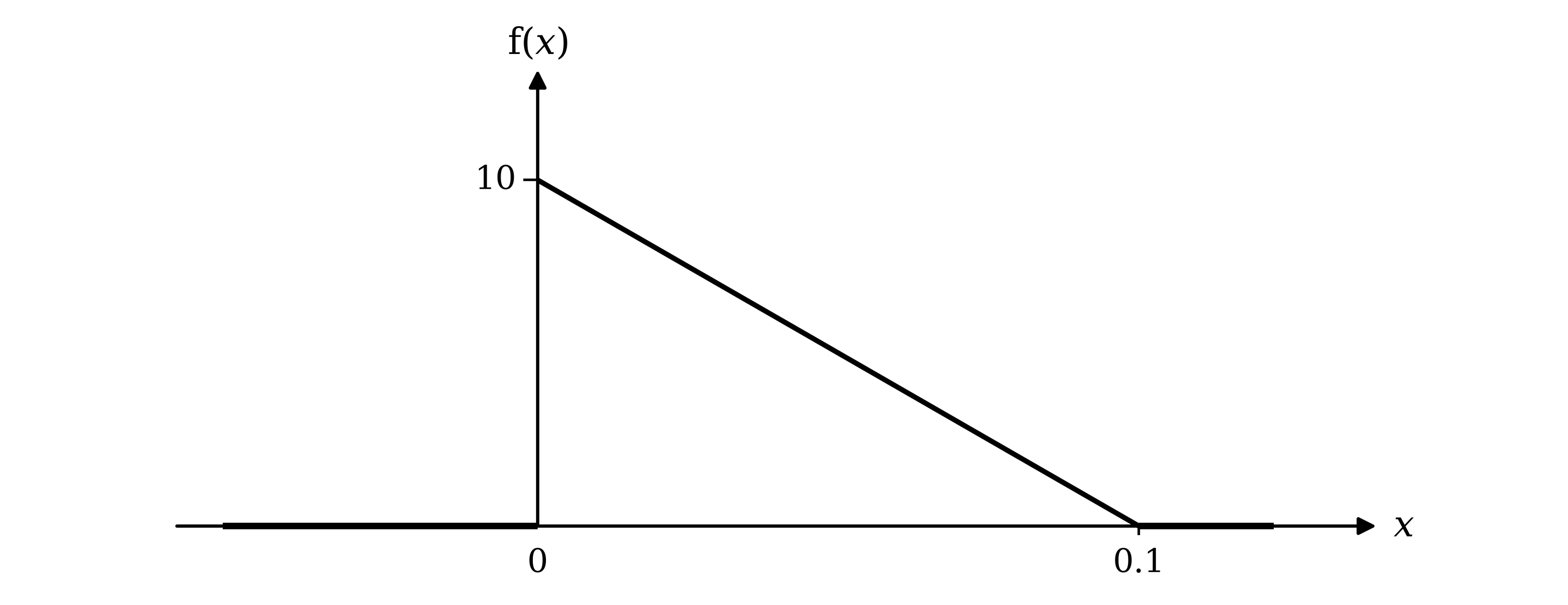
A straight line falling from f(x) = 10 at x = 0 to 0 at x = 0.1

(ii)

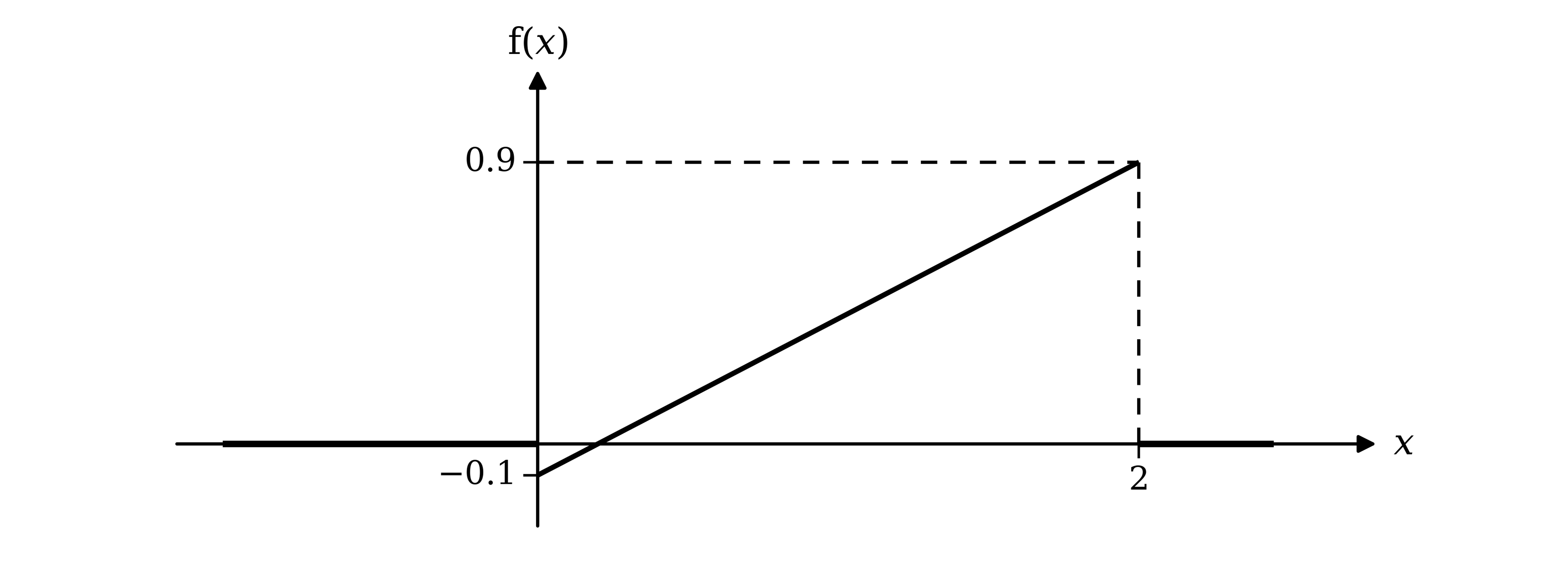
A straight line rising from f(x) = −0.1 at x = 0 to 0.9 at x = 2

(iii)

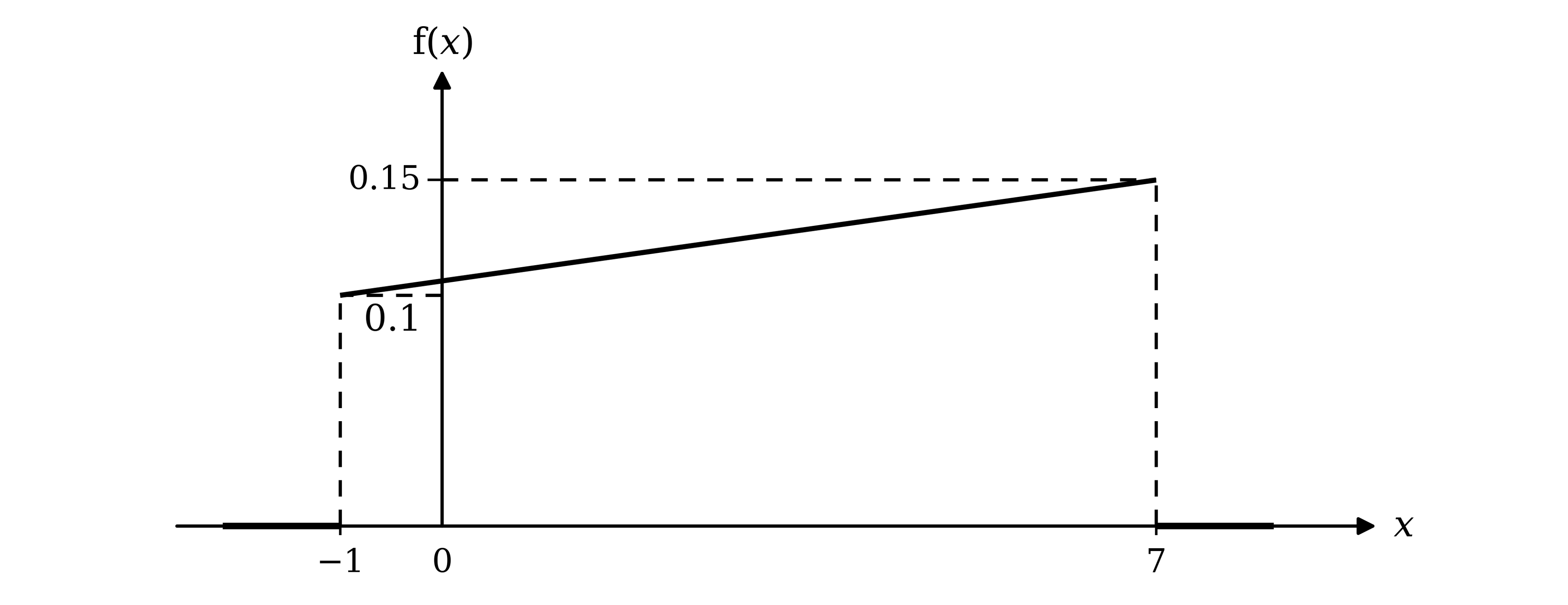
A straight line rising from f(x) = 0.1 at x = −1 to 0.15 at x = 7

(iv)

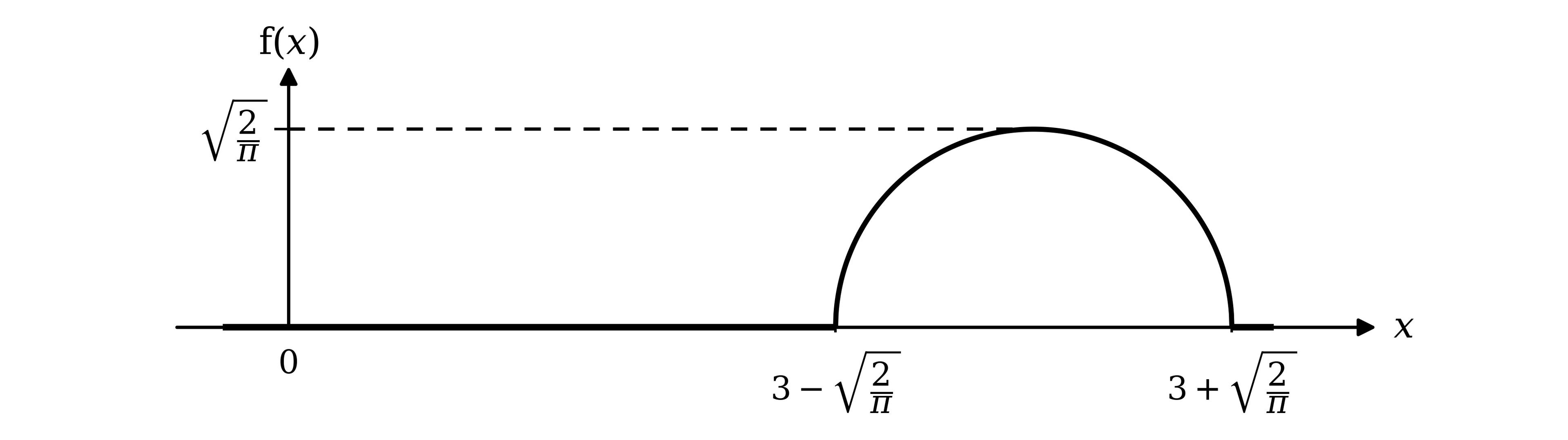
A semicircle with height the square root of 2 over pi, from x = 3 minus root 2 over pi to x = 3 plus root 2 over pi

This is a semicircle.

4
6 marks

State, with a reason, whether the following functions could represent probability density functions.

(i) f(x)={3(x5−2x3)    1≤x≤20    otherwise

(ii) f(x)={38(x+1)2    −1≤x≤10    otherwise

(iii) f(x)={6x2    −3≤x≤−20    otherwise

5a
3 marks

The continuous random variable X has probability density function f given by

f(x)={k(3x4−2x)    1≤x≤20    otherwise

where k is a constant.

Show that k=578.

5b
4 marks

(i) Find P(1.2<X<1.8).

(ii) Find P(X<1.5).

6a
3 marks

The continuous random variable X has probability density function f given by

f(x)={k(2+x)    4≤x≤90    otherwise

where k is a constant.

Show that k=368.

6b
3 marks

Find E(X).

6c
3 marks

Find Var(X).

7a
2 marks

The continuous random variable X has probability density function f given by

f(x)={12sin x    0≤x≤π0    otherwise

Verify that f can be a probability density function.

7b
1 mark

State the value of E(X), giving a reason for your answer.

7c
3 marks

Find the lower quartile of X, giving your answer in terms of π.

8a
3 marks

The continuous random variable X has probability density function f given by

f(x)={562x32    1≤x≤40    otherwise

Show that the median, m, of X satisfies the equation 2m52−33=0.

8b
2 marks

Hence find the value of m.

9a
3 marks

The continuous random variable X has probability density function f given by

f(x)={k    3≤x≤280    otherwise

where k is a constant.

Find the value of k, and find P(X<15) and P(20<X<30).

9b
4 marks

(i) State the value of E(X).

(ii) Use integration to find Var(X).

10a
3 marks

May calls her nephew Peter each day. Peter's phone ends every call after 15 minutes. The length of a call, T minutes, is modelled by the probability density function given by

f(t)={11125t2    0≤t≤150    otherwise

Find the mean length of a call.

10b
3 marks

Find the standard deviation of T.

10c
3 marks

Find the probability that a randomly chosen call lasts longer than 10 minutes.

10d
1 mark

Out of the next 100 calls, estimate the number that last less than 10 minutes.

11a
3 marks

The mass, M kilograms, of a wrestler at a local club is modelled by the probability density function given by

f(m)={k−19000(m−80)2    70≤m≤1000    otherwise

where k is a constant.

Show that k=245.

11b
3 marks

Wrestlers who weigh less than 85 kg can enter Heavy Middleweight competitions.

Find the probability that a randomly chosen wrestler can enter Heavy Middleweight competitions.

11c
3 marks

Wrestlers who weigh less than 80 kg can enter Middleweight competitions.

Given that a wrestler can enter Heavy Middleweight competitions, find the probability that they can also enter Middleweight competitions.

12a
1 mark

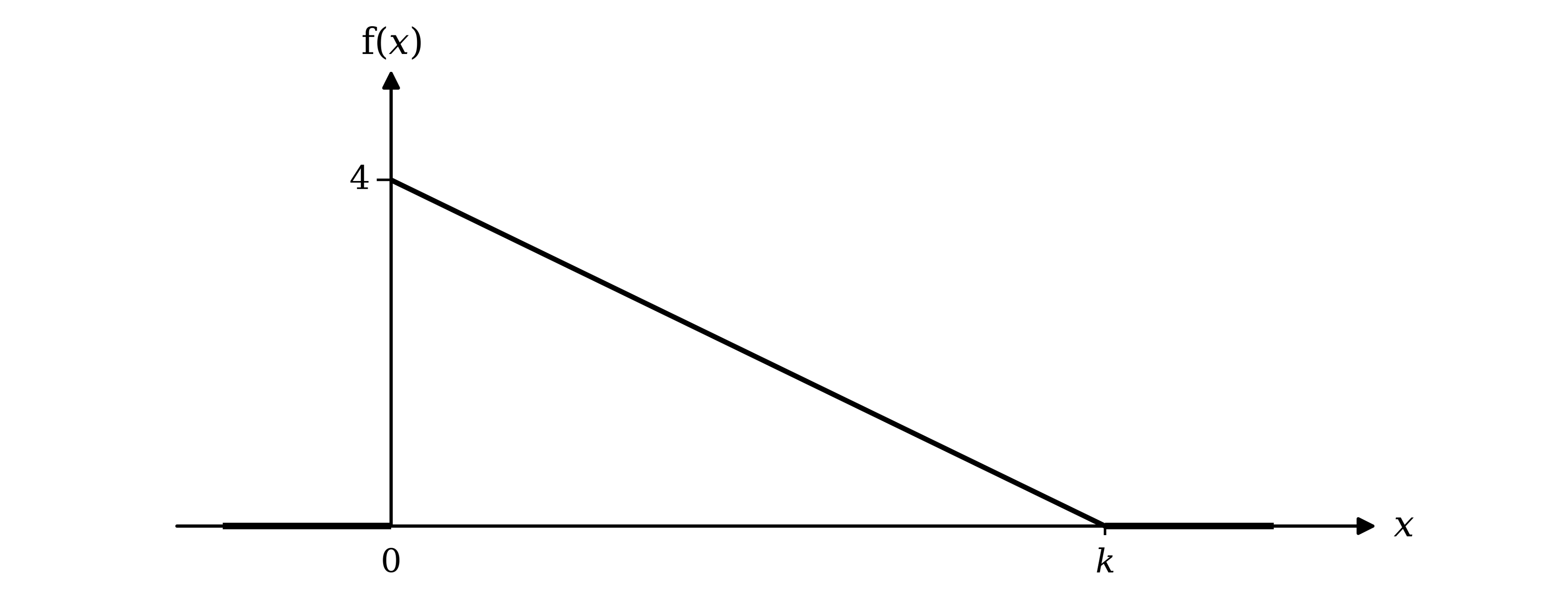
A random variable X takes values between 0 and k only, where k is a constant. The diagram shows the graph of the probability density function, f, of X. Between these two values the graph is a straight line.

A graph of f(x) against x: a straight line falling from height 4 at x = 0 to 0 at x = k, with f(x) = 0 elsewhere

Find the value of k.

12b
2 marks

Find P(X>0.4).

12c
4 marks

Find the median of X.

1
5 marks

State, with a reason, whether the following functions could represent probability density functions.

(i) f(x)={13(x2−2)    1≤x≤20    otherwise

(ii) f(x)={4x5    x≥10    otherwise

(iii) f(x)={2x2    −1≤x≤20    otherwise

2a
4 marks

The continuous random variable X has probability density function f given by

f(x)={14x(x−1)(x+1)    1≤x≤k0    otherwise

where k is a constant.

Find the exact value of k.

2b
4 marks

Find P(X<E(X)).

3a
4 marks

Harry draws a straight line by eye, aiming for a length of 10 cm. The length of his line, L cm, is modelled by the probability density function given by

f(l)={20421(l−10.5)4    8≤l≤120    otherwise

Find the lower quartile of the lengths of Harry's lines.

3b
1 mark

Harry draws 80 of these lines, independently.

Find the expected number of lines that are shorter than the lower quartile.

4a
1 mark

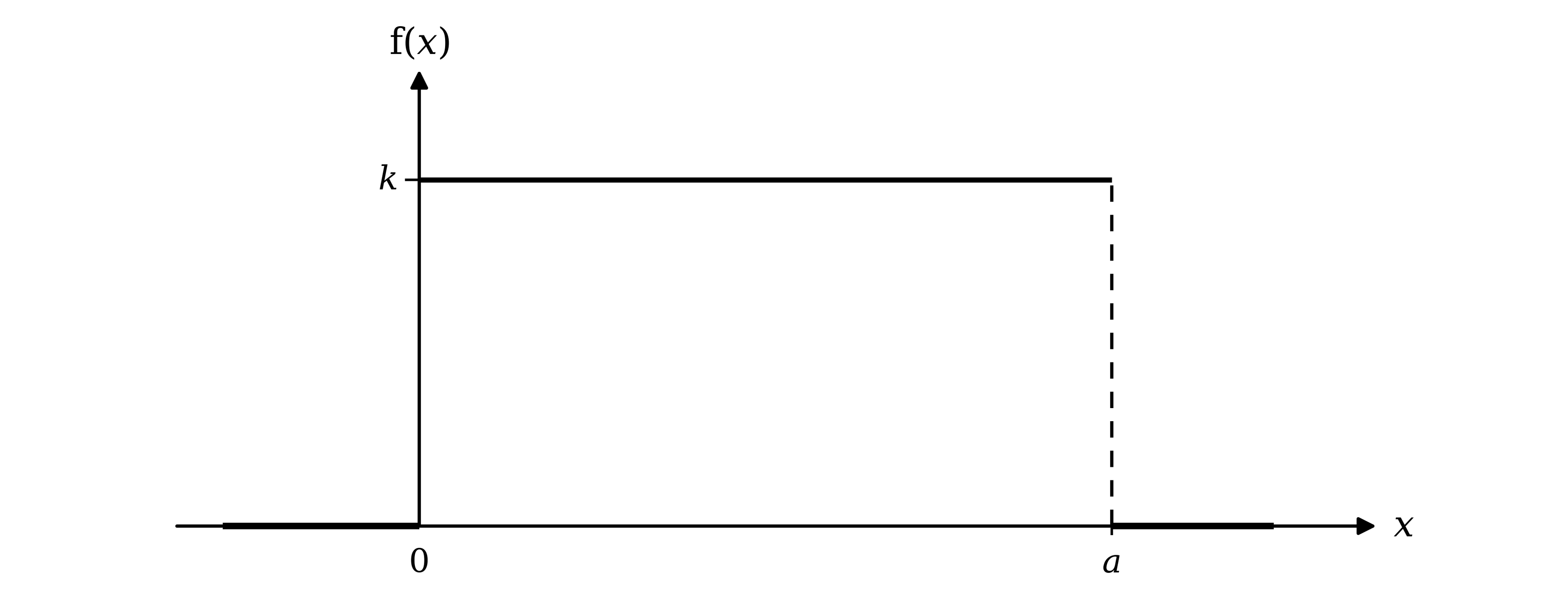
The diagram shows the probability density function, f(x), of a random variable X. For 0≤x≤a, f(x)=k; elsewhere f(x)=0.

A graph of f(x) against x: a horizontal line at height k from x = 0 to x = a, with f(x) = 0 elsewhere

Express k in terms of a.

4b
1 mark

State E(X) in terms of a.

4c
3 marks

Show that Var(X)=a212.

4d
2 marks

Given that P(X>5)=0.6, find the value of a.

5a
2 marks

The continuous random variable X has probability density function f given by

f(x)={12(sin x+cos x)    0≤x≤12π0    otherwise

Verify that f can be a probability density function.

5b
4 marks

Use integration to show that E(X)=π4.

5c
3 marks

Find the exact value of P(X<16π).

6a
2 marks

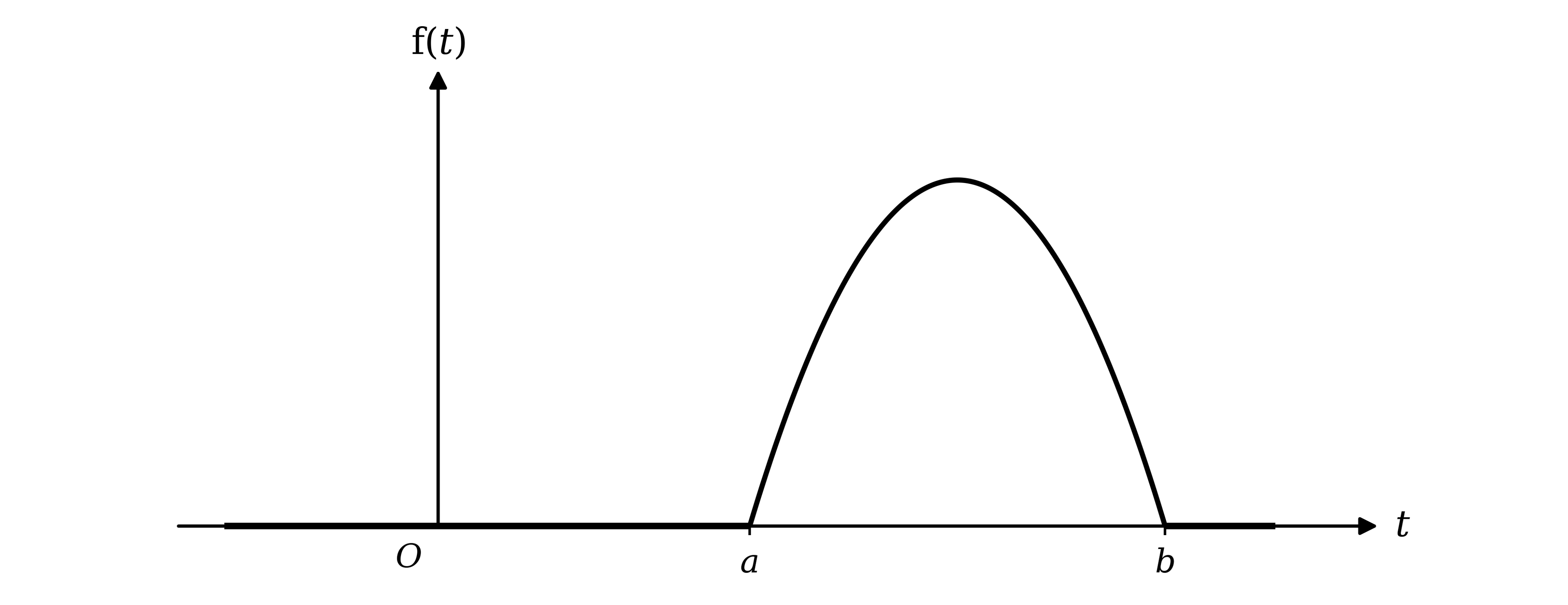
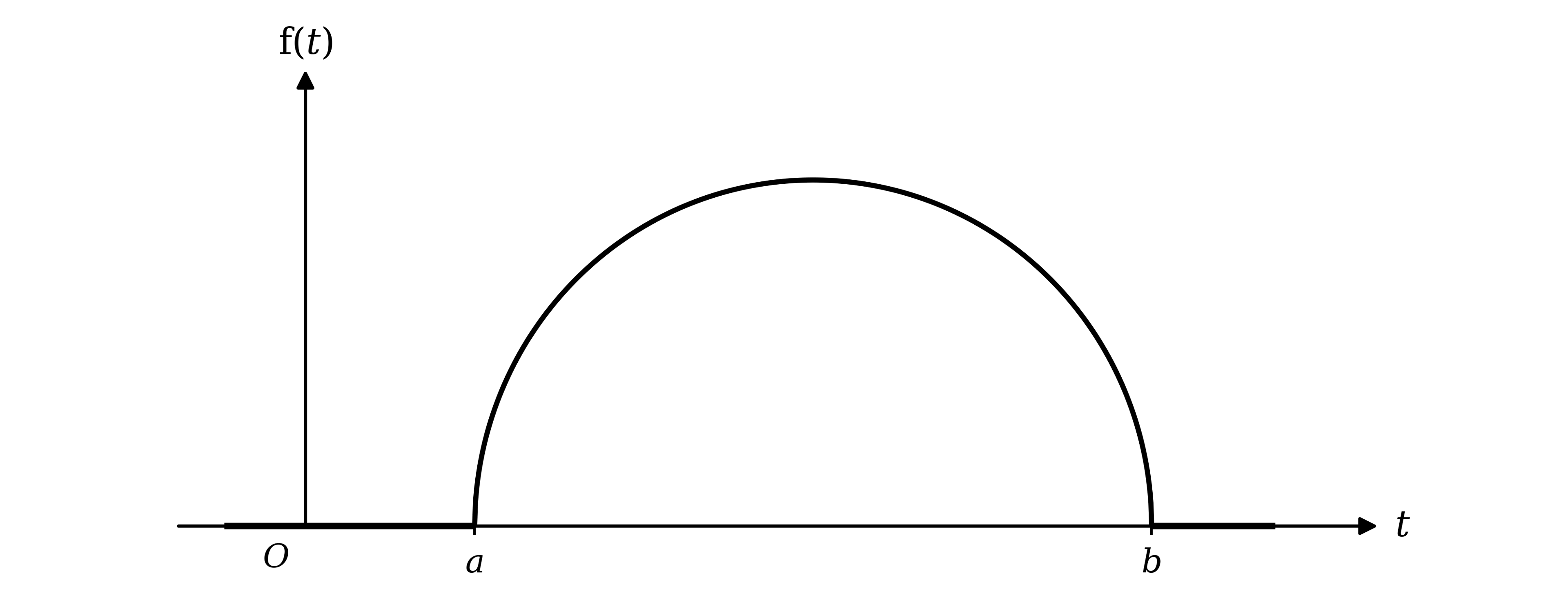
The diagram shows the graph of the probability density function, f, of a random variable T.

A graph of f(t) against t: a symmetrical arch-shaped curve from t = a to t = b on the positive t-axis, with f(t) = 0 elsewhere

It is given that

f(t)={332(10t−t2−21)    a≤t≤b0    otherwise

Find the values of a and b.

6b
4 marks

State the value of E(T) and find Var(T).

6c
1 mark

Find P(−2≤T≤5).

6d
2 marks

Given that P(4≤T≤6)=1116, find P(T≥6).

7a
2 marks

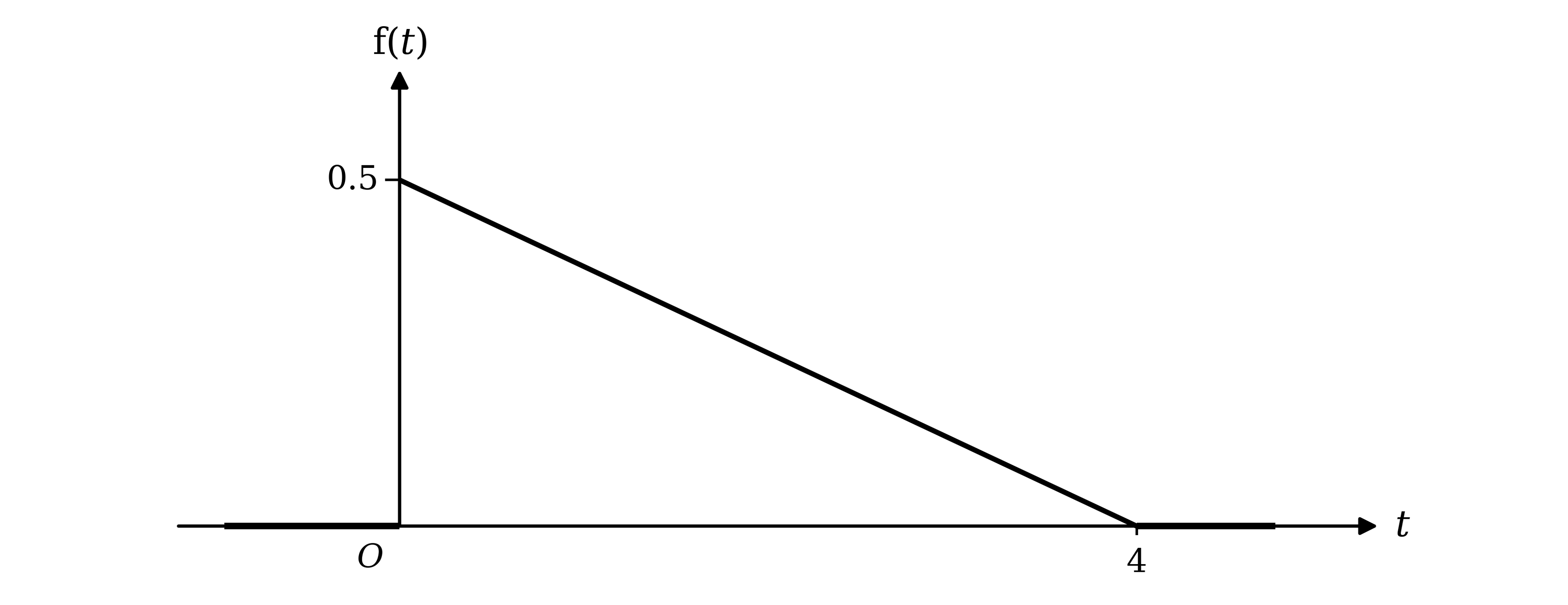
Geoff takes part in a quiz in which he has 4 seconds to answer each question. The time, T seconds, that Geoff takes to answer a question is modelled by the probability density function f shown in the diagram.

A graph of f(t) against t: a straight line falling from 0.5 at t = 0 to 0 at t = 4, with f(t) = 0 elsewhere

Find the probability that Geoff answers a question in less than 2 seconds.

7b
4 marks

Find the mean time that Geoff takes to answer a question.

7c
3 marks

There are 10 questions in the quiz. Assuming that the times are independent, find the probability that Geoff takes longer than 3 seconds to answer at least one of the questions.

8a
2 marks

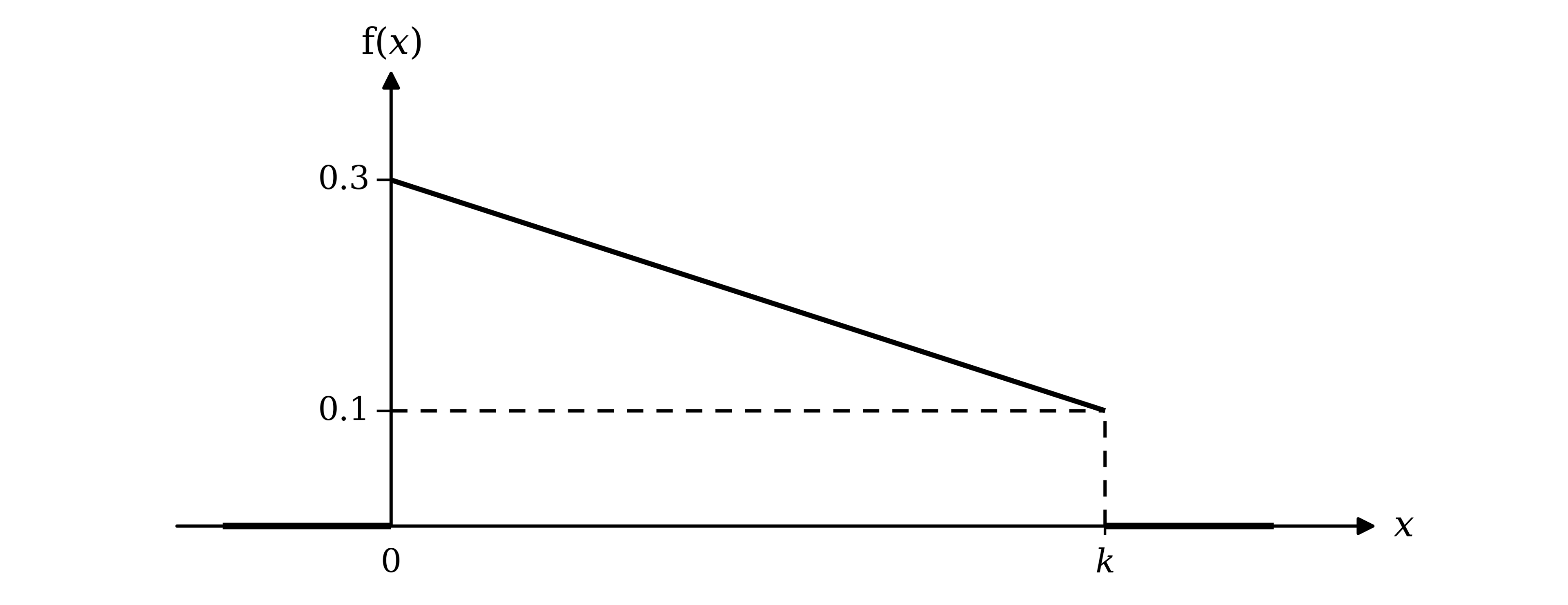
The diagram shows the graph of the probability density function, f, of a random variable X which takes values between 0 and k only, where k is a constant. Between these two values the graph is a straight line.

A graph of f(x) against x: a straight line falling from height 0.3 at x = 0 to height 0.1 at x = k, with f(x) = 0 elsewhere

Find the value of k.

8b
2 marks

Find P(X≤3).

8c
4 marks

Find the interquartile range of X.

9a
2 marks

The time, T seconds, that a computer takes to start up is modelled by the probability density function f shown in the diagram.

A graph of f(t) against t: an arch-shaped curve from t = a to t = b on the positive t-axis, with f(t) = 0 elsewhere

It is given that

f(t)={18π12t−t2−20    a≤t≤b0    otherwise

where a and b are constants.

Find the values of a and b.

9b
1 mark

State the mean time for the computer to start up.

9c
1 mark

Find the probability that the computer takes between 6 and 15 seconds to start up.

9d
2 marks

Given that P(4≤T≤8)=32π+13, find the exact value of P(T>8).

10a
1 mark

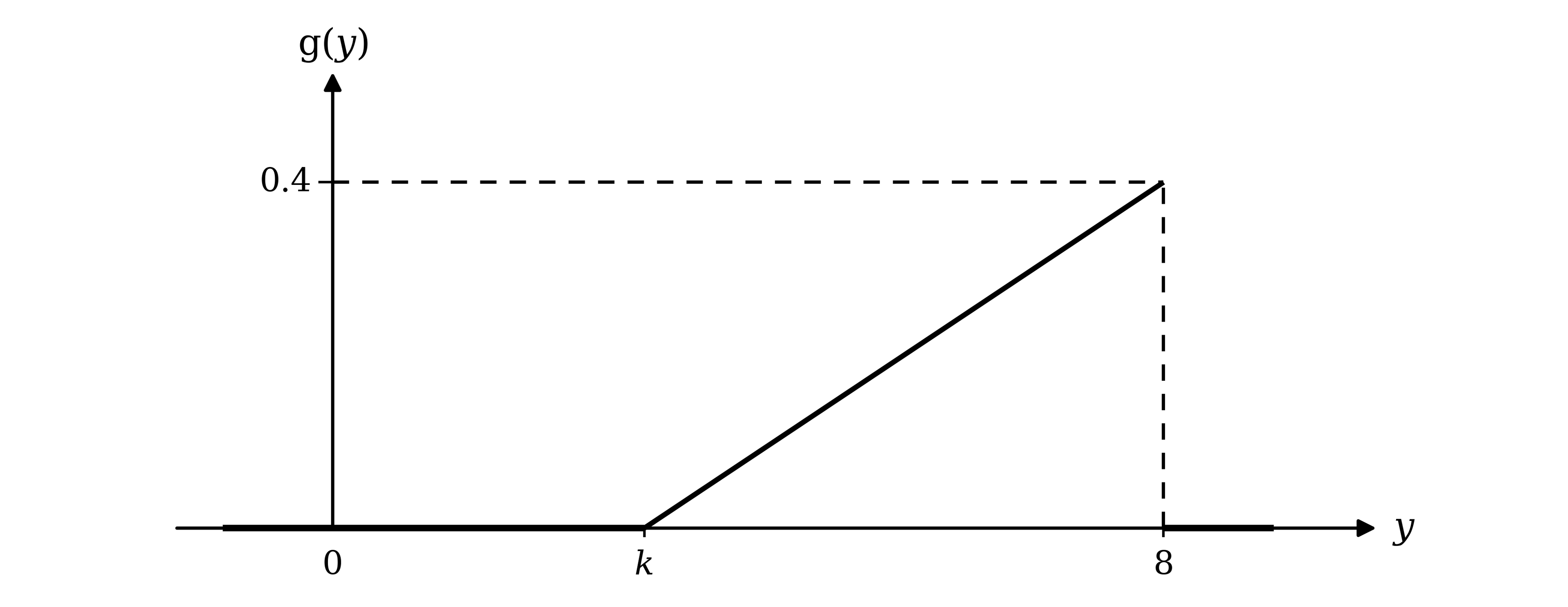
The diagram shows the graph of the probability density function, g, of a random variable Y which takes values between k and 8 only, where k is a constant. Between these two values the graph is a straight line.

A graph of g(y) against y: a straight line rising from 0 at y = k to 0.4 at y = 8, with g(y) = 0 elsewhere

Find the value of k.

10b
3 marks

Find P(5<Y<6).

10c
2 marks

Find the median of Y.

10d
4 marks

Find E(Y).

11a
6 marks

The length of a meeting at a company, T hours, is modelled by the probability density function given by

f(t)={34t(t−2)2    0≤t≤20    otherwise

Find the mean length of a meeting and find the standard deviation of the lengths.

11b
4 marks

Show that the median length of a meeting is 0.771 hours, correct to 3 significant figures.

12a
1 mark

The cost, C euros, of a baguette in France is modelled by the probability density function given by

f(c)={136(14c−c2−40)    4≤c≤100    otherwise

Sketch the graph of y=f(c).

12b
1 mark

Hence explain, without calculation, why the mean cost of a baguette is 7 euros.

12c
2 marks

Given that P(C<9)=2527, find P(5<C<9).

1a
5 marks

The continuous random variable U has probability density function g given by

g(u)={k    a≤u≤b0    otherwise

where a, b and k are constants with b>a.

(i) Express k in terms of a and b.

(ii) State E(U) in terms of a and b.

(iii) Show by integration that Var(U)=(b−a)212.

1b
3 marks

Given that E(U)=8.5 and Var(U)=6.75, find the values of a and b.

2a
3 marks

The continuous random variable X has probability density function f given by

f(x)={kx3    2≤x≤a0    otherwise

where a and k are constants.

Show that k=8a2a2−4.

2b
5 marks

Given that E(X)=207, show that a=5 and hence find the value of k.

2c
3 marks

Find the exact value of Var(X).