Resolving Forces, Inclined Planes & Friction (Cambridge (CIE) AS Maths: Mechanics): Exam Questions

Exam code: 9709

4 hours36 questions
1a
2 marks

The diagram shows a force of magnitude 16 N acting at an angle of 30° above the horizontal.
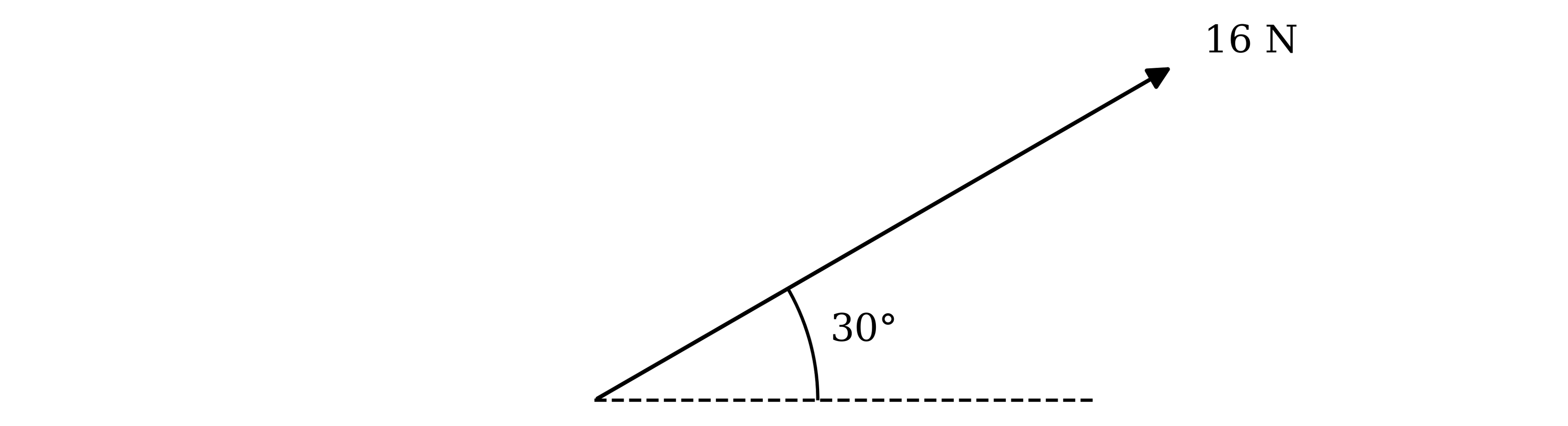
A force of 16 N represented by an arrow pointing up and to the right, at an angle of 30° above a dashed horizontal line

Find the horizontal and vertical components of the force.

1b
2 marks

The diagram shows a force of magnitude 8.5 N acting at an angle of 20° to the vertical.
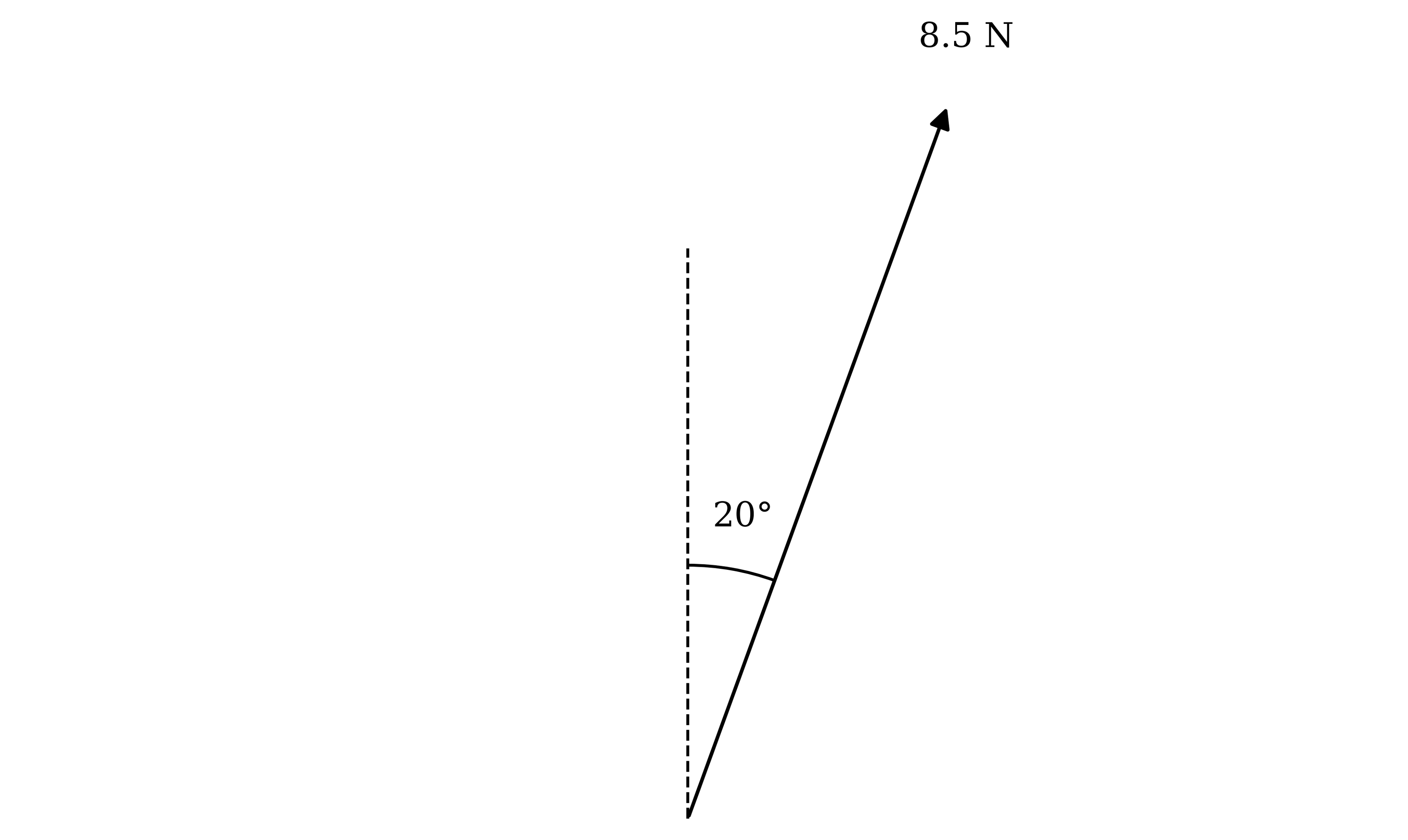
A force of 8.5 N represented by an arrow pointing up and slightly to the right, at an angle of 20° to a dashed vertical line

Find the horizontal and vertical components of the force.

2a
2 marks

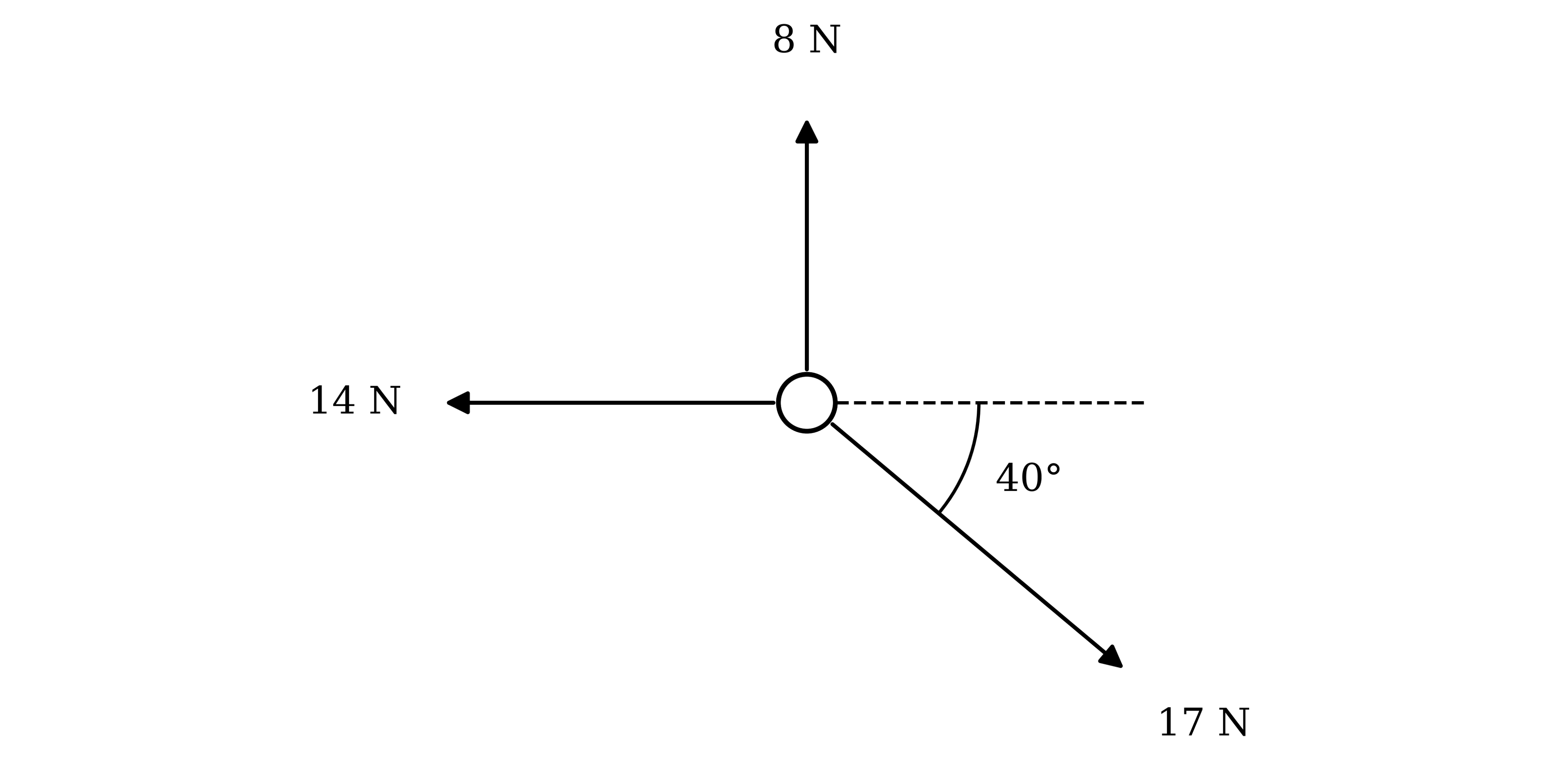
Three forces, of magnitudes 8 N, 14 N and 17 N, act on a particle, as shown in the diagram.

Three forces acting on a particle. A force of 8 N acts vertically upwards, a force of 14 N acts horizontally to the left, and a force of 17 N acts downwards and to the right at an angle of 40° below the horizontal

Find the horizontal and vertical components of the 17 N force.

2b
2 marks

Hence find the resultant force on the particle in the horizontal direction and in the vertical direction, stating the direction of each.

3a
2 marks

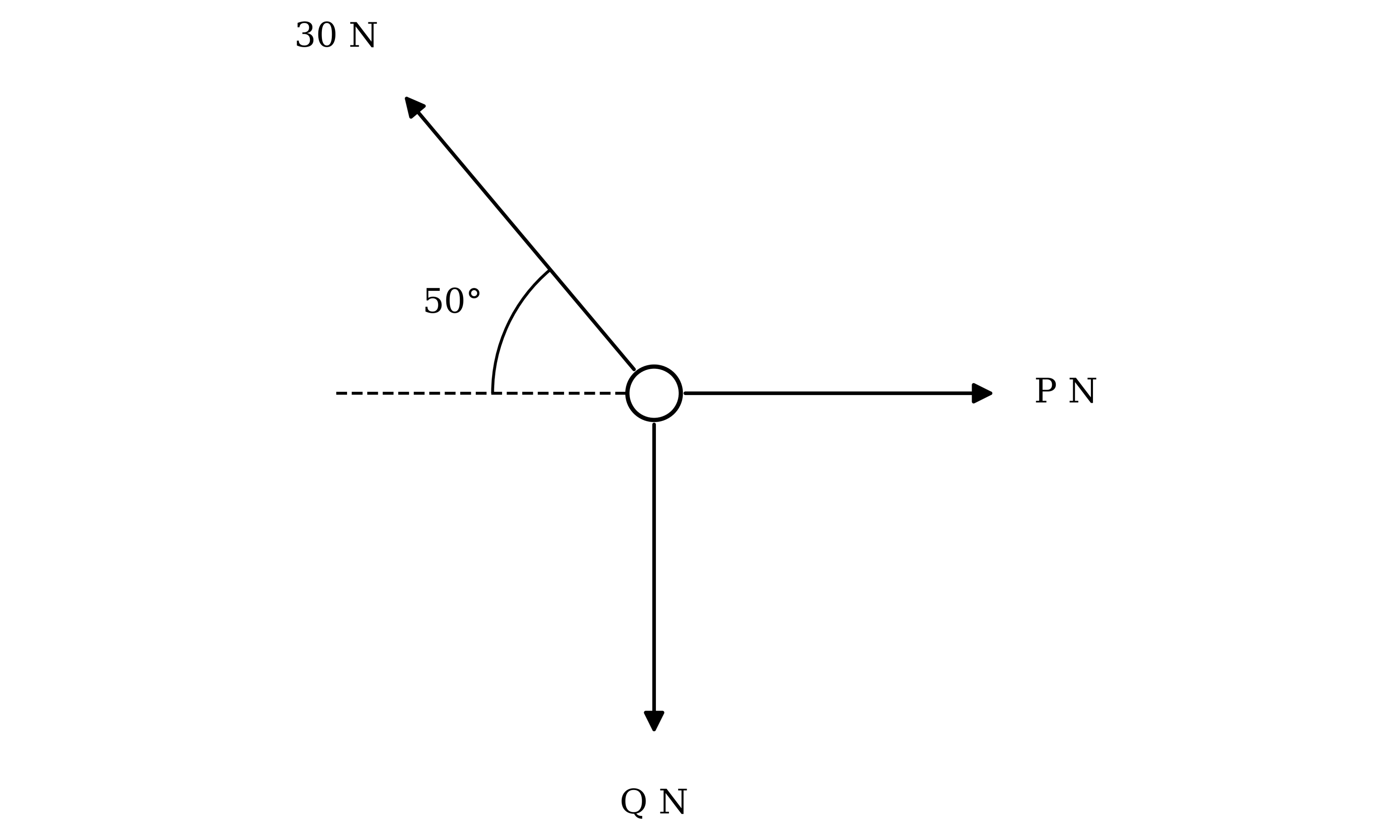
Three forces, of magnitudes 30 N, P N and Q N, act on a particle, as shown in the diagram.

Three forces acting on a particle. A force of 30 N acts upwards and to the left at an angle of 50° above the horizontal, a force of P N acts horizontally to the right, and a force of Q N acts vertically downwards

Find the horizontal and vertical components of the 30 N force.

3b
2 marks

Given that the particle is in equilibrium, find the values of P and Q.

4a
1 mark

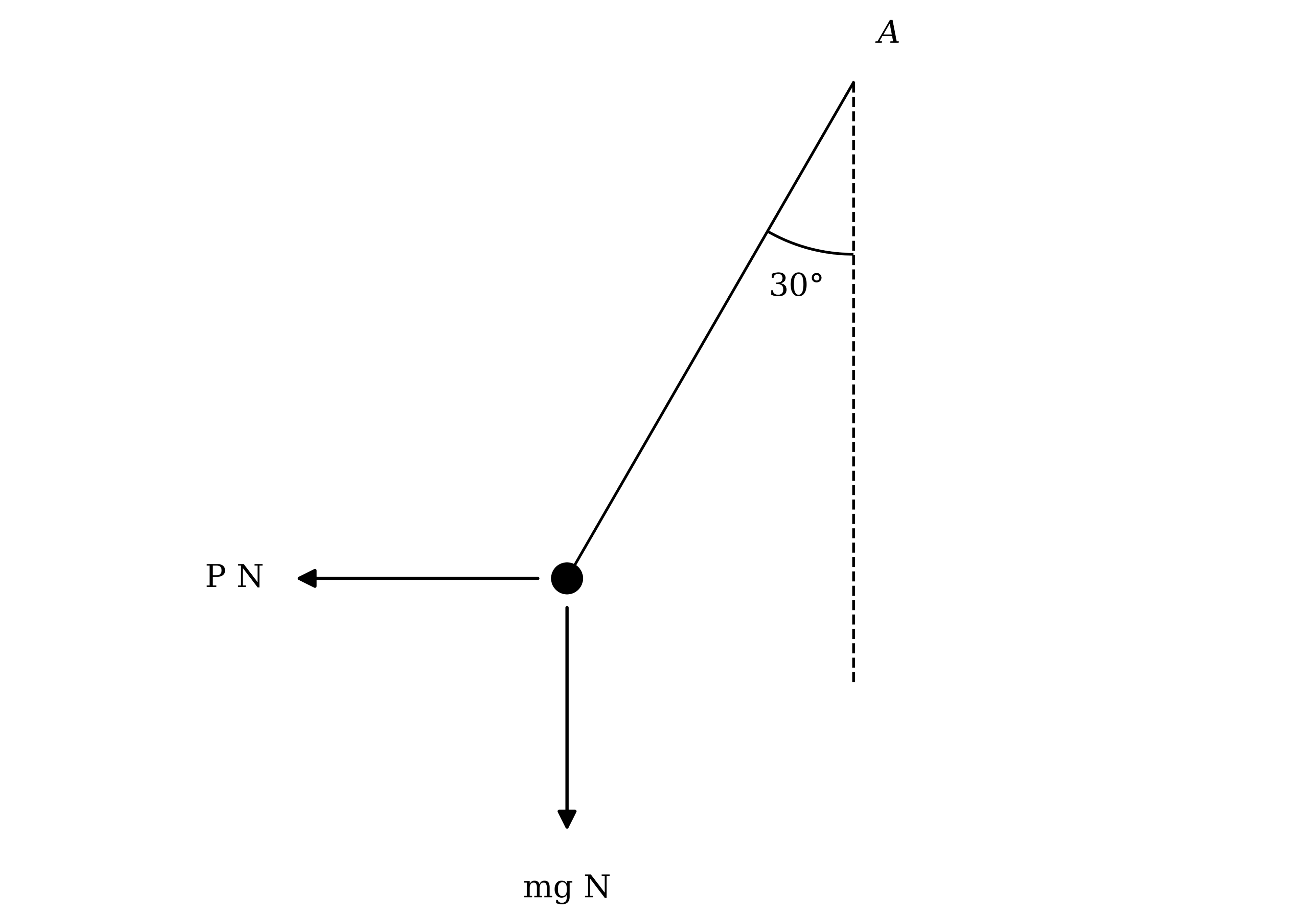
A particle of mass m kg is attached to one end of a light inextensible string. The other end of the string is attached to a fixed point A. A horizontal force of magnitude P N acts on the particle, which is in equilibrium with the string inclined at 30° to the vertical, as shown in the diagram.

A particle hanging from a fixed point A by a string inclined at 30° to a dashed vertical line through A. A horizontal force of P N acts on the particle to the left, away from the vertical line, and a force of mg N acts vertically downwards

State what the force of magnitude mg N represents.

4b
2 marks

The tension in the string is 16 N.

Find the horizontal and vertical components of the tension.

4c
2 marks

Hence find the values of P and m.

5a
2 marks

A particle of mass 5 kg slides down a line of greatest slope of a smooth plane inclined at 30° to the horizontal.

Find the acceleration of the particle.

5b
2 marks

Find the normal contact force exerted by the plane on the particle.

6a
3 marks

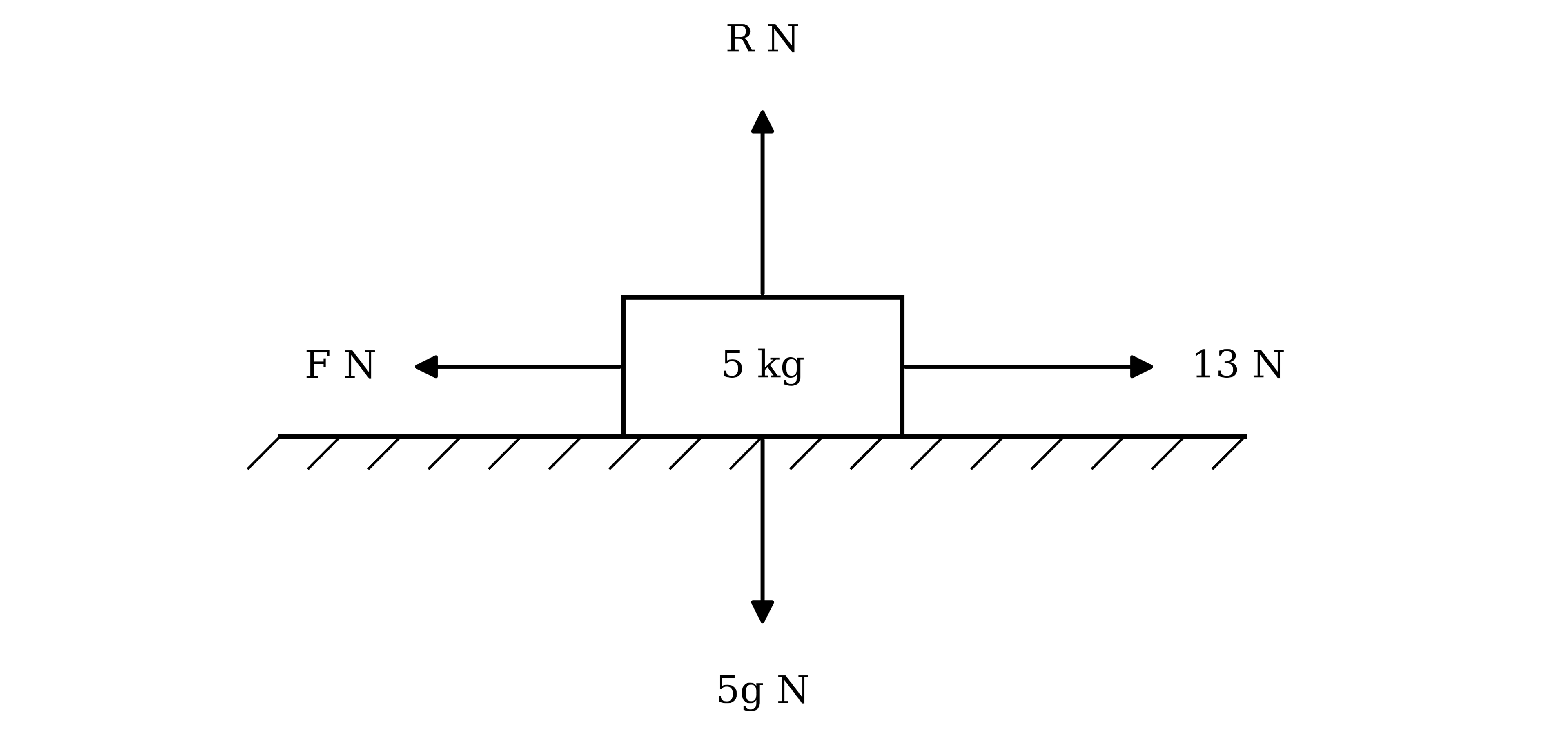
In each part of this question, a block is initially at rest on a rough horizontal surface. The diagram in each part shows all the forces acting on the block, where R N is the normal contact force and F N is the frictional force.

In this part, the block has mass 5 kg and the coefficient of friction between the block and the surface is 0.3. A horizontal force of magnitude 13 N acts on the block, as shown in the diagram.

A block of mass 5 kg on a rough horizontal surface. A force of 13 N acts horizontally to the right, the frictional force F N acts horizontally to the left, the normal contact force R N acts vertically upwards and the weight 5g N acts vertically downwards

Find the value of F and determine whether the block remains at rest or begins to move.

6b
3 marks

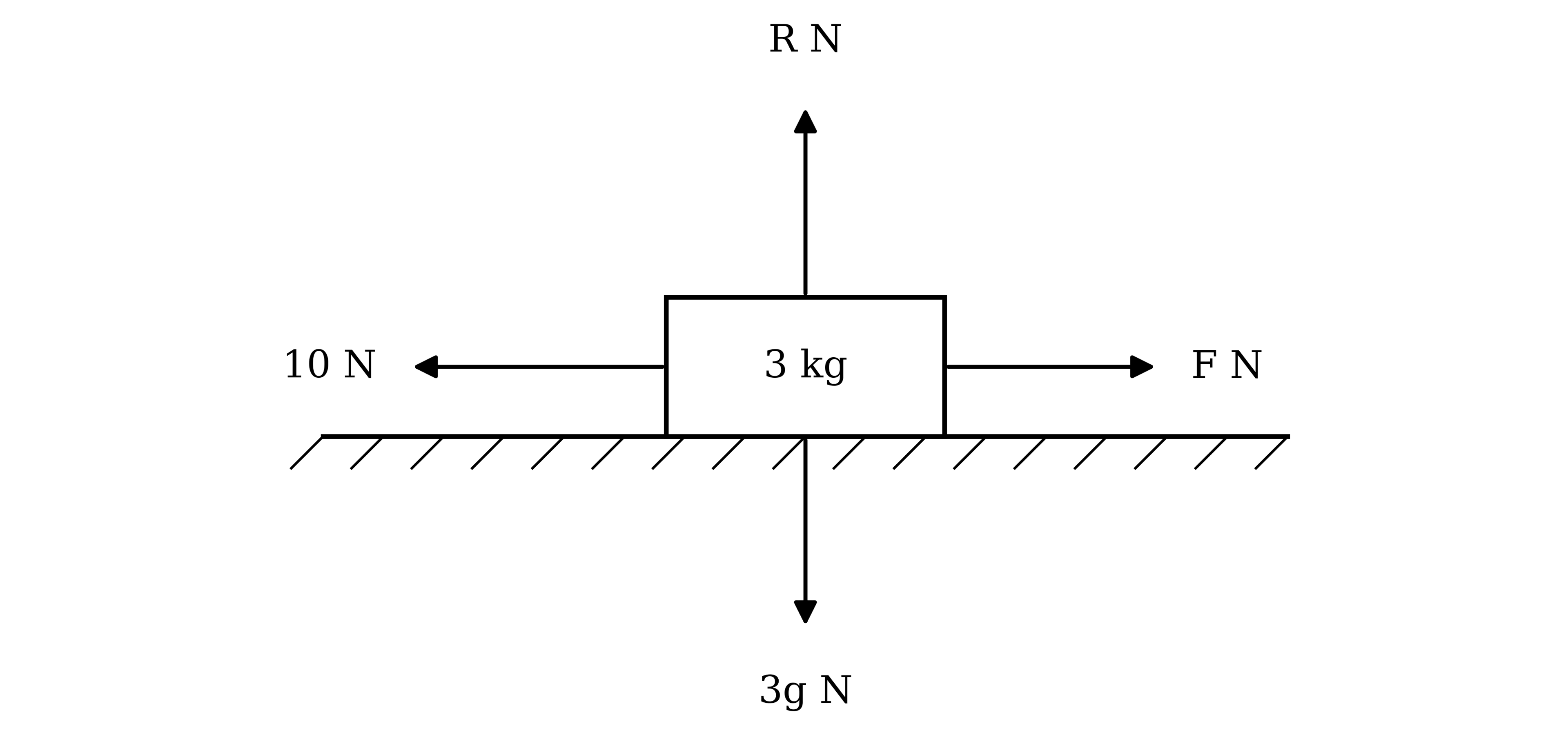
In this part, a block of mass 3 kg is initially at rest, and the coefficient of friction between the block and the surface is 0.4. A horizontal force of magnitude 10 N acts on the block, as shown in the diagram.

A block of mass 3 kg on a rough horizontal surface. A force of 10 N acts horizontally to the left, the frictional force F N acts horizontally to the right, the normal contact force R N acts vertically upwards and the weight 3g N acts vertically downwards

Find the value of F and determine whether the block remains at rest or begins to move.

6c
3 marks

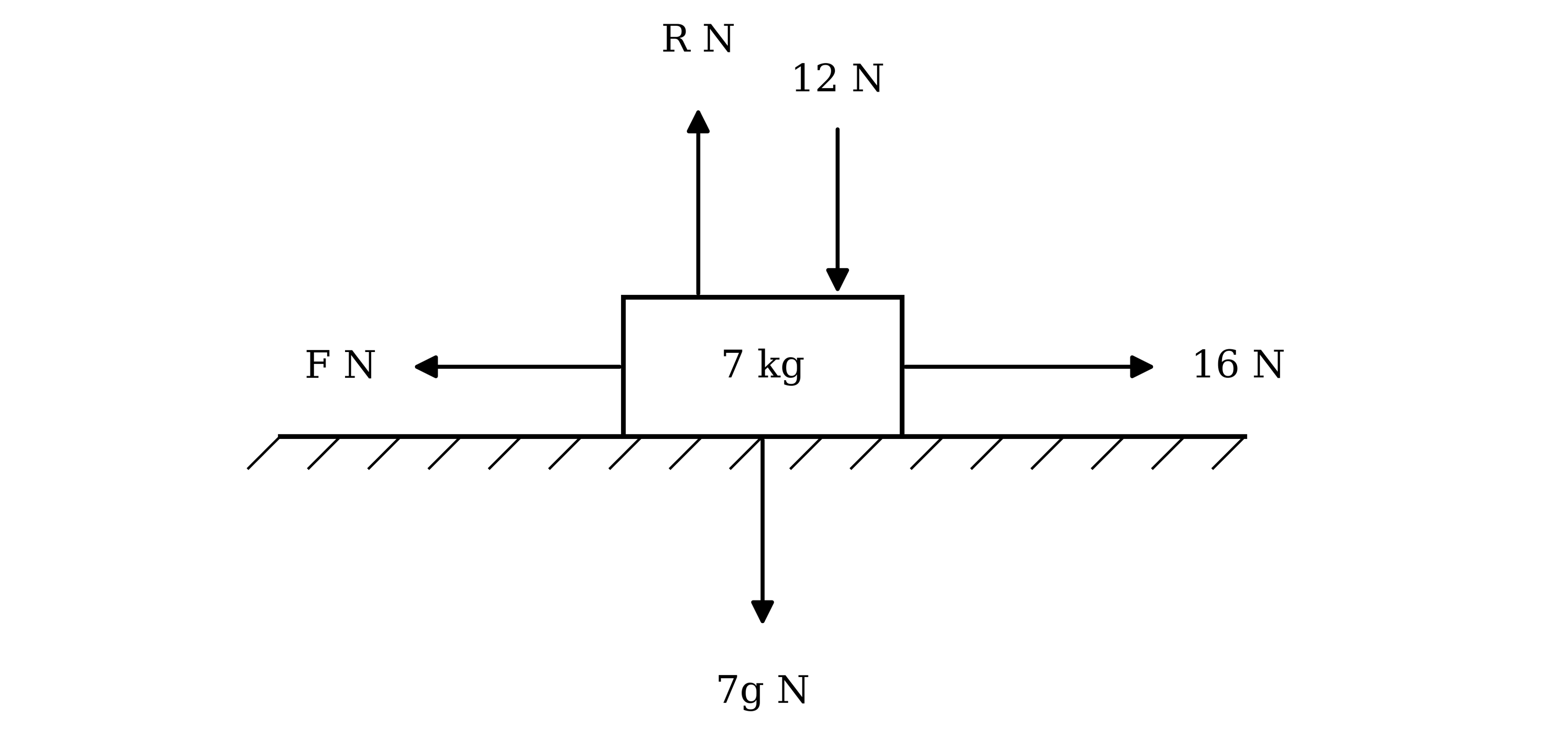
In this part, a block of mass 7 kg is initially at rest, and the coefficient of friction between the block and the surface is 0.2. A horizontal force of magnitude 16 N and a downward vertical force of magnitude 12 N act on the block, as shown in the diagram.

A block of mass 7 kg on a rough horizontal surface. A force of 16 N acts horizontally to the right, the frictional force F N acts horizontally to the left, the normal contact force R N acts vertically upwards, the weight 7g N acts vertically downwards, and a further force of 12 N pushes vertically downwards on the top of the block

Find the value of F and determine whether the block remains at rest or begins to move.

6d
4 marks

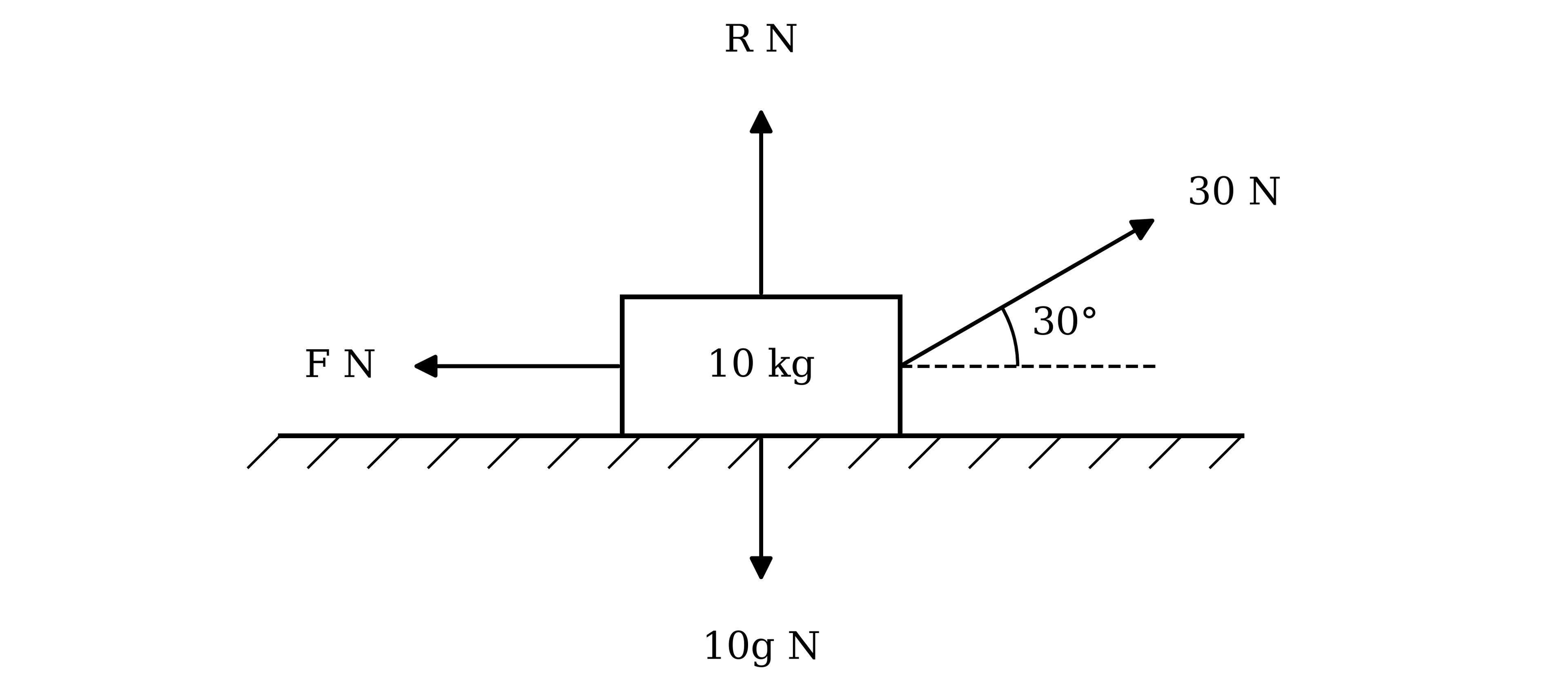
In this part, a block of mass 10 kg is initially at rest, and the coefficient of friction between the block and the surface is 0.25. A force of magnitude 30 N acts on the block at an angle of 30° above the horizontal, as shown in the diagram.

A block of mass 10 kg on a rough horizontal surface. A force of 30 N acts upwards and to the right at 30° above the horizontal, the frictional force F N acts horizontally to the left, the normal contact force R N acts vertically upwards and the weight 10g N acts vertically downwards

Find the value of F and determine whether the block remains at rest or begins to move.

7a
3 marks

A particle of mass 5 kg is projected up a line of greatest slope of a rough plane inclined at 30° to the horizontal. The coefficient of friction between the particle and the plane is 0.3. The particle comes to instantaneous rest and then slides back down the plane.

Find the magnitude of the frictional force acting on the particle while it moves up the plane, and state its direction.

7b
3 marks

Find the deceleration of the particle while it moves up the plane.

7c
2 marks

State the magnitude and direction of the frictional force acting on the particle while it slides back down the plane.

7d
3 marks

Find the acceleration of the particle while it slides down the plane.

8a
2 marks

A particle of mass 10 kg slides down a line of greatest slope of a smooth plane inclined at 15° to the horizontal.

Find the acceleration of the particle.

8b
2 marks

Find the normal contact force exerted by the plane on the particle.

1
4 marks

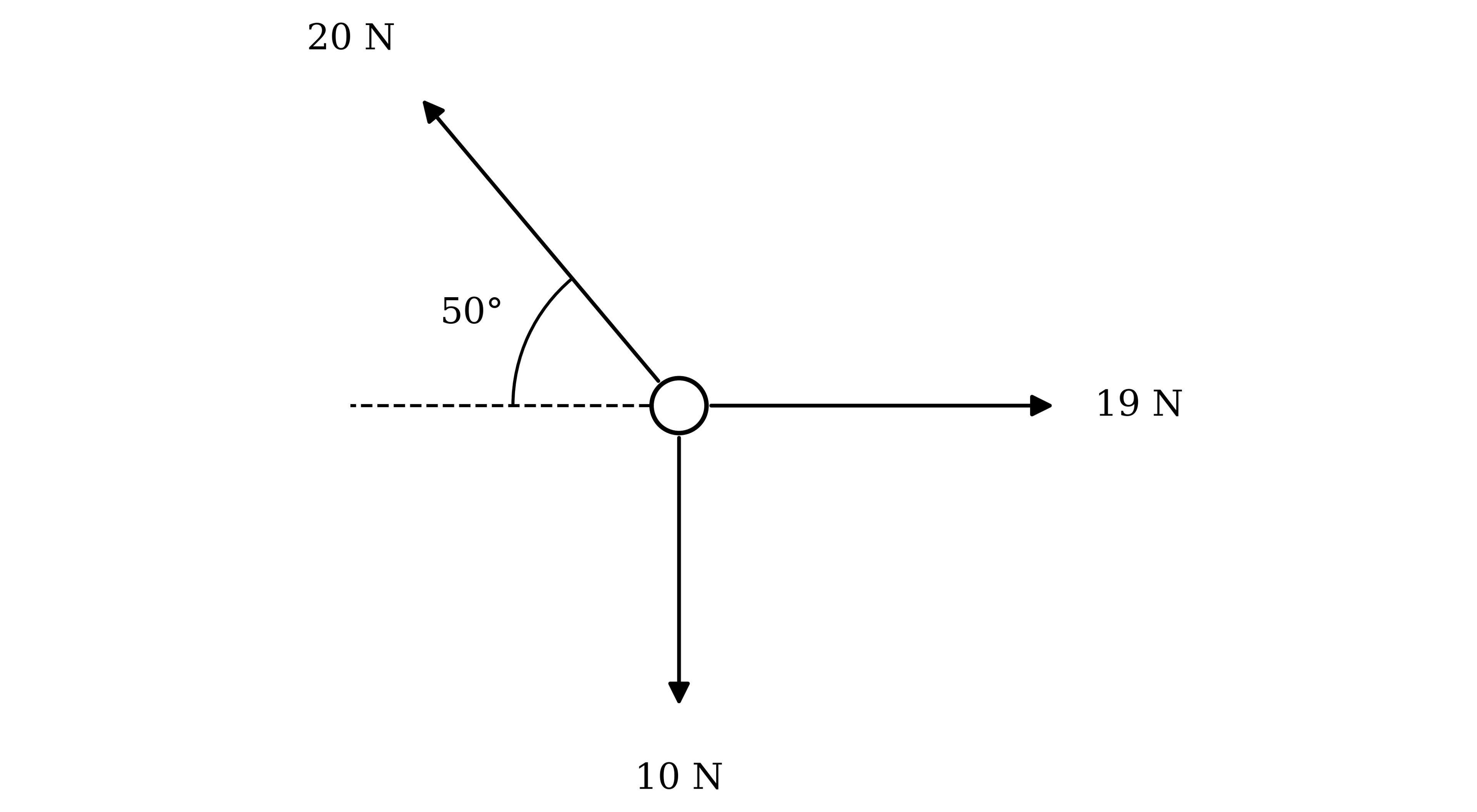
Three forces, of magnitudes 20 N, 19 N and 10 N, act on a particle, as shown in the diagram.

Three forces acting on a particle. A force of 20 N acts upwards and to the left at an angle of 50° above the horizontal, a force of 19 N acts horizontally to the right, and a force of 10 N acts vertically downwards

Find the resultant force on the particle in the horizontal direction and in the vertical direction, stating the direction of each.

2a
3 marks

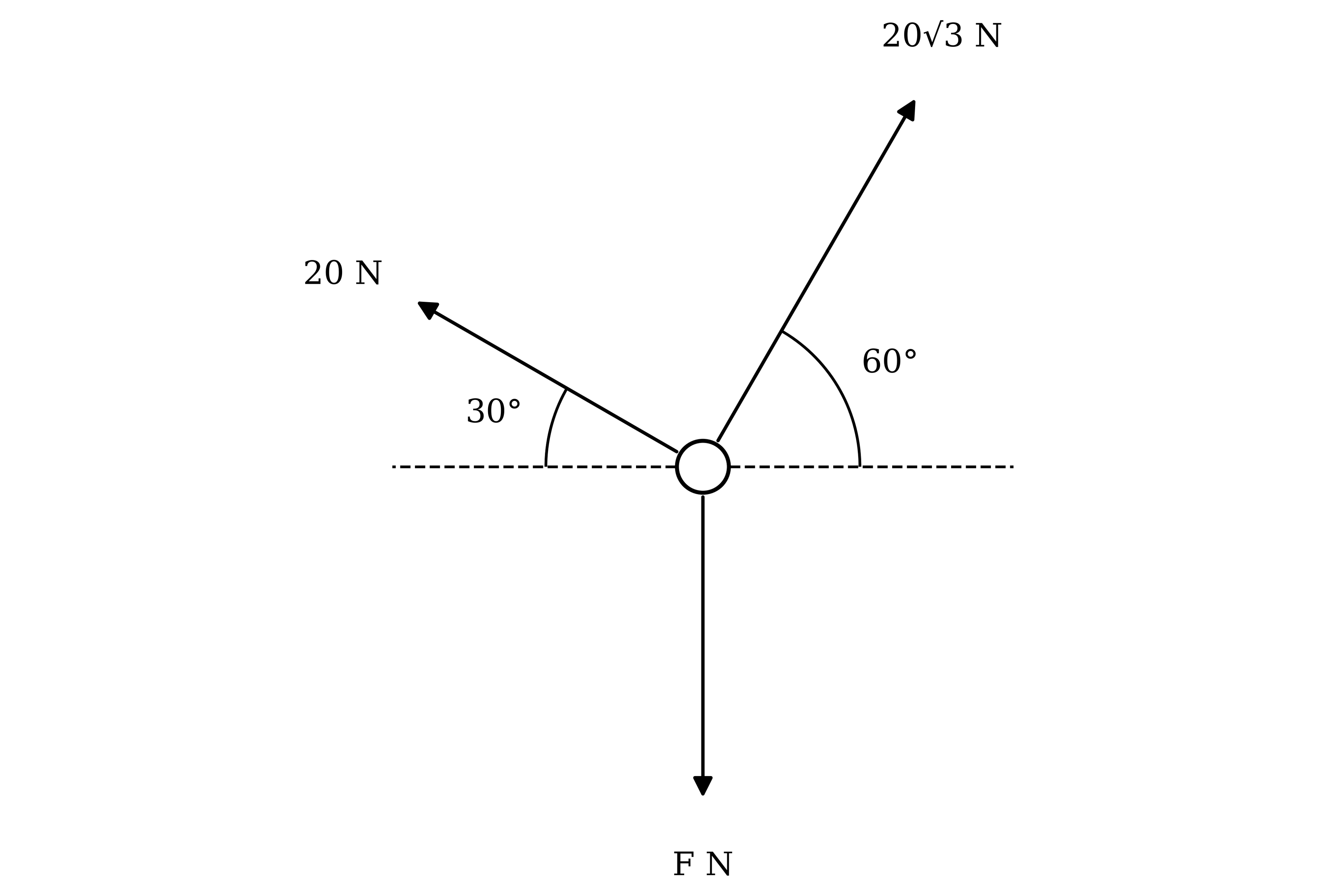
Three forces, of magnitudes 203 N, 20 N and F N, act on a particle, as shown in the diagram.

Three forces acting on a particle. A force of 20√3 N acts upwards and to the right at an angle of 60° above the horizontal, a force of 20 N acts upwards and to the left at an angle of 30° above the horizontal, and a force of F N acts vertically downwards

Show that the resultant force on the particle in the horizontal direction is zero.

2b
3 marks

Given that the particle is in equilibrium, find the value of F.

3
5 marks

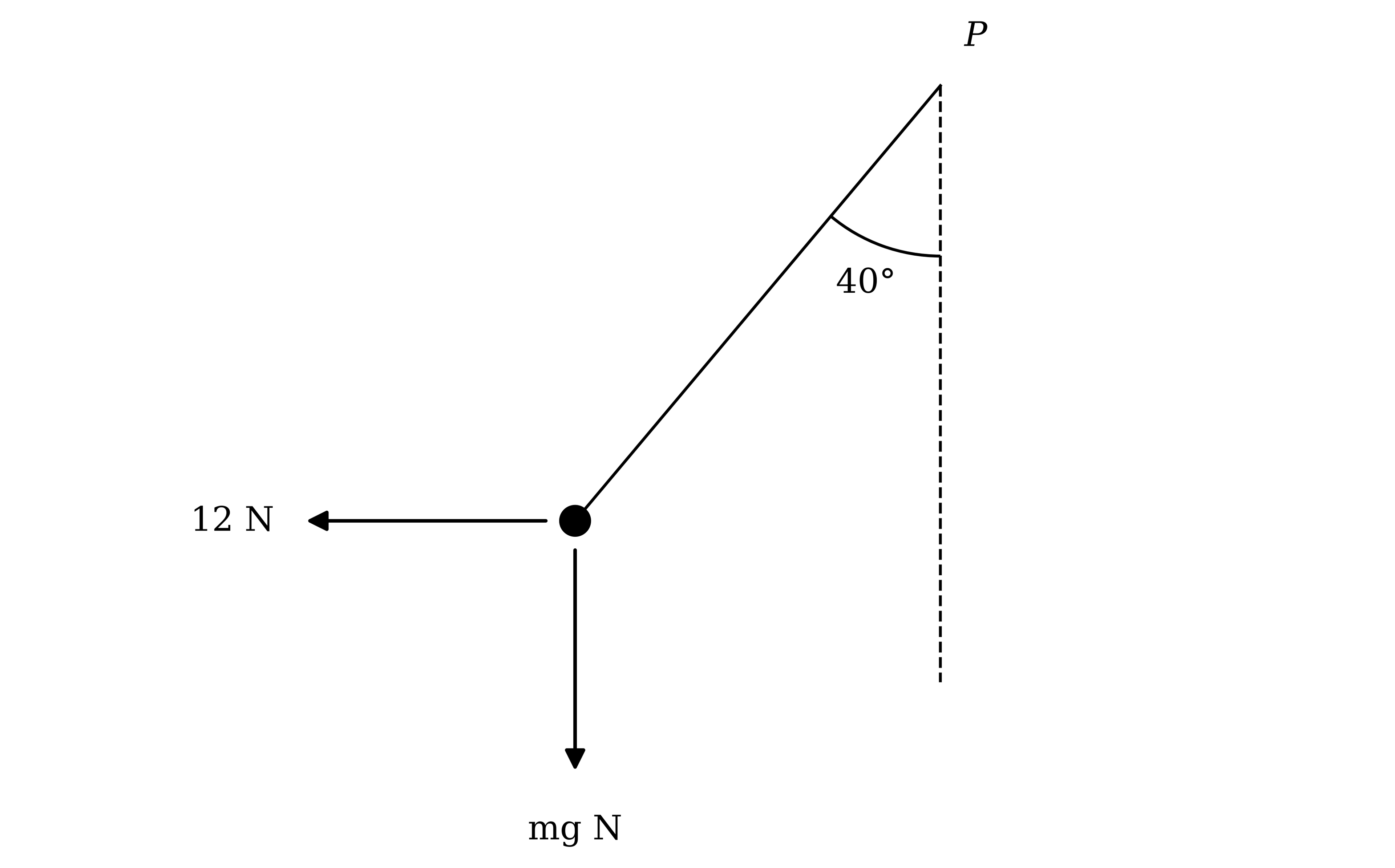
A particle of mass m kg is attached to one end of a light inextensible string. The other end of the string is attached to a fixed point P. A horizontal force of magnitude 12 N acts on the particle, which is in equilibrium with the string inclined at 40° to the vertical, as shown in the diagram.

A particle of mass m kg hanging from a fixed point P by a string inclined at 40° to a dashed vertical line through P. A horizontal force of 12 N acts on the particle to the left, away from the vertical line

Find the tension in the string and the value of m.

4a
4 marks

A particle of mass 7 kg is pulled along a rough horizontal plane by a force of magnitude 45 N acting at an angle of 20° above the horizontal, as shown in the diagram. The coefficient of friction between the particle and the plane is 0.4. The particle moves to the right.

A particle of mass 7 kg on a rough horizontal plane, pulled by a force of 45 N acting upwards and to the right at 20° above the horizontal

Find the magnitude of the frictional force acting on the particle.

4b
3 marks

Hence find the acceleration of the particle.

5
6 marks

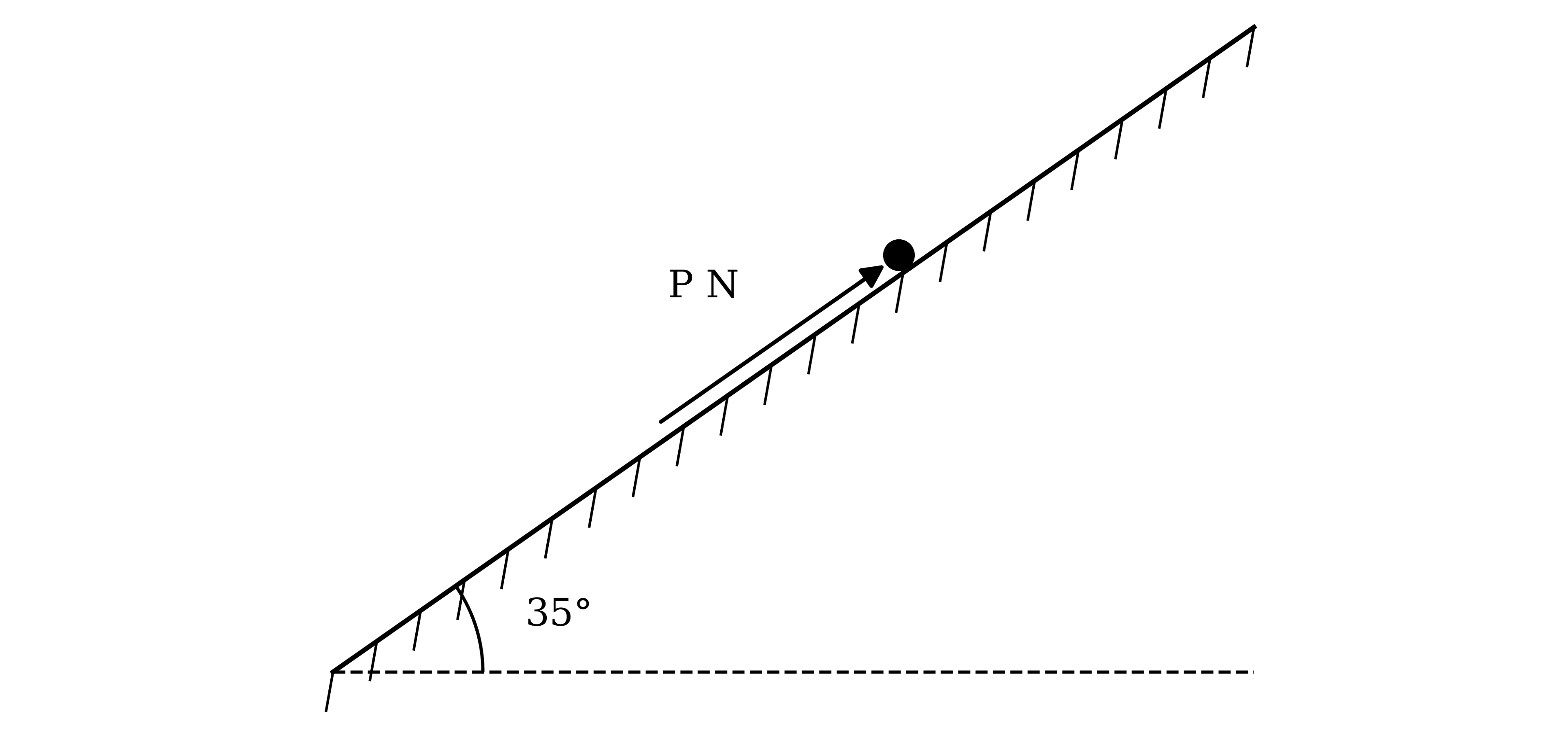
A particle of mass 0.7 kg is on a rough plane inclined at 35° to the horizontal. The particle is held in equilibrium by a force of magnitude P N acting up a line of greatest slope of the plane, as shown in the diagram. The coefficient of friction between the particle and the plane is 0.35, and the particle is about to slip up the plane.

A particle on a rough plane inclined at 35° to the horizontal. A force of P N acts on the particle up the plane, parallel to a line of greatest slope

Find the value of P.

6
5 marks

A particle of mass 3 kg is released from rest on a rough plane inclined at 15° to the horizontal. The coefficient of friction between the particle and the plane is 0.2.

Find the distance the particle travels in the first 3 s after it is released.

7a
4 marks

A particle of mass 3 kg is projected with speed um s−1 up a line of greatest slope of a rough plane inclined at 25° to the horizontal. The coefficient of friction between the particle and the plane is 0.27. The particle comes to instantaneous rest after moving 1.91 m up the plane.

Show that the deceleration of the particle while it moves up the plane is (sin 25°+0.27cos 25°)gm s−2.

7b
3 marks

Hence find the value of u.

8
6 marks

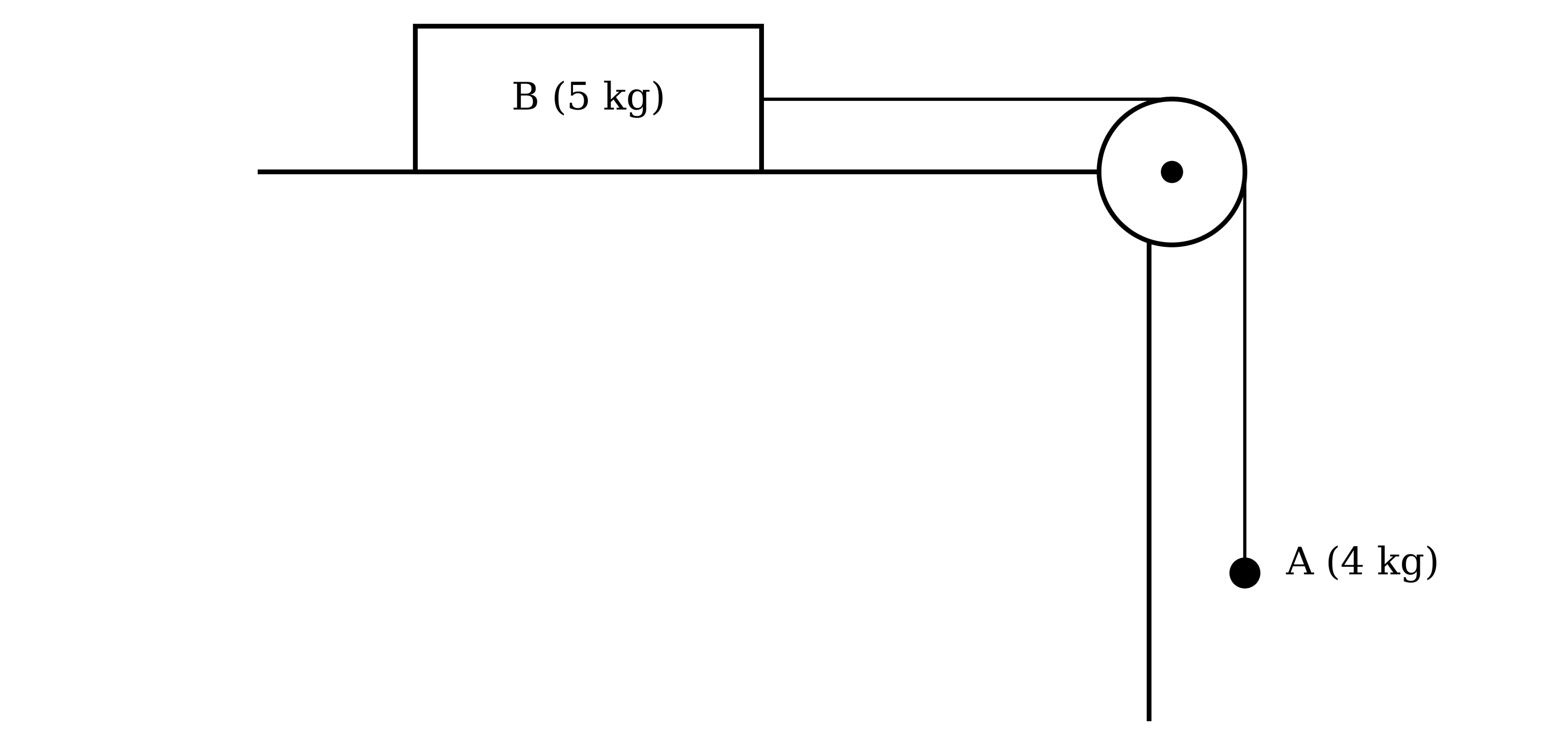
A block B of mass 5 kg rests on a rough horizontal table. It is attached to one end of a light inextensible string, which passes over a small smooth pulley fixed at the edge of the table. A particle A of mass 4 kg is attached to the other end of the string and hangs vertically, as shown in the diagram. The string between B and the pulley is horizontal, and the coefficient of friction between B and the table is 0.35.

A block B of mass 5 kg on a horizontal table, attached by a horizontal string that passes over a pulley at the edge of the table to a particle A of mass 4 kg hanging vertically

The system is released from rest with the string taut.

Find the acceleration of the system and the tension in the string.

9a
3 marks

In each part of this question, a block rests on a rough horizontal surface and is on the point of moving under the action of a force of magnitude P N.

In this part, the block has mass 2 kg, the force acts horizontally, and the coefficient of friction between the block and the surface is 0.4.

A block of mass 2 kg on a rough horizontal surface, with a force of P N acting on it horizontally to the right

Find the value of P.

9b
4 marks

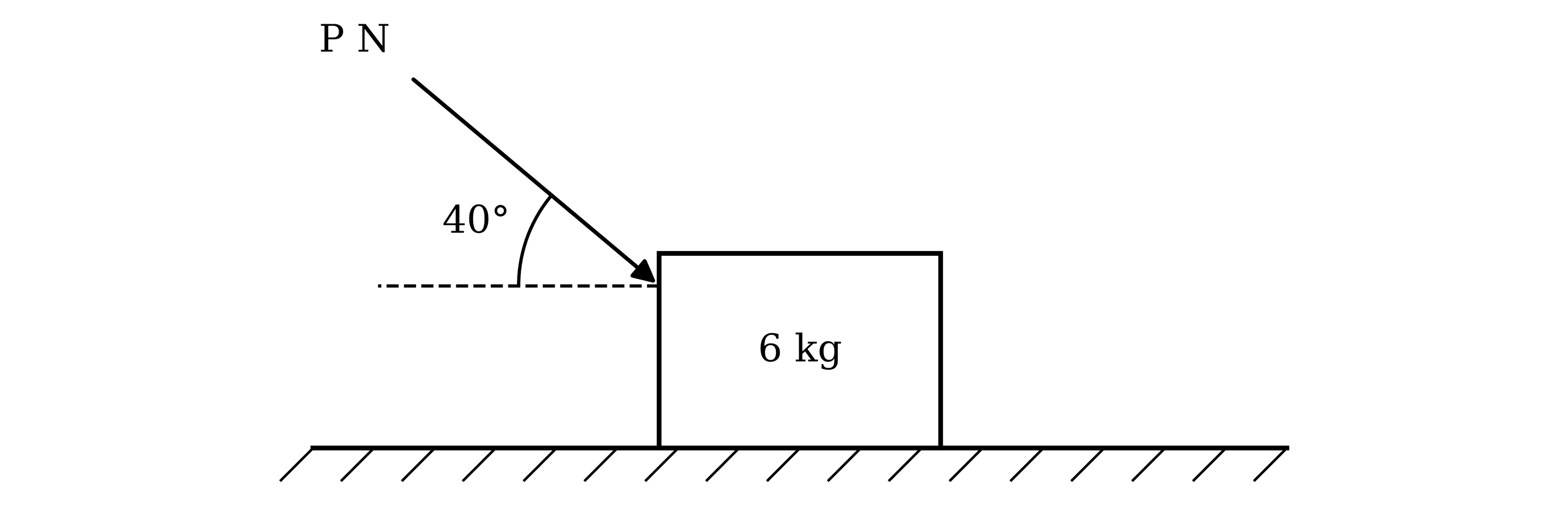
In this part, the block has mass 6 kg and the coefficient of friction between the block and the surface is 0.3. The force of magnitude P N pushes on the block at an angle of 40° below the horizontal, as shown in the diagram, and the block is on the point of moving.

A block of mass 6 kg on a rough horizontal surface. A force of P N pushes down on the block from the upper left, at an angle of 40° below the horizontal

Find the value of P.

10
4 marks

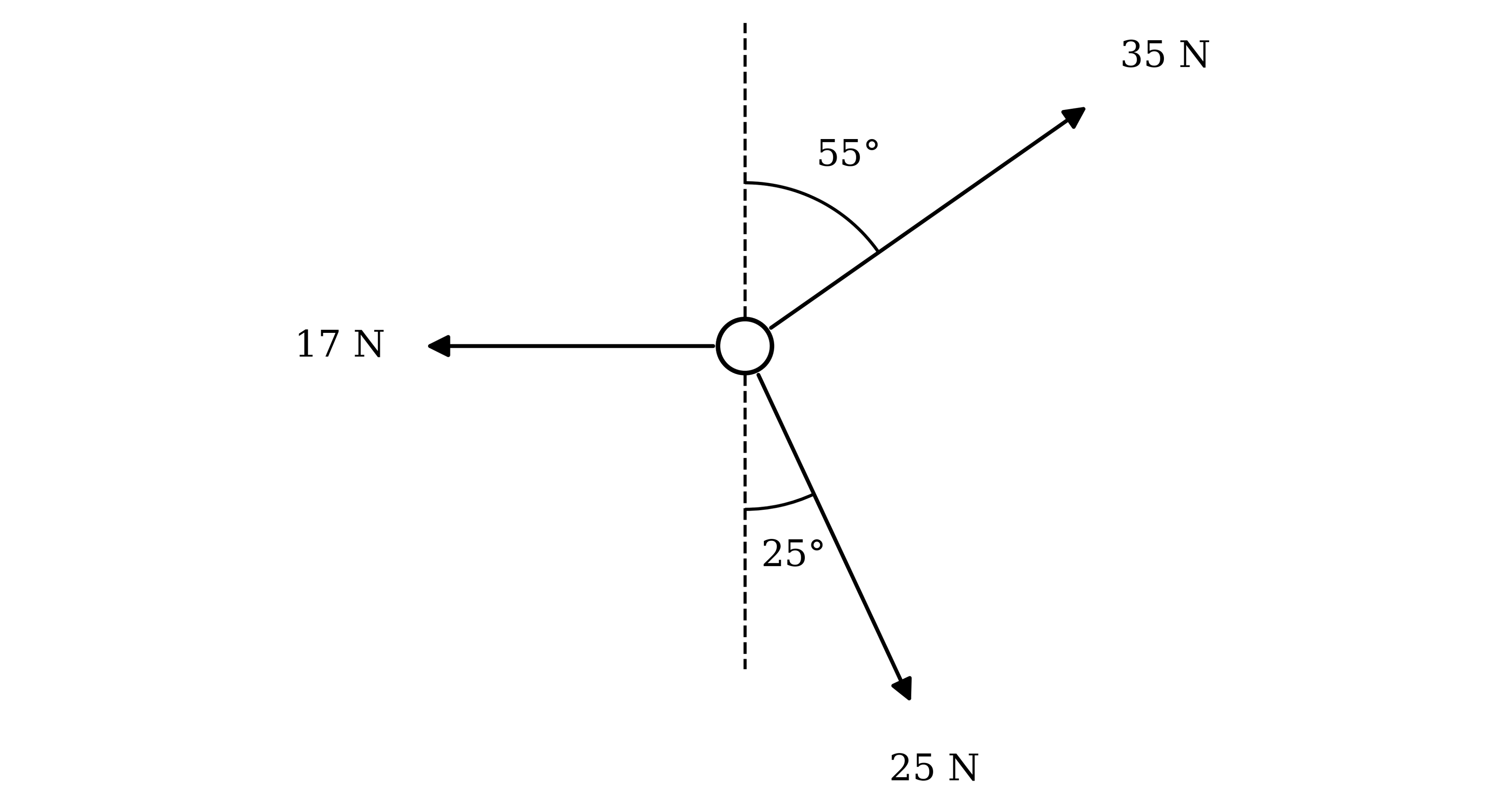
Three forces, of magnitudes 35 N, 17 N and 25 N, act on a particle, as shown in the diagram.

Three forces acting on a particle. A force of 35 N acts upwards and to the right at an angle of 55° to the upward vertical, a force of 17 N acts horizontally to the left, and a force of 25 N acts downwards and to the right at an angle of 25° to the downward vertical

Find the resultant force on the particle in the horizontal direction and in the vertical direction, stating the direction of each.

11a
3 marks

A particle of mass 15 kg slides down a line of greatest slope of a rough plane inclined at 25° to the horizontal. The coefficient of friction between the particle and the plane is 0.3.

Find the magnitude of the frictional force acting on the particle.

11b
3 marks

Hence find the acceleration of the particle.

12
6 marks

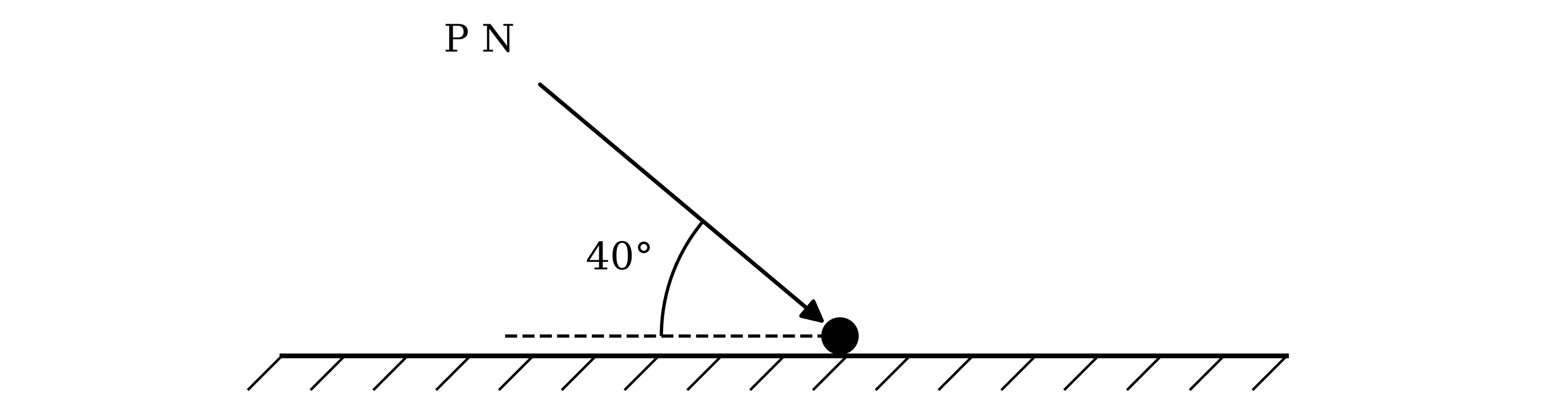
A particle of mass 0.9 kg is at rest on a rough horizontal plane. A force of magnitude P N acts on the particle, directed downwards at an angle of 40° below the horizontal, as shown in the diagram. The coefficient of friction between the particle and the plane is 0.3.

A particle on a rough horizontal plane. A force of P N pushes down on the particle from the upper left, at an angle of 40° below the horizontal

Given that the particle is about to move, find the value of P.

13
4 marks

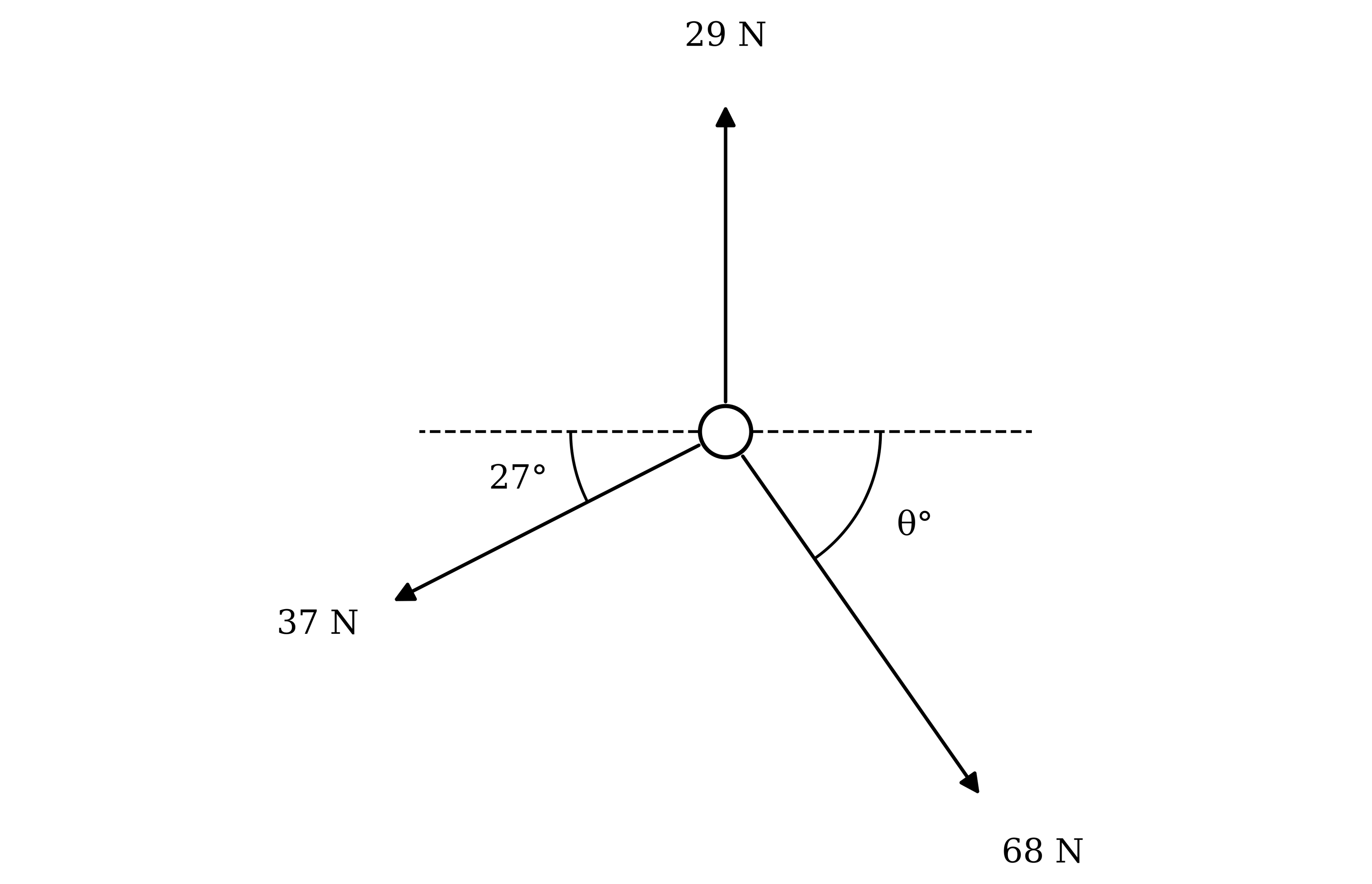
Three forces, of magnitudes 29 N, 37 N and 68 N, act on a particle, as shown in the diagram.

Three forces acting on a particle. A force of 29 N acts vertically upwards, a force of 37 N acts downwards and to the left at an angle of 27° below the horizontal, and a force of 68 N acts downwards and to the right at an angle of θ° below the horizontal

The resultant force on the particle in the vertical direction is 44.8 N downwards. Find the value of θ.

1
4 marks

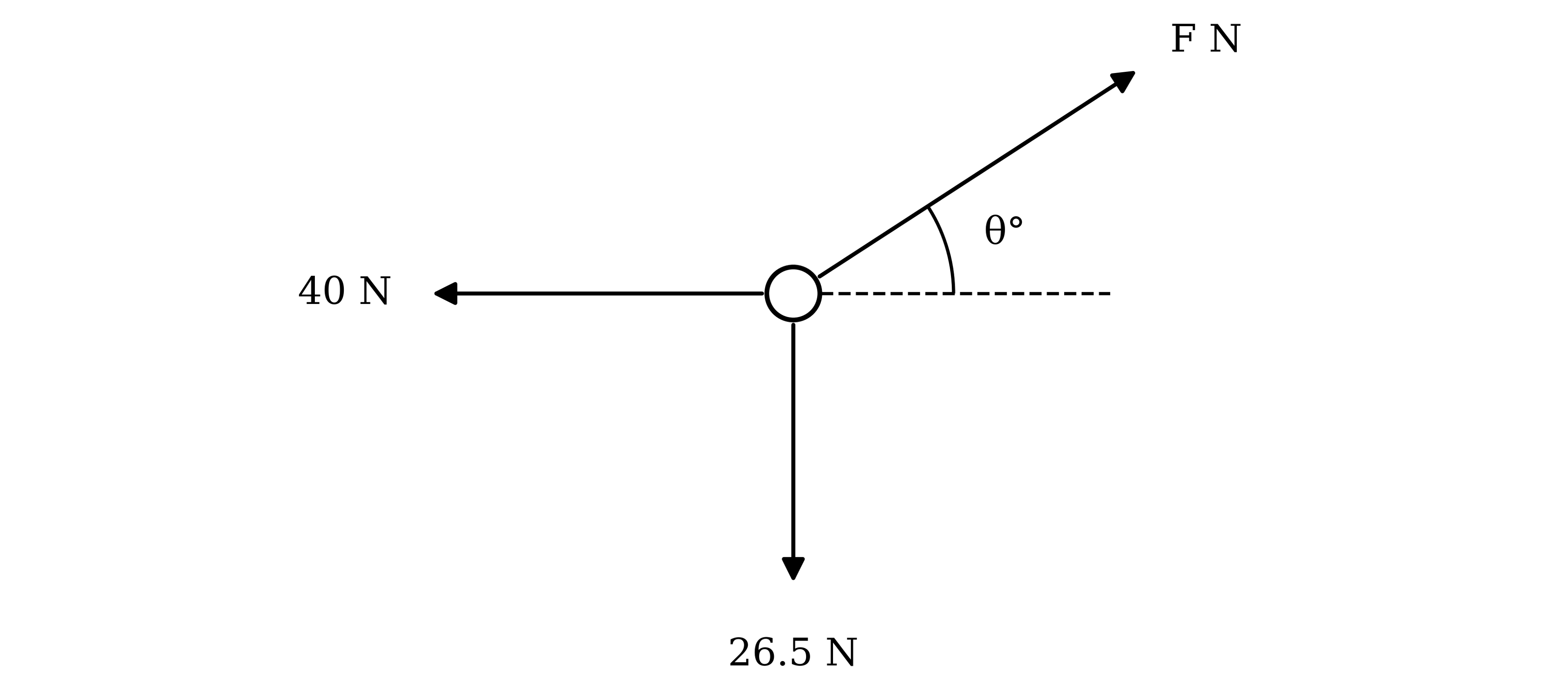
Three forces, of magnitudes F N, 40 N and 26.5 N, act on a particle, as shown in the diagram.

Three forces acting on a particle. A force of F N acts upwards and to the right at an angle of θ° above the horizontal, a force of 40 N acts horizontally to the left, and a force of 26.5 N acts vertically downwards

Given that the particle is in equilibrium, find the value of F and the value of θ.

2
6 marks

A particle of mass m kg is attached to two light inextensible strings, whose other ends are attached to two fixed points at the same horizontal level. The particle hangs in equilibrium with the strings inclined at 25° and 70° to the horizontal, as shown in the diagram.

A particle of mass m kg hanging below a dashed horizontal line from two strings. The left string makes an angle of 25° with the horizontal and the right string makes an angle of 70° with the horizontal

The tension in the string inclined at 70° to the horizontal is 56 N. Find the value of m.

3a
3 marks

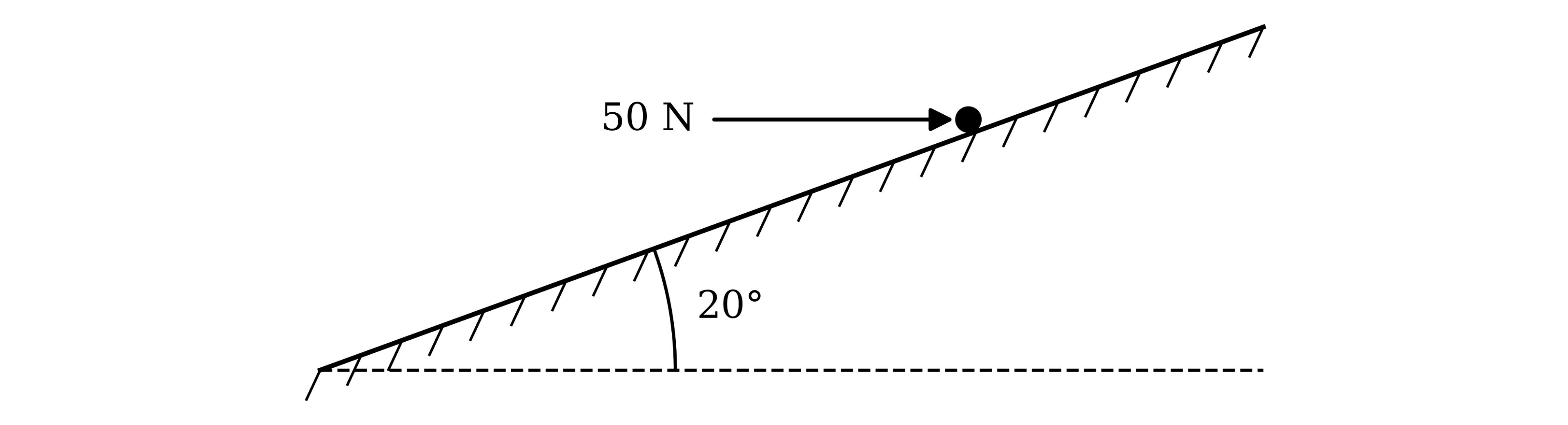
A particle of mass 12 kg is pushed up a line of greatest slope of a smooth plane inclined at 20° to the horizontal by a horizontal force of magnitude 50 N. The line of action of the force is in the vertical plane containing the line of greatest slope, as shown in the diagram.

A particle on a smooth plane inclined at 20° to the horizontal, pushed by a horizontal force of 50 N acting towards the plane from the left

Find the acceleration of the particle.

3b
3 marks

Find the magnitude of the normal contact force exerted by the plane on the particle.

4
5 marks

A particle of mass m kg is released from rest on a rough plane inclined at θ° to the horizontal, where 45<θ<90. The coefficient of friction between the particle and the plane is μ.

Given that the particle remains at rest, show that μ>1.

5
7 marks

A particle of mass 2 kg is projected with speed um s−1 up a line of greatest slope of a rough plane inclined at 20° to the horizontal. The coefficient of friction between the particle and the plane is 0.2. The particle comes to instantaneous rest after moving 4.85 m up the plane.

Find the value of u.

6
8 marks

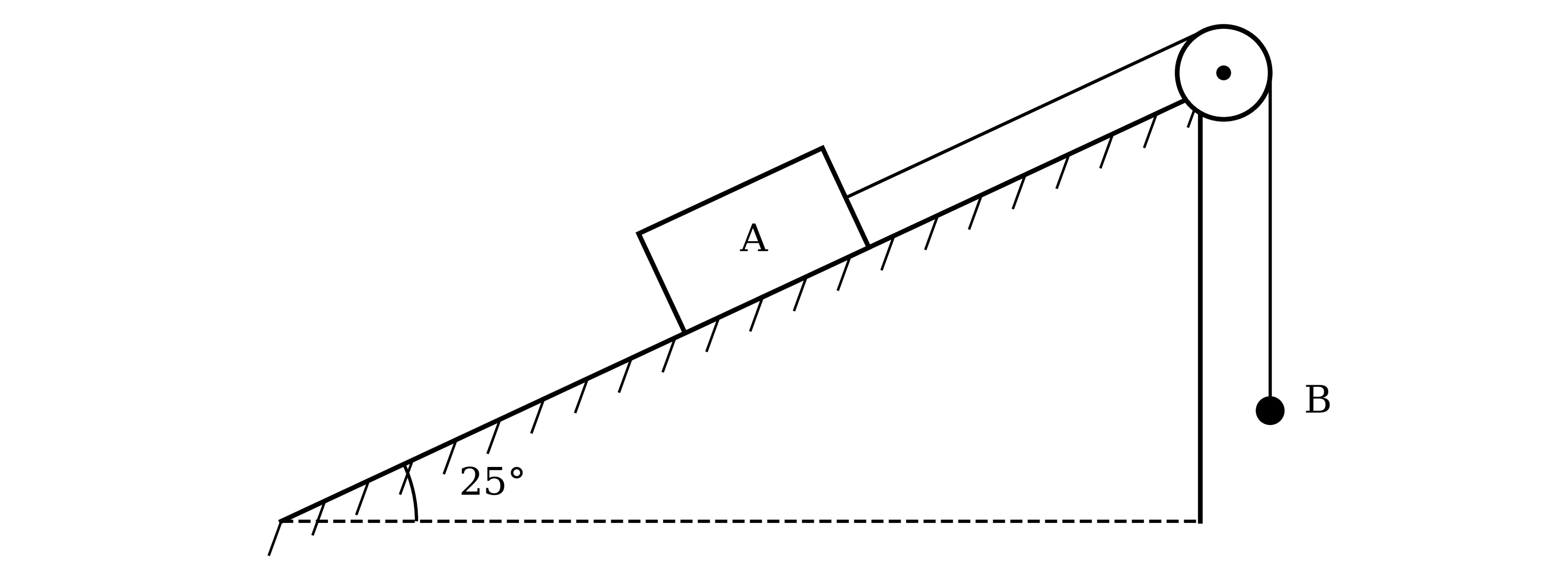
Two particles A and B, of masses 2.7 kg and 2.2 kg respectively, are attached to the ends of a light inextensible string. Particle A is held at rest on a rough plane inclined at 25° to the horizontal. The string passes over a small smooth pulley fixed at the top of the plane, and B hangs vertically below the pulley, as shown in the diagram. The part of the string between A and the pulley is parallel to a line of greatest slope of the plane. The coefficient of friction between A and the plane is μ.

Particle A on a rough plane inclined at 25° to the horizontal, attached by a string parallel to the plane that passes over a pulley at the top of the plane to particle B, which hangs vertically

The system is released from rest with the string taut. Given that B descends 1.82 m in the first 3 s after it is released, find the value of μ.

7a
7 marks

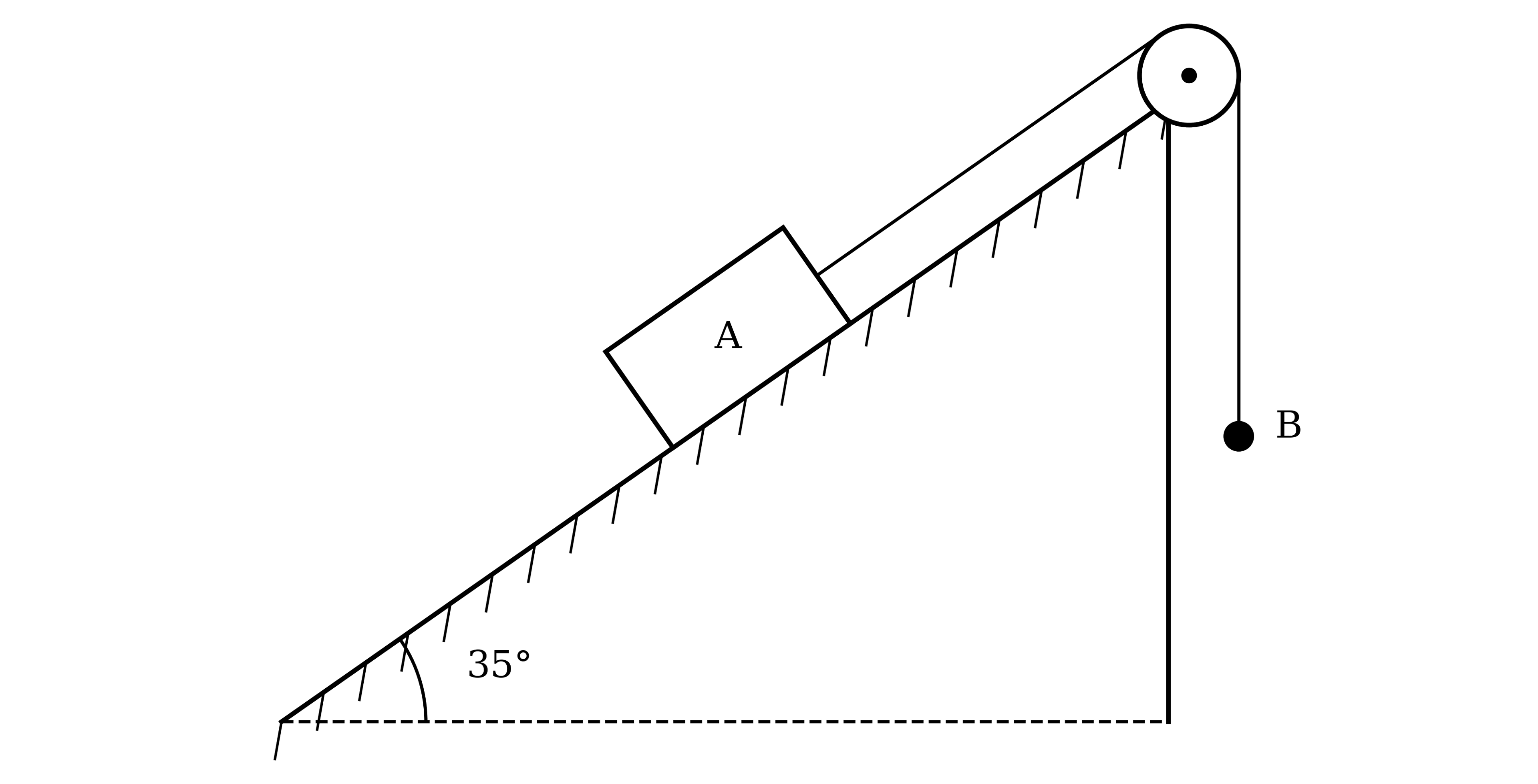
Two particles A and B, of masses 4 kg and 3 kg respectively, are attached to the ends of a light inextensible string. Particle A is held at rest on a rough plane inclined at 35° to the horizontal. The string passes over a small smooth pulley fixed at the top of the plane, and B hangs vertically below the pulley, as shown in the diagram. The part of the string between A and the pulley is parallel to a line of greatest slope of the plane. The coefficient of friction between A and the plane is 0.15.

Particle A on a rough plane inclined at 35° to the horizontal, attached by a string parallel to the plane that passes over a pulley at the top of the plane to particle B, which hangs vertically

The system is released from rest with the string taut, and B moves downwards.

Find the acceleration of the system and the tension in the string.

7b
6 marks

B reaches the ground 3.2 s after the system is released, and does not rebound. Particle A does not reach the pulley.

Find the total distance travelled by A from the instant the system is released until A first comes to instantaneous rest.

8a
3 marks

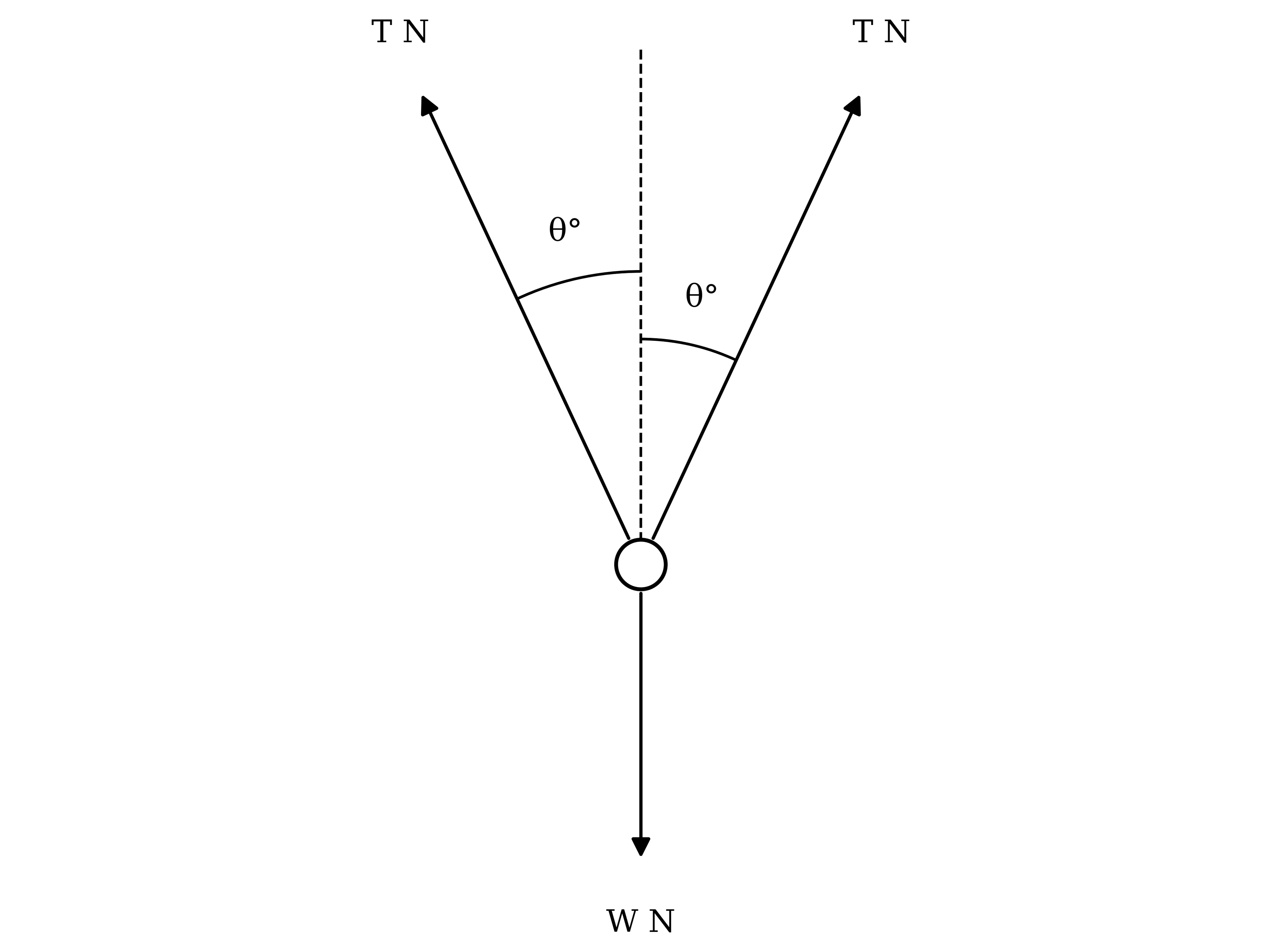
In a warehouse, a load of weight W N is lifted by two light cables. The tension in each cable is T N, and each cable makes an angle of θ° with the vertical, as shown in the diagram. The only forces acting on the load are its weight and the tensions in the two cables.

A load hanging from two cables. Each cable has tension T N and makes an angle θ° with a dashed vertical line through the load, one on each side. The weight W N acts vertically downwards

The load is initially at rest. Find an inequality in terms of T and θ that W must satisfy if the load is to be lifted.

8b
2 marks

Given that the load is still accelerating upwards when θ=45, find an inequality in terms of W that T must satisfy.

9
6 marks

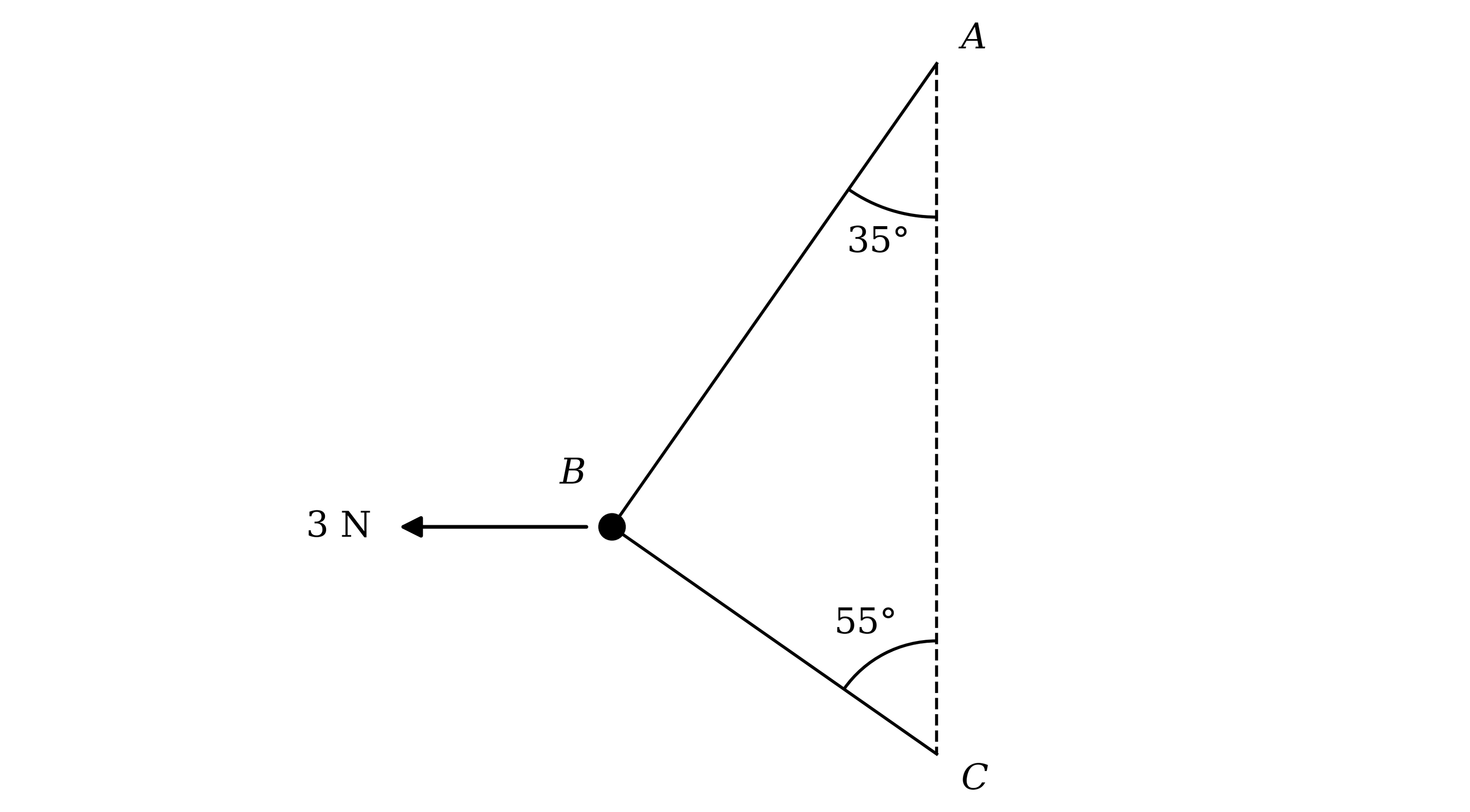
A small smooth ring B of mass m kg is threaded on a light inextensible string. The ends of the string are attached to fixed points A and C, where A is vertically above C. The ring is held in equilibrium by a horizontal force of magnitude 3 N, with the parts AB and BC of the string making angles of 35° and 55° respectively with the vertical, as shown in the diagram.

A ring B on a string whose ends are attached to point A and point C, with A vertically above C on a dashed vertical line. The part AB makes an angle of 35° with the vertical and the part BC makes an angle of 55° with the vertical. A horizontal force of 3 N acts on B, away from the line AC

Find the value of m.

10a
3 marks

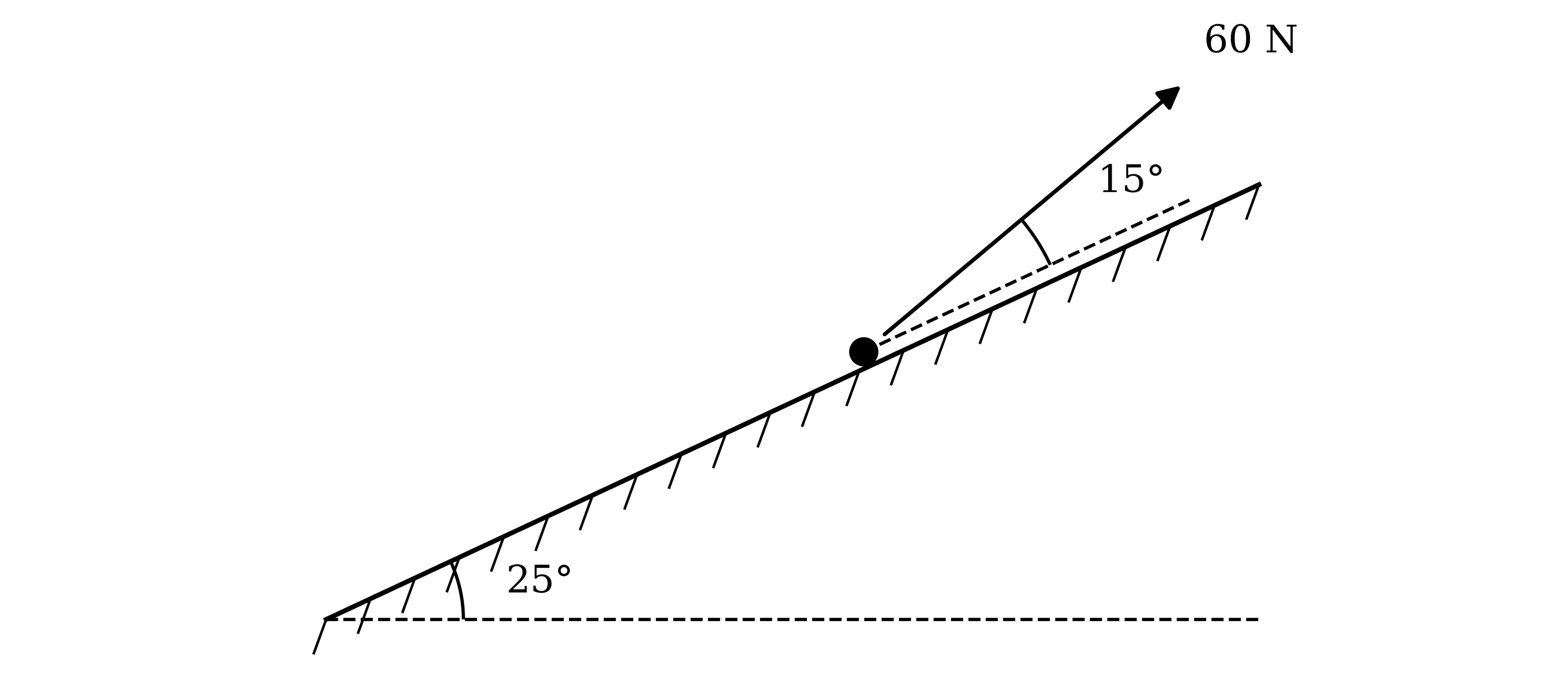
A particle of mass m kg is pulled up a line of greatest slope of a smooth plane inclined at 25° to the horizontal by a force of magnitude 60 N. The force acts at an angle of 15° above the line of greatest slope, in the vertical plane containing it, as shown in the diagram. The particle accelerates up the plane at 0.3 m s−2.

A particle on a smooth plane inclined at 25° to the horizontal. A force of 60 N acts on the particle upwards and up the plane, at an angle of 15° above the line of greatest slope

Find the value of m.

10b
3 marks

Find the magnitude of the normal contact force exerted by the plane on the particle.

11
7 marks

A particle of mass 0.8 kg is released from rest on a rough plane inclined at an angle θ to the horizontal, where tan θ=27. The particle slides down a line of greatest slope, and 4 s after it is released its speed is 1.35 m s−1.

Find the coefficient of friction between the particle and the plane.

1
6 marks

A small object is placed on a rough plane whose angle of inclination to the horizontal can be adjusted. The coefficient of friction between the object and the plane is μ.

When the plane is inclined at an angle θ1 to the horizontal, the object is released from rest and remains at rest. When the plane is inclined at a larger angle θ2 to the horizontal, where θ2<90°, the object is released from rest and slides down the plane.

Show that tan θ1⩽μ<tan θ2.

2
6 marks

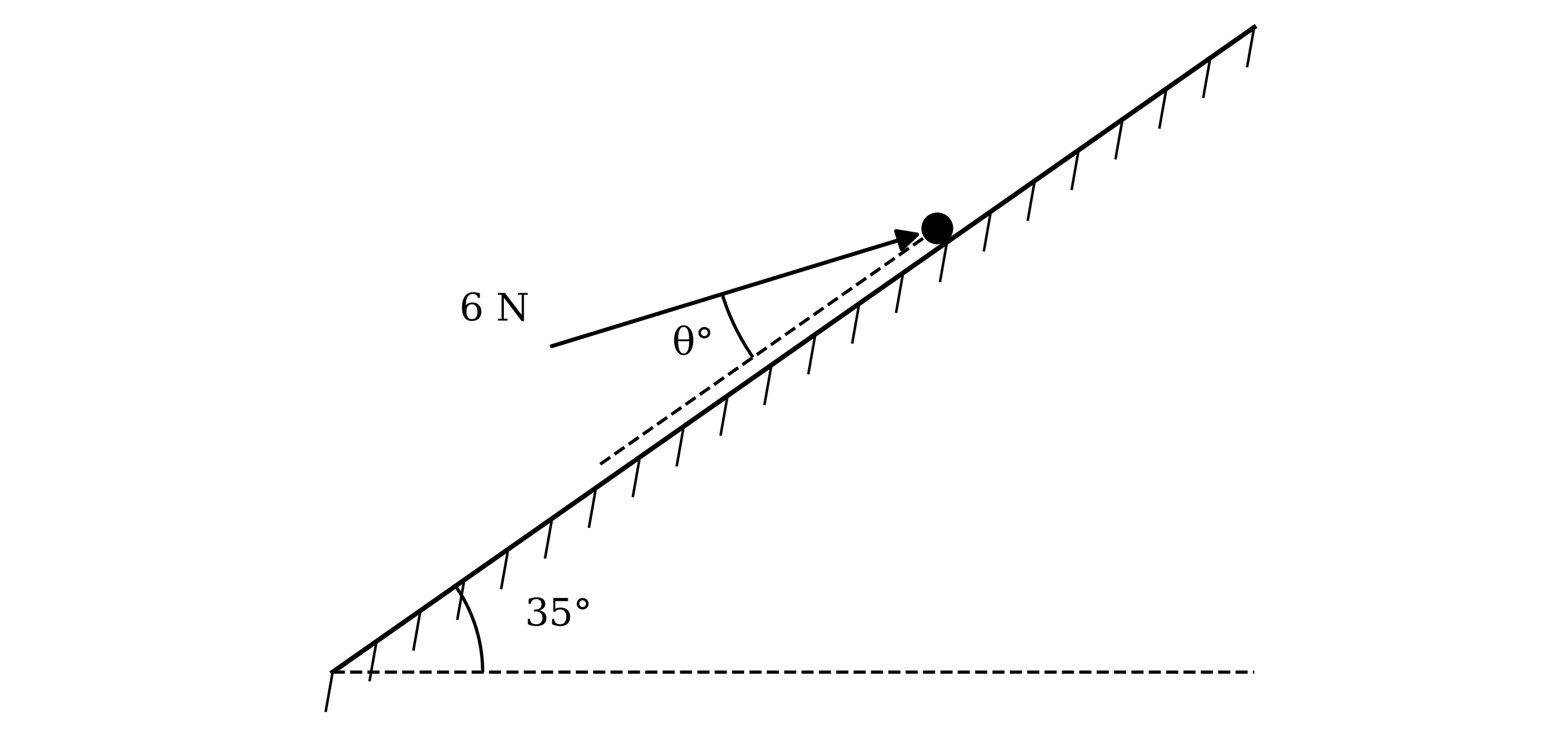
A particle of mass 0.5 kg is on a rough plane inclined at 35° to the horizontal. A force of magnitude 6 N acts on the particle, towards the plane, at an angle of θ° to a line of greatest slope, as shown in the diagram. The force acts in the vertical plane containing the line of greatest slope. The coefficient of friction between the particle and the plane is 0.4, and the particle is about to slip up the plane.

A particle on a rough plane inclined at 35° to the horizontal. A force of 6 N pushes on the particle up the plane and towards it, at an angle of θ° to a dashed line along the line of greatest slope

You may use without proof the identity:

6cos θ°−2.4sin θ°≡6295cos(θ°+tan−1 0.4)

Find the value of θ.

3a
7 marks

A particle of mass m kg is projected with speed um s−1 up a line of greatest slope of a rough plane inclined at an angle θ to the horizontal. The coefficient of friction between the particle and the plane is μ. The particle comes to instantaneous rest after t1 seconds, having moved a distance s metres up the plane.

Show that

(i) t1=ug(sin θ+μcos θ)

(ii) s=u22g(sin θ+μcos θ)

3b
4 marks

After coming to instantaneous rest, the particle slides back down the plane and returns to its starting point t2 seconds later.

Find an expression for t2 in terms of u, g, μ and θ.

4a
6 marks

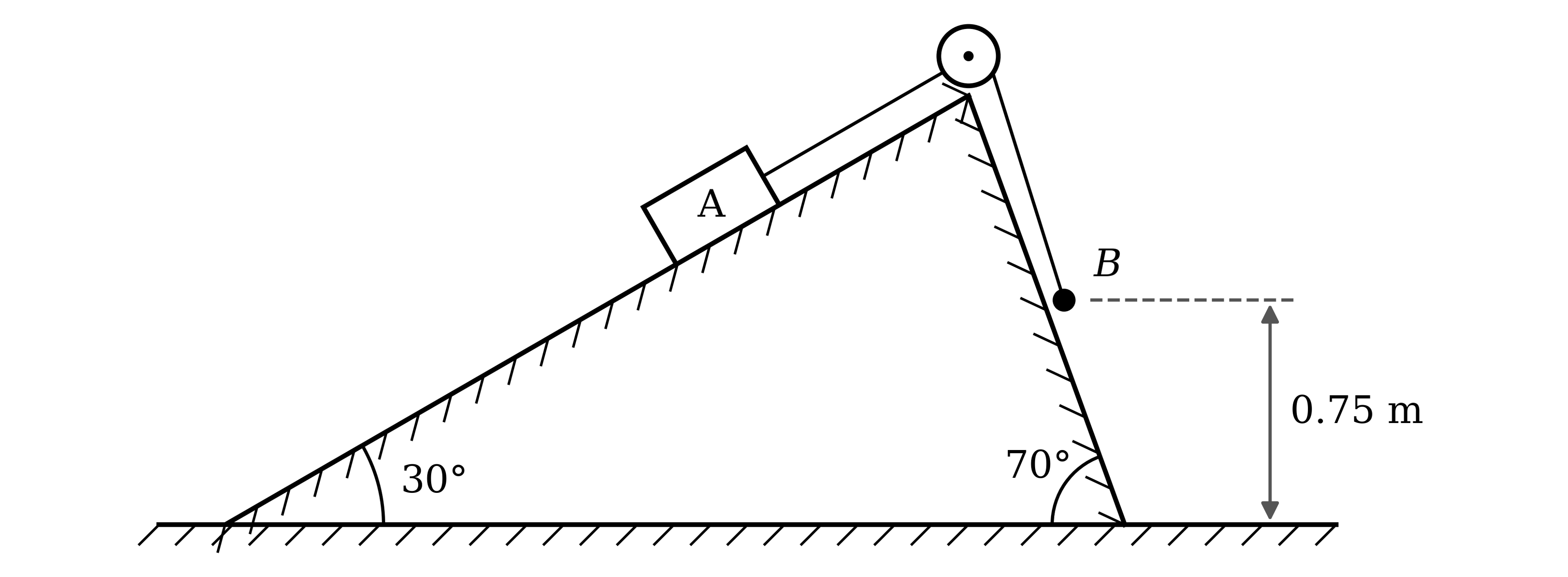
Two particles A and B, each of mass m kg, are attached to the ends of a light inextensible string. A rests on a rough plane inclined at 30° to the horizontal and B rests on a rough plane inclined at 70° to the horizontal. The planes meet at a ridge, where a small smooth pulley is fixed. The string passes over the pulley, and each part of the string lies along a line of greatest slope of its plane, as shown in the diagram. The coefficient of friction between each particle and its plane is 0.15.

Two rough planes meeting at a ridge with a pulley at the top. The left plane is inclined at 30° to the horizontal and particle A rests on it. The right plane is inclined at 70° to the horizontal and particle B rests on it, at a height of 0.75 m above the ground. A string along each plane passes over the pulley and connects A and B

The system is released from rest with the string taut and with B at a height of 0.75 m above the ground. B moves down its plane.

Find the acceleration of the particles while B is moving.

4b
7 marks

When B reaches the ground it does not rebound. A does not reach the pulley.

Find the total distance travelled by A from the instant the system is released until A first comes to instantaneous rest.