Fuel Cells (Edexcel GCSE Chemistry): Revision Note
Exam code: 1CH0

Fuel Cells
A fuel cell is an electrochemical cell in which a fuel donates electrons at one electrode and oxygen gains electrons at the other electrode
These cells are becoming more common in the automotive industry to replace petrol or diesel engines
As the fuel enters the cell it becomes oxidised which sets up a potential difference or voltage within the cell
Different electrolytes and fuels can be used to set up different types of fuel cells
An important cell is the hydrogen-oxygen fuel cell which combines both elements to release energy and water
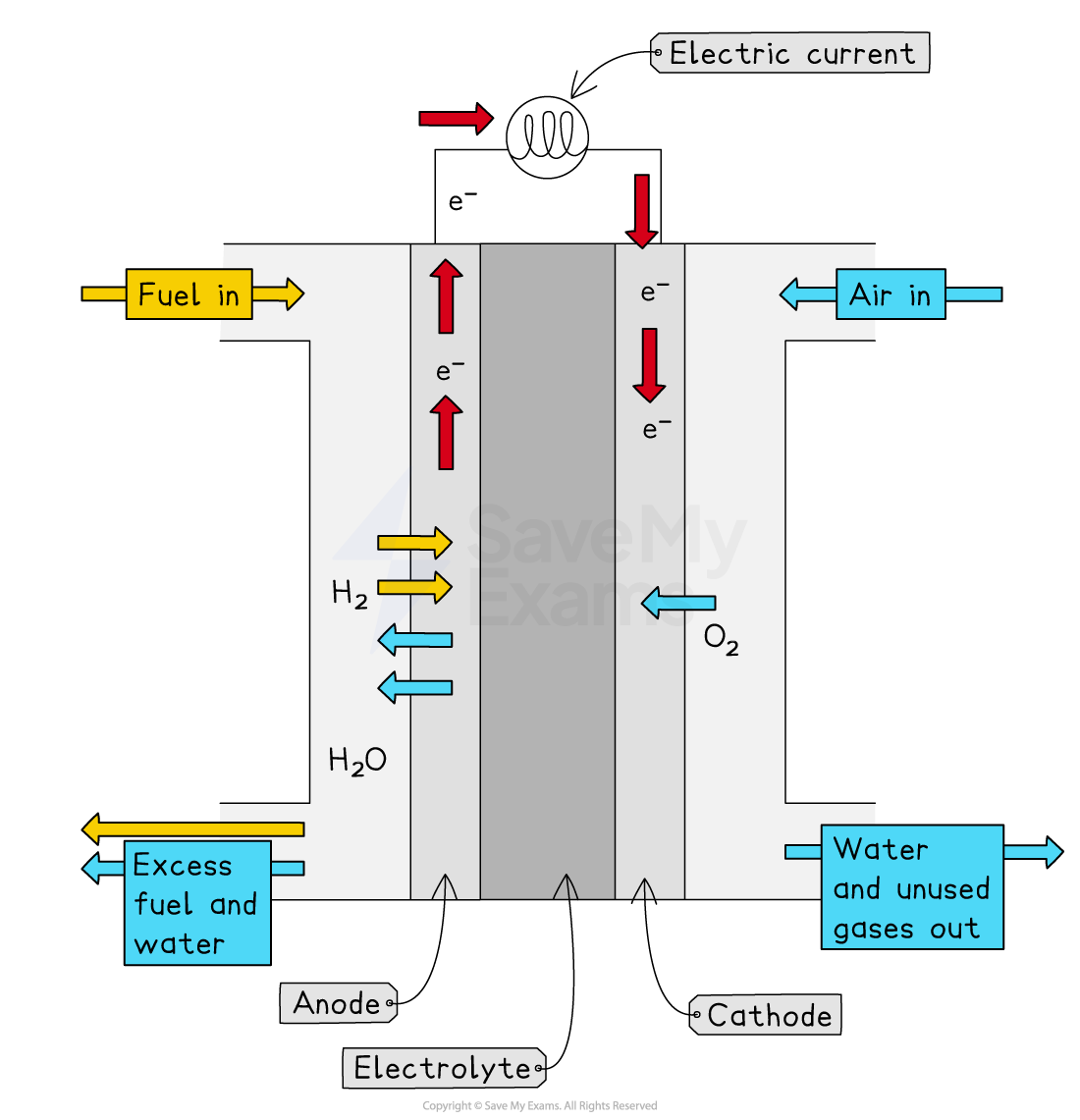
Diagram showing the movement of hydrogen, oxygen and electrons in a Hydrogen-Oxygen fuel cell
Examiner Tips and Tricks
In fuel cells the polarity on the electrodes are the other way around: the anode is the negative electrode and the cathode is the positive electrode.
Evaluating Fuel Cells
Advantages
They do not produce any pollution: the only product is water
They produce more energy per kilogram than either petrol or diesel
No power is lost in transmission as there are no moving parts, unlike an internal combustion engine
No batteries to dispose of which is better for the environment
Continuous process and will keep producing energy as long as fuel is supplied
Quieter so less noise pollution
Disadvantages
Materials used in producing fuel cells are expensive
High pressure tanks are needed to store the oxygen and hydrogen in sufficient amounts which are dangerous and difficult to handle
Fuel cells are affected by low temperatures, becoming less efficient
Hydrogen is expensive to produce and store
Quieter so potential danger to pedestrians if used in cars and lorries
Examiner Tips and Tricks
You should be able to state advantages and disadvantages of the hydrogen-oxygen fuel cells.

Unlock more, it's free!
Join the 100,000+ Students that ❤️ Save My Exams
the (exam) results speak for themselves:

Was this revision note helpful?
Build on this topic
