Show that
Hence express in the form where and are integers, giving the value of and the value of ,
(i) Find
(ii) Hence evaluate , giving your answer in the form where , and are integers.
Was this exam question helpful?
Exam code: 4PM1
Show that
How did you do?
Hence express in the form where and are integers, giving the value of and the value of ,
How did you do?
(i) Find
(ii) Hence evaluate , giving your answer in the form where , and are integers.
How did you do?
Was this exam question helpful?
Given that can be written in the form where and are constants,
find the value of , the value of and the value of .
How did you do?
(i) Hence write down the maximum value of ,
(ii) Write down the value of for which this maximum occurs.
How did you do?
The curve has equation
The line with equation intersects at two points.
Find the coordinates of these two points.
How did you do?
The finite region bounded by the curve and the line is rotated about the -axis.
Use algebraic integration to find, to 3 significant figures, the volume of the solid generated.
How did you do?
Was this exam question helpful?

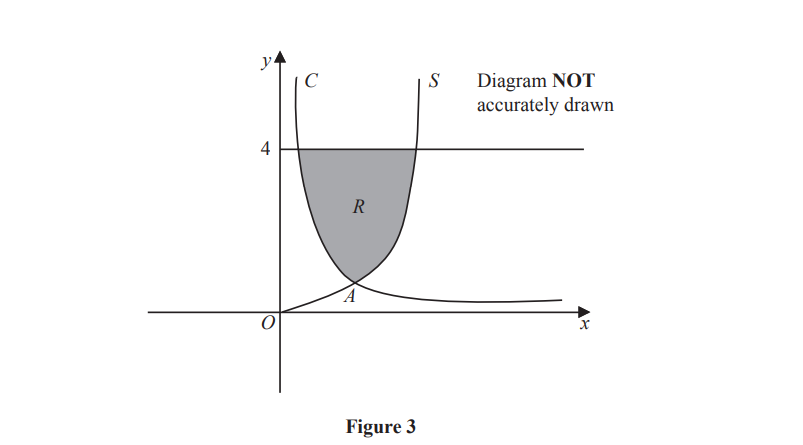
Figure 3 shows part of the curve with equation and part of the curve with equation
The curve and the curve intersect at the point
Find the coordinates of point
How did you do?
The finite region , shown shaded in Figure 3, bounded by the curve , the curve and the straight line is rotated through 360º about the -axis.
Find, using algebraic integration, the exact volume of the solid formed.
How did you do?
Was this exam question helpful?

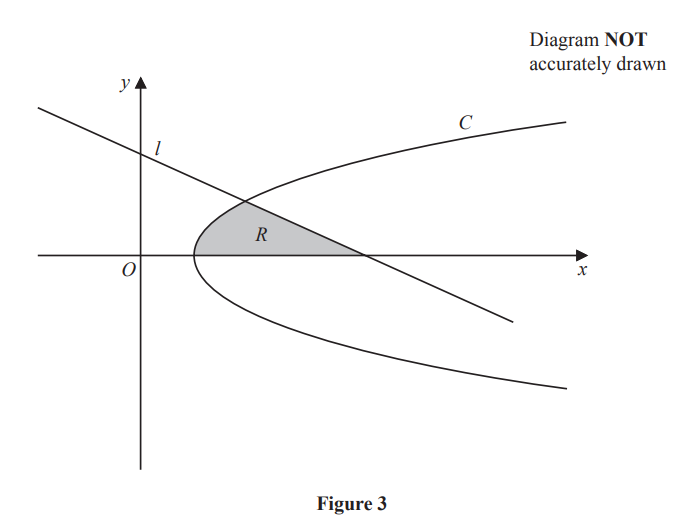
Figure 3 shows part of the curve with equation and part of the line with equation
The region , bounded by the -axis, the curve and the line , is rotated through 360° about the -axis.
Using algebraic integration, find the exact value of the volume of the solid generated.
How did you do?
Was this exam question helpful?
Using a formula (opens in a new tab), show that
How did you do?
Using a formula (opens in a new tab), show that
Hence show that
where , and are integers to be found.
How did you do?

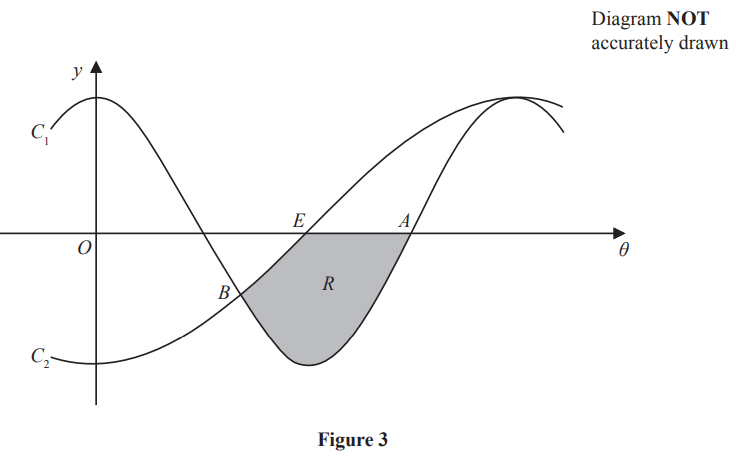
Figure 3 shows part of the curve with equation and part of the curve with equation
Point is the intersection of and as shown in Figure 3
Point is the intersection of with the -axis as shown in Figure 3
The finite region , shown shaded in Figure 3, is bounded by the -axis, and
Use calculus to find, in its simplest form, the exact area of
How did you do?
Was this exam question helpful?
Given that can be written in the form where , and are constants,
find the value of , the value of and the value of
How did you do?
Given that can be written in the form where , and are constants,
Hence, or otherwise, find
(i) the value of for which has its greatest value
(ii) the greatest value of
How did you do?
The curve has equation
The curve with equation intersects curve at two points.
Find the coordinate of each of these two points.
How did you do?
Given that can be written in the form where , and are constants,
The curve has equation
The curve with equation intersects curve at two points.
Use algebraic integration to find the exact area of the finite region bounded by the curve and the curve
How did you do?
Was this exam question helpful?

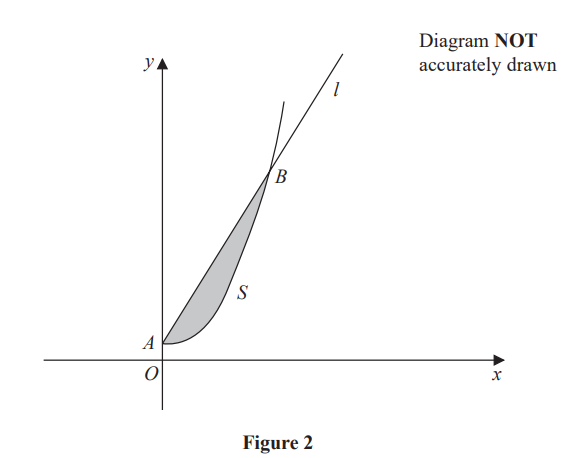
The curve with equation where and the line with equation where intersect at the points and , as shown in Figure 2.
(i) Show that the coordinates of point are (0, 2)
(ii) Find the coordinates of the point
How did you do?
The finite region bounded by and , shown shaded in Figure 2, is rotated through radians about the -axis.
Use algebraic integration to find the volume of the solid generated.
Give your answer in terms of
How did you do?
Was this exam question helpful?
Expand in ascending powers of up to and including the term in
Where appropriate express each coefficient as an exact fraction in its lowest terms.
How did you do?
Write down the range of values of for which your expression is valid.
How did you do?
Express in the form where and are rational numbers whose values should be stated.
How did you do?
Obtain a series expansion for in ascending powers of up to and including the term in
How did you do?
Hence, using algebraic integration, obtain an estimate of
Give your answer to 5 significant figures.
How did you do?
Was this exam question helpful?

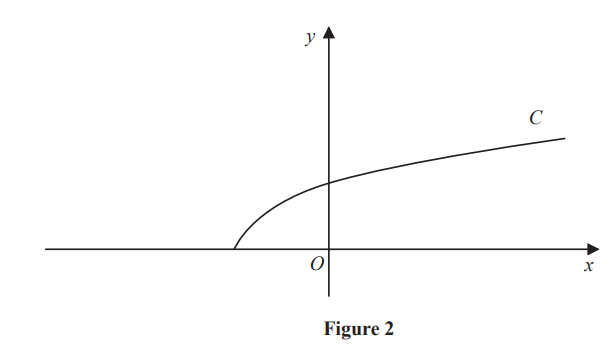
Figure 2 shows the graph of part of the curve with equation
The finite region enclosed by the curve and the straight line with equation is rotated through 360° about the -axis.
Use algebraic integration to find the exact volume of the solid generated.
Give your answer in terms of
How did you do?
Was this exam question helpful?
Expand in ascending powers of , up to and including the term in giving each coefficient as an integer.
How did you do?
where and are prime numbers
Given that the fourth and fifth terms, in ascending powers of , in the series expansion of are 20and 48 respectively,
find the value of and the value of
How did you do?
Using the first five terms, in ascending powers of , in the series expansion of
obtain an estimate, to 4 significant figures, of
How did you do?
Was this exam question helpful?

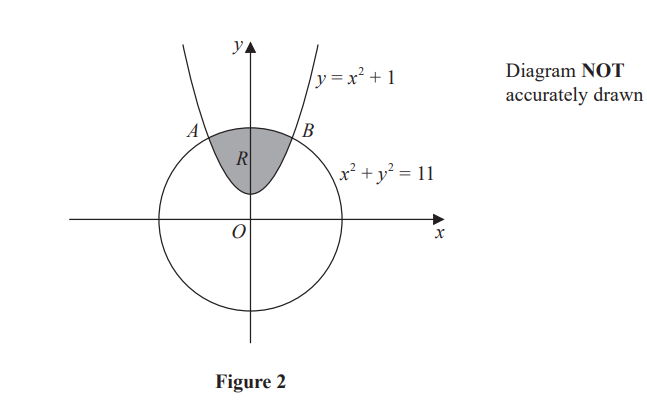
The region , shown shaded in Figure 2, is bounded by the curve with equation and the curve with equation
The two curves intersect at the point and at the point .
Find the coordinate of the point and the coordinate of the point .
How did you do?
The region is rotated through 360° about the ‑axis.
Use algebraic integration to find the volume, to 2 decimal places, of the solid generated.
How did you do?
Was this exam question helpful?

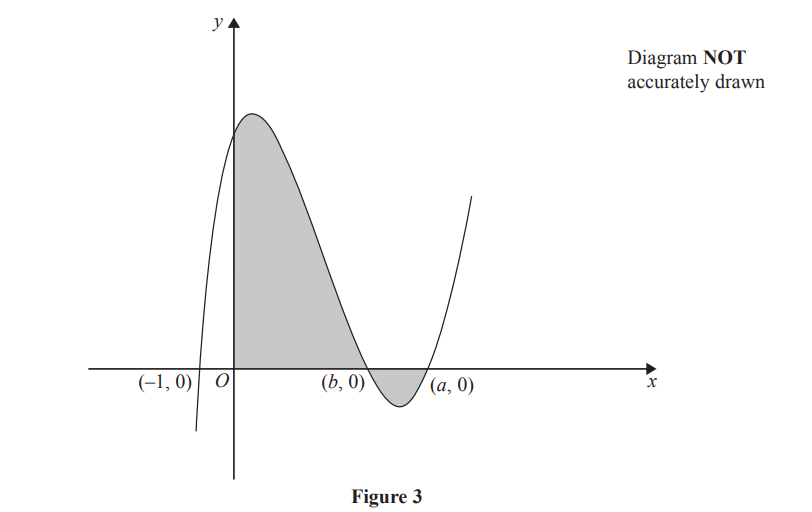
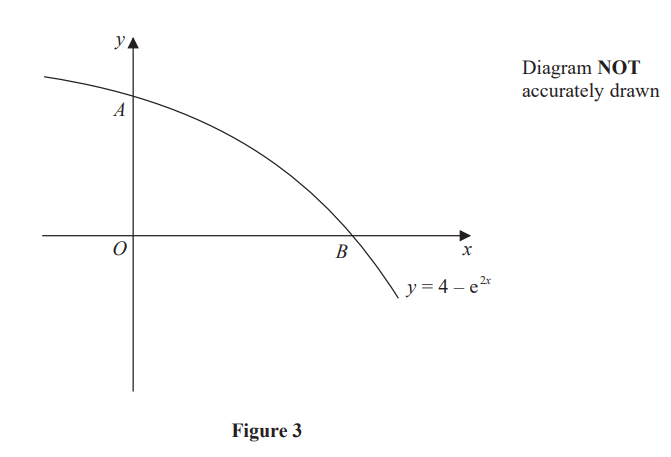
Figure 3 shows part of the curve with equation
The curve crosses the -axis at the point and the -axis at the point .
(i) Write down the coordinate of point .
(ii) Show that the coordinate of is
How did you do?
The line is the normal to at the point .
Find an equation for , giving your answer in the form
How did you do?
The finite region is bounded by , and the -axis.
Using calculus, find the area of .
Give your answer to one decimal place.
How did you do?
Was this exam question helpful?