Speed (Cambridge (CIE) IGCSE Combined Science: Physics): Revision Note
Exam code: 0653

Speed
The speed of an object is defined as
Distance travelled per unit time
Speed is a scalar quantity
This is because it only contains a magnitude (without a direction)
For objects that are moving at a constant speed, the equation for calculating speed is:
Where:
= speed, measured in metres per second (m/s)
= distance travelled, measured in metres (m)
= time, measured in seconds (s)
Average speed
The speed of an object can vary throughout its journey
Therefore, it is often more useful to know an object's average speed
Examples of average speeds
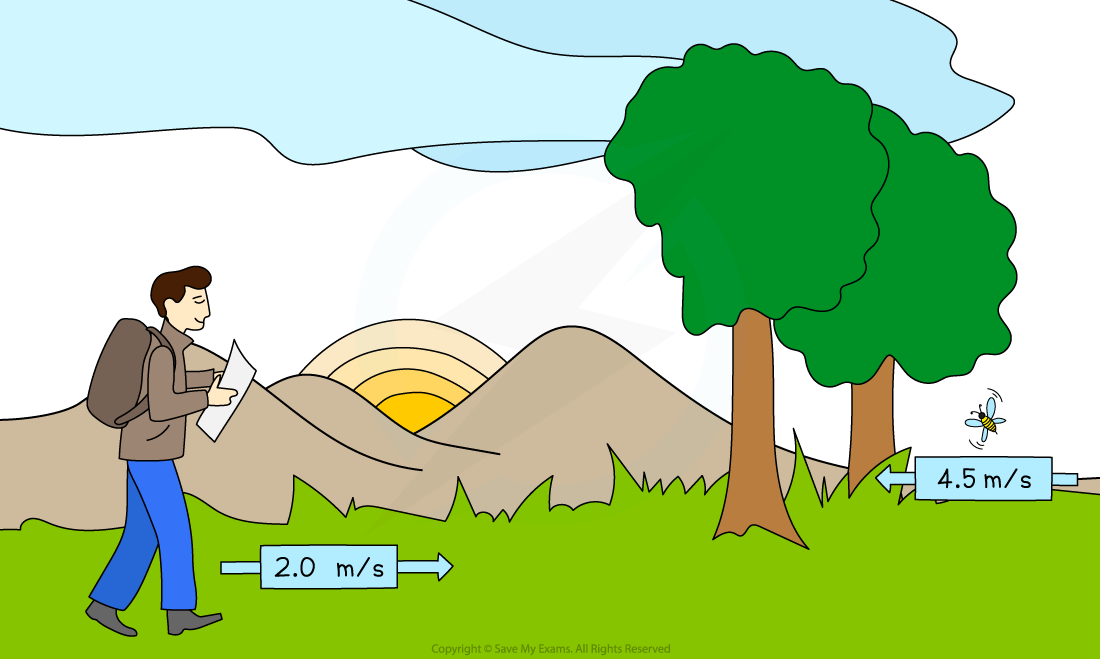
A hiker might have an average speed of 2.0 m/s, whereas a particularly excited bumble bee can have average speeds of up to 4.5 m/s
The equation for calculating the average speed of an object is:
Average speed considers the total distance travelled and the total time taken

Formula triangle for average speed, distance moved and time taken
How to use formula triangles
Formula triangles are really useful for knowing how to rearrange physics equations
To use them:
Cover up the quantity to be calculated, this is known as the 'subject' of the equation
Look at the position of the other two quantities
If they are on the same line, this means they are multiplied
If one quantity is above the other, this means they are divided - make sure to keep the order of which is on the top and bottom of the fraction!
In the example below, to calculate average speed, cover-up the variable speed so that only distance and time are left
The equation is revealed as:

To use a formula triangle, simply cover up the quantity you wish calculate and the structure of the equation is revealed
Worked Example
Planes fly at typical average speeds of around 250 m/s.
Calculate the distance travelled by a plane moving at this average speed for 2 hours.
Answer:
Step 1: List the known quantities
Average speed = 250 m/s
Time taken = 2 hours
Step 2: Write the relevant equation
Step 3: Rearrange to make distance moved the subject
Step 4: Convert any units
The time given in the question is not in standard units
Convert 2 hours into seconds:
Step 5: Substitute the values for average speed and time taken
Examiner Tips and Tricks
Rearranging equations is an important skill in Physics. You can use the equation triangles to help you practice, but it is better not to rely on them because they do not work for all equations you may need to rearrange in the exam.

Unlock more, it's free!
Join the 100,000+ Students that ❤️ Save My Exams
the (exam) results speak for themselves:

Was this revision note helpful?
Build on this topic