Freedom Summer, 1964 (AQA GCSE History: The Period Study (Paper 1: Section A)): Revision Note
Exam code: 8145

Why was the Freedom Summer of 1964 significant? - Summary
The Freedom Summer of 1964 was significant because it exposed the continued discrimination faced by African Americans in voting and increased national support for the civil rights movement. It showed that, despite federal laws, racial inequality remained deeply rooted in the Southern States.
The campaign focused on Mississippi, where only 7 per cent of the black population were registered to vote due to Jim Crow laws, literacy tests and intimidation. Civil rights organisations such as the Student Nonviolent Coordinating Committee (SNCC), Congress of Racial Equality (CORE) and the National Association for the Advancement of Colored People (NAACP) established Freedom Schools to educate black citizens and help them attempt to register to vote. Although only a small number were successful, the campaign gained widespread publicity, particularly because many of the volunteers were white college students.
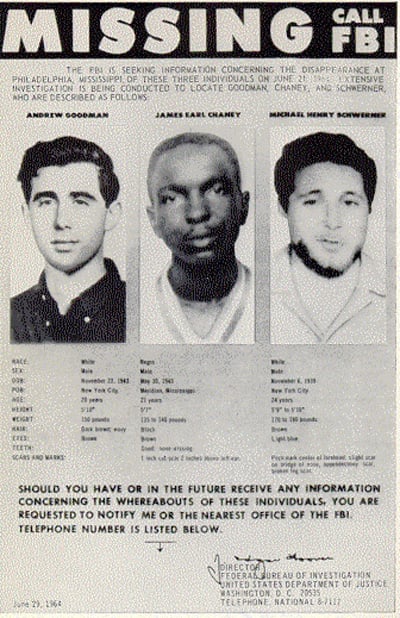
Violence and opposition highlighted the dangers faced by activists. The murder of James Chaney, Michael Schwerner and Andrew Goodman shocked the nation and revealed the involvement of local authorities and the Ku Klux Klan (KKK). The weak punishments given to those responsible demonstrated the lack of justice for African Americans in the Deep South.
The Freedom Summer also influenced later campaigns, especially in Selma, Alabama. Events such as Bloody Sunday in 1965 showed that voter discrimination continued, increasing pressure on the federal government to act. These events helped lead to the Voting Rights Act of 1965, making the Freedom Summer a crucial turning point in the struggle for civil rights.
Why was Freedom Summer Established?
The Freedom Summer was established after the New York Times newspaper reported in 1964 that only 7% of Mississippi’s African American population were eligible to vote
This was the lowest percentage of African American registered voters in the US
It also reported that many ‘Jim Crow’ state laws still existed in Mississippi
This motivated the Student Nonviolent Coordinating Committee (SNCC), the National Association for the Advancement of Colored People (NAACP) and the Congress of Racial Equality (CORE) to target Mississippi in 1964 in a campaign they called the ‘Freedom Summer’
They formed the Mississippi Freedom Party
With the help of 80,000 volunteers, they created 30 Freedom Schools to teach African American people of Mississippi how to pass the literacy tests
Under the Jim Crow laws, it was necessary to pass these tests before they could vote
Many of the volunteers at the Freedom Schools were white college students
They received training on how to cope with harassment, abuse and arrest
The Mississippi Freedom Party leaders believed that attacking and arresting white volunteers would attract more publicity
Of the 17,000 African American people of Mississippi who applied to register to vote, only 1,600 were successful
Examiner Tips and Tricks
At this stage of the course, you may be overwhelmed by the amount of abbreviations and civil rights groups. You could create flashcards, testing your knowledge of what each abbreviation stands for. You could also make a revision poster of each civil rights group, their aims and their tactics.
Opposition & the Mississippi Murders
In response to the Freedom Summer, more than 30 black Mississippi churches were firebombed
The freedom schools and volunteers were also attacked
In June 1964, three volunteers named James Chaney, Michael Schwerner and Andrew Goodman were arrested for traffic offences by a police officer who belonged to the KKK
Although they were released hours later, they were never seen alive again
After six weeks of searching, the bodies of the three men were eventually discovered
The police officer had organised their murders with his fellow Klan members
The investigation led to 18 people being arrested; seven were found guilty of the murders
The longest sentence served by the killers was six years
Segregation in Selma, Alabama
The Civil Rights Act of 1964 left many people unsatisfied because it did not completely ban voter discrimination in individual states
Different rules could still apply to African American voters compared to white voters
The Southern Christian Leadership Conference (SCLC) and the SNCC decided to publicise and challenge this remaining discrimination in the town of Selma, Alabama, in 1965
They chose Selma for their protest as it had a majority African American population and yet had just 383 registered African American voters out of a population of 15,000
This was the lowest rate of Black voter registration in Alabama
Martin Luther King & Selma, Alabama, 1965
By 1965, Martin Luther King had been awarded the Nobel Peace Prize and been named Time Magazine’s ‘Man of the Year’
His actions attracted enormous publicity and, after failing to get African American voters registered in Selma for two months, he decided to organise a march
The march was to travel from Selma to Montgomery, the state capital of Alabama, to deliver a petition to the state governor demanding equal rights for African American voters
The first march, on 7 March 1965, involved 600 protesters
King was not present because he was scheduled to speak at a church in Atlanta, Georgia
As they reached the Edmund Pettus Bridge, the marchers were attacked by state troopers who used tear gas, clubs and whips
More than 50 demonstrators were hospitalised, and the march turned back to Selma
The day became known as ‘Bloody Sunday’
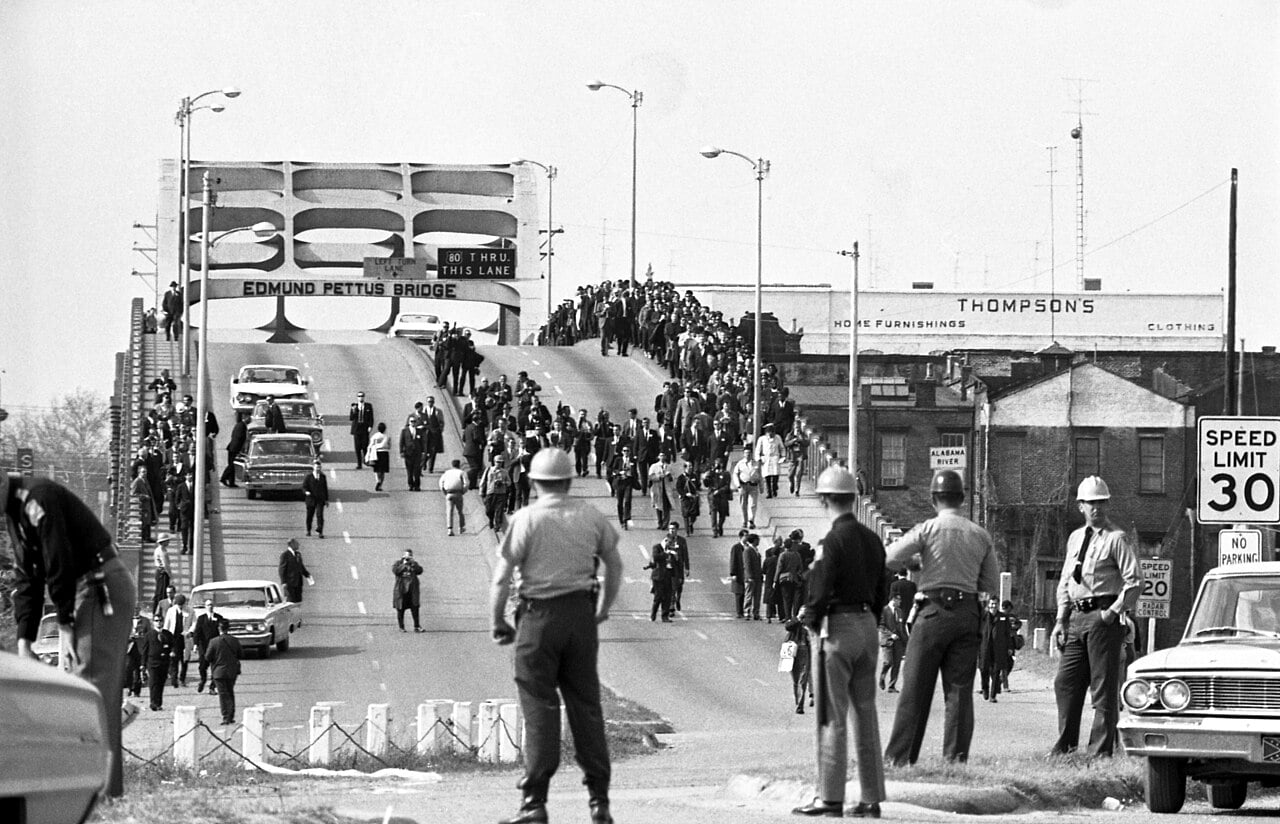
On 9 March, King led more than 2,000 demonstrators over the Edmund Pettus Bridge, but, after agreeing with President Johnson to avoid another violent clash, he turned back before reaching Montgomery
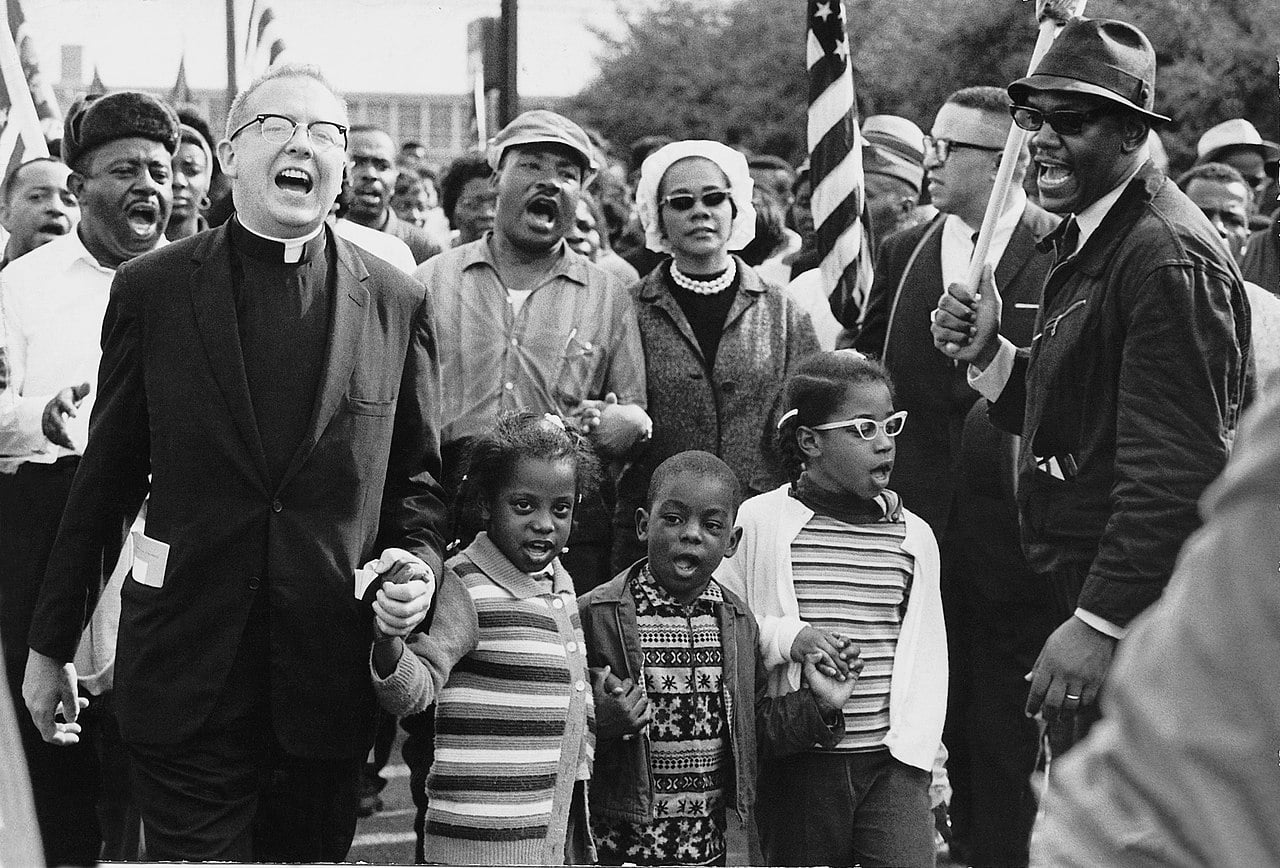
On 21 March, King led a march of over 25,000 people from Selma to Montgomery, where they successfully and peacefully presented the petition
Examiner Tips and Tricks
An exam question could ask you to explain in what ways the civil rights movement impacted Americans in the 1950s and 1960s. You could use the Freedom Summer of 1964 as an example for this question. This is because the protests, events and initiatives involved were a very public protest method that impacted both African American and white Americans’ lives.

Unlock more, it's free!
Join the 100,000+ Students that ❤️ Save My Exams
the (exam) results speak for themselves:

Was this revision note helpful?
Build on this topic
