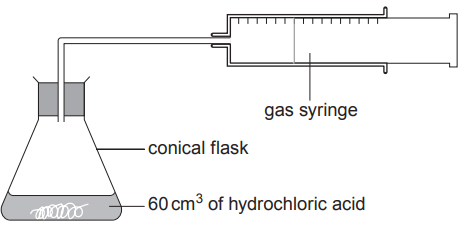
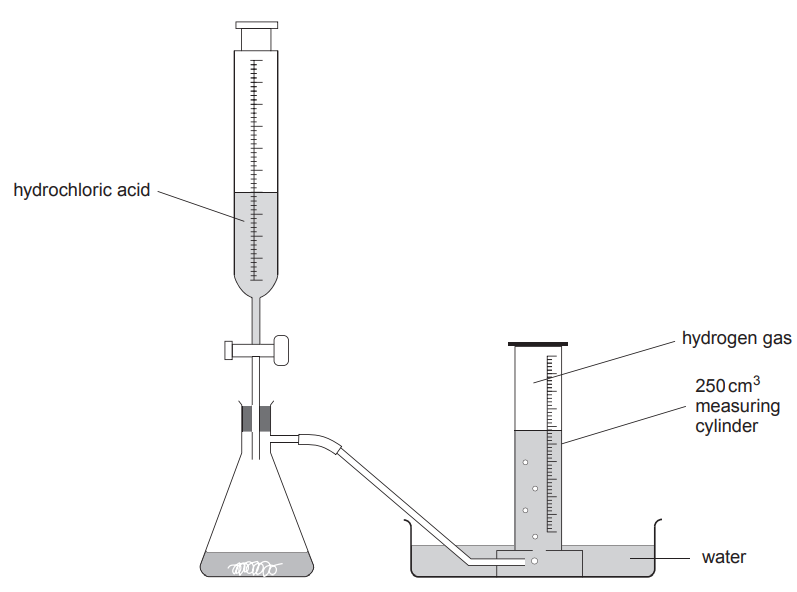
A class investigated the rate of the reaction between magnesium and hydrochloric acid by measuring the volume of gas produced in 10 seconds using different concentrations of acid.
Tick (✓) the name of the piece of apparatus they used to measure the volume of gas produced.
beaker | |
thermometer | |
gas syringe | |
conical flask |
The table shows the results of their experiment.
Concentration of acid (M) | Volume of gas produced (cm3) | |||
Test 1 | Test 2 | Test 3 | Mean | |
0.2 | 16 | 14 | 15 | 15 |
0.4 | 31 | 33 | 30 | 32 |
0.6 | 47 | 49 | 29 | 48 |
0.8 | 63 | 64 | 65 | 64 |
1.0 | 82 | 83 | 79 | 81 |
(i) Circle the result in the table which was not used to calculate a mean.
Give the reason why this result was not used.
Reason ..................................................................................
[2]
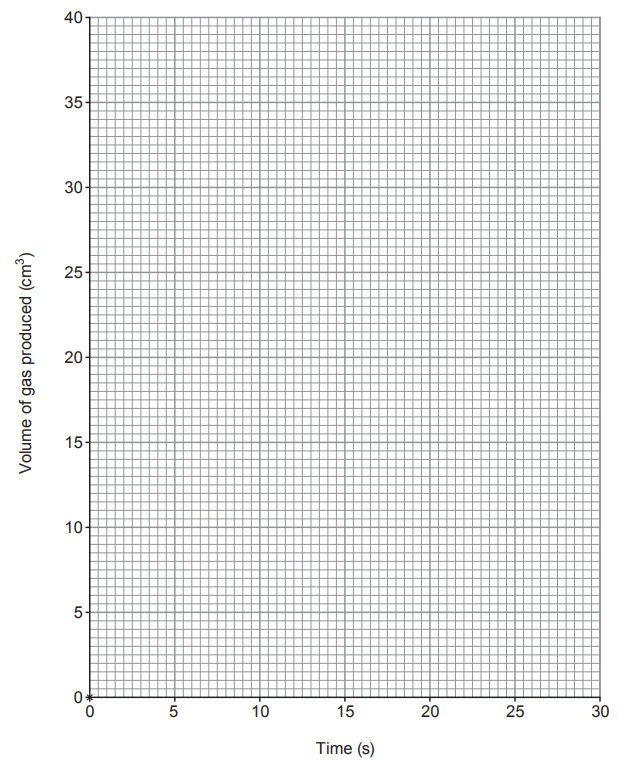
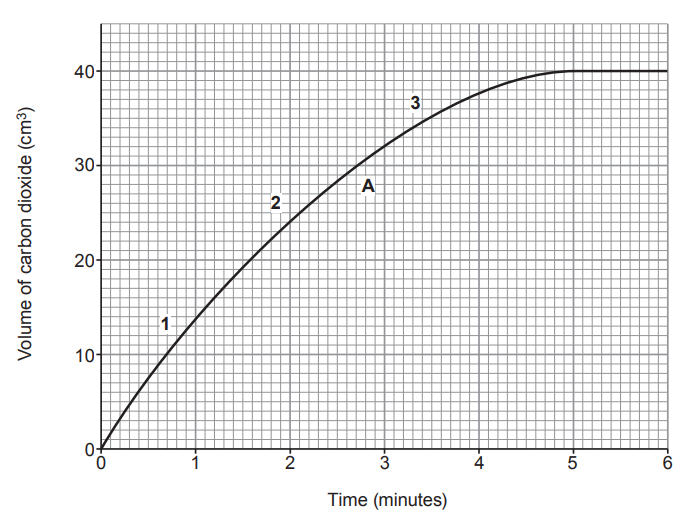
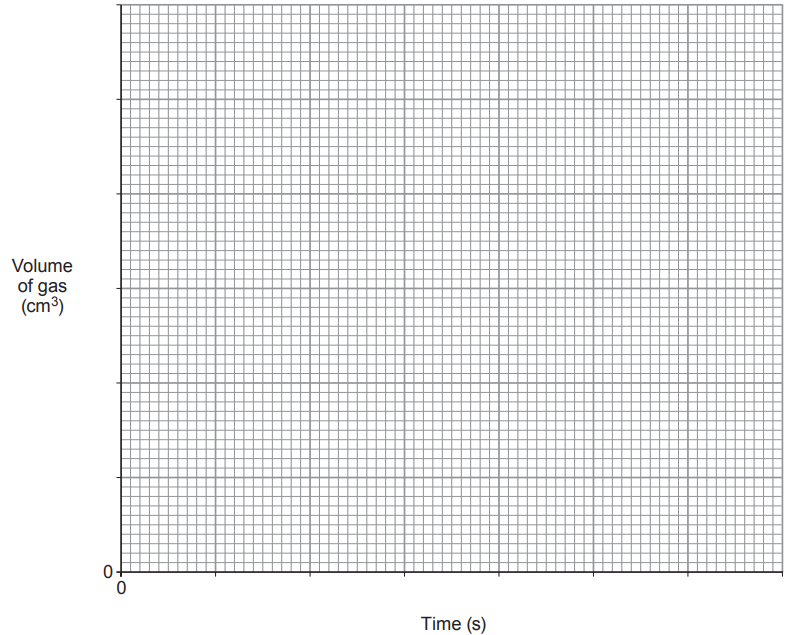
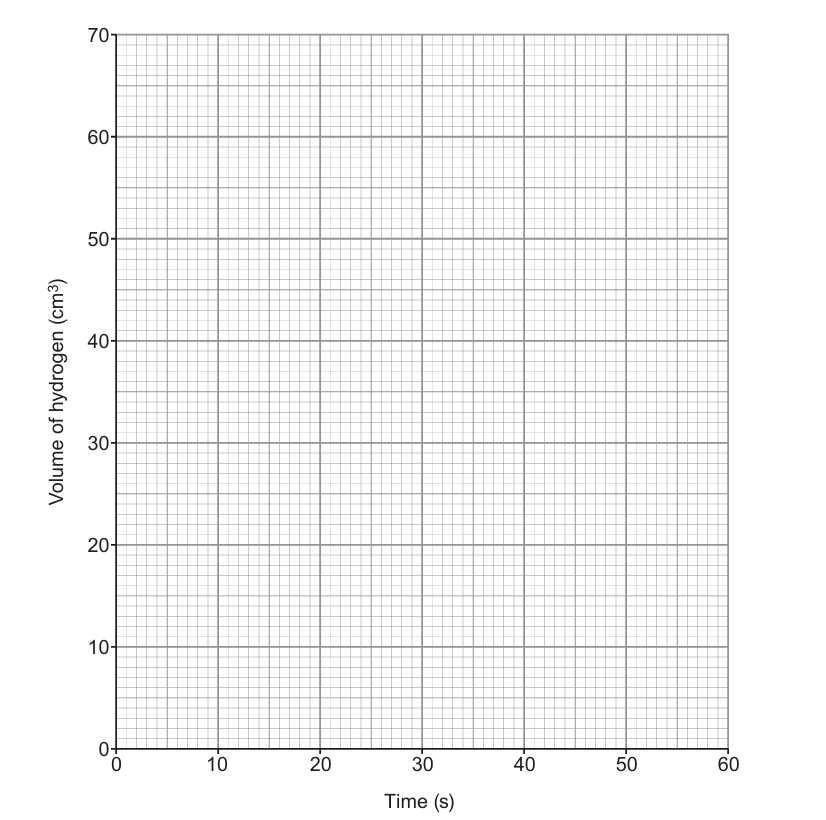
(ii) Plot the mean volume of gas produced against the concentration of acid. Draw a suitable line.
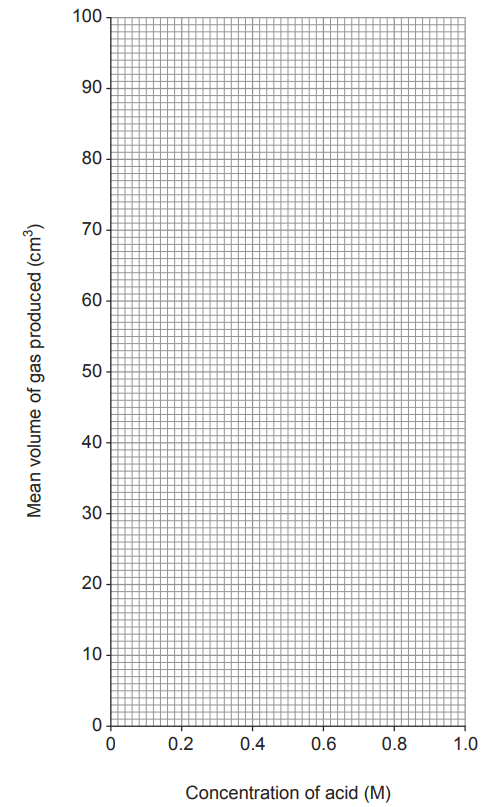
[3]
(iii) Use the information to find the volume of gas produced in 10 seconds using acid of concentration 0.5 M.
........................................................................ cm3
[1]
In another investigation the class found that as the temperature of the acid increases the reaction is faster.
Tick (✓) the two statements which explain why the reaction is faster at a higher temperature.
there are more particles of acid | |
the acid particles are moving faster | |
there is a higher surface area | |
there are more collisions per second | |
the acid particles have less energy |
[2]
Was this exam question helpful?