Combustion of Hydrocarbons (WJEC GCSE Chemistry): Revision Note
Exam code: 3410

Combustion of Fuels
Fuels are substances that react with oxygen to release energy
This reaction is called combustion
Due to the release of energy, combustion reactions are exothermic
When there is plenty of oxygen for the fuel to burn in, complete combustion occurs
In complete combustion, all of the elements within the fuel react fully with the oxygen
Many fuels, such as natural gas and petrol, consist of hydrocarbons
A hydrocarbon is an compound containing hydrogen and carbon atoms only
When the hydrocarbon undergoes complete combustion:
The carbon reacts with oxygen to form carbon dioxide, CO2
The hydrogen reacts with oxygen to form water, H2O
Summary table of complete combustion reactions
Fuel | Equation |
|---|---|
Methane | methane + oxygen → carbon dioxide + water |
Ethane | ethane + oxygen → carbon dioxide + water |
Ethanol | ethanol + oxygen → carbon dioxide + water |
You might be asked to balance chemical equations for combustion reactions
The balanced symbol equation for the combustion of methane is:
CH4 + 2O2 → CO2 + 2H2O
To balance combustion equations, balance the carbon atoms first, then the hydrogen atoms and finally the oxygen atoms
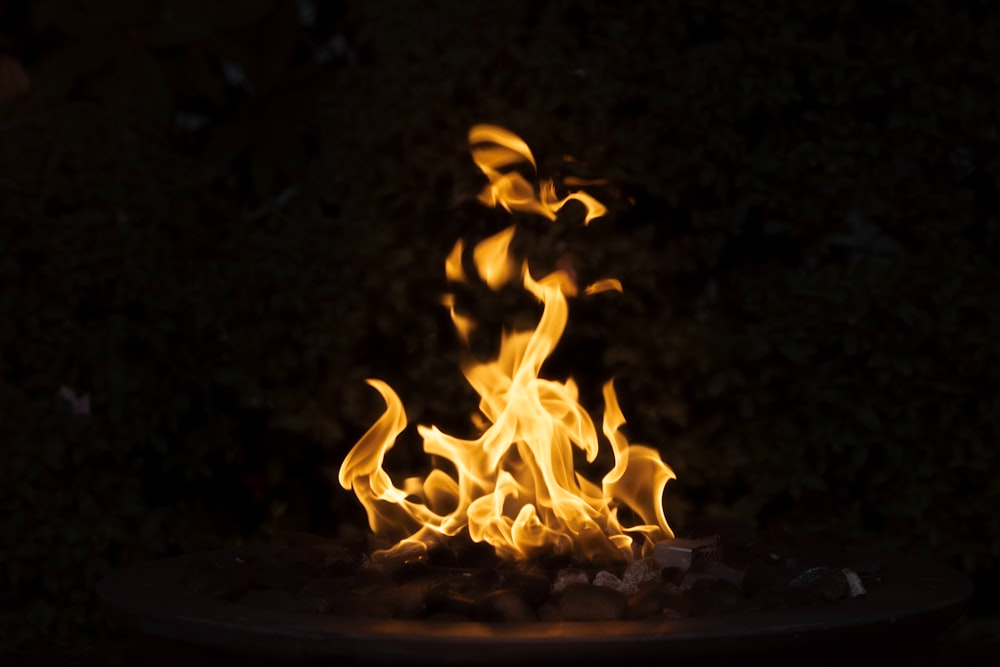
Photo by Bruno in Unsplash (opens in a new tab)
Combustion is the burning of a fuel in oxygen
Worked Example
Balance the symbol equation for the combustion of propane.
___C3H8 + ___O2 → ___CO2 + ___H2O
Answer:
Balance the carbon atoms first
There are 3 on the left hand side so place a 3 in front of carbon dioxide
___C3H8 + ___O2 → 3CO2 + ___H2O
The balance the hydrogen atoms
There are 8 on the left hand side, so a 4 needs placing in front of water
___C3H8 + ___O2 → 3CO2 + 4H2O
Finally, balance the oxygen atoms
There are now 10 oxygen atoms on the right hand side (6 from carbon dioxide, and 4 from water)
A 5 needs placing in front of oxygen
___C3H8 + 5O2 → 3CO2 + 4H2O

Unlock more, it's free!
Join the 100,000+ Students that ❤️ Save My Exams
the (exam) results speak for themselves:

Was this revision note helpful?
Build on this topic