Plate Tectonics (AQA A Level Geography): Exam Questions

Exam code: 7037

2 hours13 questions
1
Sme Calculator
1 mark

What is an island arc?

  • Where oceanic plates collide, subduction leads to increased friction and melting. The less dense material begins to rise through the crust, creating a series of volcanic islands.

  • Radioactive elements beneath the crust cause intense heating, often away from plate boundaries. As the volcano breaks through the crust and crust moves, an arc is formed.

  • As plates diverge, magma is forced to the surface. After subsequent underwater eruptions, eventually island arcs are formed along ridges, such as in the Mid Atlantic.

  • As continental plates collide, enormous pressure is exerted and folding occurs. Where folding occurs in coastal locations, some land can be cut off by the sea leading to arc formation.

2
Sme Calculator
1 mark

What is the process of slab pull?

  • At constructive plate boundaries, convection currents cause plates to pull apart. This generates both seismic and volcanic activity.

  • At conservative plate margins, plates are pulled alongside each other. This generates seismic activity after a period of pressure build-up.

  • At destructive margins gravity forces lithosphere to descend into the mantle. The collision with the other plate causes both shallow and deep seismic activity.

  • At constructive plate margins, plates are pulled apart leading to the formation of rift valleys. These valleys continue to widen and generate significant seismic activity.

3
Sme Calculator
1 mark

What are the main characteristic processes operating at destructive plate boundaries?

[1]

  • Opposing convection currents lead to the divergence of plates. As plates pull apart magma intrudes leading to the formation of ridges.

  • As plates slide past each other, fault lines emerge which, following the build-up of substantial pressure, lead to the development of major earthquakes.

  • Subduction occurs where two plates converge. Subduction can lead to the formation of features such as deep sea trenches and island arcs.

  • Radioactive decay is the main process. As the plate slides over the place experiencing the decay, the magma is forced through the plate leading to the formation of island chains.

4
4 marks

Outline processes involved in the formation of ocean ridges.

5
Sme Calculator
4 marks

Outline processes which lead to the formation of fold mountains.

1
6 marks

Figure 1 shows data on earthquake characteristics across four contrasting tectonic settings.

Tectonic setting

Plate boundary type

Mean earthquake magnitude (Mw)

Mean focal depth (km)

Mean number of events per year (Mw 4.0+)

Example location

Ocean-continent subduction zone

Destructive

7.4

35

320

Cascadia, North America

Ocean-ocean subduction zone

Destructive

6.8

55

210

Tonga-Kermadec, Pacific

Continental collision zone

Destructive

6.2

18

95

Zagros Mountains, Iran

Conservative plate margin

Conservative

5.9

12

140

San Andreas Fault, California

Constructive plate margin

Constructive

4.1

8

180

Mid-Atlantic Ridge

Intraplate zone

None (hotspot / ancient fault)

4.8

22

30

New Madrid, USA

Note: focal depth is classified as shallow (0–70 km), intermediate (70–300 km) or deep (300–700 km).

Using Figure 1, analyse the relationship between tectonic settings and seismic hazards.

2
6 marks

Study Figure 1, which shows the age of the oceanic crust at increasing distances from the axis of the Mid-Atlantic Ridge.

Figure 1 — Age of the oceanic crust at increasing distance from the axis of the Mid-Atlantic Ridge

Distance from ridge axis (km)

Age of oceanic crust (million years)

0

0

100

4

250

10

500

21

750

33

1000

45

1500

70

Using Figure 1, analyse the data shown.

3
6 marks

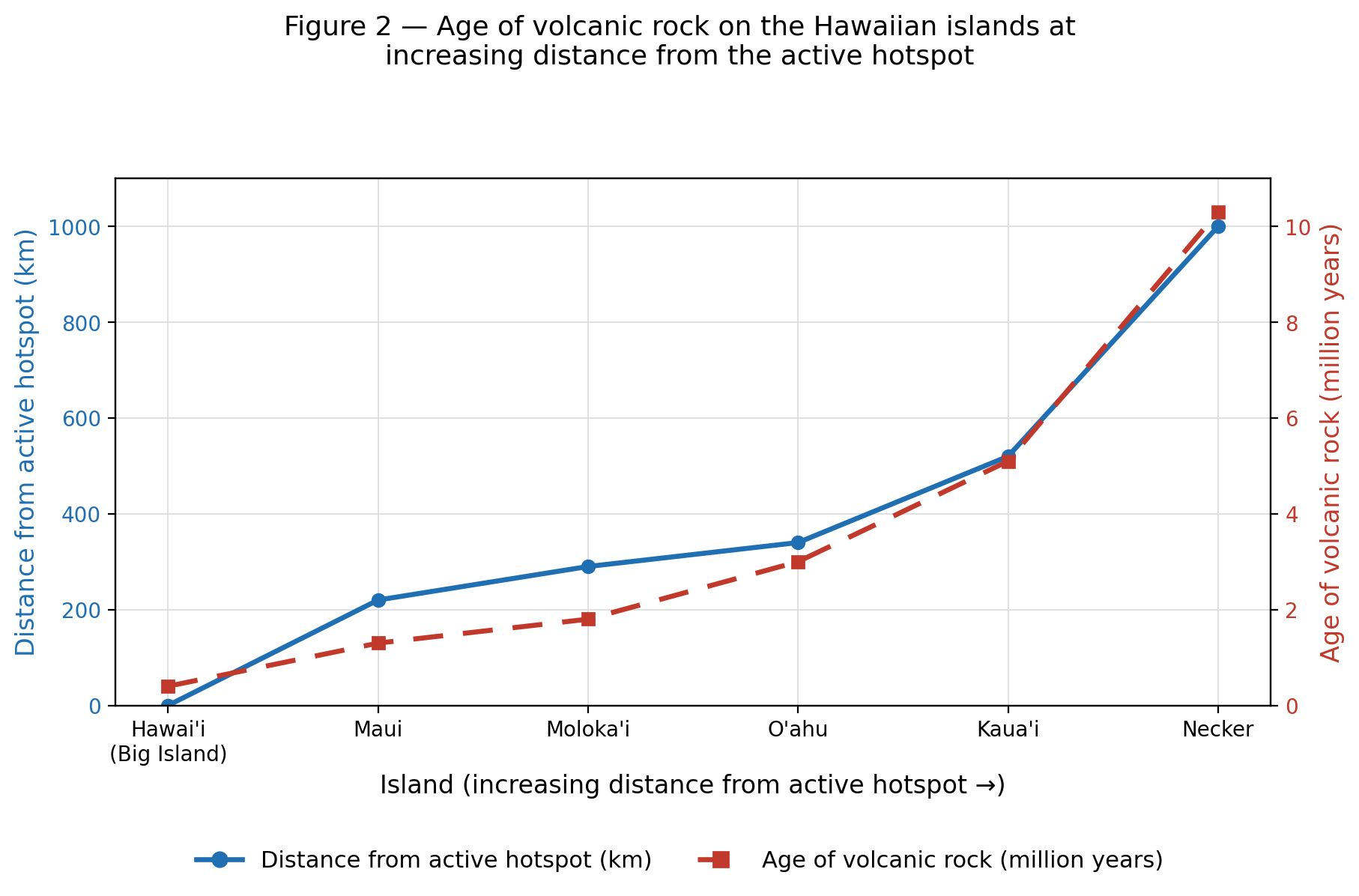
Study Figure 2, which shows the age of volcanic rock on the Hawaiian islands at increasing distances from the active hotspot.

Line graph of Hawaiian islands showing distance from hotspot and volcanic rock age both increase from Hawai‘i to Necker, with nearly matching rising trends.

Using Figure 2, analyse the data shown.

4
9 marks

Assess the relative importance of the processes that drive the movement of tectonic plates.

5
9 marks

Assess the strength of the evidence used to support the theory of plate tectonics.

1
Sme Calculator
20 marks

To what extent does plate tectonic theory help in understanding the development of landforms associated with plate movement?

2
20 marks

'All tectonic activity occurs at the boundaries of tectonic plates.'

To what extent do you agree?

3
20 marks

Assess the relative importance of the different types of plate margin in producing distinctive tectonic landforms.