Cultural Revolution: Art, Culture and Ideology (Edexcel A Level History: Route E: Communist states in the twentieth century): Revision Note
Exam code: 9HI0
Summary
Mao understood the ability of culture and art to influence people's thoughts and actions
Initially, old traditions and festivals in the countryside were interrupted by the introduction of collective farms and then communes
Traditional culture in the towns then came under attack as part of the Cultural Revolution in 1966 (opens in a new tab)
Jiang Qing became a powerful figure during the Cultural Revolution
She played a key role in the attacks on traditional culture and in replacing it with Communist Art
This included the banning of most foreign art and the creation of the Eight Model Plays
These were turned into films and watched billions of times by the Chinese people
They were powerful propaganda tools, but many people soon tired of the repetition of the same eight stories
All art was controlled and used to celebrate Mao, communism and the revolution rather than provoke thought or say anything about the human condition
This accessible and upbeat art that depicted workers as being heroic became known as the socialist aesthetic
CCP attacks on traditional Chinese culture in towns and the countryside
Mao believed that culture could be used to manipulate and control people
He ordered the creation of new music and art that would:
Be accessible to all
Glorify Communism and its achievements
At the same time, the agricultural reforms of the 1950s (opens in a new tab) led to collectivisation and the creation of the communes, which destroyed traditional village life
This included traditional festivals such as the New Year and the Lantern Festival
The ancient culture of Tibet, which was based around Buddhism, was targeted by the Chinese Communist Party (CCP), which attempted to destroy it
Similarly, the Islamic culture of Xinjiang was also attacked by the CCP
When Mao launched his campaign against the 'Four Olds' as part of the Cultural Revolution (opens in a new tab) in 1966, traditional Chinese culture in the towns and cities came under attack
People were instructed to destroy old ideas, customs, culture and habits
This led to the destruction of temples and ancient religious artefacts, as well as the burning of books
The traditional custom of burning incense at the graves of ancestors during the Qingming festival was categorised as superstition and discouraged
Many old customs and beliefs were too ingrained within Chinese culture to be completely eradicated
Jiang Qing: role in the Cultural Revolution and control of art and culture
Jiang Qing was Mao's fourth wife, and she rose to prominence and influence during the Cultural Revolution (opens in a new tab) and became the leader of the 'Gang of Four' (opens in a new tab)
She was fiercely committed to the destruction of traditional Chinese culture and replacing it with Communist culture
Before the Cultural Revolution, Mao had restricted her political role
During the Cultural Revolution, Mao appointed her as First Vice-Chairwoman of the Central Cultural Revolution Group
In 1969, she became part of the Politburo
This gave her enormous power to ban and censor any art, music or theatre performance she wanted
Any art she considered to contain themes connected to the 'Four Olds', such as respect for family, romance or wealth, was banned
The slogan: 'Make it revolution or ban it' was adopted
Jiang Qing also used her control of culture during the Cultural Revolution to attack her opponents and increase her personal power
Revolutionary art and culture: model operas, propaganda and socialist aesthetics
Most foreign art was banned
Many Chinese artists, writers and directors were also banned and fired from their positions
Many other artists were reluctant to create new art for fear of being denounced
As a result, Jiang commissioned 8 new Model Plays, including:
Five operas
Two ballets
One symphony
They all advocated communist ideology and featured communist characters overcoming various issues and problems caused by foreigners or capitalists
These eight plays were the only productions allowed to be staged
They were all turned into feature films to enable them to reach a wider audience
As there were no alternatives, these movies attracted enormous viewing figures
It was estimated that the movie Taking Tiger Mountain had been watched 7.3 billion times by 1974
That means every Chinese person would have seen it eight times
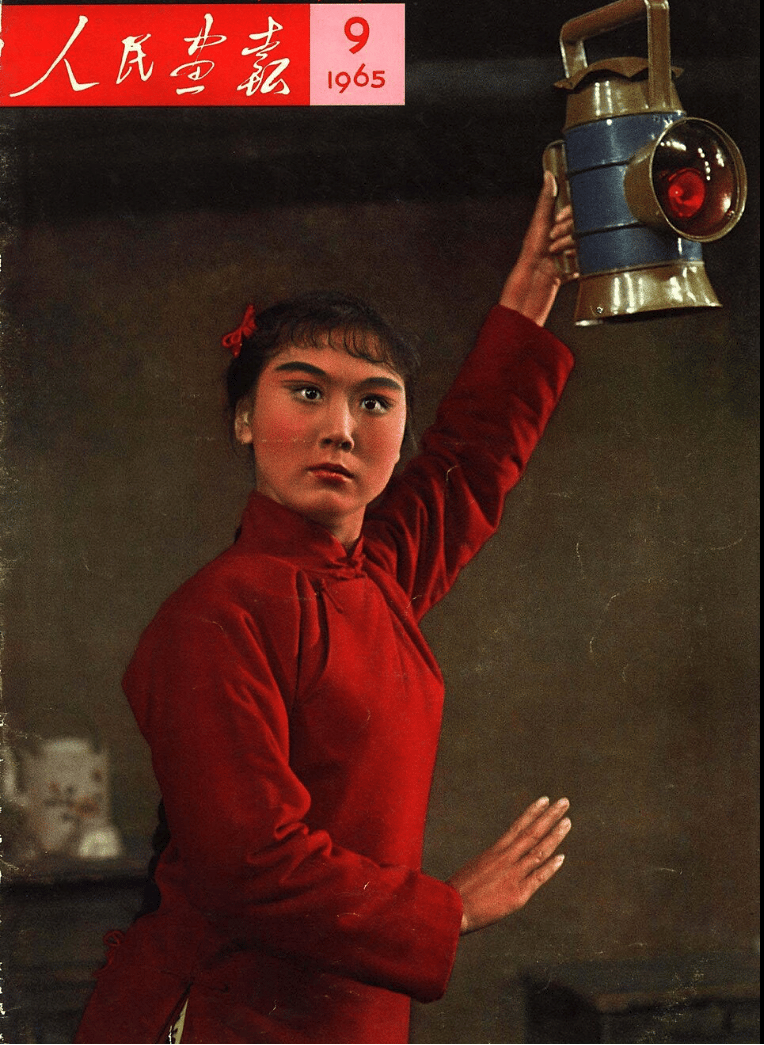
Millions of people watched The Legend of the Red Lantern film
This told the story of heroic Communist resistance against the Japanese invasion
The portrayal of Mao and the CCP as the saviour of China was the central message of all of the films and plays
By sending propaganda teams into remote villages with mobile projectors, they were an effective way of spreading CCP messages
Audiences soon became bored with the same eight stories
Also, people wanted escapism when they watched a show or movie, not stories of relentless struggle
The lack of diversity, choice or spontaneity from other artists led to the Chinese culture of this time being heavily criticised
Some have described it as a 'cultural desert' with art being replaced by CCP propaganda
Art as Propaganda and the Socialist Aesthetic
Mao wanted art to serve society and the CCP rather than express the thoughts and feelings of the artist
Art in Mao's China was to celebrate the revolution and communism in a way that ordinary people could understand
Workers and peasants were to be depicted as heroes
It was to be bright and uplifting
It commonly featured agricultural or industrial production
Its message was to be clear and contain no hidden meanings or ambiguity
This approach to art became known as the Socialist Aesthetic
How far did the CCP succeed in replacing traditional Chinese culture with a new revolutionary culture?
There are different views on how successful the CCP were in replacing traditional Chinese art and culture
Some historians believe it was completely dismantled
Others argue it merely hid and reemerged after the Cultural Revolution
Chinese Art and Culture was Dismantled
This argues that the CCP were so thorough in their attacks on artists and in the extent of the censorship that it could never recover
Key historians
In addition to the physical labour in the countryside, a large-scale abolishment of troupes was carried out across China in accordance with the instructions of the Central Cultural Revolution Group, during which nearly all the non-state-owned troupes were dismantled in some provinces. In the spring of 1967, in accordance with the guiding spirit of the Cultural Revolution Group, the Cultural Bureau of Hebei Province signed a document jointly with seven other departments, including public security, education, civil affairs and human affairs, instructing all troupes in the province which performed model plays without authorisation to disband. As a result, more than 100 troupes were disbanded in the province, while slightly over 20 provincial-level troupes were preserved. From the end of 1969 to the beginning of 1970, Jilin Province dismantled all the troupes of the duet genre and the troupes of Hebei Drama at the county level in the name of reorganising literature and art teams. In this context, the troupe members had to either settle in the countryside or work in the factories. In 1971, the surviving troupes were turned into art ensembles, only engaged in performing song, dance and folk arts. Gansu Province abolished all the professional troupes. Of course, while the theatrical troupe was greatly reduced, literary and artistic propaganda teams and rural cultural task forces on Mao Tse-tung Thought at various levels were successively established throughout the country. In addition, various types of professional or amateur literary and artistic propaganda teams in most of the industrial and mining enterprises, communes, schools, institutions and organisations were also established so as to replace the original theatrical troupes.
Fu Jin, A History of Chinese Theatre in the 20th Century I, 2021
Traditional Chinese Art and Culture Hid From View
This argues that, although pushed underground, traditional Chinese art and culture were too ingrained to be eradicated
Cultural practices, transgressive or not, were technologies of the self and self-cultivation. Writing diaries, reading books, singing songs, maybe about self-improvement, self-planning and self-entertainment. After universities and colleges reopened in 1972 to admit students from workers, peasants, and soldiers, sent-down youth began to entertain hopes of going on to college, and many of them spent their leisure time studying maths, English, philosophy, literature, and other subjects. Despite all the fierce attacks on culture in the Red Guard movement, culture retained its attraction and prestige amongst the youth. In fact, the revolution against culture had, in all likelihood, intensified rather than weakened the appeal of culture, and the underground cultural movement was merely a sign of the resurgence of culture’s undying status and appeal in Chinese society.
Guobin Yang, The Red Guard Generation and Political Activism in China, 2016
Examiner Tips and Tricks
This topic is closely connected to the Four Olds question, but Jiang Qing's role in controlling cultural output — commissioning revolutionary model operas, banning traditional forms — is central here. The key debate is how far the CCP succeeded in replacing traditional culture with a new revolutionary culture.
The strongest answers will note that while traditional culture was suppressed, it was not eliminated: private resistance continued, clandestine artistic practice persisted, and the revolutionary culture produced was widely regarded as sterile and artistically impoverished

Unlock more, it's free!
Join the 100,000+ Students that ❤️ Save My Exams
the (exam) results speak for themselves:

Was this revision note helpful?
Build on this topic
