Winding Down the Cultural Revolution, 1968–76 (Edexcel A Level History: Route E: Communist states in the twentieth century): Revision Note
Exam code: 9HI0
Summary
Mao decided to end the influence of the Red Guards and bring the Cultural Revolution to an end by using the People's Liberation Army (PLA)
The PLA rounded up nearly two million Red Guards and their supporters, restored order and reopened schools and colleges that had been closed
To permanently destroy the influence of the Red Guards, Mao launched the 'Up to the Mountains and Down to the Villages' campaign
This scattered around 17 million city-dwelling young people into remote rural areas, where they could not coordinate any action against the government
After the excesses of the Cultural Revolution, moderates such as Zhou Enlai and Deng Xiaoping became increasingly important in the government
This alarmed the Radicals, led by the 'Gang of Four', who saw the moderates as 'capitalist roaders'
As Mao's health declined, the moderates and radicals jockeyed to be in a position to be his successor
Instead of naming any of the 'Gang of Four' as his successor, Mao named the relatively unknown Hua Guofeng
One of Hua's first acts after Mao's death was to arrest the 'Gang of Four'
PLA restoration of order and the 'Up to the mountains, down to the villages' campaign
By August 1967, it had become clear to Mao that the Red Guards and the Cultural Revolution were damaging China
The hunt and purges of suspected 'capitalist roaders' had spread to the People's Liberation Army (PLA)
Mao worried this was causing internal chaos and would weaken China's ability to withstand a foreign invasion
He declared the PLA purges 'un-strategic'
The purge of many of the experts and experienced people had greatly damaged the economy
Mao decided to bring the years of Red Guard chaos to an end and turned to the PLA
The PLA Restores Order
The leaders of the PLA were eager to crush the Red Guards, as they feared they might grow to rival them
They also feared that the chaos and death of denunciations, accusations and struggle meetings of the Cultural Revolution would spread through the PLA ranks
This would weaken its fighting ability
On Mao's orders, the PLA rounded up nearly 2 million people who were suspected of being Red Guards
They were accused of being 'counter-revolutionaries', and many thousands were murdered and imprisoned
Schools which had been closed due to attacks on teachers were reopened in 1967-68 by the PLA; universities remained closed for around a decade
Red Guard leaders complained they were being suppressed by a 'black hand'
In response, Mao said: 'I am the black hand'
The 'Up to the Mountains and Down to the Villages' Campaign
To break up the networks of Red Guards, approximately 17 million of them were sent to the countryside
This was part of the 'Up to the Mountains and Down to the Villages' campaign
The official reason given for this was to help young people understand the lives of the peasants and the importance of their role in the revolution
But it was also to prevent them from coordinating any violent action in response to the PLA crackdown
The hard manual labour, meagre food and basic living conditions of the peasants shocked the young people who were sent to the countryside
The peasants objected to having to share what food they had with the millions of new arrivals
However, they welcomed the young people who had been given basic medical training
Known as 'barefoot doctors'
These were often the first medical professionals that peasants in remote areas had ever seen
Return of Zhou Enlai and Deng Xiaoping: Moderates vs radicals
In the early 1970s, Mao's health began to fail
People began to focus on who would succeed him
Lin Biao had been his most trusted follower and had been officially designated as Mao's successor
However, Lin was killed and accused of plotting against Mao in 1971 (opens in a new tab)
With no clear successor in place, rival groups of moderates and radicals began to manoeuvre so they were best placed to take over once Mao died
The moderates
Most of the moderates had been labelled as 'capitalist roaders' and purged from the Party during the Cultural Revolution
However, some had survived, and others managed to stage a comeback after the Red Guards' power had been diminished
Zhou Enlai
Zhou was a Moderate and a pragmatist, but had survived the purges of the Cultural Revolution
This was because he was skilled at avoiding becoming too associated with any other individuals or factions
He also played a key role in uncovering Lin Biao's alleged betrayal of Mao, which helped protect him from accusations of being a traitor himself
Zhou became increasingly trusted by Mao after the excesses of the Cultural Revolution
He announced his Four Modernisations, which later led to increased ties with the West as well as advances in agriculture, industry, defence and technology
Deng Xiaoping
Deng had been stripped of his Government positions and sent to perform 'corrective labour' in a tractor factory (opens in a new tab) during the purges of the Cultural Revolution
Zhou helped convince Mao that Deng's organisational skills and experience would be vital in helping re-establish order
Deng was recalled from his rural exile in 1973 and regained his position as Chinese Communist Party (CCP) First Vice Premier in 1974
As Zhou's health declined, Deng was effectively in control of the day-to-day running of the government
The radicals
The radicals were headed by a group known as the "Gang of Four"
They were alarmed by the growing influence that the moderates had over Mao
Gang of Four: Rise, influence and fall; Death of Mao Zedong 1976
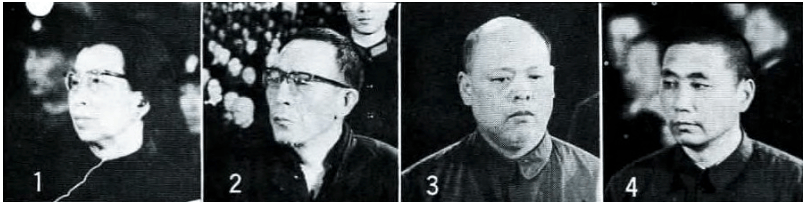
The 'Gang of Four' were Jiang Qing, who was Mao's wife, Zhang Chunqiao, Yao Wenyuan and Wang Hongwen
They had risen in influence during the Cultural Revolution
They supported Mao's belief in continuous revolution
However, as Mao and others began to view the Cultural Revolution and the Red Guards as having gone too far, the Gang of Four's influence began to decline
In 1973, they launched a campaign to discredit Zhou and Deng by portraying them as allies of Lin Biao
They called for a:
Boycott of the Western technology that Zhou was introducing
Return to People's Communes (opens in a new tab) in the countryside
The campaign was intended to paint the moderates as traitors to Mao and the revolution
The campaign failed, and Mao continued to back Zhou
When Zhou Enlai died of bladder cancer in 1976, millions took to the streets to pay their respects
A memorial service to him in Tiananmen Square turned into a mass demonstration in favour of his moderate policies and against the 'Gang of Four'
Attempts to clear floral tributes to Zhou led to violence between protestors and riot police
The 'Gang of Four' blamed Deng for the disorder, and were supported in this by the Politburo
Deng was once again forced to go into exile, illustrating that the 'Gang of Four' still had considerable influence
The Death of Mao
After a long illness, Mao died in September 1976
In the months before his death, he had decided against naming any of the 'Gang of Four' as his successor and instead opted for a little-known member of the Politburo, Hua Guofeng
The 'Gang of Four believed it would be easy to discredit and undermine Hua and remove him from power
Hua acted quickly and arrested the 'Gang of Four' before they could move against him
Deng Xiaoping returned from exile and replaced Hua as leader in 1980
In the same year, the 'Gang of Four' were put on trial for the roles they played in the Cultural Revolution
Jiang Qing and Zhang Chunqiao were sentenced to death, but this was instead changed to life imprisonment
Yao Wenyuan was also sentenced to 20 years' imprisonment, and Wang Hongwen was sentenced to life imprisonment
How successfully did Mao wind down the Cultural Revolution in the years 1968 to 1976?
The ending of the Cultural Revolution has been viewed in different ways
Some historians argue that Mao's use of the PLA meant China turned into a military dictatorship
Other historians have argued that, although Mao did bring the Cultural Revolution to an end, the end was extremely bloody and drawn out
Military Dictatorship
Mao needed the PLA to control the Red Guards and so handed power to the military
Key historians
Throughout this confused period Mao tried to leave the impression that these twists and turns were all unfolding in ways that were favorable for his ultimate plans. The new revolutionary committees installed across most of China by late 1968 were celebrated as a great victory. Indeed, they did represent a new form of government built on the rubble of the old. But they did not operate as advertised, and they did not last very long. Except for Shanghai and Beijing, almost all provincial revolutionary committees were completely dominated by army officers, and most were a thinly disguised form of military dictatorship. Andrew G. Walder, China Under Mao: A Revolution Derailed, 2015
A Long and Bloody End
The winding down of the Cultural Revolution took longer than the revolution itself and cost thousands of lives
Key historians
To the extent that the Ninth Congress marked anything at all, it was neither the victory nor the end of the Cultural Revolution. It was but the beginning of an ending so painfully drawn out, so tortuously slow, that it would last more than twice as long as the event it supposedly brought to a close. And what until recently has been obscured by a paucity of documentation is the immense human cost of that ending, all too often treated by past chroniclers as merely a “restoration of order,” followed by years when not much seemed to be happening in China other than the rise and fall of a tiny handful of members of the political elite. A greater number of ordinary citizens died while revolutionary committees across the country “finished the job” that Mao had mentioned at the Ninth Congress than at the hands of rampaging Red Guards in 1966–67 or in armed combat between “mass organizations” competing for power in 1967–68.
Roderick MacFarquhar, Michael Schoenhals, Mao’s Last Revolution, 2008
Examiner Tips and Tricks
The key tension in this topic lies between genuine stabilisation (PLA restoring order, Zhou Enlai's Four Modernisations, Deng's rehabilitation) and continued instability (the Gang of Four's influence, Mao's physical and political decline).
The strongest answers will argue that stabilisation was partial and fragile — the political atmosphere remained febrile because Mao's unpredictability and poor health made any settlement temporary.

Unlock more, it's free!
Join the 100,000+ Students that ❤️ Save My Exams
the (exam) results speak for themselves:

Was this revision note helpful?
Build on this topic
