11 mark
Figure 1.1 represents the rock cycle.
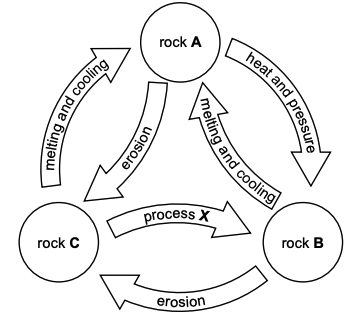
Identify the rock, A, B or C, that represents igneous rocks in Figure 1.1.
Was this exam question helpful?
Exam code: 0680
Figure 1.1 represents the rock cycle.
Identify the rock, A, B or C, that represents igneous rocks in Figure 1.1.
Was this exam question helpful?
Figure 1.1 represents the rock cycle.
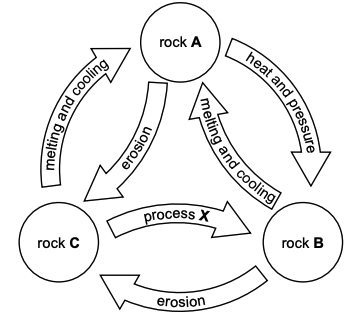
In Figure 1.1, process X changes rock C into rock B.
Circle the correct description of process X.
erosion
heat and pressure
melting and cooling
Was this exam question helpful?
Figure 1.2 shows terms used in the rock cycle and their descriptions.
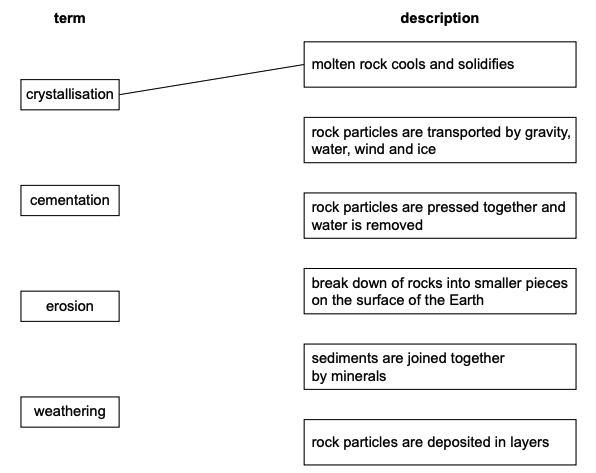
Draw one line from each term to its correct description.
One line has been done for you.
Was this exam question helpful?
Most sedimentary rocks are permeable.
Define permeability.
Was this exam question helpful?
Most sedimentary rocks are permeable.
Name a sedimentary rock that is:
permeable
impermeable
Was this exam question helpful?