14 marks
Outline why cold environments are fragile.
Was this exam question helpful?
Exam code: 7037
Outline why cold environments are fragile.
Was this exam question helpful?
Outline the impacts of human economic activity on cold environments.
Was this exam question helpful?
Outline the impacts of climate change on cold environments.
Was this exam question helpful?
Explain how the Trans-Alaska oil pipeline was designed to reduce its impact on permafrost.
Was this exam question helpful?
Outline how cold environments can be managed sustainably.
Was this exam question helpful?
Figure 11 and Figure 12 show information about the active layer and ground temperature in Svalbard, which is within the Arctic Circle. Figure 13 provides further information about the island of Svalbard.
Figure 11

Figure 12

Figure 13All buildings in the Svalbard settlements are built on piles driven into the permafrost, and roads, bridges, airports and other infrastructure are also constructed on permafrost. In addition, the permafrost is essential for stabilising steep mountainsides. There are also ramifications for natural vegetation. The most important consequence of the warming and thawing of the permafrost is, that large volumes of greenhouse gases, like CO2 (carbon dioxide) and CH4 (methane), may be released if ever deeper layers of the permafrost thaw. These gases have been kept out of the atmosphere because the organic carbon has been frozen in the ground. |
|---|
Using Figure 11, Figure 12, Figure 13 and your own knowledge, assess the potential impact of these data upon this area.
Was this exam question helpful?
Using Figure 1 and your own knowledge, to what extent do the challenges of cold environments outweigh the opportunities they present for human activity?
Figure 1: Human activities and their economic significance in the Swiss Alps, 2020
Activity | Annual economic value | Employment | Sustainability concern |
|---|---|---|---|
Winter ski tourism | CHF 3.2 billion | 50,000 direct jobs | High: ~70% of some resorts use artificial snowmaking; glacier-based skiing is threatened by retreat |
HEP generation | CHF 2.8 billion | 15,000 jobs | Medium: glacier retreat threatens long-term supply; reservoir maintenance costs are rising |
Alpine farming | CHF 0.4 billion | 8,000 farms | Low: traditional transhumance declining; EU subsidies support continuation |
Mineral and infrastructure | CHF 1.1 billion | 25,000 jobs | Medium: permafrost thaw destabilises infrastructure; rockfall risk is increasing |
Nature and walking tourism | CHF 0.9 billion | 12,000 jobs | Low: national parks protect key areas; climate change threatens habitats |
Source: adapted from Swiss Federal Statistical Office and Swiss Tourism Federation, 2020. CHF = Swiss francs. Sustainability concern ratings reflect expert assessment of climate-change risk to each activity.
Was this exam question helpful?
Figure 8 shows future challenges and opportunities in the Alps as the climate changes.
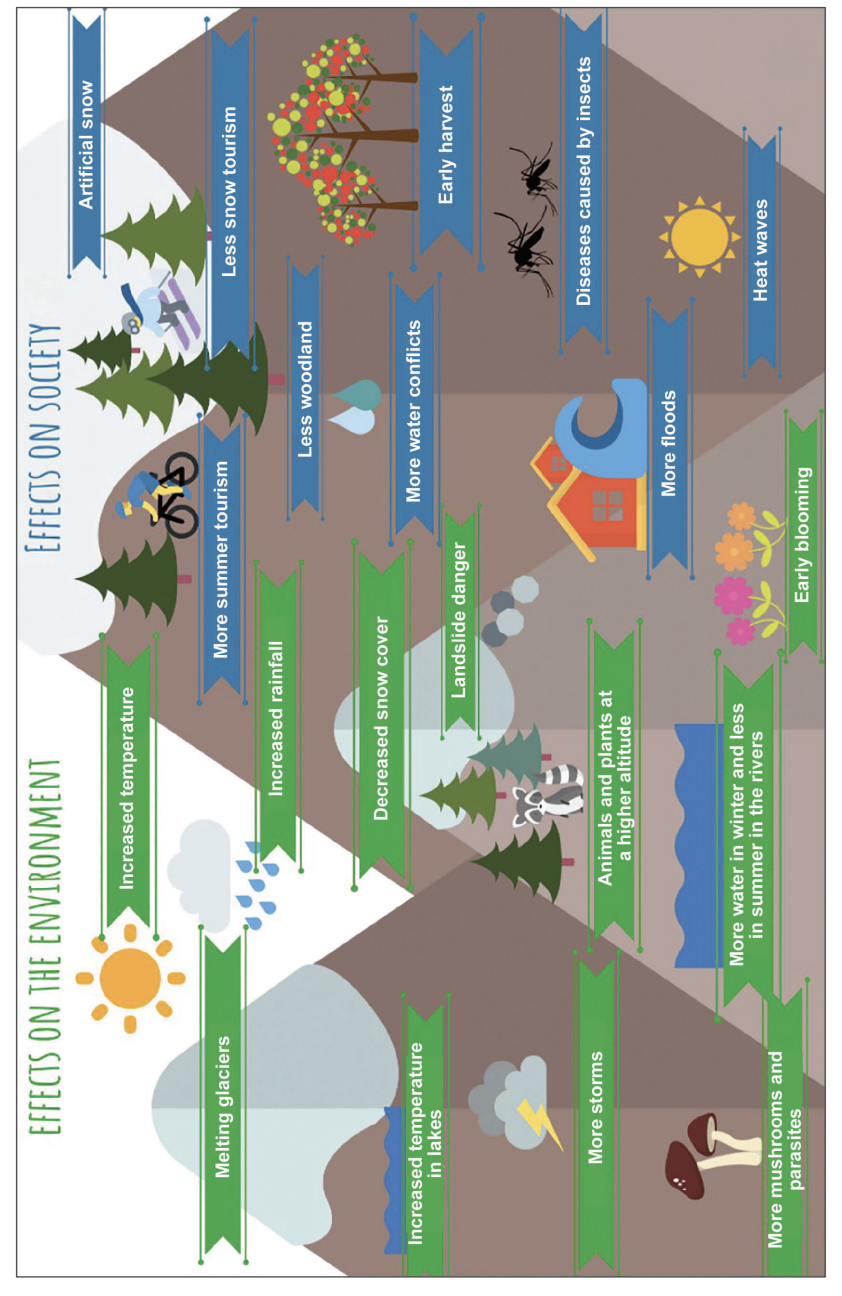
Using Figure 8 and your own knowledge, evaluate opportunities for developing a sustainable future for this region.
Was this exam question helpful?
Figures 8a and 8b are in the insert. Figure 8a shows trends in the onset of winter freeze-up in the Arctic Ocean and surrounding areas, 1979-2019. Figure 8b shows the change in the age of ice in the Arctic Ocean, 1985-2019.
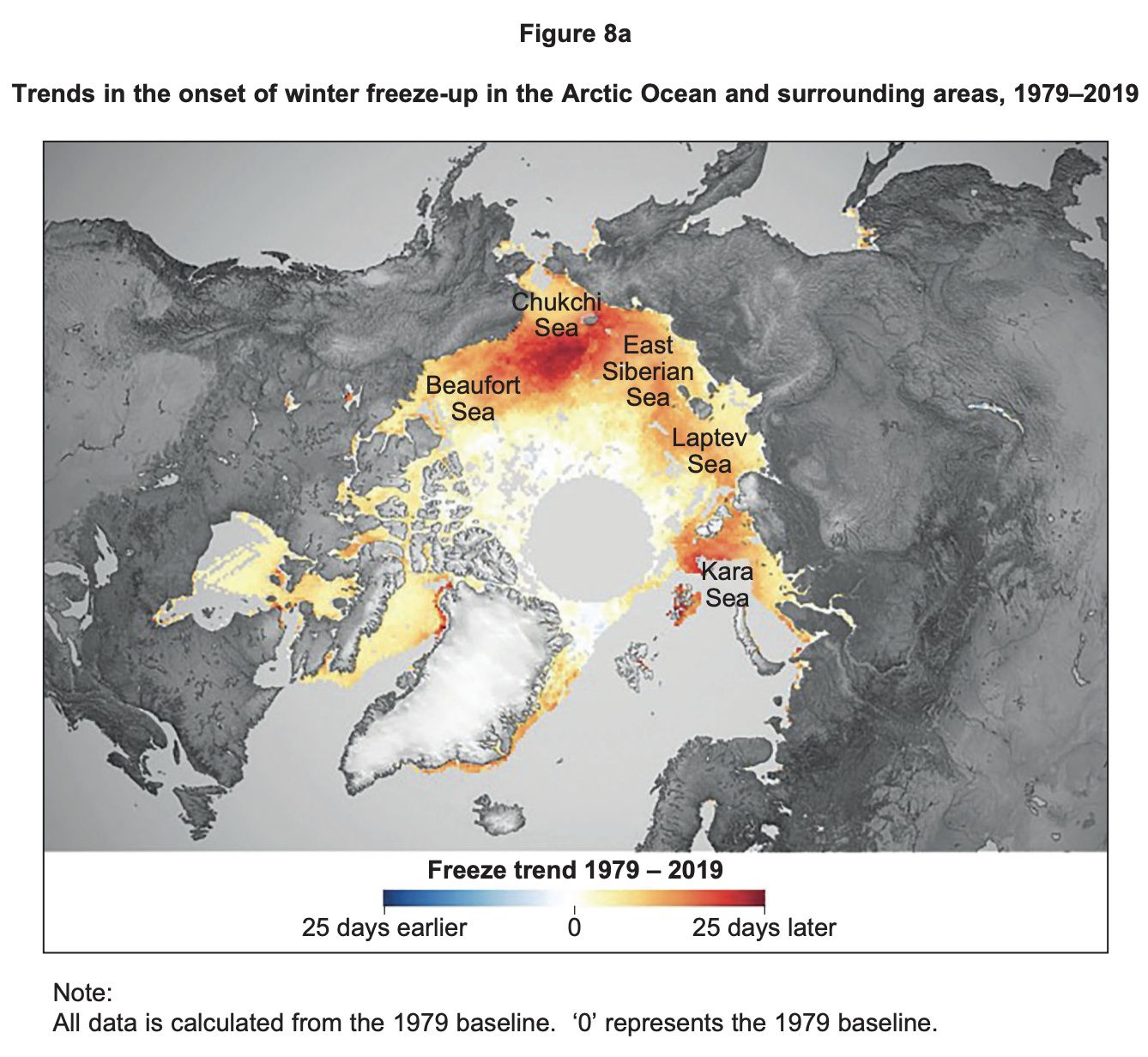
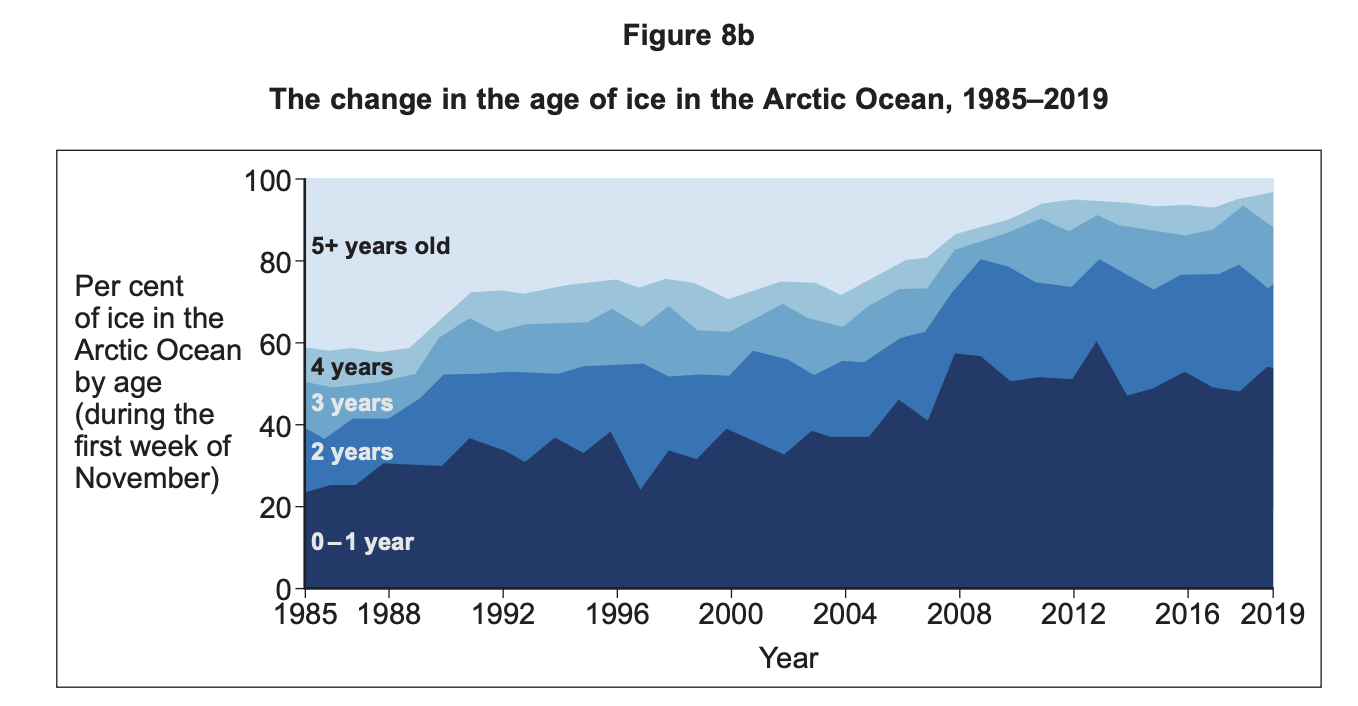
Using Figure 8a, Figure 8b and your own knowledge, assess the potential future for Arctic sea ice.
Was this exam question helpful?
Study Figure 1, which shows the mean ski-season length and the number of days with natural snow cover at an Alpine resort, by decade.
Figure 1 — Mean ski-season length and days with natural snow cover at an Alpine resort, by decade
Decade | Mean ski-season length (days) | Days with natural snow cover (days) |
|---|---|---|
1970s | 150 | 140 |
1980s | 145 | 130 |
1990s | 138 | 115 |
2000s | 128 | 95 |
2010s | 120 | 80 |
2020s | 110 | 65 |
Using Figure 1, analyse the changes shown.
Was this exam question helpful?
With reference to a glaciated landscape beyond the UK, assess the role of management in shaping alternative possible futures.
Was this exam question helpful?
With reference to a glaciated landscape from beyond the UK, assess the impact of human activity upon the natural systems and physical landscape.
Was this exam question helpful?
‘Warming taking place in fragile cold environments is set to generate unprecedented impacts affecting both people and the physical environment.’
To what extent do you agree with this view?
Was this exam question helpful?