Fires in Nature (AQA A Level Geography): Exam Questions

Exam code: 7037

2 hours13 questions
1
Sme Calculator
1 mark

What is an appropriate measure to tackle the spread of wildfire?

  • In higher income countries, insurance is available. Whilst this can be very costly, it does mean that any damage done during the event can be quickly rectified.

  • Replanting trees in fire-affected areas can quickly return the area to its original condition, thus preventing the spread of fire in any future event.

  • Education and warning systems can provide invaluable information to people in fire prone areas. Lookouts and regular patrols can help with early evacuation.

  • Use of retardants combined with controlled burning can contain a wildfire, provided this is well planned and co-ordinated in advance of the event.

2
Sme Calculator
1 mark

Which is the most significant natural factor leading to the spread of a wildfire?

  • Unplanned human activities in natural locations. These activities, such as smoking or campfires, often combine with the dropping of materials which are combustible. 

  • Lightning strikes, particularly in areas of dense population that have very dry conditions in summer months. California is one such state in the USA.

  • Controlled burning by farmers undertaken to remove scrub land which may have been left fallow. This removes large areas of vegetation and allows for the planting of crops.

  • Prolonged periods of drought and high rates of evapotranspiration, especially in the summer months in sub-tropical climates. A strong dry wind increases the risk.

3
4 marks

Outline the conditions needed for a wildfire.

4
4 marks

Outline the causes of wildfires.

5
4 marks

Outline the impacts of wildfires.

1
Sme Calculator
9 marks

How far do you agree that global governance is crucial in meeting the challenge of reducing incidence of wildfires?

2
Sme Calculator
9 marks

Figure 10 shows a wildfire on Saddleworth Moor, Greater Manchester, UK on 27 June 2018.

Figure 10

fig-10-paper1-june2019-aqa-alevel-geography

Note: Saddleworth Moor is an upland area north east of Manchester. The soils are composed of peat. In June 2018, there was a heatwave which was accompanied by virtually no rain and a dry wind for several weeks. Around 150 soldiers and firefighters were called in to tackle the blaze. The blaze lasted for weeks and may have been started deliberately.

Using Figure 10 and your own knowledge, assess the potential issues associated with managing an event such as this.

3
6 marks

Using Figure 1 and your own knowledge, assess the factors that explain the global distribution of wildfires shown.

Figure 1: Area burned by wildfires by world region (million hectares per year), comparing average 2000–2010 with average 2011–2022

Region

2000–2010 average (million ha/year)

2011–2022 average (million ha/year)

Sub-Saharan Africa

180

195

South America

42

68

Southeast Asia

28

47

North America

8

14

Australia

11

19

Europe and Central Asia

4

9

Source: Global Fire Emissions Database (GFED), 2023

4
9 marks

Explain how the physical characteristics of wildfires can influence the scale of their impacts.

5
6 marks

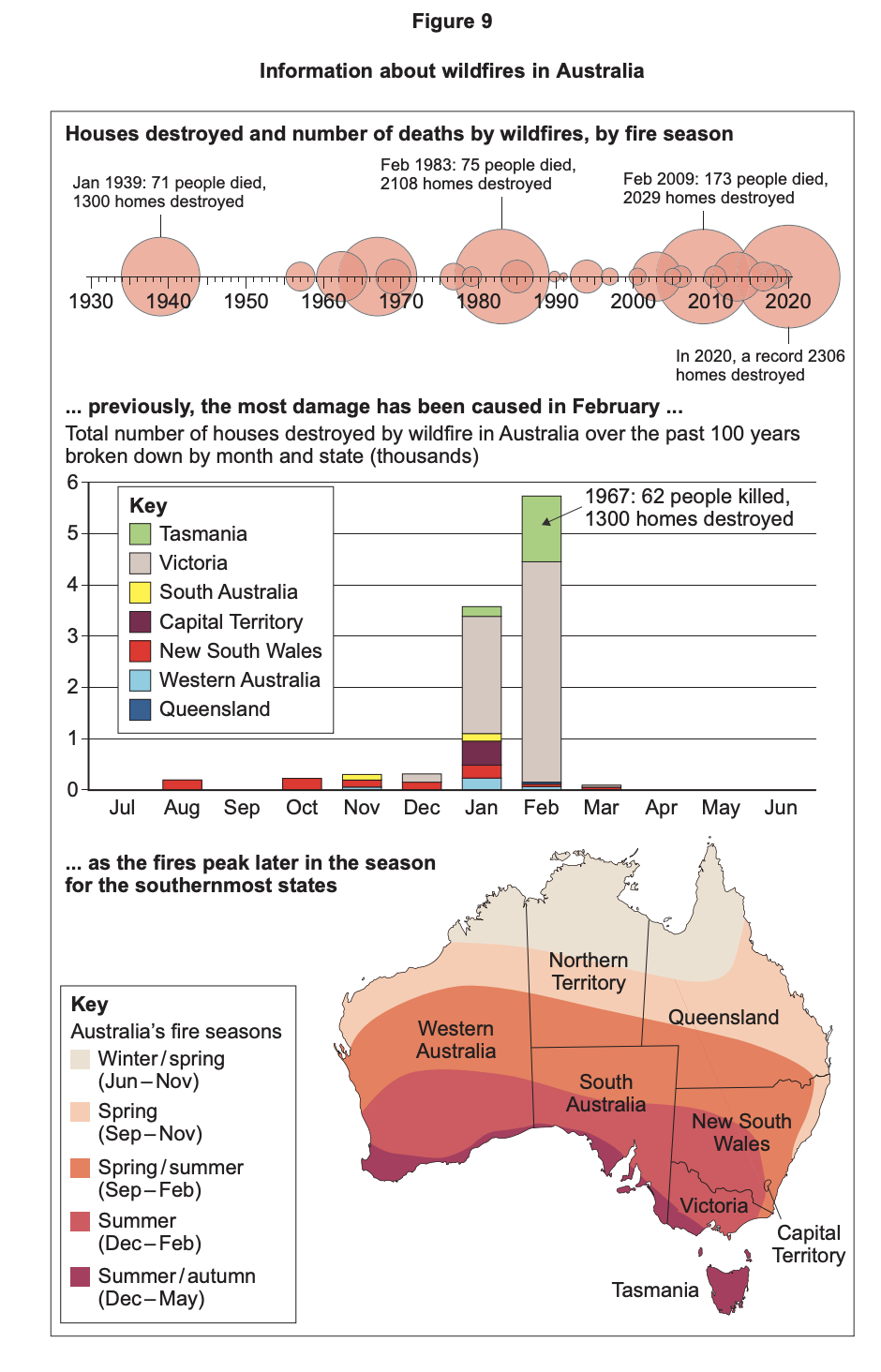
Figure 9 is in the insert. Figure 9 shows information about wildfires in Australia.

Infographic on Australian wildfires showing major deadly seasons, monthly house losses by state peaking in February, and a map of varying regional fire seasons

To what extent does Figure 9 show that wildfires are increasing in intensity and severity?

1
Sme Calculator
20 marks

How far do you agree that storms and wildfires are increasing in frequency and intensity, presenting an increasing threat to people?

2
20 marks

'The Hazard Management Cycle is useful in minimising the impact of wildfires.'

Evaluate this view with reference to a wildfire event that you have studied.

3
20 marks

'Human activity is the main cause of wildfires.'

To what extent do you agree?