Ecosystems & Processes (AQA A Level Geography): Exam Questions

Exam code: 7037

2 hours18 questions
1
Sme Calculator
1 mark

What is a seral stage?

  • This is a stage where human activity has led to the creation of a sub-climax within the ecosystem. Until the human activity ceases the seral stage will remain.

  • This is a stage whereby no further changes will occur in the succession. The only change that will occur is due to human activity or as a response to environmental change.

  • This is a stage in the development of the ecosystem as it progresses towards climax. New species which are better adapted to the conditions outcompete a declining species.

  • This is a stage in the food web. For example, primary consumers feed off the producers. This would be the second seral stage in the development of the food web.

2
Sme Calculator
1 mark

What are trophic levels?

  • These are stages of a food chain or food web. At each new stage there are species which take energy from those in the previous stage. This process supports life.

  • This is a stage in succession of plants in an ecosystem. At each new stage a better adapted species will dominate the local environment as it claims a niche in the local conditions.

  • Trophic levels are a type of species which is responsible for the decay process in the ecosystem. These detritivores consume the dead matter and create conditions for regrowth.

  • Trophic levels are a measure of the biodiversity within an ecosystem. An ecosystem with high trophic levels is considered to be healthy and free from human interference.

3
Sme Calculator
1 mark

Why is weathering important in nutrient cycling?

  • Weathering allows for eroded material to be carried away by aeolian processes. As the eroded material settles in new locations, plant colonisation begins, eg sand dunes.

  • Weathering releases important minerals which decomposers further break down. Bacteria and fungi break down rock particles for future uptake by plants in the cycle.

  • The weathered material is a key part of decomposition. Climate directly impacts upon leaf litter to aid the decomposition process. From this nutrients are released.

  • Weathering processes are essential in the development of healthy soils. Weathered materials are mixed with biotic matter and become available for uptake by plants.

4
Sme Calculator
1 mark

What is a pioneer species?

  • Following a drought, there is almost always significant die-back for most plant species. In these conditions, xerophytic pioneers colonise the area with limited competition.

  • Pyrophytes are adapted to cope with conditions associated with wildfire. Root systems can cope with loss of vegetation above ground. This vegetation quickly returns after fire.

  • Plant species which require very few nutrients to survive and will colonise bare rock. These species are the first to colonise following a volcanic eruption and succession follows.

  • Once human activity has altered the climatic climax vegetation, the species are quick to adapt to the niche which is created. Pioneers readily exploit the available environment.

5
Sme Calculator
1 mark

What is net primary productivity (NPP)?

  • NPP is the biomass (minus respiration) produced in an ecosystem. It is a measure of the rate at which an ecosystem can capture and store carbon, usually measured in g/m2 /yr.

  • NPP relates to the productivity of land for the purposes of agriculture. The addition of nitrate-based fertilisers or genetically modified crops dramatically increases NPP.

  • As plants respire they take in oxygen and release carbon dioxide. NPP is a measure of how much oxygen is produced by plants in an ecosystem. This rate is measured as O2/m3 /yr. 

  • NPP is the total amount of chemical energy (as biomass) that primary producers create in a given length of time. This is the rate at which decomposition occurs in an ecosystem.

6
4 marks

Outline processes involved in mineral nutrient cycling in an ecosystem.

7
4 marks

Outline the concept of net primary production.

8
Sme Calculator
4 marks

Explain the concept of sub climax in succession.

1
Sme Calculator
9 marks

Analyse the role of nutrient cycling within a hydrosere or lithosere that you have studied.

2
Sme Calculator
9 marks

Assess the impact of declining biodiversity upon a major terrestrial biome that you have studied.

3
Sme Calculator
6 marks

Figure 11, shows data related to Main Trophic Index (MTI) in selected sea areas around Europe between 1950 and 2004. MTI indicates the percentage change in top marine predators.

Figure 12, on the insert, shows data related to the status of fish stocks in selected fishing regions around Europe in 2008.

Analyse the data shown in Figure 11 and Figure 12.

main-trophic-index-european-seas

Figure 11: Main Trophic Index (MTI) of selected sea areas around Europe between 1950 and 2004 showing change in top marine predators.

fish-stocks-europe-2008

Figure 12: Note: The size of each circle is proportional to the magnitude of the regional catch. The numbers in the circles indicate the number of stocks assessed within the given region.

4
Sme Calculator
9 marks

Analyse the human and ecological inter-relationships which lead to the development of a plagioclimax.

5
6 marks

Figure 2 shows net primary productivity (NPP) data for a selection of the world's major terrestrial biomes.

Biome

Mean annual temperature (°C)

Mean annual precipitation (mm)

Mean NPP (g/m²/yr)

Range of NPP (g/m²/yr)

Tropical rainforest

25–28

2000–4000

2200

1000–3500

Tropical savanna

20–25

500–1500

900

200–2000

Temperate deciduous woodland

5–15

500–1500

1200

600–2500

Temperate grassland

5–15

250–750

600

200–1500

Boreal forest (taiga)

−5–5

300–850

800

400–2000

Hot desert

20–35

0–250

90

10–250

Tundra

−15–5

150–350

140

10–400

Wetlands

10–25

1000–3000

2000

800–4000

Source: adapted from Whittaker (1975) and subsequent biome productivity studies.

Using Figure 2, analyse the relationship between climate and net primary productivity across these biomes.

6
9 marks

Assess the relative importance of different physical factors in a region experiencing ecological change.

7
9 marks

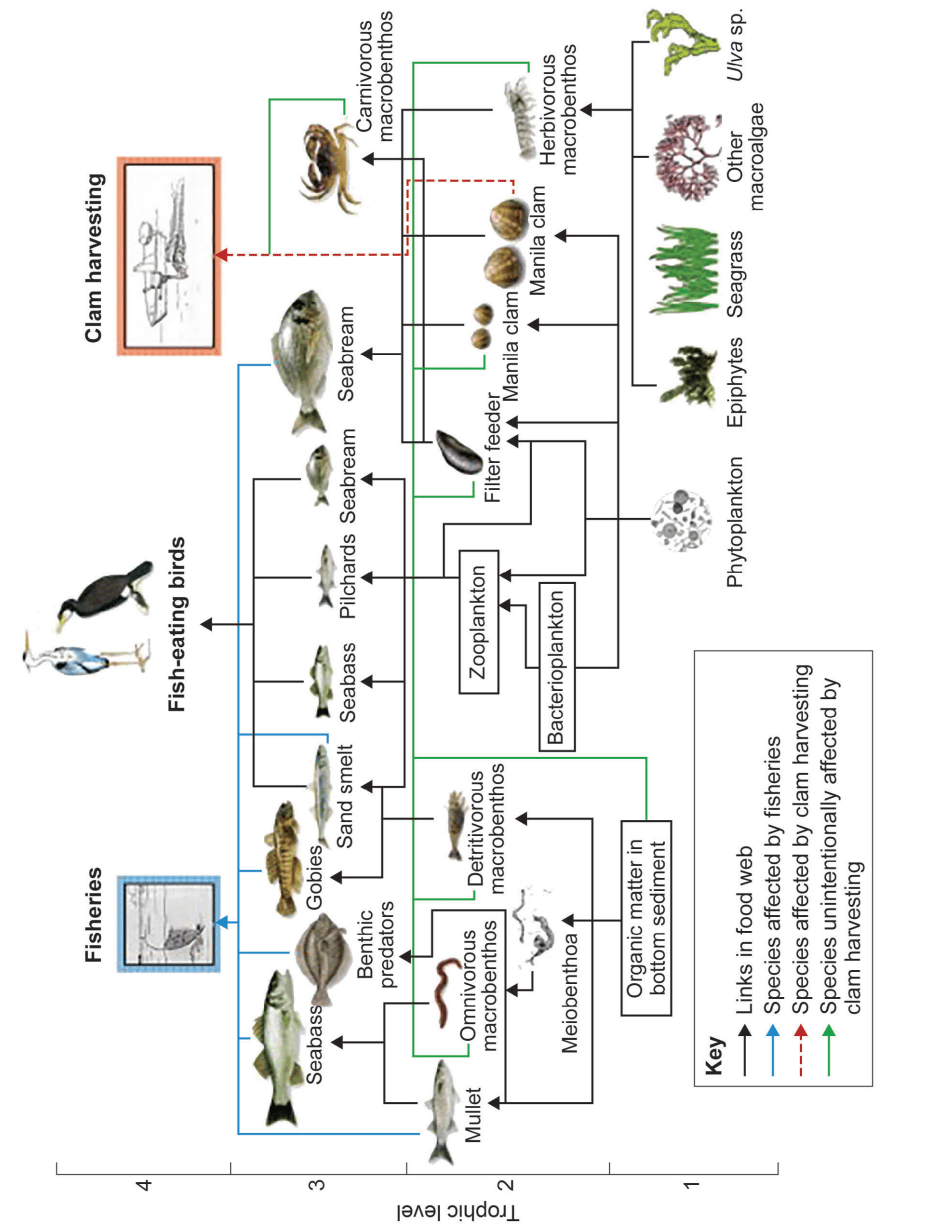
Figure 12 shows a food web diagram of a coastal lagoon in Italy.

Diagram of a coastal marine food web showing trophic levels, from phytoplankton and sediment organisms to fish, seabirds and human fisheries impacts
Figure 12 - Food web diagram of a coastal lagoon in Italy

Using Figure 12 and your own knowledge, assess the potential impact of human activity on this food web.

1
20 marks

With reference to ecosystems that you have studied, assess the view:

'Climate change is now the primary driver of ecosystem stress at all scales.'

2
20 marks

'The flow of energy is more important than the cycling of nutrients in maintaining an ecosystem.'

To what extent do you agree?

3
20 marks

'Ecosystems can always recover from disturbance.'

To what extent do you agree?