Stratospheric Ozone (College Board AP® Environmental Science): Revision Note

What is the stratospheric ozone layer?
The atmosphere is a 10,000 km layered envelope of mixed gases
Its layers are based on temperature changes and consist of 78% nitrogen, 21% oxygen and 1% trace gases
Gravity compresses 99% of the atmosphere to within 40 km of the Earth's surface
50% of the atmosphere is in the first 5.6 km
Atmospheric layers
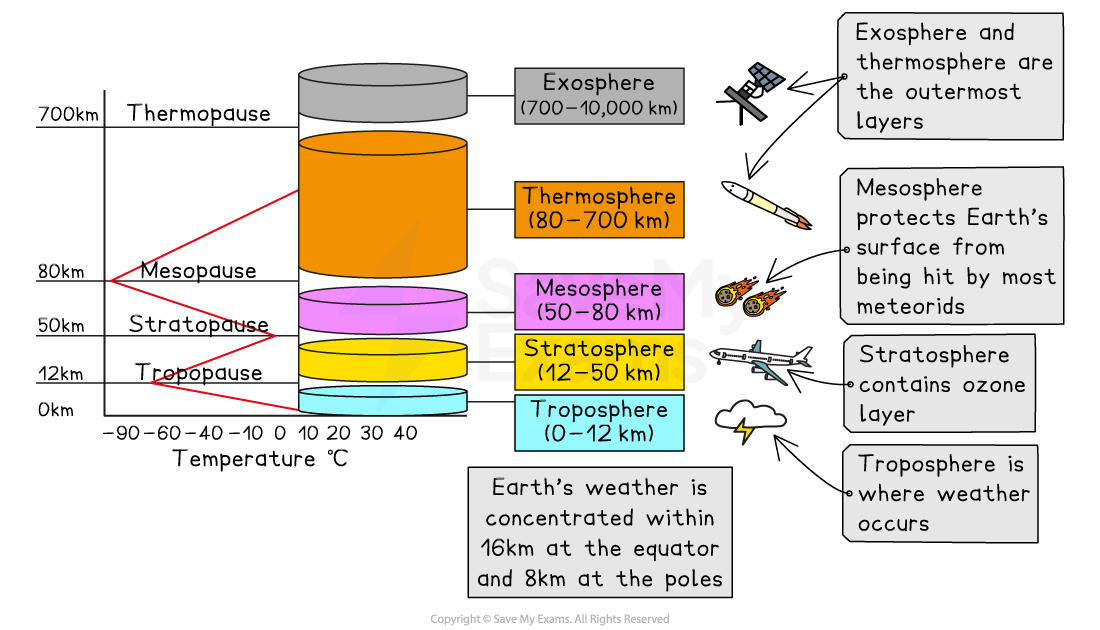
The stratosphere is the second layer of Earth's atmosphere and extends roughly 38 km (24 miles) between the troposphere and the mesosphere
Within the first 3-20 km of the lower stratosphere (15–30 km or 10-20 miles above the Earth's surface) lies the stratospheric ozone layer
This region of the stratosphere contains the highest concentration of ozone gas
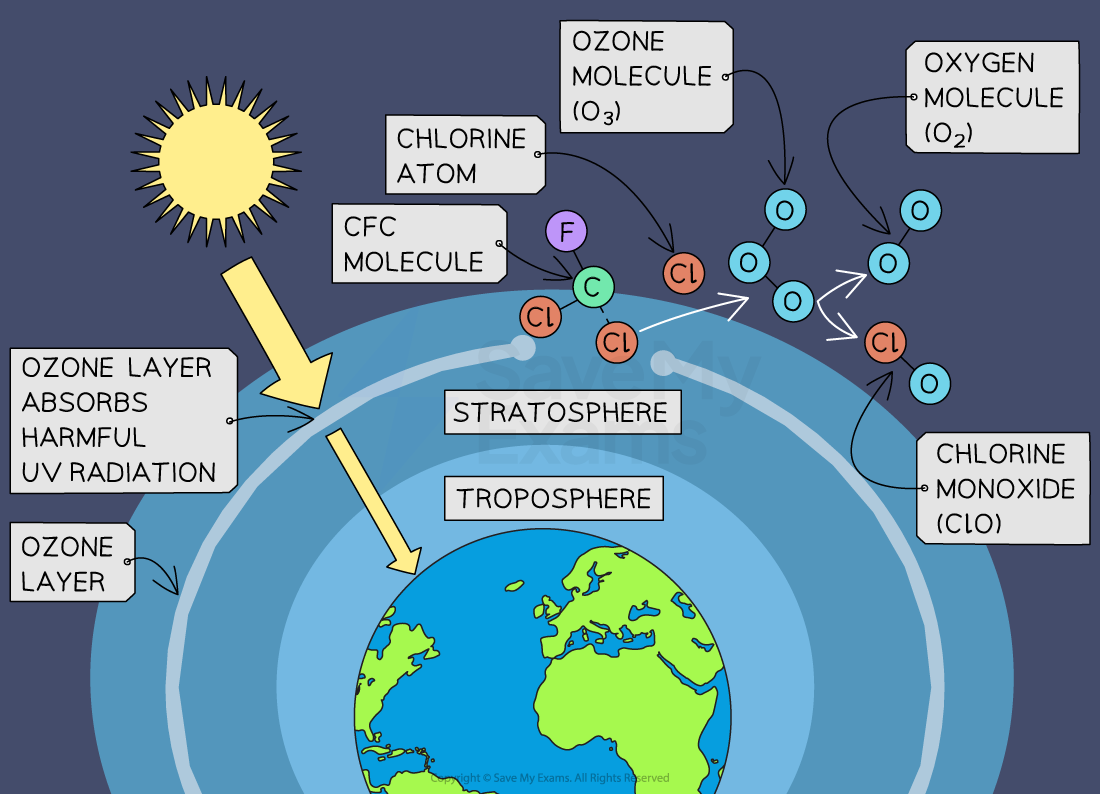
This layer serves as a natural 'sunscreen' for life on Earth by absorbing the majority of the sun's harmful ultraviolet (UV) radiation before it reaches the planet's surface
Ozone
Ozone is a molecule composed of three oxygen atoms (O₃)
Ozone is made naturally in the stratosphere through a two-step reaction
In the first step, solar ultraviolet radiation splits one ozone molecule (O₃) into one single oxygen atom (O) and an oxygen molecule (O₂)
In the second step, each oxygen atom (O) collides with another oxygen molecule (O₂) to produce an ozone molecule (O₃)
The largest ozone production occurs in the tropical stratosphere because this area has the highest levels of insolation
Under normal conditions, there is a continuous cycle of ozone formation and destruction, which creates a dynamic equilibrium in the stratosphere
This keeps the concentration of ozone relatively stable over time

Some stratospheric ozone is transported down into the troposphere, which increases ozone levels at Earth’s surface, particularly in remote, unpolluted regions of the globe
Examiner Tips and Tricks
Remember that stratospheric ozone is good ozone. It filters out ultraviolet radiation.
It is tropospheric ozone that is a harmful air pollutant that damages plants and human health.
Stratospheric ozone depletion
Ozone can be destroyed faster than it is created when certain substances reach the stratosphere — this is called stratospheric ozone depletion
The main culprits are chlorofluorocarbons (CFCs) — synthetic compounds containing chlorine atoms
Historically used in aerosol sprays, refrigerants, and foam-blowing agents
Other halogen-containing compounds also contribute, including halons (used in fire extinguishers, contain bromine) and methyl bromide (used as a soil fumigant)
In the stratosphere, UV radiation breaks these compounds apart, releasing reactive chlorine (Cl) and bromine (Br) atoms
These atoms catalyse the destruction of ozone
One chlorine atom can destroy over 100,000 ozone molecules before it is removed from the stratosphere
Because the atom is regenerated in each cycle, it keeps destroying ozone until it eventually leaves the stratosphere
Natural sources
Natural processes, such as large volcanic eruptions, have an indirect effect on ozone levels
Mt. Pinatubo's 1991 eruption produced large amounts of aerosols (small particles) that increased chlorine's effectiveness at destroying ozone, although the effect was short-lived
Polar stratospheric clouds (PSCs) form during the long, cold Antarctic winter
These clouds consist of tiny ice crystals in the stratosphere
Chlorine compounds, mainly man-made CFCs, are trapped within the ice crystals, forming chlorine reservoirs
During the Antarctic spring, the returning sunlight melts the ice crystals, releasing and reactivating the chlorine atoms
This causes rapid stratospheric ozone depletion and the formation of the 'ozone hole' over Antarctica
Not all chlorine and bromine sources cause ozone layer depletion
Chlorine from pools, factories, sea salt, and volcanoes does not reach the stratosphere
Because CFCs and halons are stable and do not dissolve in rain, there are no natural processes that remove them from the lower atmosphere
Examiner Tips and Tricks
Do not confuse global warming with ozone depletion. Know the differences in causes and effects. Ozone depletion is the thinning of the ozone layer and global warming is the raising of atmospheric temperatures. Although the ozone layer is thinner, it does not allow increased levels of heat into the atmosphere, only ultraviolet light.
Effects of stratospheric ozone depletion
Ozone depletion refers to the gradual thinning of the ozone layer in the Earth's stratosphere
Stratospheric ozone depletion leads to increased levels of harmful ultraviolet (UV) radiation reaching the Earth's surface
This negatively impacts human health, including
Higher UV-B radiation exposure significantly increases the risk of skin cancer, particularly melanoma, the most dangerous form
Increased UV radiation can lead to the development of cataracts, clouding of the lens in the eye
Excessive UV exposure can weaken the immune system, making individuals more susceptible to infections
Chronic exposure to UV radiation accelerates the ageing process of the skin, causing the breakdown of collagen and elastin fibres, leading to wrinkles, sagging skin and the development of age spots
Sunburn occurs when the skin is exposed to excessive UV rays that trigger an inflammatory response as a defence mechanism indicating damage to the skin cells
Ecosystems are damaged, affecting productivity
UV radiation can harm phytoplankton, the base of the marine food chain, impacting aquatic ecosystems
High UV levels can damage plant tissues, affecting crop yields and plant productivity
Disruptions in ecosystems due to UV damage can affect various species and alter food webs
Clothing and construction materials exposed to UV rays are damaged and degrade
Fabrics, plastics, paints and building materials may become brittle, faded or weakened, reducing their durability and lifespan
This degradation not only affects the aesthetic appearance of materials but also compromises their structural integrity and functionality
Examiner Tips and Tricks
Don't confuse ozone depletion with the ozone hole.
Ozone depletion affects the entire Earth's stratosphere.
The ozone hole is an area of very low stratospheric ozone.
The hole is predominantly over Antarctica in spring but can extend to South America and the Falkland Islands. There is only one hole, but it changes size and location depending on seasonal conditions.

Unlock more, it's free!
Join the 100,000+ Students that ❤️ Save My Exams
the (exam) results speak for themselves:

Was this revision note helpful?
Build on this topic