Global Industries & Multinational Corporations (Edexcel A Level Business): Exam Questions

Exam code: 9BS0

3 hours20 questions
1
4 marks

Extract E

Pfizer merges with Allergan

In 2015, American healthcare business, Pfizer, announced a merger with Irish Botox maker, Allergan plc, in a deal worth 160bn US dollars. The merger created the world's largest producer of drugs and shifted Pfizer's headquarters to Ireland – a member of the European Union. Its headquarters are in Dublin; the business also manufactures in Cork and Sligo. This was the biggest ever instance of a US company relocating its headquarters overseas in order to lower its taxes.

The deal provided access to about 70 additional worldwide markets for specialist Allergan products, such as Botox wrinkle treatment, Alzheimer's drug Namenda and dry-eye medication Restasis. It was not known at that time how many jobs would be lost as a result of the merger.

For 166-year-old Pfizer, Allergan was the fourth merger or takeover in the previous 15 years, following the purchases of Warner-Lambert, Pharmacia and Wyeth. Pfizer made profits of 9.135bn US dollars in 2014. This also caps a record year for global healthcare mergers, taking their total value in 2015 to more than 600bn US dollars.

(Source: adapted from http://www.reuters.com/article/usallergan-m-a-pfizer-idUSKBN0TB0UT20151124)

Extract F

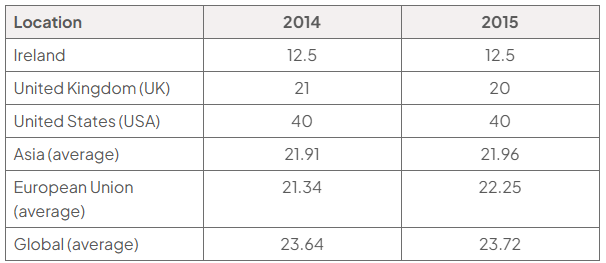
Top rate of Corporation Tax as (%) of profits in selected economies

Table of top corporation tax rates as a percentage of profits: Ireland 12.5% in 2014 and 2015; UK 21% and 20%; USA 40% both years; Asia, EU and global averages 21.91/21.96%, 21.34/22.25% and 23.64/23.72%.

(Source: adapted from https://home.kpmg.com/xx/en/home/services/tax/ tax-tools-and-resources/tax-rates-online/corporate-tax-rates-table.html)
Extract G

Multinationals and the economy of Ireland

In 2015, Microsoft was Ireland's largest business, with a turnover of €19.8bn, and became one of the seven multinationals in the top ten largest businesses in Ireland. Just three Irish companies made it into the top ten, with CRH (building materials) in second place and Irish energy company DCC taking fifth place. Google took third place, with other IT businesses Dell and Oracle also in the top 10. Facebook climbed nine places to 28th.

The role of multinationals is a hotly debated topic, not only in Ireland but internationally too.

Foreign multinationals bring with them knowledge and technology; there are also gains from the increased competition generated by incoming firms. However, evidence of direct effects in Ireland is mixed. There are positive impacts from multinationals in sectors such as software and pharmaceuticals. Some evidence of a positive relationship between Foreign Direct Investment (FDI) and increased exports and productivity also exists.

Multinationals have had an impact on the labour market of Ireland, including on the average wage of the workers in the Irish economy. A high demand for high-skilled labour may lead to skill shortages, most notably in the IT sector.

(Sources: adapted from http://www.independent.ie/opinion/columnists/dan-obrien/weshould-eke-more-entrepreneurs-out-of-multinationals-31579675.html http://businessetc.thejournal.ie/irelands-biggest-companies-2116085-May2015/)

Explain one economic benefit to Ireland of being chosen as the headquarters location of businesses such as Pfizer

2
4 marks

Extract D

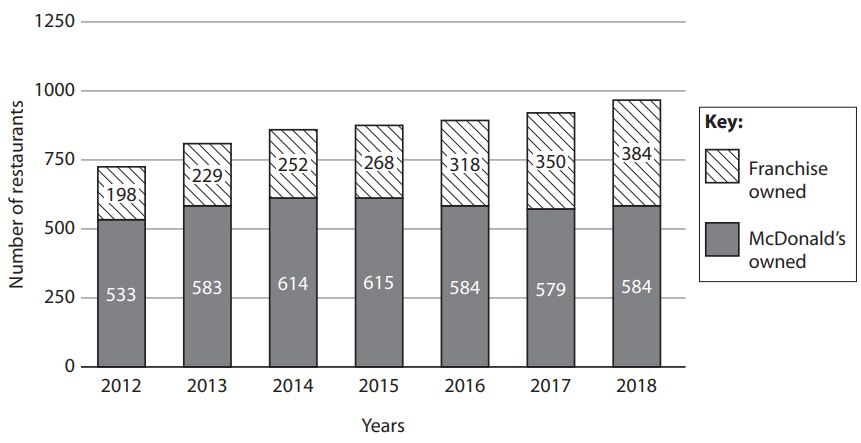
Total number of McDonald's restaurants in Brazil

Chart showing the total number of McDonald's restaurants in Brazil.

(Source: adapted from https://www.statista.com/statistics/812580/number-mcdonaldsrestaurants-type-brazil/)

Extract E

Taco Bell opens first Rio de Janeiro location

American fast-food business, Taco Bell, has joined an already crowded market.

"Brazil has great potential both in terms of its geography and its food consumption," said Taco Bell's Director of Operations in Brazil. She added, "Operating on a larger scale is important, because it allows us to reduce the cost of inputs and services." The company's current goal is to have up to 200 locations by 2027.

As well as Taco Bell's popular Tex-Mex dishes, including the 'Crunchwrap Supreme' and the 'XXL Grilled Stuft Burrito,' Taco Bell has made sure to add local flavour to its traditional menu. For example, in São Paulo, it added the local drink maté.

Currently, all the branches in Brazil will be company-owned, but Taco Bell is considering franchising in the future.

(Source: adapted from https://riotimesonline.com/brazil-news/rio-business/taco-bell-opensfirst-rio-location-in-barra-da-tijuca/)

Extract F

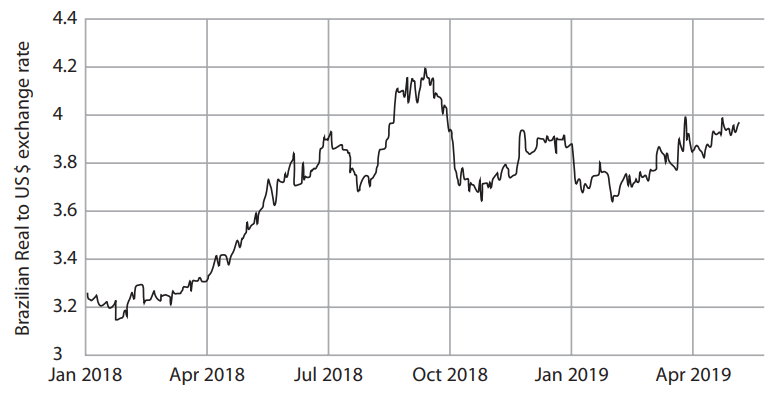
Brazilian Real to US dollar exchange rate 2018–19

Line chart showing the Brazilian Real to US dollar exchange rate over 2018 and 2019.

(Source: adapted from https://tradingeconomics.com/brazil/currency)

Extract G

Multinationals in Brazil

Food and beverage multinationals provide a range of benefits to the Brazilian economy. They are responsible for 10% of Brazil's economic output and together employ 1.6 million people. Specifically, Nestlé employs 21,000 people in Brazil and has started an apprenticeship programme training 7,000 people under the age of 30.

However, in 2006, the Brazilian government, recognising the health problems caused by some multinational food businesses, introduced regulations to curb obesity and disease. These measures included advertising to warn consumers about foods high in sugar, salt and saturated fats. There were also marketing restrictions on sugary drinks aimed at children. The new rules also stopped brands such as Pepsi and KFC from sponsoring sports and cultural events.

Brazilian business, Citrosuco, exports 50% of the total orange juice exported to the USA, a total market worth 1.4 billion US dollars. One of the American companies Citrosuco sells to is Tropicana, owned by PepsiCo.

However, a report in 2015, from the pressure group Supply Cha!nge, criticised working conditions in the Brazilian orange juice industry. The report alleged that high pesticide use led to unsafe working conditions and even deaths. It also stated workers were sometimes unpaid for weeks and trapped in employment contracts that kept them in debt.

(Source: adapted from https://www.nytimes.com/interactive/2017/09/16/health/brazilobesity-nestle.html and https://www.cnbc.com/2018/08/23/brazil-florida-orange-juice-tarifftrade-war.html)

Explain one way in which the actions of multinationals may be impacted by the actions of pressure groups

3
4 marks

Extract G

Ford and Mahindra joint venture

Mahindra, an Indian-based car manufacturer, and Ford have signed a deal to develop a new Sports Utility Vehicle (SUV) for the Indian market. These will have a Ford body and badge, but will be based on a car chassis (frame) that will be made by Mahindra.

The deal will see Mahindra and Ford cooperate with each other for a period of three years. While Ford may gain economies of scale and a lower cost structure from Mahindra's new car chassis, Mahindra will get access to Ford's engineering knowledge. Mahindra will also get support in global emerging markets, including Ford's manufacturing and car distribution network. The Managing Director of Mahindra Ltd said, "Both teams are working together and building on mutual strengths. We are excited about the synergies unveiled through this joint venture and the potential opportunities it will bring."

(Source: adapted from https://auto.ndtv.com/news/ford-and-mahindraconfirm-jointly-developed-suvs-electric-car-for-india-1827425)

In late 2020, Ford and Mahindra decided to call off their joint venture due to challenges caused by the COVID-19 pandemic. Two years later Ford announced that all manufacturing in the country would come to an end

Explain one impact on the Indian economy of Ford's decision to cease production

4
4 marks

Extract D

Total number of McDonald's restaurants in Brazil

Chart showing the total number of McDonald's restaurants in Brazil.

(Source: adapted from https://www.statista.com/statistics/812580/number-mcdonaldsrestaurants-type-brazil/)

Extract E

Taco Bell opens first Rio de Janeiro location

American fast-food business, Taco Bell, has joined an already crowded market.

"Brazil has great potential both in terms of its geography and its food consumption," said Taco Bell's Director of Operations in Brazil. She added, "Operating on a larger scale is important, because it allows us to reduce the cost of inputs and services." The company's current goal is to have up to 200 locations by 2027.

As well as Taco Bell's popular Tex-Mex dishes, including the 'Crunchwrap Supreme' and the 'XXL Grilled Stuft Burrito,' Taco Bell has made sure to add local flavour to its traditional menu. For example, in São Paulo, it added the local drink maté.

Currently, all the branches in Brazil will be company-owned, but Taco Bell is considering franchising in the future.

(Source: adapted from https://riotimesonline.com/brazil-news/rio-business/taco-bell-opensfirst-rio-location-in-barra-da-tijuca/)

Extract F

Brazilian Real to US dollar exchange rate 2018–19

Line chart showing the Brazilian Real to US dollar exchange rate over 2018 and 2019.

(Source: adapted from https://tradingeconomics.com/brazil/currency)

Extract G

Multinationals in Brazil

Food and beverage multinationals provide a range of benefits to the Brazilian economy. They are responsible for 10% of Brazil's economic output and together employ 1.6 million people. Specifically, Nestlé employs 21,000 people in Brazil and has started an apprenticeship programme training 7,000 people under the age of 30.

However, in 2006, the Brazilian government, recognising the health problems caused by some multinational food businesses, introduced regulations to curb obesity and disease. These measures included advertising to warn consumers about foods high in sugar, salt and saturated fats. There were also marketing restrictions on sugary drinks aimed at children. The new rules also stopped brands such as Pepsi and KFC from sponsoring sports and cultural events.

Brazilian business, Citrosuco, exports 50% of the total orange juice exported to the USA, a total market worth 1.4 billion US dollars. One of the American companies Citrosuco sells to is Tropicana, owned by PepsiCo.

However, a report in 2015, from the pressure group Supply Cha!nge, criticised working conditions in the Brazilian orange juice industry. The report alleged that high pesticide use led to unsafe working conditions and even deaths. It also stated workers were sometimes unpaid for weeks and trapped in employment contracts that kept them in debt.

(Source: adapted from https://www.nytimes.com/interactive/2017/09/16/health/brazilobesity-nestle.html and https://www.cnbc.com/2018/08/23/brazil-florida-orange-juice-tarifftrade-war.html)

Explain one reason why the Brazilian government encourages multinational brands such as Nestle to set up manufacturing facilities in the country

5
4 marks

Extract H

Changes at Volkswagen (VW)

VW aims to create 9,000 new jobs as it shifts to self-driving cars. The new Chief Executive, Matthias Müller, said it was "the biggest modernisation programme in the history of the group's core brand. The VW brand needs a real shake-up".

During a presentation at the Paris Motor Show, Matthias Müller said that VW has teamed up with Gett, a rival to Uber, to create a self-driving mobility service for businesses.

In 2016, VW cut 30,000 jobs globally, partly due to the falling popularity of its diesel cars. This was a consequence of VW being fined 15bn US dollars for cheating in emission tests on its diesel cars. The VW brand was struggling even before the emissions scandal damaged its reputation. It had weak profitability, high labour costs and a complex organisational structure.

(Sources: adapted from © Independent Digital News and Media Ltd and © Associated Newspapers Ltd)

Using the information in Extract H, explain why multinational companies are sometimes accused of behaving unethically

6
4 marks

Extract B

Ashborne Pharmaceuticals plc

Ashborne Pharmaceuticals plc is a UK-based multinational with operations in 31 countries. It holds the patent on a treatment for a rare childhood liver condition.

The treatment costs Ashborne £40 per course to manufacture. In high-income countries it is sold to health services for £2,800 per course. In eleven lower-income countries where the condition is most common, almost no patients can afford it, and Ashborne sells fewer than 200 courses a year there.

Nothing Ashborne does is unlawful. Its patent is valid and its pricing is legal in every country in which it operates.

At the 2026 annual meeting, a shareholder asked the board whether "legal" and "right" were the same thing. Chief Executive Marianne Osei replied: "They are not, and that is the whole difficulty."

Using Extract B, explain one reason why Ashborne Pharmaceuticals plc faces an ethical dilemma

7
4 marks

Extract A

Kelverton Group plc

Kelverton Group plc is a multinational that sells home audio equipment. Its UK subsidiary sells to UK customers, while the group's brand and designs are owned by a holding company in Ireland.

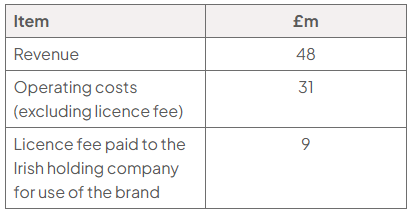
UK subsidiary results for 2026:

Table of UK subsidiary results in £ millions: revenue £48m; operating costs excluding licence fee £31m; licence fee paid to the Irish holding company for use of the brand £9m.

Corporation tax is charged at 25% in the UK and 12.5% in Ireland. The Irish holding company has no costs other than the licence income it receives.

Using the data in Extract A, calculate the total corporation tax that Kelverton Group plc will pay on its 2026 UK trading. You are advised to show your working

8
4 marks

Extract C

Marrenden Stores plc

Marrenden Stores plc is a multinational supermarket group operating in 19 countries. In 2025 it opened a 4,000 square metre hypermarket on the edge of Radnowo, a Polish town of 28,000 people.

The store employs 240 people, most of them part-time, at wages around 8% above the local average.

In the two years since it opened, 11 of the town's 34 independent food shops have closed. Marrenden buys 94% of its stock centrally through its European distribution centre in Germany; before it arrived, the town's grocers bought most of their fresh produce from farms within 40km.

Town mayor Krystyna Bielak said: "We gained 240 jobs. I am still counting what we lost."

Using Extract C, explain one negative impact of Marrenden Stores plc on the local economy of Radnowo

9
4 marks

Extract A

Orrell Mining plc

Orrell Mining plc extracts lithium at sites in four countries. Its head office is in London.

Environmental rules differ sharply between them. At one site, Orrell must restore the land fully when extraction ends; at another there is no such requirement, and restoration would cost around £70m.

In 2026 a change of government at a third site introduced a 22% export levy on unprocessed minerals, announced with six weeks' notice. Orrell had already signed fixed-price supply contracts running to 2029.

Its London board sets one global environmental standard for all four sites, which exceeds what three of the four countries require.

Chief Executive Daniel Okonkwo said: "We are one company operating under four rulebooks, and they change without warning."

Using Extract A, explain one difficulty for Orrell Mining plc of operating under different political and legal systems

10
4 marks

Extract D

Cheveley Sportswear plc

Cheveley Sportswear plc designs and sells running shoes. It owns no factories; all production is carried out by 46 contract factories across six countries.

Cheveley publishes a supplier code of conduct covering hours, pay and safety. Audits are announced three weeks in advance and are carried out by a firm the factory itself pays for.

In 2026 a journalist found that workers at two factories were routinely working 72-hour weeks during peak season, and that a third factory had subcontracted part of its order to an unregistered workshop Cheveley did not know existed.

Cheveley's shoes retail at £115. It pays its contract factories around £9 per pair.

Head of Sustainability Nadia Farouk said: "We audit what we can see. The problem is what we cannot."

Using Extract D, explain one ethical problem for Cheveley Sportswear plc in managing its supply chain

1
8 marks

Extract A

Ethics in the UK health and fitness club industry

The nature of a health and fitness club can lead to a number of potential ethical problems. Many fitness clubs rely on memberships for much of their revenue, getting customers to sign contracts that commit them for a period of months, even years.

Members trust staff to help them achieve their fitness goals. If a member joins who is overweight, out of shape and wants to compete in a triathlon in a month, a personal trainer's response should be to point out that the goal might be unrealistic. The trainer should instead suggest a less challenging activity, or a longer time frame.

Where a club is given an incentive to promote the sales of a particular product line, such as an energy bar, the potential reward must not lead to staff overstating the product's benefits.

(Source: adapted from http://yourbusiness.azcentral.com/ ethical-problems-fitness-club 25902.html)

Extract B

More clubs, more members, more money

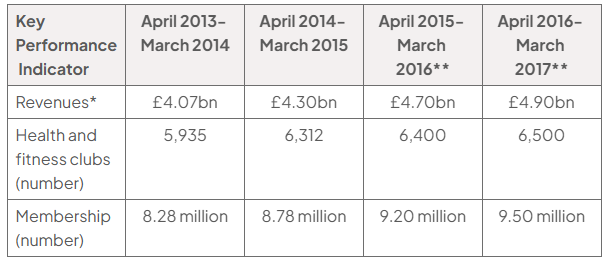
Technological innovation and an enhanced consumer experience helped the UK health and fitness industry to expand between 2014–2015, according to the 2015 State of the UK Fitness Industry (SOFI) Report.

Table of UK health and fitness indicators, April–March 2013–14 to 2016–17: revenues £4.07bn, £4.30bn, £4.70bn, £4.90bn; clubs 5,935, 6,312, 6,400, 6,500; membership 8.28m, 8.78m, 9.20m, 9.50m.

In the same period, the share of UK adults who were health and fitness club members increased by 0.5%, rising to 13.7%, the highest ever level. This market trend was expected to continue.

*Revenues include membership fees, walk-in or guest fees, personal training fees, sportswear and food and beverage sales.

**Forecast

(Source: adapted from http://www.healthclubmanagement.co.uk/detail.cfm?pagetype= detail&subject=news&codeID=316479#sthash.lBsC3oO2.dpuf, 18 June 2015)

Extract C

Gym surge

Britons are trying to get fitter with a bigger than usual January rush this year to join gym chains, as people resolve to work off their Christmas overindulgence. The media focus on health and fitness has also helped encourage less active people to exercise more. Fitness First, a health club chain, stated that membership retention is at one of its highest levels.

A spokesman said: "Every day we are bombarded with messages in the media on how an hour of exercise, three times a week, can help boost overall life expectancy and wellbeing."

(Source: adapted from http://www.express.co.uk/finance/city/633097/ Gym-surge-Greggs-sales-UK-interest-rates-Arla, 10 January 2016)

Extract D

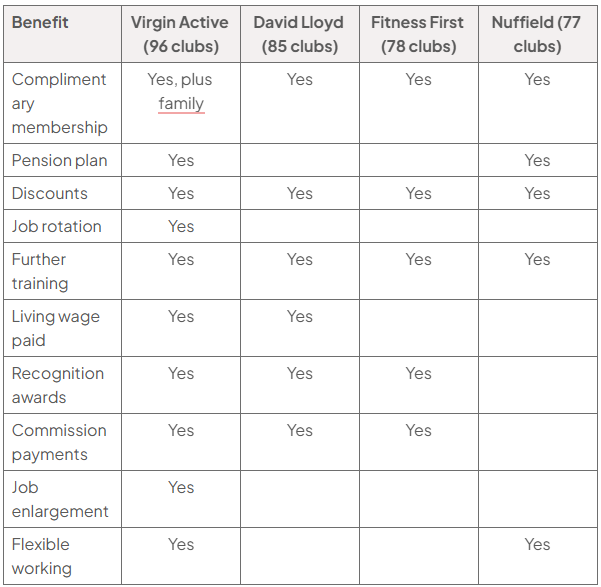
Standard employee benefits for a selection of private health and fitness club chains in the UK

Table comparing employee benefits at Virgin Active (96 clubs), David Lloyd (85), Fitness First (78) and Nuffield (77): all offer complimentary membership and discounts; other benefits vary by chain.

(Source: adapted from http://www.fitforvirginactive.co.uk/Rewards.aspx, https://careers.davidlloyd.co.uk/working-for-us.aspx, http://www.fitnessfirsters.co.uk/working-with-us/, http://www.leisurejobs.com/minisites/nuffield-health/ job/692706/lifeguard/, 21 January 2016)

Assess two possible examples of trade-offs between profit and ethics for a health and fitness club

2
10 marks

Extract A

Benefits of McDonald's to London and the UK

London represents an important part of the McDonald's story. It opened its first UK restaurant in Woolwich in 1974.

In 2016, McDonald's added £540 million in revenue to the Greater London economy. 82% of restaurants in London are owned and operated by 24 franchisees – local entrepreneurs – with the remainder operated by the corporate group (McOpCo). McDonald's and its franchisees have become important members of communities in London: investing in skills and developing people, supporting local causes and getting kids into football.

Today McDonald's has 183 restaurants across London, employing 15,000 people, with a presence in every borough. In the UK, McDonald's operates over 1,250 restaurants and employs just over 115,000 people. Over 80% of restaurants are operated by franchisees as local businesses. Worldwide, today, there are over 38,000 restaurants.

(Source: adapted from https://www.london.gov.uk/sites/default/files/McDonald%27s%20 Resturants%20Ltd%20%282650%29.pdf)

Extract C

Hospitality firms can make use of various loans, grants and tax cuts

The hospitality industry warned that it faced an 'obvious crisis' without financial support from the UK Government.

Shops, restaurants, cafes, pubs, bars and cinemas were the first businesses to feel the full effect of the economic recession in 2020.

In March 2020, the Chancellor of the Exchequer pledged to provide a £330 billion package to help businesses through the recession, with a number of measures such as tax cuts and millions of pounds in grants and loans.

(Source: adapted from What help the government has announced for the hospitality sector – and how to apply for support By Rachel Millard and Sophie Smith © Telegraph, 26 March 2020)

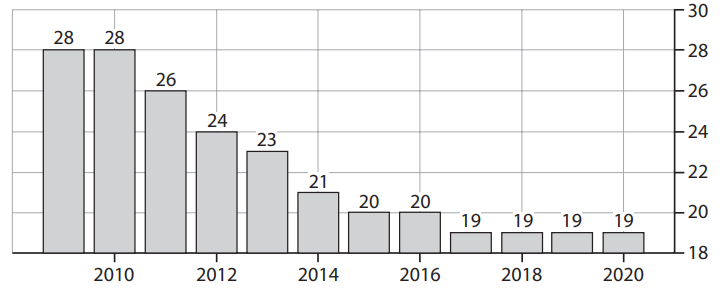
UK corporation tax rates, 2009–2019 (%)

Bar chart of UK corporation tax rates, 2009–2020: 28% in 2009–10, falling to 26% in 2011, 24% in 2012, 23% in 2013, 21% in 2014, 20% in 2015–16 and 19% in 2017–20.

(Source: adapted from https://tradingeconomics.com/united-kingdom)

Assess the long-term impacts of McDonald's growth on the UK's national economy

3
12 marks

Extract G

Multinationals in Brazil

Food and beverage multinationals provide a range of benefits to the Brazilian economy. They are responsible for 10% of Brazil's economic output and together employ 1.6 million people. Specifically, Nestlé employs 21,000 people in Brazil and has started an apprenticeship programme training 7,000 people under the age of 30.

However, in 2006, the Brazilian government, recognising the health problems caused by some multinational food businesses, introduced regulations to curb obesity and disease. These measures included advertising to warn consumers about foods high in sugar, salt and saturated fats. There were also marketing restrictions on sugary drinks aimed at children. The new rules also stopped brands such as Pepsi and KFC from sponsoring sports and cultural events.

Brazilian business, Citrosuco, exports 50% of the total orange juice exported to the USA, a total market worth 1.4 billion US dollars. One of the American companies Citrosuco sells to is Tropicana, owned by PepsiCo.

However, a report in 2015, from the pressure group Supply Cha!nge, criticised working conditions in the Brazilian orange juice industry. The report alleged that high pesticide use led to unsafe working conditions and even deaths. It also stated workers were sometimes unpaid for weeks and trapped in employment contracts that kept them in debt.

(Source: adapted from https://www.nytimes.com/interactive/2017/09/16/health/brazilobesity-nestle.html and https://www.cnbc.com/2018/08/23/brazil-florida-orange-juice-tarifftrade-war.html)

Assess whether legal controls are the most effective way of controlling the actions of multinational companies in countries, such as Brazil.

4
12 marks

Extract D

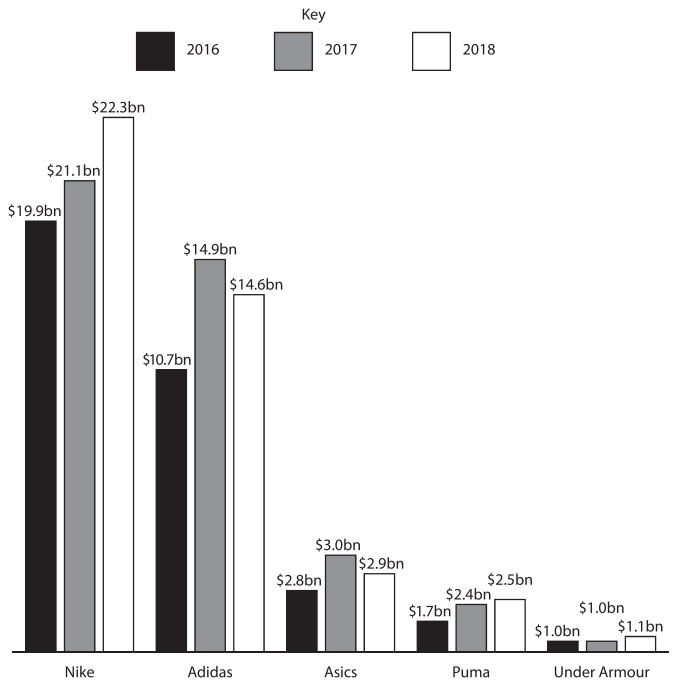
Worldwide sports footwear sales in billions of US dollars, selected leading brands

Grouped bar chart of sports footwear sales by brand in 2016–18, in billions of US dollars: Nike 19.9, 21.1, 22.3; Adidas 10.7, 14.9, 14.6; Asics 2.8, 3.0, 2.9; Puma 1.7, 2.4, 2.5; Under Armour 1.0, 1.0, 1.1.

Sales value of all other sports footwear brands not included in the chart = 16.7bn US dollars in 2018

Extract E

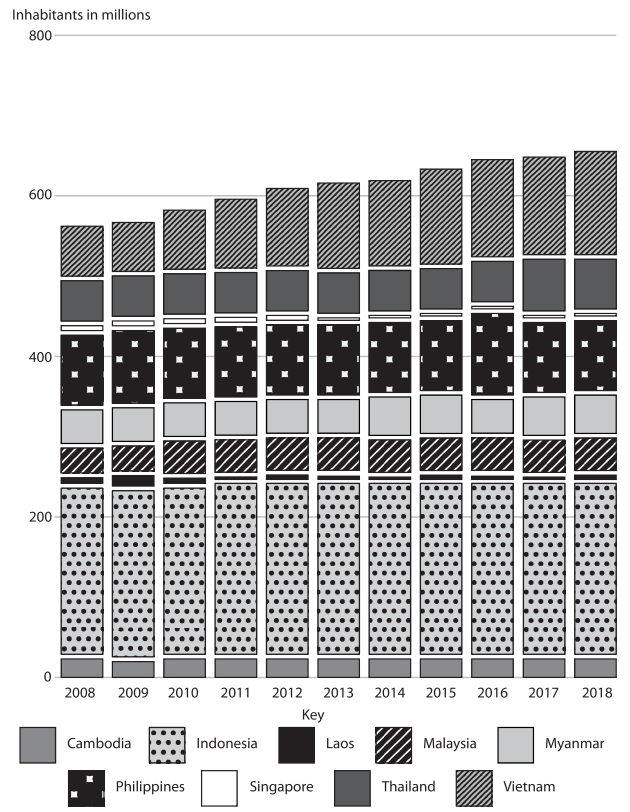
Populations of The Association of Southeast Asian Nations (ASEAN) member states

Stacked bar chart of ASEAN populations in millions by country from 2008 to 2018: total population rises from about 560 million to 660 million. Indonesia is largest; Singapore is smallest. Countries shown are Cambodia, Indonesia, Laos, Malaysia, Myanmar, Philippines, Singapore, Thailand and Vietnam.

Extract F

ASEAN opportunity

The Association of Southeast Asian Nations (ASEAN) was founded in 1967 by five countries: Thailand, Indonesia, Philippines, Malaysia, and Singapore. Its aim is to promote free trade between members, by reducing trade barriers between them. In 2010 ASEAN joined China in the ASEAN-China free trade area, reducing tariffs on 70% of goods.

With over 260 million people, Indonesia possesses both a large workforce and a young population. It has a stable and growing economy. Furthermore, increasing urbanisation eases the cost of doing business for foreign companies. These businesses, such as Nike, manufacture their goods in Indonesia and sell their products to the country's growing middle class.

The Indonesian Government has also realised the importance of developing the country's manufacturing sector to increase economic growth and create employment opportunities. The government has released several policy packages since September 2015 aimed at easing the cost of doing business in Indonesia. This should increase foreign direct investment (FDI).

Nike, Toyota, Nestle, LG, and Samsung are some of the major multinational corporations that have set up factories in Indonesia. These corporations benefit from low labour costs and relatively skilled workers.

Growing urbanisation makes businesses closer to their customers. However, there are also land shortages, which can make it difficult and expensive for firms to build new manufacturing facilities in Indonesia.

Extract G

Nike announces new partnership with Flex

Nike's manufacturing involves mass production in a range of low-wage economies, such as Indonesia, Thailand, and Vietnam. These production locations also tend to be close to materials needed, such as textiles and rubber.

In 2016 Nike announced a new partnership in North America with Flex, a design and manufacturing company. This enabled Nike to move towards differentiating its products. Before this new agreement Nike had its NikeID website, which customers could use to design aspects of their own shoes. However, these orders took up to four weeks to reach the customer.

Nike aims to reduce the time from design to delivery for customer orders from weeks to days. To do this it is working with Flex to develop efficient methods for making orders of one, rather than 1,000 shoes. Flex is experimenting with new laser cutting technology, that allows one-off production. The machine can go from cutting size 13 shoes to size 7 shoes without interrupting production. "We think that unlocks a lot of growth, by differentiating our products from competitors, and getting customised orders to our customers more quickly," said Nike's Head of Marketing.

Assess the possible impact of multinationals, such as Nike, on the economy of Indonesia.

5
8 marks

Extract A

Beltane Paper plc

Beltane Paper plc is a UK-headquartered multinational producing packaging board. It operates four mills - two in Sweden, one in Portugal and one in Uruguay - and employs 6,200 people.

In 2026 the board adopted an "ethical sourcing standard" that goes beyond the law in every country where Beltane operates:

  • all wood to come from certified plantations and never from primary forest, even where local law permits it

  • a closed-loop water system at the Uruguay mill, although local regulations do not require one

  • a guaranteed price to independent smallholder growers, 18% above the market rate

The standard adds an estimated £14m a year to Beltane's costs.

Finance Director Owen Traill said: "Every one of these choices is voluntary. That is exactly why they are expensive."

Extract B

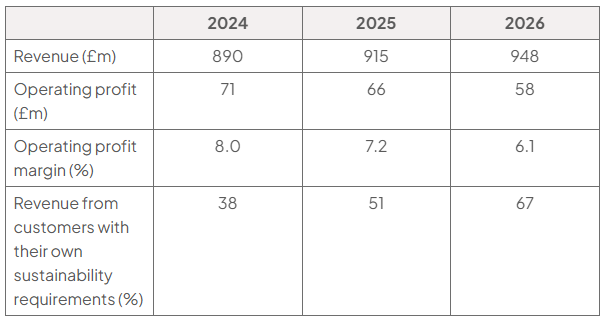
Beltane Paper plc - key figures

Table of Beltane Paper plc key figures for 2024, 2025 and 2026: revenue (£m) 890, 915, 948; operating profit (£m) 71, 66, 58; operating profit margin (%) 8.0, 7.2, 6.1; customers with own sustainability requirements (%) 38, 51, 67.

Extract C

Beltane's market and stakeholders

Two of Beltane's three largest competitors apply no comparable standard and undercut it by 6-9% on standard packaging board.

In 2026 a major European food manufacturer awarded Beltane a five-year contract worth £120m, citing its certified sourcing as the deciding factor.

Around the Uruguay mill, the local municipality has credited the closed-loop water system with improving river water quality. The mill employs 480 local people.

Two institutional shareholders have written to the board asking it to explain the falling operating margin.

Assess two ways in which Beltane Paper plc's ethical sourcing standard may affect its profits

6
12 marks

Extract E

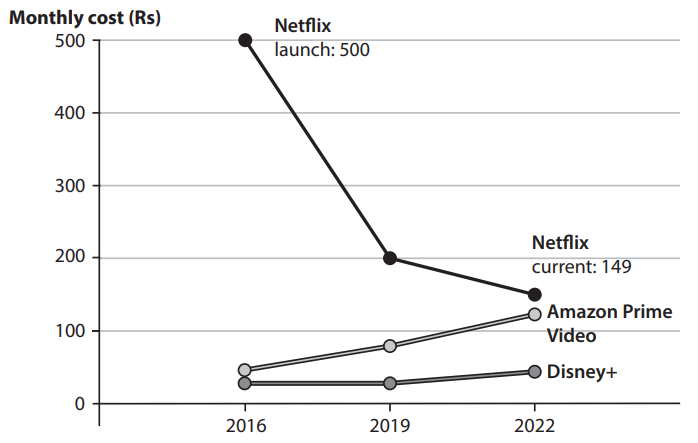
Monthly subscription prices for streaming services in India, 2016 to 2022

Line chart of monthly streaming costs in India (Rs) from 2016 to 2022: Netflix falls from 500 to 200 to 149, while Amazon Prime Video rises 50–80–120 and Disney+ 30–30–45.

In 2016 Netflix had 0.35 million subscribers. In 2019 it had 2 million and by 2022, 5.5 million, an increase of 175%.

(Source: adapted from Copyright The Financial Times Limited 2023. All rights reserved.)

Extract F

Netflix in India

Since 2021 businesses such as Netflix and multinational media companies operating in India have been expected to follow a code of ethics, drafted by the government. This requires businesses to exercise 'due caution and discretion' when showing content that may threaten India's security or be detrimental to the country's foreign relations.

The government is also considering extending existing legislation affecting online content to TV streaming. The code requires businesses such as Netflix to improve the accessibility of content to persons with disabilities, and requires parental controls to limit children's access to content aimed at older viewers. Multinational streaming businesses are also expected to consider the impact of content on matters of caste (social class), race, gender, religion, or sexuality.

(Source: adapted from Copyright The Financial Times Limited 2023. All rights reserved. and https://www.hindustantimes.com/india-news/govt-mulls-code-of-ethics-what-ott-platforms-may-have-to-follow-101614147645811.html)

Extract G

Streaming market in India

Between 2019 and 2020, Netflix spent 400 million US dollars on content made in India. "We're quite optimistic that India isn't fundamentally different in some way from our other markets," said Greg Peters, Netflix's Chief Operating Officer. Critics pointed out that Netflix was slow to address various issues, from pricing and distribution to the importance of commissioning more shows in regional languages, such as Tamil. Amazon Prime Video has been faster to offer more content in regional languages.

In 2023, 46% of drama programmes made by streaming platforms watched in India were on Disney+, whereas only 5% were made by Netflix.

Disney+ has catered more successfully to a mass-market audience. Netflix has not identified its target audience in India.

(Source: adapted from Copyright The Financial Times Limited 2023. All rights reserved. and https://www.hindustantimes.com/india-news/govt-mulls-code-of-ethics-what-ott-platforms-may-have-to-follow-101614147645811.html)

Assess the importance of political influence as a factor in controlling multinational TV streaming services in India.

7
12 marks

Extract F

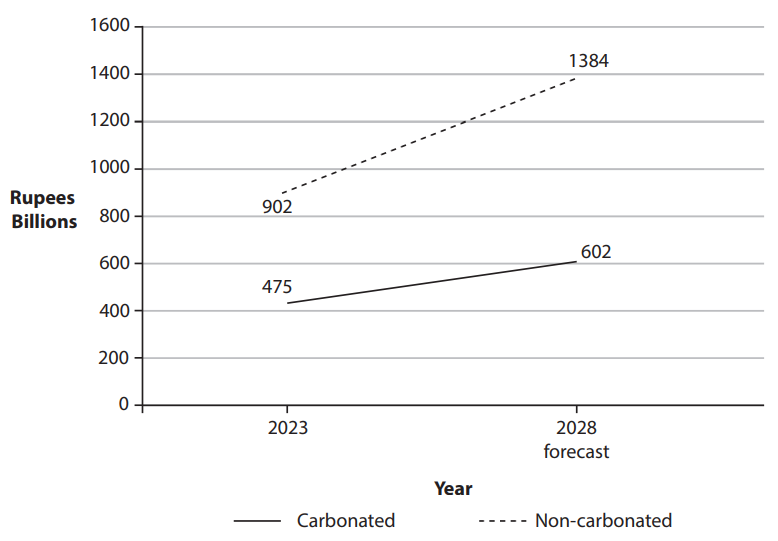
Trends in the Indian soft-drinks market

Line chart of India's soft-drinks market in rupees billions, where carbonated drinks rise from 475 in 2023 to a 602 forecast for 2028, while non-carbonated drinks rise from 902 to 1,384.

(Source: adapted from https://www.enterpriseappstoday.com/stats/soft-drinksales-statistics-2023-facts-trend-and-demand-analysis.html)

Extract G

Fever-Tree

In 2004, Fever-Tree began as a UK-based startup selling high quality tonic water. They now sell a variety of 14 different flavoured mixers.

It began exporting to markets, particularly in India, by building brand reputation. It recognised the importance of understanding local markets. Market research helped ensure compliance with local regulations, food safety standards, labelling requirements and import-export laws, including tariffs and duties.

Fever-Tree built relationships by connecting with local bartenders, chefs and other spirits brands operating in its target markets, Mumbai and Delhi.

Sourcing ingredients from India is important. Indian consumers prefer local ingredients. India's cocktail culture has traditional and modern influences, with a growing appreciation for premium, innovative products. India's rapidly growing middle class offers new opportunities.

One way Fever-Tree could overcome the challenges posed by trade barriers, such as tariffs, would be to set up a production facility in India.

(Source: adapted from https://www.ft.com/partnercontent/departmentfor-business-and-trade/savouring-success-finding-exportopportunities-in-indias-evolving-market.html)

Extract H

Coca-Cola in India

The Coca-Cola Company entered the Indian market in 1956.

In 2004, after years of protests by local villagers, a Coca-Cola bottling plant was forced to close as it allegedly contaminated groundwater with toxins. The villagers also suffered crop failures due to lack of irrigation water, as the bottling plant was causing water shortages.

As a result of the closure of the bottling plant, the Coca-Cola Company has adapted its business model. It now uses independent Indian bottling partners, often family-owned businesses, which employed local workers. Coca-Cola is distributed through local retailers. Local suppliers create jobs in agriculture, manufacturing, supply chain, transportation, and retail.

Coca-Cola supports communities through The Coca-Cola Foundation. These address environmental and social priorities like education, economic empowerment, recycling, and disaster relief.

(Source: adapted from https://www.historyoasis.com/post/coca-cola-history-india and https://esgnews.com/the-coca-cola-system-refreshing-local-economies-and-communities-worldwide/)

Assess the possible impact of multinationals, such as Coca-Cola, on the local economy of India.

1
20 marks

Extract B

Shanghai Disney

The Shanghai Disney resort opened in June 2016, the first Disney resort on the Chinese mainland and the sixth worldwide. By May 2017, Shanghai Disney welcomed its 10 millionth visitor. It has enjoyed success in China because of the popularity of American culture amongst the younger generation in China.

Ding Song, of the China Development Institute, commented: "The Shanghai government played a very important role in the establishment of Shanghai Disney by funding research and development, as well as supplying the land."

Shanghai Disney is being operated in cooperation with Chinese company Fosun International.

Competition from Chinese rivals was expected to intensify over time, so in 2018 Shanghai Disney extended the resort to include Toy Story Land.

Other western theme park companies are seizing the opportunity to operate in China, due to its expanding middle class. Construction began in November 2017 on a 7.4bn US dollar Universal Studios' park in Beijing, which is expected to open in 2020.

(Source adapted from: Shanghai Disney welcomes 11m visitors in first year - By Tom Hancock © The Financial Times, June 19 2017 and www.ecns.cn/business/2017/11-13/280636.shtml)

Shanghai Disney has been heavily criticised for poor customer service and high prices. It is losing market share to domestic and international rivals such as Universal Studios. Its directors are considering either reducing ticket prices to match those of rivals or retraining all customer-facing workers in core Disney expectations

Evaluate these two options and recommend which one would be most suitable for Disney to regain lost market share

2
20 marks

Extract D

Total number of McDonald's restaurants in Brazil

Chart showing the total number of McDonald's restaurants in Brazil.

(Source: adapted from https://www.statista.com/statistics/812580/number-mcdonaldsrestaurants-type-brazil/)

Extract E

Taco Bell opens first Rio de Janeiro location

American fast-food business, Taco Bell, has joined an already crowded market.

"Brazil has great potential both in terms of its geography and its food consumption," said Taco Bell's Director of Operations in Brazil. She added, "Operating on a larger scale is important, because it allows us to reduce the cost of inputs and services." The company's current goal is to have up to 200 locations by 2027.

As well as Taco Bell's popular Tex-Mex dishes, including the 'Crunchwrap Supreme' and the 'XXL Grilled Stuft Burrito,' Taco Bell has made sure to add local flavour to its traditional menu. For example, in São Paulo, it added the local drink maté.

Currently, all the branches in Brazil will be company-owned, but Taco Bell is considering franchising in the future.

(Source: adapted from https://riotimesonline.com/brazil-news/rio-business/taco-bell-opensfirst-rio-location-in-barra-da-tijuca/)

Extract F

Brazilian Real to US dollar exchange rate 2018–19

Line chart showing the Brazilian Real to US dollar exchange rate over 2018 and 2019.

(Source: adapted from https://tradingeconomics.com/brazil/currency)

Extract G

Multinationals in Brazil

Food and beverage multinationals provide a range of benefits to the Brazilian economy. They are responsible for 10% of Brazil's economic output and together employ 1.6 million people. Specifically, Nestlé employs 21,000 people in Brazil and has started an apprenticeship programme training 7,000 people under the age of 30.

However, in 2006, the Brazilian government, recognising the health problems caused by some multinational food businesses, introduced regulations to curb obesity and disease. These measures included advertising to warn consumers about foods high in sugar, salt and saturated fats. There were also marketing restrictions on sugary drinks aimed at children. The new rules also stopped brands such as Pepsi and KFC from sponsoring sports and cultural events.

Brazilian business, Citrosuco, exports 50% of the total orange juice exported to the USA, a total market worth 1.4 billion US dollars. One of the American companies Citrosuco sells to is Tropicana, owned by PepsiCo.

However, a report in 2015, from the pressure group Supply Cha!nge, criticised working conditions in the Brazilian orange juice industry. The report alleged that high pesticide use led to unsafe working conditions and even deaths. It also stated workers were sometimes unpaid for weeks and trapped in employment contracts that kept them in debt.

(Source: adapted from https://www.nytimes.com/interactive/2017/09/16/health/brazilobesity-nestle.html and https://www.cnbc.com/2018/08/23/brazil-florida-orange-juice-tarifftrade-war.html)

Taco Bell entered the Brazilian market in 2018, with limited success. To increase brand recognition, Taco Bell could either establish charitable initiatives in the local communities in which outlets are located or increase its range of Brazilian-inspired menu items

Evaluate these two options and recommend which one is most suitable for Taco Bell to increase brand recognition in Brazil

3
20 marks

Extract C

Clothes manufacturing in China

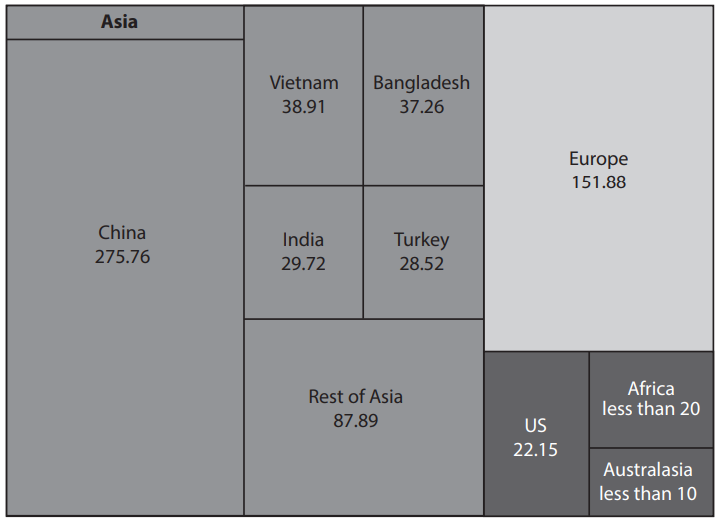
Value of textile exports in billions of US dollars, 2020

Treemap of textile exports in 2020, in billions of dollars: China 275.76, Europe 151.88, rest of Asia 87.89, Vietnam 38.91, Bangladesh 37.26, India 29.72, Turkey 28.52, US 22.15; Africa under 20 and Australasia under 10.

(Source: adapted from OEC)

Previously clothing brands were attracted to China by a large labour force, low labour costs, clothing manufacturing technology, and high product quality. Factories concentrated in coastal port cities, also help with transportation. Fast-fashion brand Shein has its base in China.

Mango's chief executive, Toni Ruiz, said he was considering buying less from China. 'What we're looking at is the extent to which all this global sourcing, developed over many years, might become more local,' he said.

According to China's National Bureau of Statistics, the average factory wage doubled between 2013 and 2021. Products manufactured in China are not as competitive once shipping and transport costs are taken into account. An increasingly important consideration for retailers is traceability in the supply chain after years of widely reported labour abuses in China.

Many clothing brands are moving production to Turkey, which has a customs agreement with the European Union. Turkey also has a free trade agreement with the UK. Turkey has easy access to raw materials, such as cotton, as well as having a skilled workforce protected by strong labour laws. Hugo Boss and Zara already use Turkey as a production location.

(Source: adapted from ft.com)

Clothing retailer Mango aims to deliver the latest fashion trends to its UK customers. It is reviewing the source of its clothing stock. It is considering two options, either continue to use suppliers from China, or change to suppliers based in Turkey.

Using the data in Extract C, evaluate these two options and recommend which one is likely to support Mango's aim of delivering the latest fashion trends to UK customers.